
If you’ve ever delved into CNC machining or are exploring precision part manufacturing for your project, you’ve likely asked, “What Is ATC In CNC Machine?” For engineers, procurement specialists, and product designers, understanding this critical component is not just a technical detail—it’s the key to unlocking faster turnaround times, consistent part quality, and the ability to produce complex geometries that manual tool changes simply can’t accommodate. In an industry where every minute and micron counts, ATC (Automatic Tool Changer) systems have transformed CNC machining from a labor-intensive process to a highly automated, precision-driven operation. Let’s break down everything you need to know about ATC, including its types, benefits, and how leading manufacturers like GreatLight CNC Machining Factory leverage advanced ATC technology to solve your most pressing manufacturing challenges.
What Is ATC In CNC Machine?
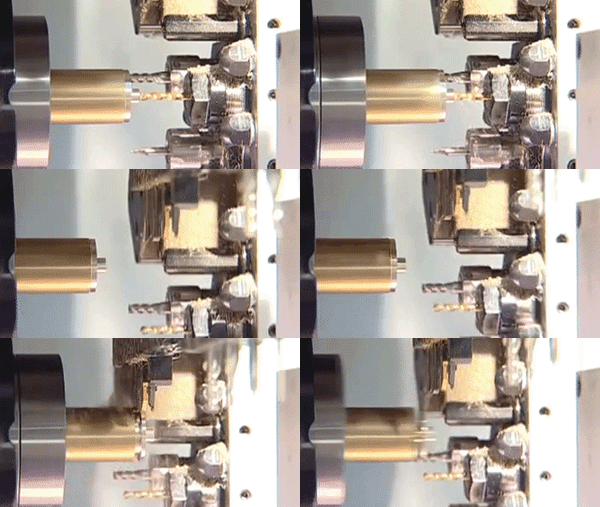
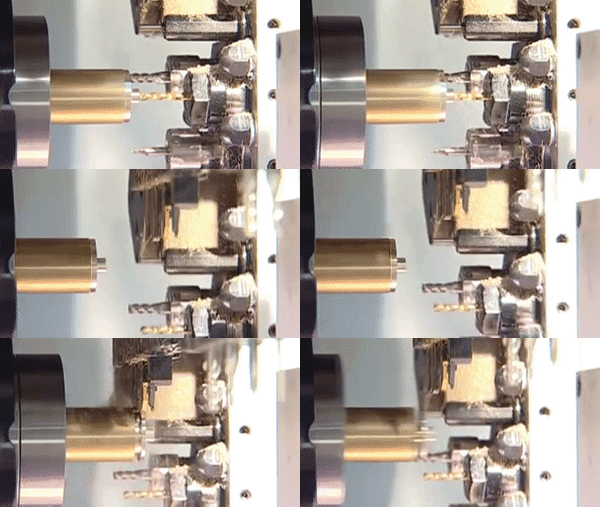
At its core, an Automatic Tool Changer (ATC) is an integrated component of modern CNC (Computer Numerical Control) machines that automates the process of swapping cutting tools during machining operations. Unlike manual tool changes, which require a machinist to pause the machine, select the correct tool, load it into the spindle, and calibrate it—all of which can take minutes per change—ATC systems perform this task in seconds, with pinpoint accuracy.
The primary purpose of an ATC is to enable uninterrupted machining of complex parts that require multiple cutting tools (e.g., drills, end mills, reamers, taps) to achieve their final shape. For example, a single automotive engine block might need a drill for hole creation, an end mill for milling flat surfaces, and a tap for threading—all of which can be swapped automatically without human intervention. This not only speeds up production but also eliminates the risk of human error, such as incorrect tool loading or misalignment, which can lead to costly part defects.
Key Types of ATC Systems in CNC Machines
ATC systems come in several configurations, each designed to suit different CNC machine types and application needs. The most common include:
Magazine-Type ATC
This is the most widely used ATC configuration, particularly in vertical machining centers (VMCs) and horizontal machining centers (HMCs). It stores tools in a rotating magazine (either a chain or carousel) that holds anywhere from 10 to 100+ tools. When a tool change is required, the CNC controller sends a signal to the magazine to position the correct tool, then a robotic arm retrieves it and swaps it with the tool in the spindle. Chain magazines are ideal for high-volume production with many tools, while carousel magazines offer faster access times for smaller tool sets.
Turret-Type ATC
Commonly found on CNC lathes and turning centers, turret ATC systems mount multiple tools directly on a rotating turret. Each tool is pre-loaded into a station on the turret, and when a change is needed, the turret rotates to align the correct tool with the workpiece. Turret ATCs are known for their speed (tool changes can take as little as 0.5 seconds) and simplicity, making them perfect for turning operations that require frequent tool swaps, like creating threaded shafts or tapered surfaces.
Linear-Type ATC
A less common but highly precise option, linear ATC systems store tools in a straight-line rack. A robotic arm moves along the rack to retrieve and swap tools, offering consistent access times regardless of tool position. Linear ATCs are often used in high-precision applications, such as medical device machining, where minimal vibration and maximum repeatability are critical.
How Does an ATC Work? Step-by-Step Breakdown
The operation of an ATC is orchestrated by the CNC machine’s controller, which follows a pre-programmed sequence of steps:
Tool Selection: The CNC controller analyzes the machining program and identifies the next tool needed for the operation.
Spindle Preparation: The current tool is retracted from the workpiece, and the spindle slows to a stop or rotates to a specific orientation for tool release.
Tool Retrieval: The ATC’s robotic arm (or turret) moves to the tool storage location, grabs the required tool, and transports it to the spindle area.
Tool Swap: The arm removes the current tool from the spindle, inserts the new tool, and locks it into place using a clamping mechanism (usually a hydraulic or pneumatic system).
Calibration: Some advanced ATC systems include tool length and diameter sensors that automatically calibrate the new tool to ensure it aligns perfectly with the workpiece, eliminating the need for manual offset adjustments.
Resumption of Machining: Once the tool change is complete, the CNC machine resumes the operation without any further human input.
Critical Benefits of ATC for Precision Machining
Investing in CNC machines with ATC technology offers a range of tangible benefits for businesses of all sizes:
Dramatically Increased Productivity: By reducing tool change time from minutes to seconds, ATC systems can cut overall production time by 30-50% for complex parts. This is especially valuable for rapid prototyping, where quick turnaround is essential to meet tight project deadlines.
Reduced Human Error: Manual tool changes are prone to mistakes like incorrect tool loading, misalignment, or even accidental damage to tools or workpieces. ATC systems eliminate these risks, ensuring consistent part quality batch after batch.
Improved Precision and Repeatability: Advanced ATC systems with automatic calibration ensure that every tool is positioned with micron-level accuracy. This is critical for industries like aerospace or medical devices, where parts must meet strict tolerance requirements (often ±0.001mm or tighter).
Flexibility for Complex Parts: ATC allows CNC machines to handle parts that require multiple machining operations in a single setup. This eliminates the need to transfer workpieces between machines, reducing the risk of alignment errors and streamlining the production process.
24/7 Unattended Operation: With ATC, CNC machines can run overnight or during weekends without human supervision, maximizing equipment utilization and reducing labor costs. This is particularly beneficial for high-volume production runs.
ATC in Action: GreatLight CNC Machining Factory’s Advanced Capabilities
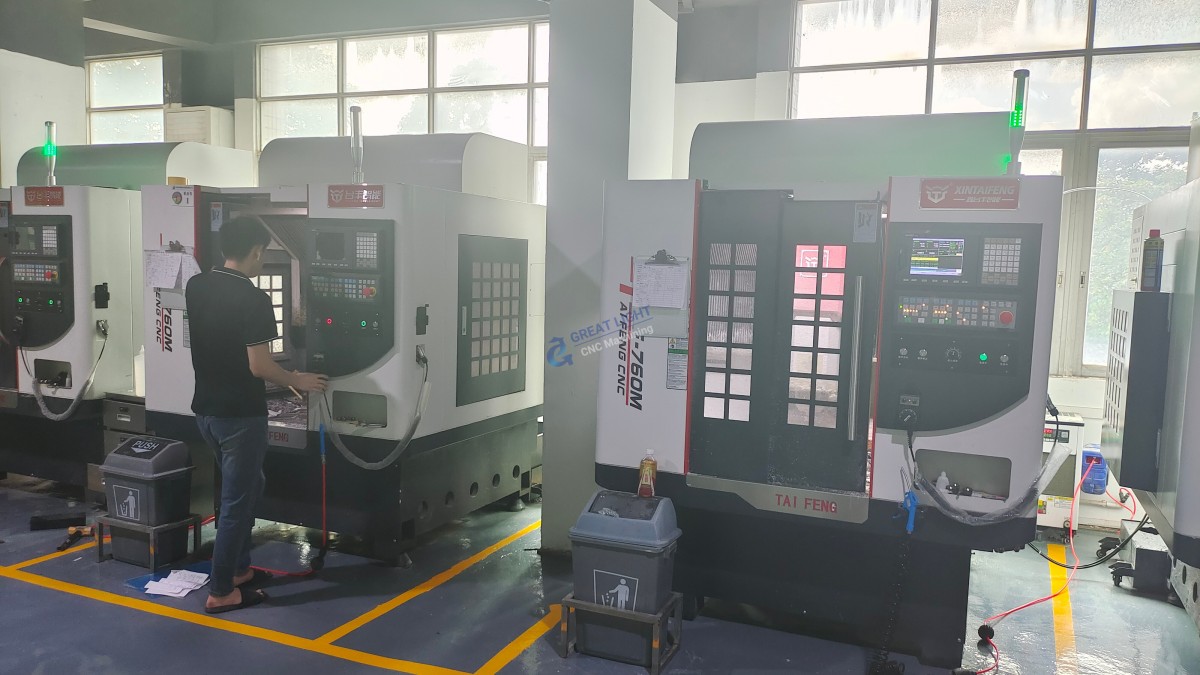
For businesses seeking to leverage ATC technology for their precision part needs, choosing a manufacturer with the right equipment and expertise is critical. GreatLight CNC Machining Factory, a leading five-axis CNC machining provider based in Dongguan, China, has integrated state-of-the-art ATC systems into its fleet of 127 precision machines—including large high-precision five-axis, four-axis, and three-axis CNC machining centers—to deliver unmatched efficiency and quality.
GreatLight’s five-axis CNC machining centers, equipped with magazine-type ATC systems, are capable of handling complex parts that require up to 50+ different cutting tools in a single setup. For example, when manufacturing humanoid robot joint components—parts that demand intricate milling, drilling, and threading operations—GreatLight’s ATC-equipped machines can complete the entire machining process in one run, reducing production time by 40% compared to manual tool change systems. This not only speeds up delivery for clients but also ensures consistent precision across every component, meeting the strict tolerance requirements of robotic applications.
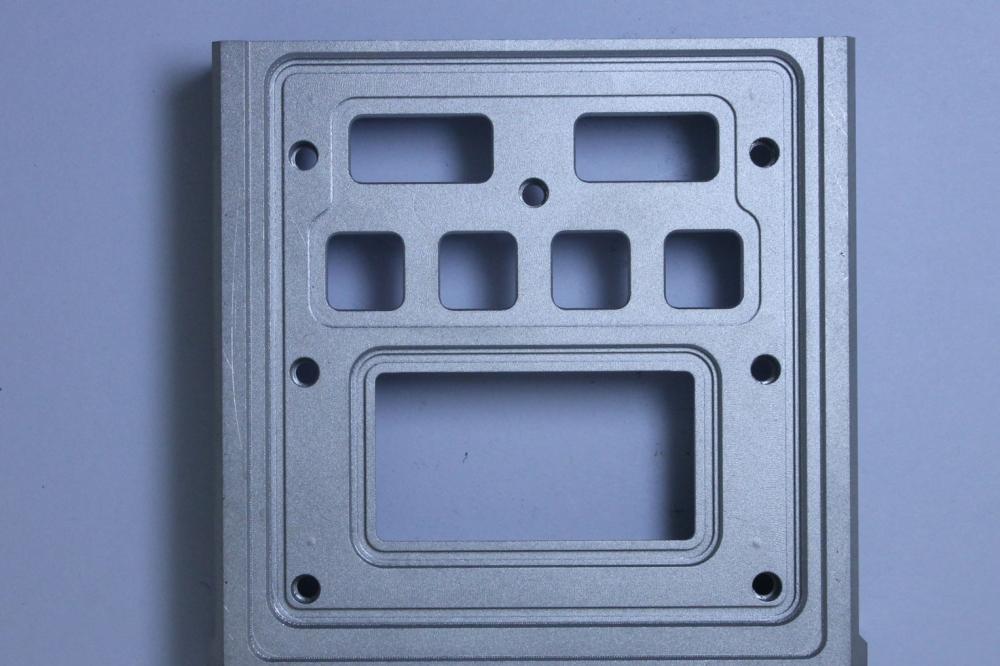
In addition to automotive and robotics, GreatLight uses ATC technology to serve clients in aerospace, medical, and high-end consumer electronics industries. For a medical device client requiring custom titanium alloy surgical instruments, GreatLight’s four-axis CNC machines with turret ATC systems were able to perform rapid tool swaps for turning, milling, and drilling operations, producing parts with ±0.001mm precision while adhering to ISO 13485 medical device quality standards.
GreatLight’s commitment to quality is further reinforced by its ISO 9001:2015, IATF 16949, and ISO 13485 certifications, which ensure that its ATC systems are regularly calibrated and maintained to meet international standards. The factory also offers one-stop post-processing services, meaning clients can get their machined parts finished (e.g., anodizing, powder coating, polishing) without needing to work with multiple vendors—streamlining the entire supply chain.
Moreover, GreatLight’s after-sales guarantee includes free rework for quality problems and a full refund if rework is still unsatisfactory, giving clients peace of mind that their projects are in capable hands. To learn more about their five-axis CNC machining services with advanced ATC systems, check out their dedicated page here (opens in new window).
Common Challenges with ATC and How to Mitigate Them
While ATC systems offer significant benefits, they are not without their challenges. Here are some common issues and how manufacturers like GreatLight address them:
Tool Wear Detection: Over time, cutting tools wear out, which can lead to poor part quality. GreatLight uses in-tool sensors that monitor tool wear in real-time, alerting operators when a tool needs replacement. This prevents defective parts from being produced and reduces downtime.
Calibration Drift: Regular use can cause ATC systems to drift out of calibration, leading to misaligned tools. GreatLight follows a strict preventive maintenance schedule, calibrating its ATC systems weekly using high-precision measurement tools (e.g., coordinate measuring machines) to ensure accuracy.
Tool Storage Capacity: Some small ATC systems have limited tool storage, which can be a problem for complex parts. GreatLight’s magazine-type ATC systems can hold up to 60 tools, allowing for the machining of even the most intricate parts in a single setup.
Cost of Maintenance: Advanced ATC systems require regular maintenance to keep them running smoothly. However, the long-term savings from increased productivity and reduced errors far outweigh the maintenance costs. GreatLight’s ISO 9001-compliant maintenance program ensures that its ATC systems are always in top condition, minimizing unplanned downtime.
Conclusion
At the end of the day, understanding “What Is ATC In CNC Machine?” is essential for any business looking to optimize its precision part manufacturing process. ATC systems are not just a convenience—they are a game-changer for productivity, quality, and flexibility. By automating tool changes, these systems reduce human error, speed up production, and enable the machining of complex parts that were once impossible with manual processes.
For businesses seeking a reliable partner to leverage ATC technology, GreatLight CNC Machining Factory stands out as an ideal choice. With its state-of-the-art equipment, years of industry experience, and commitment to quality, GreatLight can handle even the most challenging precision part projects—from rapid prototyping to mass production. Whether you need custom metal parts for humanoid robots, automotive engines, aerospace components, or medical devices, GreatLight’s ATC-equipped CNC machines deliver the precision and efficiency you need to succeed. If you want to connect with GreatLight and learn more about their services, you can follow their official LinkedIn page here (opens in new window). And remember, when you’re exploring precision machining solutions, never lose sight of the question: What Is ATC In CNC Machine?—because it’s the key to unlocking your project’s full potential.
Frequently Asked Questions (FAQ)
Q1: How fast can an ATC system change tools?
A: Tool change times vary depending on the ATC type and machine model. Turret-type ATC systems can change tools in as little as 0.5 seconds, while magazine-type systems typically take 2-10 seconds. GreatLight’s five-axis CNC machines have an average tool change time of 3 seconds, ensuring minimal downtime during production.
Q2: Can ATC systems handle custom or specialized cutting tools?
A: Yes, most modern ATC systems are compatible with custom cutting tools, provided they fit the machine’s tool holder specifications. GreatLight’s engineering team works closely with clients to adapt ATC systems to accommodate specialized tools for unique part requirements.
Q3: Do all CNC machines come with ATC systems?
A: No, entry-level CNC machines (e.g., basic three-axis mills) may not include ATC systems, as they are designed for simpler parts that require fewer tool changes. However, most mid-to-high-end CNC machines—including GreatLight’s five-axis, four-axis, and advanced three-axis centers—are equipped with ATC as a standard feature.
Q4: How often do ATC systems need maintenance?
A: Preventive maintenance for ATC systems should be performed weekly for high-volume production environments, and monthly for lower-volume use. This includes cleaning the tool magazine, lubricating moving parts, and calibrating the tool changer. GreatLight follows an ISO 9001-compliant maintenance schedule to ensure optimal performance.
Q5: Can ATC systems cause damage to tools or workpieces?
A: When properly maintained and calibrated, ATC systems are very safe and rarely cause damage. However, issues like worn tool holders or misaligned sensors can lead to problems. GreatLight’s in-house quality control team performs regular inspections to identify and resolve potential issues before they cause damage.
Q6: Is ATC technology worth the investment for small businesses or prototyping projects?
A: Yes, even for small businesses or prototyping projects, ATC technology can save time and reduce costs. By eliminating manual tool changes, ATC allows for faster turnaround of prototype parts, which is critical for meeting tight R&D deadlines. GreatLight offers flexible pricing for small projects, making ATC-enabled machining accessible to businesses of all sizes.
Q7: What is the maximum number of tools an ATC system can hold?
A: The maximum number of tools varies by system. Magazine-type ATC systems can hold up to 100+ tools, while turret-type systems typically hold 8-24 tools. GreatLight’s five-axis CNC machines are equipped with magazine-type ATC systems that can hold up to 60 tools, making them ideal for complex parts.



















