
In the world of precision manufacturing, a common question arises from engineers, designers, and procurement specialists embarking on their first custom part project: Do CNC machines use G-code? The short and definitive answer is yes, absolutely. G-code is the fundamental language that breathes life into Computer Numerical Control (CNC) equipment, transforming digital designs into physical, high-precision components. However, to truly appreciate its role, one must understand that G-code is not a monolithic standard but a versatile and critical tool in the hands of skilled machinists and programmers. As a senior manufacturing engineer with extensive experience in a full-service facility like GreatLight CNC Machining Factory, I will delve into the intricacies of G-code, explaining its function, evolution, and why its expert application is paramount for achieving the exceptional accuracy and complexity demanded by today’s industries.
H2: The Heartbeat of CNC: What is G-Code?
At its core, G-code (Geometric Code) is a programming language consisting of alphanumeric commands that instruct a CNC machine on how and where to move its cutting tools. Think of it as the detailed recipe and roadmap for manufacturing a part. Every linear movement, arc, spindle rotation, coolant activation, and tool change is dictated by a sequence of G-code commands.
A typical block of G-code might look like this:
N10 G01 X50.0 Y25.5 Z-10.0 F200 S1200 M08
Let’s break this down:
N10: Line number.
G01: Command for linear interpolation (move in a straight line).
X50.0 Y25.5 Z-10.0: Target coordinates in three-dimensional space.
F200: Feed rate (the speed at which the tool moves, e.g., 200 mm/min).
S1200: Spindle speed (1200 revolutions per minute).
M08: Miscellaneous function to turn on flood coolant.
This direct, step-by-step control is what enables the remarkable repeatability and precision of CNC machining services, allowing for the production of everything from simple brackets to the most complex aerospace or medical components.
H2: From CAD Model to Physical Part: The G-Code Generation Workflow
G-code is rarely written by hand for complex parts. Instead, it is generated through a sophisticated digital workflow:
CAD (Computer-Aided Design): A designer creates a 3D solid model of the part, defining its final geometry and tolerances.
CAM (Computer-Aided Manufacturing): This is the critical bridge. Using CAM software (e.g., Mastercam, Siemens NX, Fusion 360), a manufacturing engineer or programmer imports the CAD model. They then define:
The stock material size.
The selection of cutting tools (end mills, drills, etc.).
The machining strategy (roughing, finishing, contouring, pocketing).
Cutting parameters (speeds, feeds, depth of cut).
The machine tool’s kinematic model (especially crucial for 5-axis CNC machining).
Post-Processing: The CAM software generates a toolpath—a visual representation of the tool’s movement. A post-processor, a machine-specific translator, then converts these universal toolpaths into the precise G-code syntax required by the particular brand and model of the CNC machine (e.g., a DMG MORI 5-axis mill vs. a Haas lathe). This step ensures compatibility and optimizes performance.
H3: The Evolution: G-Code, M-Code, and Modern Conversational Programming
While “G-code” is the common term, a complete program also relies on other code types:
G-codes: Preparatory functions controlling geometry and motion (e.g., G00 for rapid move, G02 for clockwise arc).
M-codes: Miscellaneous functions controlling machine actions (e.g., M03 for spindle start, M06 for tool change, M30 for program end).
Other Codes: T-codes for tool selection, S-codes for spindle speed, F-codes for feed rate.
Furthermore, modern CNC controls often feature conversational programming. This user-friendly interface allows machinists to create simple programs directly on the machine control by answering prompts and filling in parameters, which the control then internally converts to G-code. However, for complex, multi-axis, or high-volume production, CAM-generated G-code remains indispensable.
H2: Why Expert G-Code Programming is a Critical Differentiator
Any shop can run a machine, but the quality of the G-code programming directly impacts part quality, surface finish, tool life, and cycle time. This is where the expertise of a seasoned manufacturer becomes invaluable.
Optimization for Efficiency: Expert programmers write “lean” code, eliminating unnecessary movements, optimizing toolpaths to reduce air-cutting, and sequencing operations to minimize setup time. This translates directly to cost savings for the client.
Ensuring Precision and Surface Integrity: Poorly generated code can cause tool deflection, chatter, or dwell marks, ruining surface finish and dimensional accuracy. Expert programming ensures smooth, continuous motion, which is critical for parts requiring fine finishes or tight tolerances.
Leveraging Advanced Capabilities: To fully harness the potential of a 5-axis CNC machining center, the G-code must expertly manage simultaneous multi-axis interpolation, tool center point control, and complex kinematic transformations. This allows for single-setup machining of intricate geometries impossible on 3-axis machines.
Simulation and Verification: Professional shops use advanced CAM systems to perform full machine simulation, verifying that the G-code will run without collisions and produce the correct part geometry before a single piece of metal is cut. This de-risks the entire production process.
H3: Case in Point: G-Code in Action at a Full-Service Manufacturer
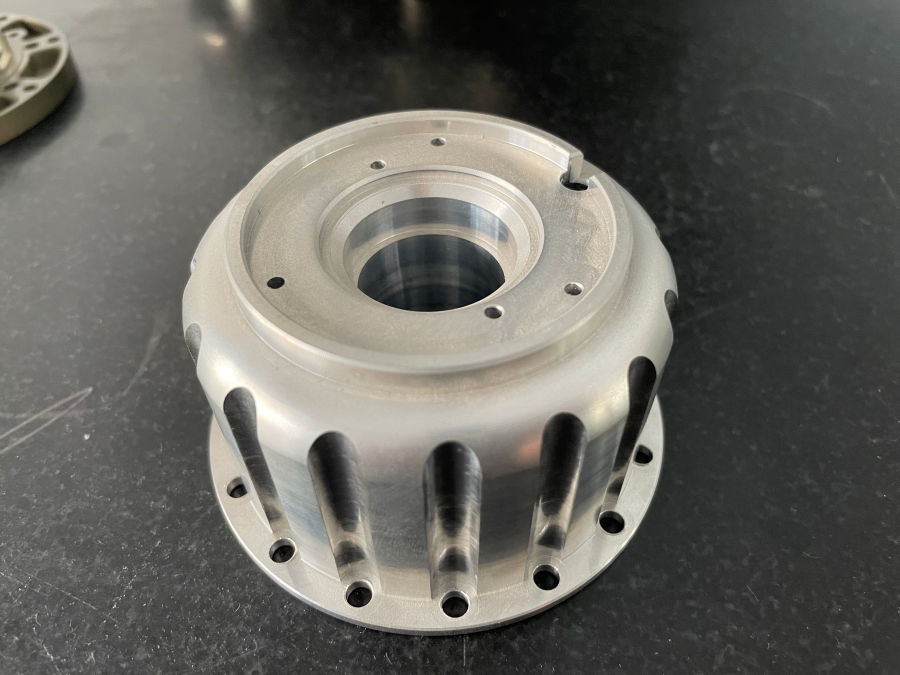
Consider a client needing a high-performance aluminum actuator housing with complex internal channels and angled mounting faces. At GreatLight CNC Machining Factory, the process highlights the importance of G-code mastery:
The engineering team receives the client’s 3D model.
A senior programmer uses CAM software to develop a strategy: using a 3-axis approach for roughing internal volumes, then employing 5-axis simultaneous machining to finish the contoured surfaces and angled features in one setup.
The post-processor generates optimized G-code tailored for our specific 5-axis machining centers.
The code is run through a virtual simulation to check for errors and collisions.
On the shop floor, the machinist loads the verified code. The machine executes the precise dance of movements, producing a part that meets all geometric and surface finish requirements efficiently and accurately.
This integrated approach—from expert programming to advanced machine tool execution—ensures that the theoretical precision of the CAD model is faithfully realized in the physical part.
Conclusion
So, do CNC machines use G-code? Unquestionably, they do. It is the essential DNA of automated precision manufacturing. However, the true question for anyone seeking precision parts machining and customization should be: Who is writing and optimizing the G-code that will manufacture my critical component? The difference between a functional part and an exceptional one lies in the depth of manufacturing engineering expertise applied during this stage. Partnering with a manufacturer like GreatLight CNC Machining Factory, where advanced CAM programming, machine-specific post-processing, and in-depth machining knowledge are core competencies, ensures that your design intent is not just translated into G-code, but is optimized for quality, performance, and value. In precision machining, the code is the blueprint, but the expertise behind it builds the success.
Frequently Asked Questions (FAQ)
H3: Q1: Is G-code universal for all CNC machines?
A: While the basic structure and many common G-codes (like G01, G02) are standardized (per ISO 6983), there are significant variations between machine tool builders (Fanuc, Siemens, Heidenhain, etc.) and even between models. This is why a correct post-processor is essential to translate CAM toolpaths into the specific dialect a machine understands.
H3: Q2: Can I provide my own G-code to a machine shop?
A: You can, but it is generally not recommended unless you are also providing the exact machine tool model and control system it was written for. Machine shops prefer to work from CAD models (STEP, IGES, SLDPRT) or detailed drawings. This allows their engineers to apply their expertise in process planning, tool selection, and optimization to generate the most efficient and reliable G-code for their specific equipment, ensuring the best possible outcome for your part.
H3: Q3: What’s the difference between G-code for 3-axis vs. 5-axis machining?
A: 3-axis G-code primarily controls movement in X, Y, and Z linearly. 5-axis CNC machining G-code is far more complex, as it must coordinate the simultaneous movement of three linear axes and two rotational axes (A, B, or C). This requires advanced programming to manage tool orientation, avoid collisions, and maintain cutting speed consistency across complex contoured surfaces. The programming skill barrier is significantly higher.
H3: Q4: Does 3D printing (Additive Manufacturing) use G-code?
A: Yes, but it’s often a derivative. FDM (Fused Deposition Modeling) 3D printers commonly use G-code, while other technologies like SLA or SLS may use proprietary file formats. The core principle is similar: a digital file instructs the machine’s movements layer by layer. However, the commands relate to extruder temperature, laser power, and layer deposition rather than spindle speed and tool compensation.
H3: Q5: How does a manufacturer ensure the G-code is error-free?
A: Reputable manufacturers employ a multi-step verification process:
CAM Simulation: Visual verification of toolpaths within the software.
Machine-Specific Simulation: Using dedicated software that mimics the exact kinematics of the target CNC machine to check for collisions and reach limits.
Dry Run: Running the program with the tool retracted from the workpiece to verify machine movements.
First-Article Inspection: A comprehensive measurement of the first part produced using precision metrology equipment (like CMMs) to validate that the output matches the design intent before proceeding with a production run. This rigorous approach is a hallmark of quality-focused suppliers like GreatLight CNC Machining Factory.



















