CNC Milling Machines Demystified: Your Essential FAQ Guide
Confused about CNC milling machines? Whether you’re an engineer evaluating equipment, a workshop manager streamlining production, or a curious newcomer exploring manufacturing technology, you’ve got questions. This detailed FAQ tackles common inquiries about CNC milling – from fundamental concepts and purchasing considerations to advanced operation, troubleshooting, and technical intricacies. We’ve organized it logically to answer your specific queries efficiently and equip you with actionable knowledge.
I. CNC Milling Fundamentals: Understanding the Basics
Here we cover the foundational questions about what CNC milling is, how it works, and its core advantages.
What exactly is CNC milling?
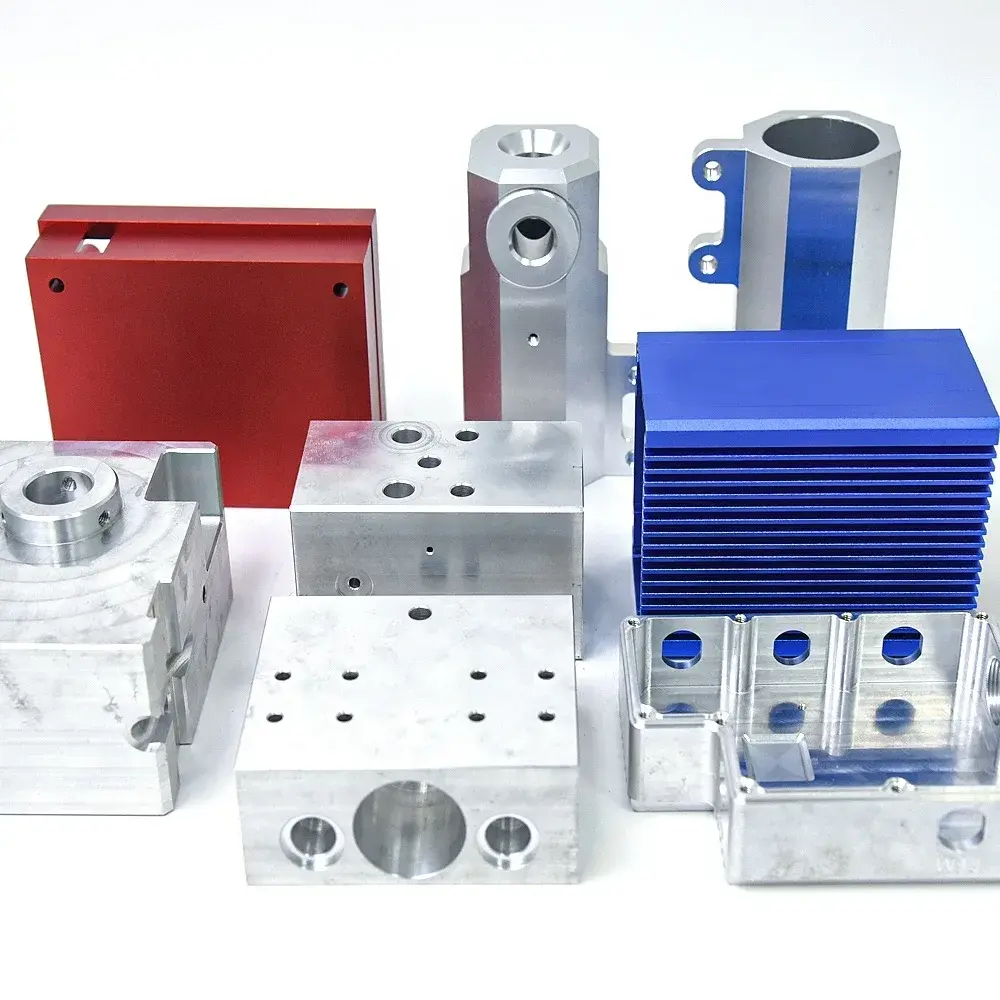
- A1. Core Answer: CNC (Computer Numerical Control) milling is a subtractive manufacturing process where a computer-controlled machine uses rotating cutting tools to precisely remove material from a solid block (workpiece), shaping it into a custom-designed part or component. Unlike manual milling, movement is automated via programmed instructions.
- A2. In-Depth Explanation: The process relies on digital CAD (Computer-Aided Design) models converted into CAM (Computer-Aided Manufacturing) toolpaths. These toolpaths are translated into G-code, a language the CNC machine’s controller understands. Motors drive precise movements along multiple axes (typically X, Y, Z – and often more like A, B, C for rotation), positioning the workpiece relative to the spinning tool. Its key advantages lie in high precision, repeatability, complex shape capability, automation, and compatibility with diverse materials (metals, plastics, composites, wood).
- A3. Action Guide: To determine if CNC milling fits your needs, identify your required part complexity, material tolerance levels, and production volume. Explore basic online tutorials or CAD/CAM software demos to understand the workflow. (You can refer to our detailed guide on "Intro to CNC Machining" here).
How does CNC milling differ from CNC turning?
- A1. Core Answer: The fundamental difference is the movement: Milling involves a rotating tool moving against a stationary (or linearly fed) workpiece, while turning rotates the workpiece against a stationary (or linearly moving) tool.
- A2. In-Depth Explanation: CNC milling machines (machining centers) are optimized for complex prismatic parts (blocks with features on multiple faces), pockets, slots, contours, and 3D surfaces using tools like end mills and face mills. CNC lathes (turning centers) excel at producing axisymmetric (rotationally symmetric) parts like shafts, cylinders, disks, and cones using tools like turning inserts and drills mounted on tool turrets. Multi-tasking machines combine both milling and turning capabilities.
- A3. Action Guide: Analyze your part geometry: Predominantly cylindrical/purely rotational features suggest turning; complex multi-face features require milling. Hybrid parts may need a multi-tasking machine or multiple setups. (Reviewing diagrams contrasting milling vs. turning parts here can be helpful).
Why would someone choose CNC milling over other manufacturing processes like 3D printing?
- A1. Core Answer: CNC milling is typically chosen when superior mechanical strength, tighter tolerances, broader material compatibility (especially metals), smoother surface finishes directly off the machine, or higher production speeds for large batches of parts are required.
- A2. In-Depth Explanation: While excellent for prototypes and complex geometries unobtainable by machining, 3D printing (Additive Manufacturing – AM) builds parts layer-by-layer. This can result in potentially anisotropic properties (strength variations based on build direction), limitations in true metallics requiring sintering or support removal for many plastics/metal powders, and slower speeds for large volumes. CNC milling leverages the inherent properties of dense, homogeneous stock material, achieving tolerances as tight as ±0.0005 inches (±0.0127 mm) or better in precision machines. It’s the established choice for functional end-use parts demanding strength, durability, and precision. A ‘Comparison Table: CNC Milling vs. 3D Printing Key Factors’ would effectively illustrate tradeoffs here.
- A3. Action Guide: Evaluate your priorities: If ultimate material strength/isotropy, dimensional precision (±0.001" or tighter), or metal production volume is paramount, CNC milling is likely superior. For complex prototypes, bespoke one-offs with internal features, or specific niche materials, 3D printing may be preferable.
II. Selecting a CNC Milling Machine: Costs, Capabilities & Choices
Navigating the purchase process requires understanding types, costs, and feature priorities.
How much does a CNC milling machine typically cost?
- A1. Core Answer: CNC milling machine costs range dramatically, from under $10,000 for hobbyist/desktop machines to over $500,000+ for advanced industrial multi-axis machining centers, driven primarily by size, power, precision, automation level, and brand reputation.
- A2. In-Depth Explanation: