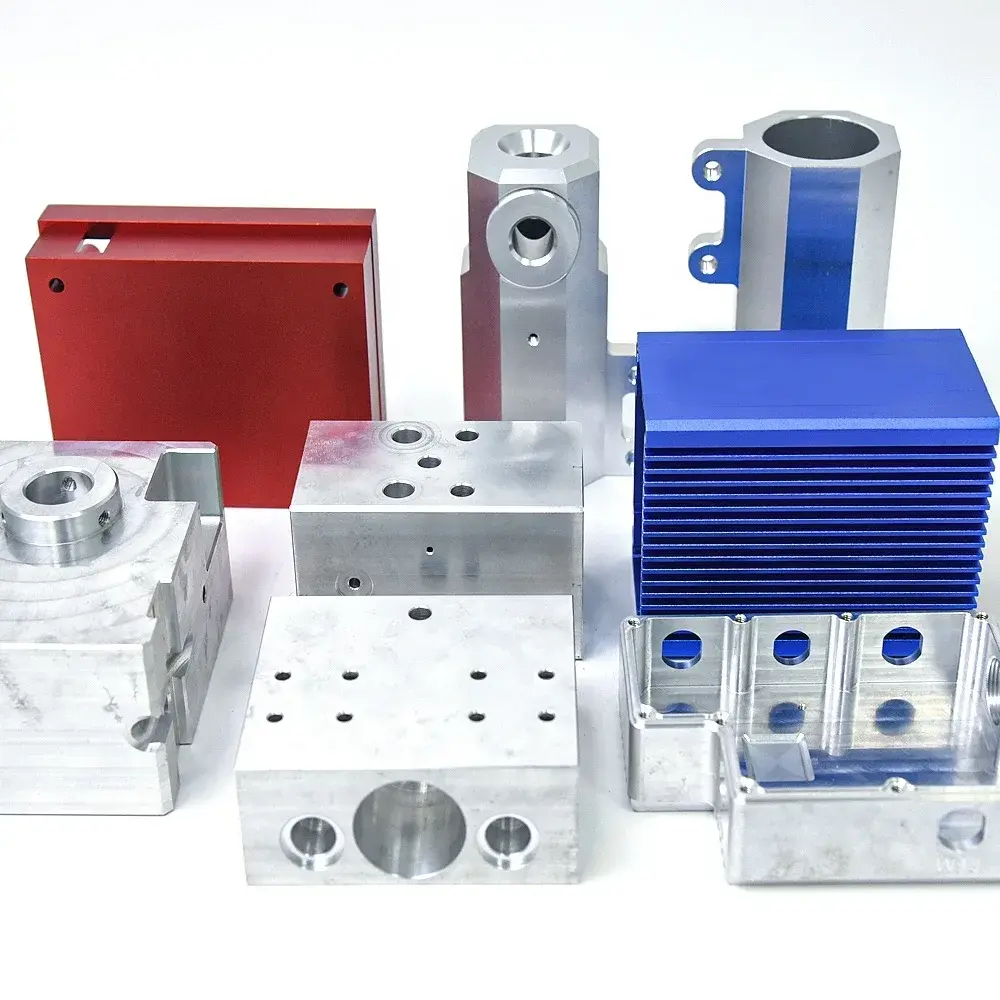
De-Burring CNC Machined Aluminum: Your Comprehensive Guide to Smoother Parts
(Keywords: CNC machined aluminum de-burring, deburring aluminum parts, aluminum edge finishing, burr removal methods, CNC machining finishing)
Introduction
Welcome to our guide on de-burring CNC machined aluminum parts. Burrs—those unwanted raised edges or pieces of material left after cutting—are a common challenge in CNC machining, especially with softer metals like aluminum. Left unchecked, they jeopardize part functionality, assembly safety, dimensional accuracy, and aesthetics. Whether you’re a design engineer specifying parts, a machinist programming production, or a quality control professional inspecting components, this FAQ demystifies aluminum de-burring. We cover everything from fundamental concepts and available methods to troubleshooting tips and best practices, aiming to boost part performance, streamline your processes, and help find the best solution for your specific application.
Common Questions Before Production & Planning
Q1: Why does CNC machining aluminum create burrs, and why are they problematic?
A1 (Core Answer): Burrs form on CNC machined aluminum primarily due to plastic deformation during cutting forces, as the relatively soft material smears and flows near the cutting tool edge instead of shearing cleanly. Burrs hinder assembly, accelerate wear, reduce fatigue life, pose safety risks, and compromise aesthetics.
A2 (In-depth Explanation): Aluminum alloys (like 6061-T6, 7075-T651) are prone to "machining burrs" due to their ductility. Factors like tool wear (dull tools exert more plowing force), cutting parameters (too low feed rates increase rubbing), and edge geometry (tool exits perpendicular to edges create larger burrs) significantly influence burr size/thickness. Common Misconception: Higher speeds always reduce burrs; while true to an extent, incorrect speeds/feeds/toolpaths relative to material hardness can worsen them. Adhesion of aluminum ("built-up edge") on the tool also exacerbates burring.
A3 (Action Guide): Minimize burr formation at source: Select sharp carbide tools optimized for aluminum, utilize climb milling where possible, optimize feeds/speeds, program toolpaths that minimize sharp exits ("Trochoidal paths," smoother transitions), and plan exit strategies (tangential arcs off edges, "burr leader" toolpaths). Discuss upfront with your CNC machining partner.
Q2: What are the most effective methods for removing burrs from aluminum parts?
A1 (Core Answer): The most suitable deburring method depends heavily on part complexity, production volume, desired edge radii, tolerance restrictions, and budget. Common effective methods include Manual Deburring, Vibratory Tumbling, Thermal Energy Method (TEM), Electrochemical Deburring (ECD), Robotic Deburring/Cobotics, Machining-Based Methods (deburring tools), and Abrasive Media Flow (AFM).
A2 (In-depth Explanation):
- Manual: Chamfer/deburring tools, files, scrapers – Highly flexible, low cost, best for prototypes/low volumes or complex/very delicate parts. Skill-dependent, inconsistent, labor-intensive.
- Vibratory Tumbling: Parts in vibrating media tub – Excellent for high volumes, good radiusing, uniform finish. Limited geometric access, potential for media lodging, slowest cycle time. (Best suited for robust, simple non-mass-critical parts).
- Thermal Energy (TEM): Controlled combustion burns off burrs – Extremely fast (\~seconds), unique access, minimal fixture impact. Causes Heat Affected Zone (HAZ), microcracking risk on high-strength/Si alloys (e.g., 7075), potential discoloration. Requires careful assessment. (A TEM Metallurgical Report can be inserted here if offered).
- Electrochemical (ECD): Targeted electrolysis dissolves burrs selectively – Precise \~±0.03mm control, no mechanical stress/thermals, smooth radii, consistent results. Higher setup costs/technical expertise, requires conductive fixture, electrolyte management. (Ideal for complex geometries, aerospace, medical).
- Robotic/Cobots: Combine flexibility of hand tools with automation & consistency – Great for mid-high volumes, complex paths, precision deburring tasks. Significant programming/engineering investment. (Table comparing Cycle Time vs Quality vs Cost per part type could be inserted here).
- Machining-Based: Dedicated CNC deburring toolpath or high-speed spindles/specialty tools – Reuses CNC setup, precise, integrates into machining cycle. Adds machine time/cost, fixture access critical, tool wear/stress on very thin webs.
- AFM: Pressurized abrasive slurry forced through passages – Exceptional for inaccessible internal edges/channels. High capital/operating cost, longer cycle times.
A3 (Action Guide): Evaluate your parts: Consider volume, geometries (blind holes? thin walls? deep cavities?), material grade (sensitive