
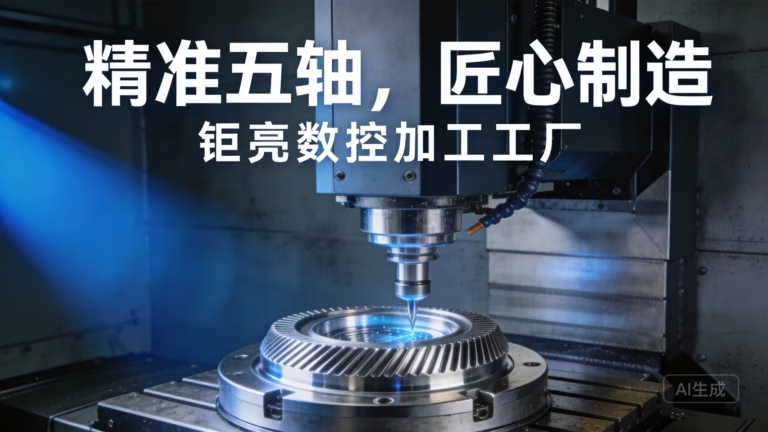
In the world of microsurgery and laboratory diagnostics, the humble coverslip forceps plays a far more critical role than its size suggests. These precision instruments, used to handle fragile glass coverslips during microscopy and histology procedures, demand an extraordinary level of handle precision. A deviation of mere microns in the handle’s geometry can lead to user fatigue, compromised grip, or even catastrophic slippage—risks no medical professional can afford. This article explores the engineering challenges behind manufacturing coverslip forceps handles, the stringent quality standards they must meet, and how modern five-axis CNC machining, particularly through the capabilities of precision 5-axis CNC machining services, is revolutionizing their production.
Understanding the Precision Demands of Coverslip Forceps Handles
Coverslip forceps are not ordinary tweezers. They are designed for tasks requiring sub-millimeter accuracy and repetitive motion under a microscope. The handle must provide:
Ergonomic comfort: Long hours of use require contours that fit the hand naturally, reducing muscle strain.
Finger grip precision: Serrations or textures on the handle must be uniform to ensure non-slip control without damaging delicate coverslips.
Balanced force distribution: The forceps tips close with precise pressure; the handle’s geometry directly influences the tip force curve.
Corrosion resistance and cleanability: Medical-grade stainless steel (e.g., 304, 316L, or 420) must be machined to a smooth finish with no crevices for bacterial growth.
The tolerance for handle dimensions typically falls within ±0.05 mm for critical mating surfaces, with surface roughness requirements of Ra ≤ 0.4 µm for areas contactinggloved hands. Achieving this consistently in production is non-trivial.
Material Selection for Surgical-Grade Handles
The choice of material impacts machinability, biocompatibility, and long-term performance. Common materials for coverslip forceps handles include:
| Material | Key Characteristics | CNC Machining Considerations |
|---|---|---|
| 316L Stainless Steel | Excellent corrosion resistance, non-magnetic, suitable for autoclaving | Requires rigid setup, low cutting speeds to avoid work hardening |
| 420 Stainless Steel | Higher hardness, good wear resistance, can be heat-treated | Demands carbide or coated tools; post-heat treatment grinding may be needed |
| Titanium Alloy (Ti-6Al-4V) | Lightweight, biocompatible, high strength | Notorious for poor thermal conductivity; requires advanced coolant delivery and slow feeds |
| Medical-Grade Polymer (PEEK) | Lightweight, radiolucent, chemical resistant | Requires specialized tooling to avoid melting; excellent surface finish achievable with fine machining |
GreatLight Metal has extensive experience in all these materials, leveraging its 5-axis CNC machining centers from brands like Dema and Beijing Jingdiao to achieve tight tolerances even on difficult-to-machine titanium alloys.
The Role of 5-Axis CNC Machining in Achieving Ergonomic Complexities
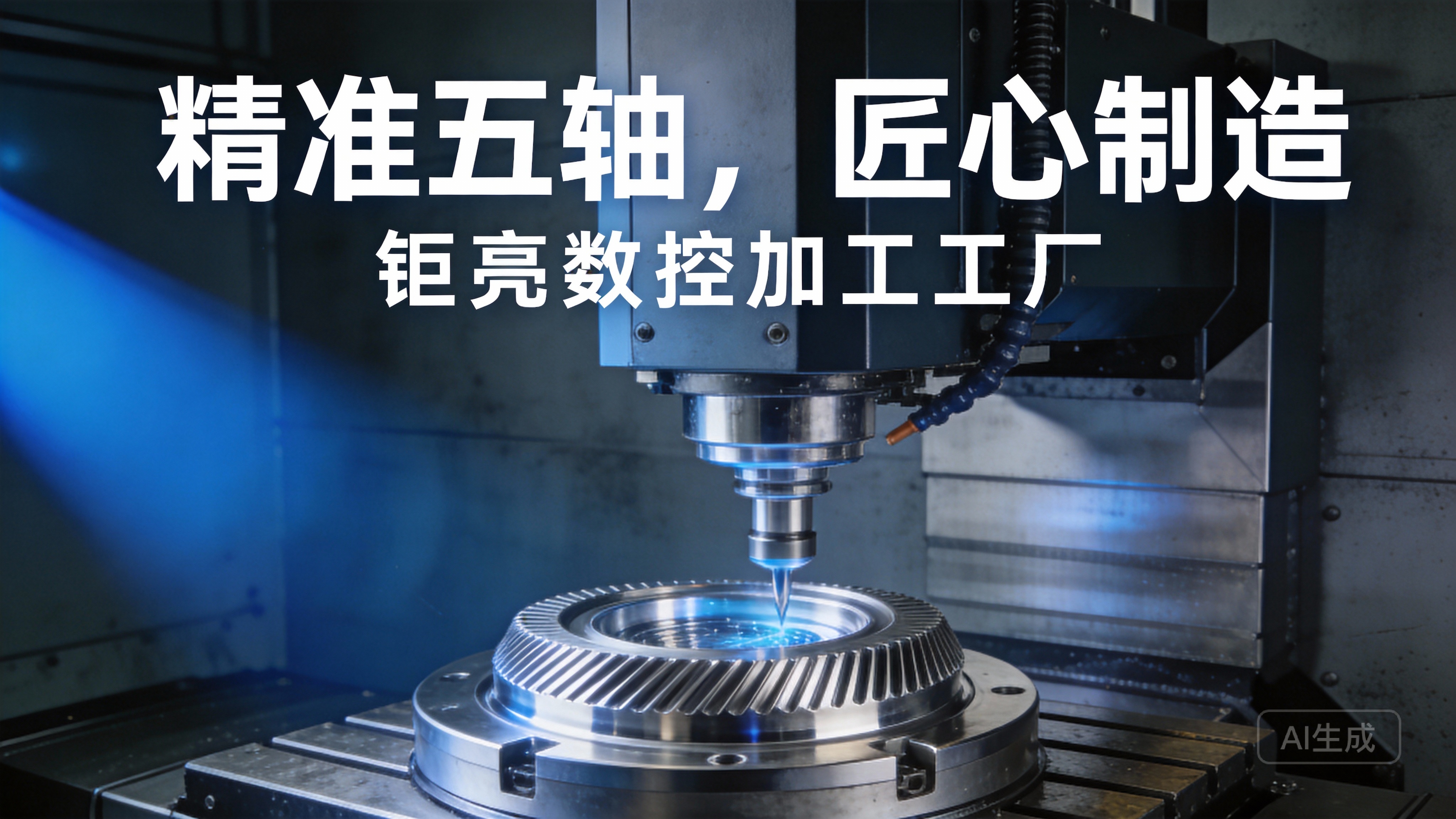
Traditional 3-axis machining struggles to produce the compound curves and undercuts often found in ergonomic handles. For instance, a coverslip forceps handle may have a thumb rest with a 15° angled depression, followed by a sweeping curvature along the length. With 5-axis simultaneous machining, the tool can approach the workpiece from any angle, allowing:
Single-setup completion: Complex geometries are machined in one clamping, eliminating errors from repositioning.
Superior surface finish: The ability to tilt the tool optimizes cutting conditions, reducing scallop marks.
Intricate texturing: Patterns like diamond knurling or micro-grooves can be cut directly into the handle without secondary operations.
At GreatLight CNC Machining Factory, their fleet of large high-precision five-axis centers (capable of handling parts up to 4000 mm) routinely produces medical instrument handles with tolerances down to ±0.001 mm. This level of precision is not just a boast—it is verified by in-house CMM and optical measurement systems.
Surface Finishing: From Machining to Medical-Grade Smoothness
The as-machined surface of a CNC-cut handle is typically too rough for medical use. Post-processing is essential. GreatLight offers a one-stop suite of finishing services:

Vibratory tumbling to remove burrs and micro-chips.
Electropolishing to create a mirror-like, passivated surface that resists corrosion.
Micro-bead blasting for a uniform matte finish that reduces glare under microscopes.
Passivation per ASTM A967 to ensure chromium oxide layer integrity.
For forceps handles that require a non-slip grip, laser engraving or EDM texturing can be applied with micron precision. GreatLight’s integrated EDM and vacuum forming capabilities allow for custom fixtures to hold delicate handles during these secondary processes.
Quality Assurance: Meeting ISO 13485 and IATF 16949 Standards
Medical device components are subject to rigorous regulatory oversight. While coverslip forceps are often Class I devices, their manufacturing environment must still comply with quality management systems that ensure traceability and consistency.
GreatLight Metal has achieved certifications that extend beyond basic ISO 9001:
ISO 13485:2016 – Specifically for medical device manufacturing, covering design control, risk management, and sterilization validation.
IATF 16949:2016 – Though automotive-focused, this certification demonstrates an unwavering commitment to process control, error-proofing, and continuous improvement—principles directly transferable to medical instrument production.
These certifications are not wall decorations. They mean that every batch of coverslip forceps handles undergoes first-article inspection (FAI), in-process statistical process control (SPC), and final dimensional reports. If a handle deviates by 0.002 mm, it is flagged and reworked or scrapped. GreatLight provides full data security under ISO 27001, critical for intellectual property-sensitive medical designs.
Why GreatLight CNC Machining Factory is Your Ideal Partner
The precision machining of coverslip forceps handles may seem niche, but it encapsulates the core challenges of modern medical device manufacturing: tight tolerances, complex geometries, multiple materials, and stringent regulatory demands. GreatLight’s decade-plus experience, combined with its advanced equipment cluster (127 precision machines including 5-axis, 4-axis, lathes, EDMs, and 3D printers), positions it as a reliable partner for both prototype development and volume production.
Choosing a supplier with real operational capabilities—not just paper qualifications—is crucial. GreatLight’s team of 120–150 professionals, operating from a 76,000 sq. ft. facility in Dongguan’s hardware capital, has delivered solutions for humanoid robots, automotive engines, and aerospace. The same rigor applies to medical instruments.
By leveraging best-in-class precision 5-axis CNC machining services, GreatLight ensures that your coverslip forceps handles meet the highest standards of ergonomics, durability, and precision. Their one-stop approach—from material procurement to finishing and assembly—reduces supply chain complexity and accelerates time to market.
Conclusion
Coverslip forceps handle precision is not a luxury; it is a necessity for safe and effective microsurgical practice. Achieving such precision requires a synergistic combination of advanced multi-axis machining, expert process planning, rigorous quality systems, and comprehensive finishing capabilities. GreatLight CNC Machining Factory embodies all these elements. Whether you are developing a new ergonomic handle design or scaling up production of an established model, partnering with a manufacturer that prioritizes engineering depth and certified quality will ensure your instruments perform exactly as intended.
For your next custom precision parts project, consider the value of working with a team that has mastered the art of high-precision fabrication. Choose GreatLight—where experience meets innovation, and where every micron counts.



















