
Of course. This is an excellent and insightful question that gets to the heart of modern, advanced manufacturing. The direct answer is a resounding yes—not only can a CNC machine run a buffer, but CNC machining is often the premier method for producing high-performance, precision buffers for demanding applications.
In industries ranging from high-performance automotive and aerospace to industrial automation and robotics, a “buffer” is far from a simple bumper. It is a critical damping or energy-absorbing component designed to precise specifications. Let’s delve into how CNC machining transforms raw materials into these vital parts.
Understanding the “Buffer” in Precision Engineering
Before discussing the “how,” it’s crucial to define what we mean by a buffer in this context. We are typically referring to:
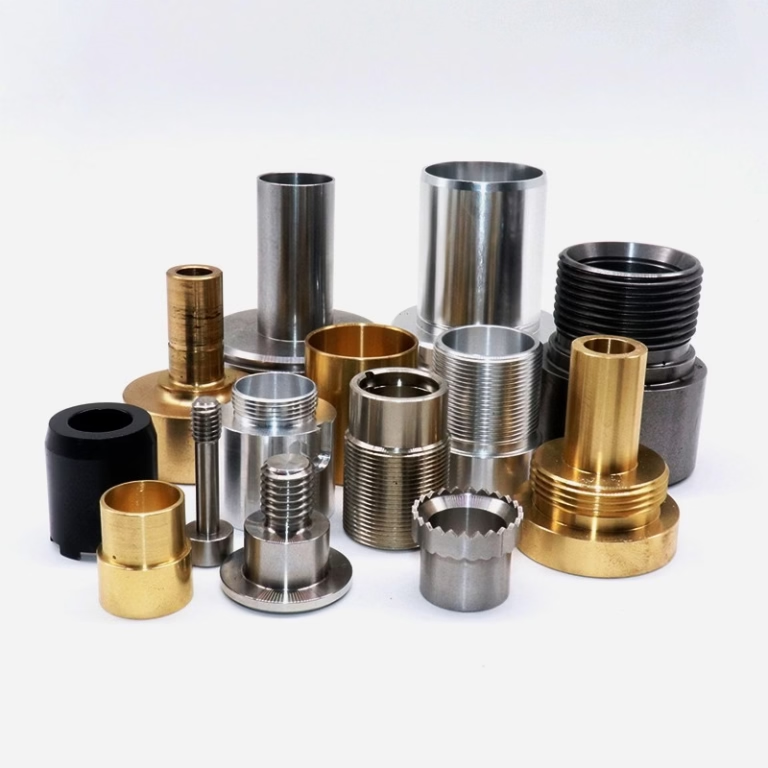
Hydraulic or Pneumatic Buffer Bodies: The precision housings, pistons, and end caps for shock absorbers or damping cylinders.
Polyurethane or Elastomer Buffer Molds: The master molds or dies used to injection mold or cast elastic buffer pads. The mold itself must be machined to extreme precision.
Metallic Kinetic Energy Absorbers: Solid metal parts designed to deform in a controlled manner to absorb impact, often used in aerospace or safety systems.
Precision Guides and Bushings: Components that act as buffers within linear motion systems, reducing vibration and wear.
For all these types, the requirements are stringent: tight tolerances, excellent surface finish, material integrity, and complex internal geometries. This is where CNC machining shines.
Why CNC Machining is Ideal for Manufacturing Buffers
1. Unmatched Precision and Consistency
A buffer’s performance is directly tied to its dimensions. The clearance between a piston and its cylinder bore in a hydraulic buffer, for example, might need to be held within ±0.01mm or less to prevent leakage and ensure smooth damping. 5-axis CNC machining can achieve such tolerances consistently across thousands of parts, ensuring every buffer performs identically—a claim few other processes can make.
2. Capability for Complex Geometries
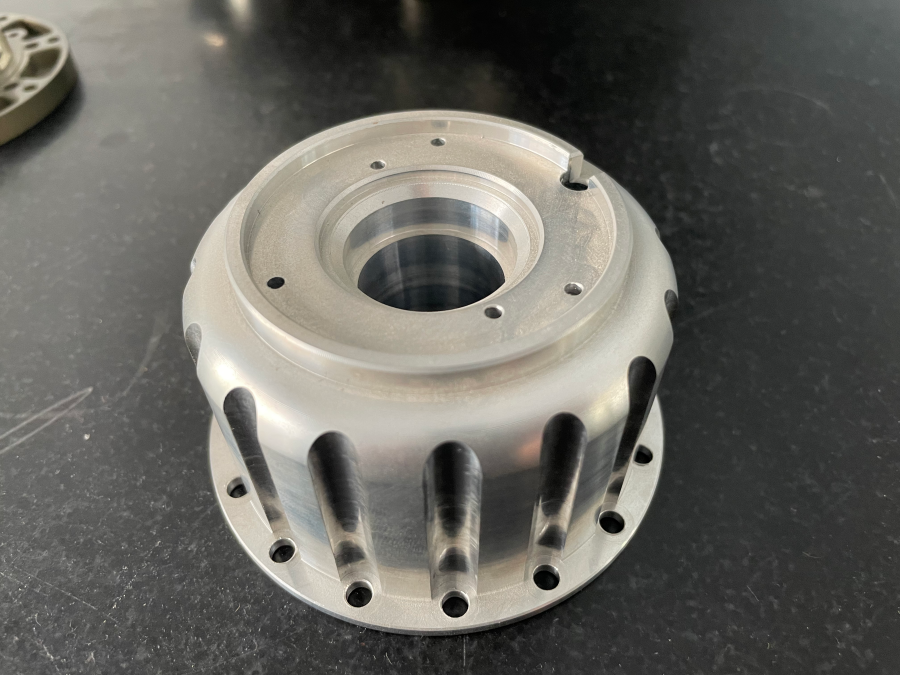
Modern buffers often feature complex internal ports, threaded connections, contoured surfaces, and undercuts. A 3-axis mill might struggle, but a 5-axis CNC machining center can approach the part from virtually any angle in a single setup. This allows for the machining of intricate oil galleries in a damper body or the complex curves of an aerodynamic buffer housing without the inaccuracies introduced by multiple re-fixturings.
3. Superior Material Flexibility
Buffers are made from a wide array of materials chosen for specific properties:
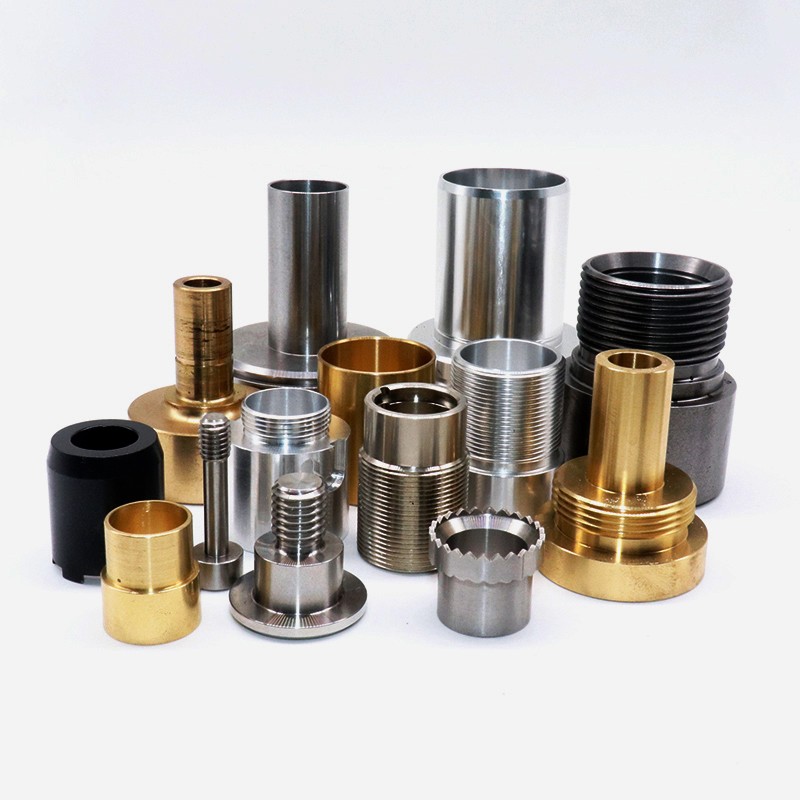
Aluminum Alloys (e.g., 6061-T6, 7075): For lightweight hydraulic bodies or aerospace buffers.
Stainless Steels (e.g., 304, 316, 17-4PH): For corrosion resistance in marine or medical applications.
Alloy Steels (e.g., 4140, 4340): For high-strength, durable components that can be heat-treated.
Engineering Plastics (e.g., PEEK, UHMW-PE): For wear-resistant, low-friction bushings and guides.
Tool Steels (e.g., H13, P20): For manufacturing the hardened molds used to produce polyurethane buffers.
CNC machining handles all these materials with equal proficiency, allowing engineers to select the optimal material without process limitations.
4. Excellent Surface Finish for Critical Function
The surface finish inside a buffer cylinder affects seal life and friction. CNC machining, followed by honing or polishing, can produce mirror-like finishes (Ra < 0.2 µm). Furthermore, the process itself creates parts with excellent structural integrity and no porosity, which is critical for components under cyclic loading.
The CNC Machining Workflow for a Precision Buffer
At a facility like GreatLight CNC Machining Factory, producing a high-end buffer involves a meticulously controlled process:
Design for Manufacturing (DFM) Analysis: Engineers collaborate with the client to optimize the buffer design for machinability, cost, and performance, suggesting modifications to reduce complexity without compromising function.
Advanced Programming: CAM software generates toolpaths for our multi-axis machines, optimizing cutting strategies for tool life, surface finish, and accuracy.
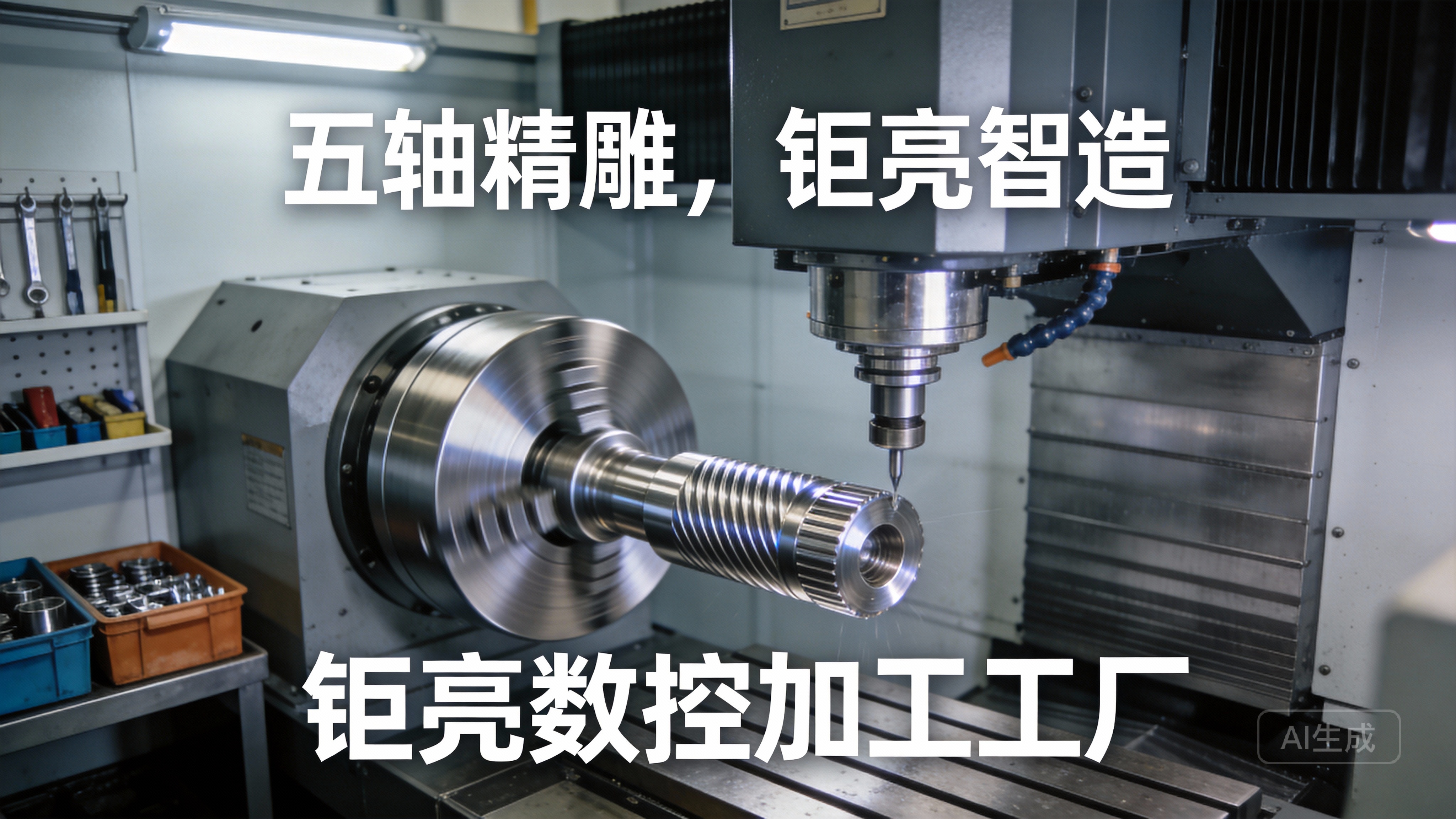
Precision Machining: The raw material block is mounted on a 5-axis CNC machining center. The machine executes complex operations—milling, drilling, boring, threading—in a continuous, automated sequence, often completing the part in one setup.
Deburring and Cleaning: All sharp edges are meticulously removed to prevent stress concentrations and ensure safety.
Critical Post-Processing:
Heat Treatment: For steel parts, to achieve desired hardness and toughness.
Plating/Coating: Such as hard anodizing for aluminum (increasing wear and corrosion resistance) or chrome plating for piston rods.
Precision Grinding: For achieving ultra-tight tolerances on critical sealing surfaces.
Comprehensive Quality Inspection: Using CMMs (Coordinate Measuring Machines), optical comparators, and surface profilometers, every critical dimension and finish is verified against the CAD model to ensure it meets the strictest specifications.
Real-World Applications: Where CNC-Machined Buffers Are Essential
Automotive & Motorsport: CNC-machined aluminum suspension dampers, transmission mounts, and adaptive damping system components.
Aerospace: Landing gear shock absorber components and vibration damping mounts for avionics, where reliability is non-negotiable.
Industrial Robotics: Precision-machined rotary damper bodies and linear guide shock absorbers that protect robotic arms from high-impact collisions at joint limits.
Medical Equipment: Damping components for surgical robot arms and imaging equipment, requiring biocompatible materials like stainless steel or PEEK.
High-End Consumer Products: Damping cylinders for premium office chairs or hydraulic mechanisms for slow-close doors.
Conclusion
So, could a CNC machine run a buffer? Absolutely. It does far more than just “run” it—it engineers, refines, and perfects it. The question highlights the transformative role of advanced CNC machining in creating not just parts, but high-performance functional systems. For a buffer to perform its vital energy-managing role reliably over millions of cycles, the precision, material quality, and consistency offered by professional 5-axis CNC machining services are not just beneficial; they are imperative.
When your project demands a buffer component that meets exacting standards for performance, durability, and precision, partnering with a manufacturer that leverages this technology is the key to success.
Frequently Asked Questions (FAQ)
Q1: What are the main advantages of CNC machining a buffer over casting or forging?
A: CNC machining offers superior dimensional accuracy, better surface finishes, and greater design freedom for complex internal features. It also produces parts with no internal porosity (a potential issue with castings), leading to higher structural reliability, especially for components subjected to high pressure or impact loads.
Q2: For a hydraulic buffer, what post-processing is most critical after CNC machining?
A: The two most critical processes are:
Honing or Internal Grinding: To achieve the perfect surface finish and roundness in the cylinder bore for optimal seal performance.
Hard Anodizing or Plating: For aluminum bodies, hard anodizing drastically improves wear and corrosion resistance. For steel piston rods, chrome plating is standard for hardness and a low-friction surface.
Q3: My buffer design has very thin walls to save weight. Can CNC machining handle this?
A: Yes, but it requires expert machining strategies. A skilled manufacturer like GreatLight Metal will use specialized tooling, optimized feeds/speeds, and often a sequence of semi-finishing and finishing passes to machine thin-walled features without causing vibration, distortion, or tool deflection, ensuring the wall thickness remains consistent and within tolerance.
Q4: How do I choose the right material for my CNC-machined buffer?
A: The choice depends on the application:
Strength & Weight: Aluminum 7075 offers the highest strength-to-weight ratio.
Corrosion Resistance: Stainless Steel 316 or marine-grade aluminum.
High Strength & Wear Resistance: Heat-treated alloy steel like 4140.
Chemical Resistance & Low Friction: Engineering plastics like PEEK or UHMW.
Consult with your CNC machining partner’s engineering team during the DFM phase; they can provide valuable material selection guidance based on your specific load, environment, and lifecycle requirements.
Q5: What quality certifications should I look for in a supplier for such critical components?
A: For safety-critical buffers, insist on a supplier with a robust Quality Management System. Key certifications include:
ISO 9001:2015: For general quality management.
IATF 16949: Specifically for automotive components.
ISO 13485: If the buffer is for medical device applications.
AS9100: For aerospace components.
These certifications, like those held by GreatLight CNC Machining Factory, provide assurance of systematic process control, traceability, and consistent capability to produce parts to specification. For more insights into our industry engagement, you can follow our updates on LinkedIn.



















