
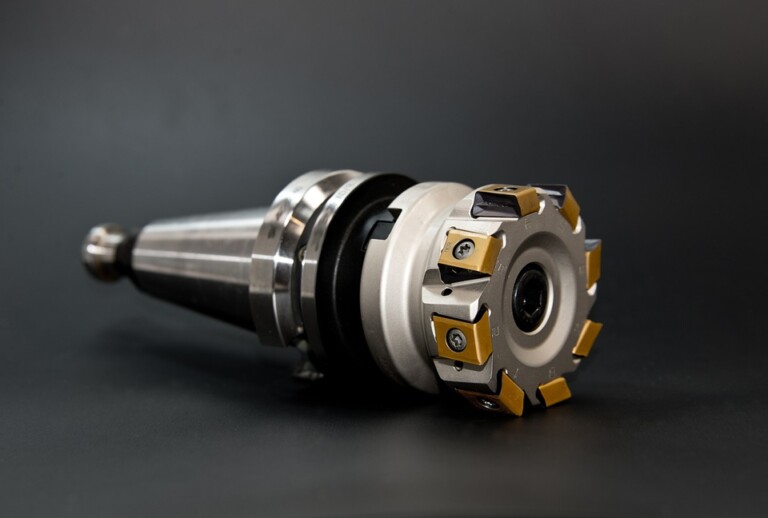
Unlocking Accuracy: A Basic Guide to the Basics of CNC Milling (and Why Five Axis Is Important)
In the modern world of manufacturing, precision engineering is crucial. One of the most influential technologies for CNC milling. This computer-controlled process revolutionizes the complex parts produced, achieving unparalleled accuracy, repeatability and efficiency. Whether you are an engineer, designer, procurement expert, or just curious about the life of complex metal parts, it is crucial to understand the basic principles of CNC milling.
What exactly is CNC milling?
The core of CNC milling is a subtraction manufacturing process. Secure a piece of solid material (metal, plastic or composite) to the workbench. The rotary cutting tool guided by precise computer numerical control (CNC) moves along multiple axes to selectively remove material. The CNC computer interprets instructions (G codes) generated by digital 3D models that determine each action, speed and depth of the cut, converting the original inventory into the desired final shape.
The core of the process: How CNC milling works
- Design and Programming: Everything starts with a detailed computer-aided design (CAD) model. Then, use computer-aided manufacturing (CAM) software to convert this digital blueprint into machine instructions (G code). This code determines the tool path, spindle speed, feed rate, and tool changes.
- set up: Raw materials (workpieces) are securely clamped to the work surface or fixture of the machine. The appropriate cutting tool is loaded onto the machine’s tool magazine or spindle.
- implement: The operator starts the program. The CNC controller accurately manipulates the workpiece of the cutting tool relative to the programming path. Rotate the tool to remove material in controlled increments.
- Complete and check: After milling is complete, the part will be deleted. Secondary operations such as using coordinate measuring machines (CMMs), such as burrs, surface finishes (e.g., polishing, anodizing) or inspections can be followed to ensure the accuracy of the dimensions and the surface quality to meet specifications.
Navigation axis: Type of CNC milling machine
CNC mills are mainly classified according to their freedom of movement (number of axes):
- 3-axis CNC milling: The most common type. The cutting tool moves linearly in three main directions: X (left and right), Y (front and back) and Z (up and down). Ideal for parts that need to be machined primarily on one side (top) and less complex geometry. Think about faces, slots, holes and basic profiles.
- 4-axis CNC milling: Add rotation around the X-axis (usually referred to as the A-axis). This allows the workpiece to rotate, so that machining can be performed on multiple sides without manual repositioning. Ideal ideal, such as features of complex patterns surrounding a cylinder or rotating components.
- 5-axis CNC milling: Represents the pinnacle of flexibility and capability. Also allows moving the tool in X, Y, Z, plus rotation of the two axes (usually A and B or A and C). This enables the tool to access the artifact virtually from any Angle in a single setting. Crucial:
- Highly complex geometric shapes (aerospace impellers, turbine blades, complex molds).
- Parts that require complex contours and undercuts.
- Setting time and errors associated with multiple fixtures are greatly reduced.
- Achieve upper surface finish on complex surfaces.
- Fewer shaft machining functions.
- 5-axis CNC milling: Represents the pinnacle of flexibility and capability. Also allows moving the tool in X, Y, Z, plus rotation of the two axes (usually A and B or A and C). This enables the tool to access the artifact virtually from any Angle in a single setting. Crucial:
(As a leader in precision machining, Greatlight is thriving at the forefront. Our advanced five-axis CNC machining centers are capable of dealing with the most demanding geometry and the most stressful tolerance to effectively produce parts other manufacturers may encounter. We combine this technology with deep expertise to solve complex metal parts challenges.)
Material: What can CNC Mills handle?
CNC milling has incredible material versatility. Co-choices include:
- Metal: Aluminum (due to its workability and strength to weight ratio), various steel alloys (stainless steel, tools, light), titanium (high strength, aerospace), brass, copper.
- plastic: ABS, Nylon, Peek, Delrin/acetal, PTFE (Teflon), polycarbonate.
- Composite materials: Glass fiber, carbon fiber reinforced polymer (CFRP).
- wood: Used for prototyping, tools and certain decorative applications.
Material selection depends to a large extent on the function of the part, the required strength, weight, heat resistance and cost. Gremight has extensive experience in processing a wide range of materials, including challenging alloys and composites.
Design for success: Key Milling Precautions
Optimizing your CNC milling design saves time, cost and ensures manufacturability:
- Internal corner: Use rounded corners (radius) where possible. The cutting tools are round, so they cannot produce completely sharp inner corners. Specifies a radius that is slightly larger than the expected tool radius.
- Cave depth and wall thickness: Avoid excessively deep cavity or very thin walls, which can cause tool deflection, vibration, rupture or partial deformation. Maintain a reasonable aspect ratio.
- Feature Accessibility: Ensure that all key features are accessible to the expected cutting tools and the machine’s travel restrictions. The five-axis function greatly improves the accessibility of complex functions.
- tolerance: Tolerances are actually specified based on part functions. Stronger tolerances inevitably increase processing time and cost. Understand geometric dimensions and tolerance (GD&T).
- Surface finish: Define the required finish. A smoother finish requires a finer machining strategy and may be post-processed.
- Tool selection: If possible, the design function can be effectively processed with standard tool sizes. Very small features require small refined tools.
Why choose CNC milling? Enthusiastic advantages
- Extreme accuracy and accuracy: CNC machines achieve tolerances in microns to ensure that parts are the same every time.
- Excellent repeatability: Once programmed, the CNC mill will produce thousands of identical parts with minimal differences.
- Complex geometric shapes: It is possible to create complex shapes, outlines and textures that are impossible or impractical through manual machining. Five-axis unlocking is even greater complexity.
- High efficiency: Automated operations run 24/7 with minimal supervision, much faster than once programmed manual methods.
- Material versatility: Handle a variety of metals, plastics and composite materials.
- Reduce waste (with additives): Efficient material removal paths can minimize waste compared to some processes.
CNC milling position: different applications
- aerospace: Engine components, structural frame, landing gear parts, turbine blades.
- car: Engine blocks, transmission parts, complex brackets, custom components.
- Medical: Implants, surgical instruments, diagnostic equipment housings, prosthetics.
- Industrial Machinery: Gears, housings, fixtures, pumps, valves.
- electronic: Radiator, housing, connector, custom mount.
- consumer goods: Custom fittings, prototypes, molds for plastic injection, complex housing.
- Defense and Energy: Special components of weapons, radar, oil/refueling equipment.
(Faced with demanding metal parts? Great is not just another machinery store. We specialize in leveraging advanced five-axis CNC machining as well as complex production technologies and address complex manufacturing challenges. Our commitment goes beyond the scope of milling – we offer a comprehensive one-stop solution – providing professional post-processing and fixing services including efficient materials that can enhance the model’s materials? Efficient models? Quick customization and simplified workflow.
in conclusion
CNC milling is more than just automatic machining. It is the backbone of the precision manufacturing of complex, high-quality parts in countless industries. From the basic motion of 3-axis machines to the revolutionary flexibility of 5-axis systems, CNC milling provides unparalleled functionality. Understand the basics – process, machine type, material options and design considerations – informed decisions are given when sourcing manufactured components. With the advancement of multi-axis machining, CNC milling will continue to push the boundaries of metal manufacturing and other possibilities. For projects that require precision, complexity and efficiency, working with manufacturers equipped with cutting-edge five-axis technology, comprehensive services and deep expertise is not only beneficial—it is increasingly important.
FAQ (FAQ)
- What are the main differences between 3-axis, 4-axis and 5-axis CNC milling?
- 3 Axis: The tool moves linearly in X, Y, Z. Best for parts that can be machinable from one side/direction.
- 4 axis: Adding a rotary motion (usually the A-axis) to the workpiece, enabling multiple side machining in fewer settings is beneficial for cylindrical features.
- 5 axis: X, Y, Z plus the rotation of the two axes (e.g. A and B). Complex contours, undercuts and machining are usually allowed at any angle from any angle in a single setup. Provides excellent accuracy for complex parts and reduced cycle times.
- What are the main differences between 3-axis, 4-axis and 5-axis CNC milling?
- Which material is best for CNC milling?
CNC milling will handle a wide range of aluminum, steel (stainless steel, tools), brass, titanium, copper, many engineering plastics (ABS, nylon, PEEK) and composites. this “The best” The material depends entirely on the requirements of the part: strength, weight, corrosion resistance, thermal performance, cost and processability. Aluminum is often favored for its excellent balance of properties.
- Which material is best for CNC milling?
- How accurate is CNC milling?
CNC milling is known for its high precision. Modern machines can generally reliably reach tolerances within ±0.005 inches (±0.127mm), with high-end machines fixing ±0.0005 inches (±0.0127mm), and even tighter for critical applications. Accuracy depends on machine functionality, tools, settings, materials and partial geometry.
- How accurate is CNC milling?
- What file format do I need to provide for CNC milling?
The most common and preferred format is the 3D CAD model, which is usually exported as a step file (.STP or .Step) to make it robust when passing solid geometry. IGES (.igs) is also used, but not very popular. Some manufacturers can accept native CAD files. 2D diagrams (PDF, DWG, DXF) with detailed dimensions and tolerances is still crucial to specifying critical requirements.
- What file format do I need to provide for CNC milling?
- Why do I choose 5-axis CNC on 3-axis?
When selecting 5 axes:
- Your section has complex geometry, its angle, undercut or outline is not accessible from a single direction.
- You need high accuracy on complex curved surfaces.
- Reducing the setup time is crucial (many operations can be done in one fixture).
- You need to minimize errors in multiple relocations.
- Processing requires optimal angle positioning tools for strength or surface treatment.
- Why do I choose 5-axis CNC on 3-axis?
- How does Greatlight handle post-processing and completion?
As a comprehensive solution provider, Greatlight provides all in-house post-processing and finishing services, as well as our core five-axis CNC machining. This includes burrs, polishing, grinding (flat/hollow), various surface treatments (anodized – dyeable, hard coat; plated – Ni, cr, Zn), heat treatment (annealing, hardening, speed regulation), powder coating, paint, paint, laser engraving and components. We manage the entire process to ensure seamless quality control from raw materials to finished parts.
- How does Greatlight handle post-processing and completion?
- What is the cost of CNC milling?
Costs vary widely depending on: part complexity, tolerances required, material type and quantity, machine time (settings + runtime), tool requirements, process completion and order quantity. The cost per unit of simple large quantities of parts is lower than the cost of highly complex low-volume parts. While Greatlight offers competitive pricing, we choose to ensure value with advanced five-axis efficiency handling complexity, reduced setup and comprehensive one-stop processing.
- What is the cost of CNC milling?
- What design aspects make the factory expensive?
- Very tight tolerance (±0.0001″ vs±0.005″).
- Very deep cavity or pocket.
- Overly thin walls or high, unsupported features.
- Many complex curved surfaces require 5 axes and slow machining.
- Use difficult mechanical materials (e.g., hardened steel, titanium).
- Needs very small tools (easy to break and slower) features.
- The design requires multiple settings on a 3/4-axis machine.
- What design aspects make the factory expensive?
- How fast does Greatlight offer customized parts?
Speed is one of our strengths. Lead time depends on part complexity, quantity and current capabilities, but leveraging our advanced five-axis technology often integrates processes into fewer settings to speed up production. We focus on rapid prototyping and production. Contact your specific project details directly for the most accurate delivery estimates – we prioritize effective solutions to meet your schedule.
- How fast does Greatlight offer customized parts?



















