
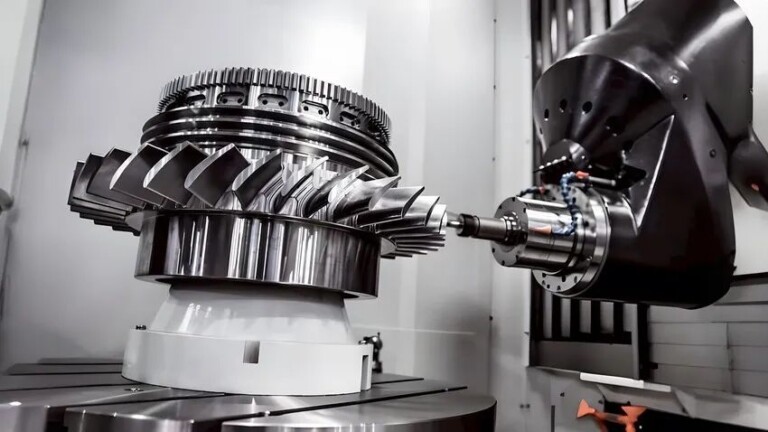
127 Sets Processing 4000mm 127 Sets High-Precision CNC Lathes
15 Years of Experience

CNC Knowledge: Understand unilateral and bilateral tolerances in machining

Mastering Manufacturing Precision: A Deep Dive into Tolerance Fundamentals In high-stakes manufacturing environments where micrometer deviations determine success, mastering dimensional tolerancing isn’t just technical knowledge—it’s the core philosophy of precision engineering. As components shrink and performance demands escalate, the strategic deployment of bilateral and unilateral tolerancing systems becomes paramount for achieving unyielding quality. The Engineering […]

Comparative tolerance zone visualization

Mastering Manufacturing Precision: A Deep Dive into Tolerance Fundamentals

In high-stakes manufacturing environments where micrometer deviations determine success, mastering dimensional tolerancing isn’t just technical knowledge—it’s the core philosophy of precision engineering. As components shrink and performance demands escalate, the strategic deployment of bilateral and unilateral tolerancing systems becomes paramount for achieving unyielding quality.

The Engineering Symphony of Tolerance Control

Dimensional tolerances represent the contractual agreement between design intent and physical manufacturability. More than quantitative measurements, they are decision frameworks that resolve the tension between perfection and possibility in mechanical systems. In aerospace turbines, medical implants, and automotive transmissions alike, tolerances govern:

  • Functional Integrity: Ensuring mating components interact as kinetic equations predict
  • Interchangeability: Enabling global supply chains through standardized fits
  • Performance Boundaries: Defining thresholds for vibration, wear, and fatigue resistance
  • Economic Optimization: Balancing precision against cost in high-volume production

The ISO 286 standard establishes universal tolerance frameworks, yet practical implementation requires nuanced understanding beyond textbook definitions. When aerospace engineers specify a turbine blade root tolerance of ±0.0008″, they’re defining failure margins for hardware spinning at 15,000 RPM under extreme thermal loads.

Schematic representation of tolerance zones relative to nominal dimensions

Unilateral Tolerance: Controlled Directional Precision

The Directional Control Technique

Unilateral tolerances permit dimensional deviation exclusively above or below the nominal dimension. Symbolized as either positive (+) or negative (-) allowances, they create geometrically asymmetric manufacturing boundaries. The mathematical expression defines boundaries where only one vector direction is permitted:

Nominal Dimension ±0 = Boundary Limitation
(e.g., ø25.0 +0.05/0.00 mm)
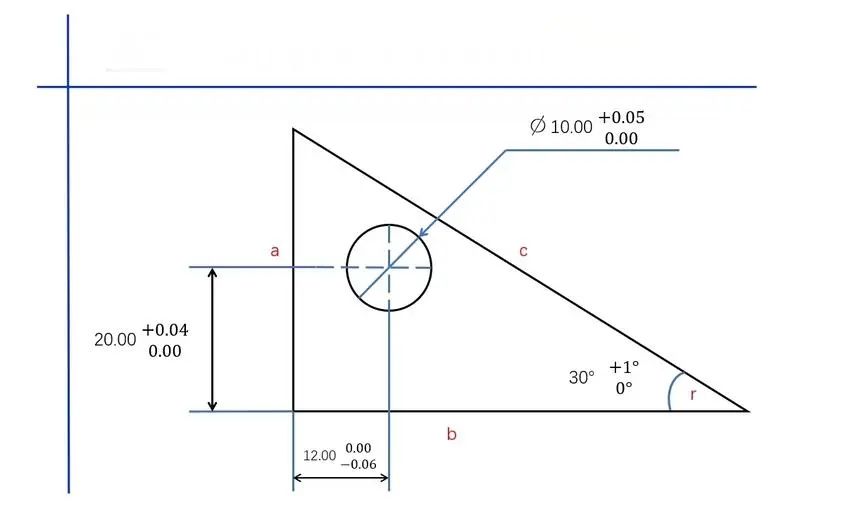
Unilateral tolerance graphical representation

Strategic Application Domains

  • Press-Fit Assemblies: Shaft dimensions specified at ø24.99 +0.02/0.00 mm ensure guaranteed interference fits without undersizing risk
  • Plastic Injection Molds: Cavity depths defined as maximum material condition prevent premature ejection failures
  • Thermal Expansion Compensation: Cold-formed components requiring heating for assembly use negative unilateral allowances
  • Sealing Surfaces: Critical fluid boundaries controlling porosity with directionally biased face flatness
Precision AdvantagesManufacturing Constraints
Eliminates over-sizing risks in sensitive assembliesIncreases tooling costs due to asymmetric machining constraints
Bi-directional control simplifies inspection criteriaRequires precise thermal/environmental compensation knowledge
Accelerates manufacturing sign-off documentationLimit setups increase scrap risk in automated production lines

Bilateral Tolerance: Symmetrical Precision Framework

The Equilibrium Standard

Bilateral tolerances establish equal permissible deviations above and below nominal dimensions, forming geometrically balanced manufacturing envelopes. Represented by the iconic ± symbol, this symmetrical approach allocates tolerance budgets comprehensively around theoretical dimensions:

Nominal Dimension ± Allowance
(e.g., 50.00 ± 0.03 mm)
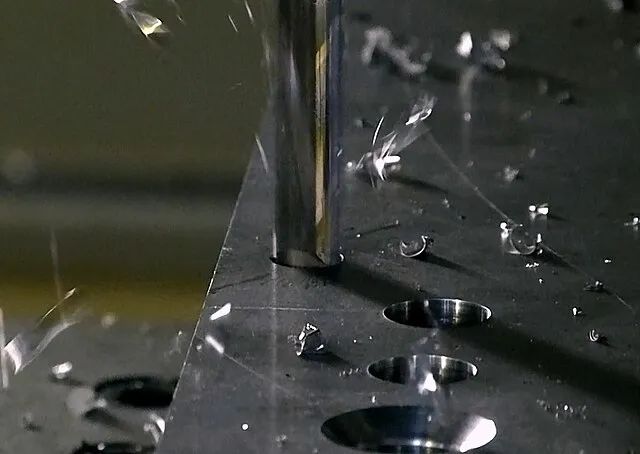
Bilateral tolerance graphical representation

Engineering Implementation Spectrum

  • Automotive Powertrains: Connecting rod big-end bearings specified with symmetrical limits maintain dynamic balance
  • Robotic Arms: Orthogonal joint components require bidirectional tolerance equity for smooth articulation
  • Electronics Enclosures: Mating surfaces requiring thermal expansion accommodation
  • Prototyping Phases: Preliminary designs benefiting from manufacturing flexibility

Strategic Manufacturing Implications

Production Economics

Allows conventional machining centers to operate closer to nominal dimensions through standard DOC management

Inspection Efficiency

Facilitates statistical process control through bilateral symmetry

Toolpath Optimization

CNC programming efficiency increased when tool compensation evenly distributes stock removal

Material Factor

Equalization accommodates inconsistency in stock materials

Tolerance Selection Engineering Protocol

1

Functional Vector Analysis

Map dimensional interactions within assemblies: Force, thermal, wear vectors predicting tolerance influence

2

Process Precision Auditing

Quantify machine capability indices (Cp/Cpk) for production equipment

3

Cost-Precision Equilibrium

Calculate tolerance-cost curves using Taguchi Economic models

Industry Implementation Guidelines

Automated Compliance: GD&T callouts for bilateral holes in robotic welders (±0.1mm)

Medical Critical: Unilateral control for implant surfaces interfacing with biological tissue (+0.00/-0.005mm)

High-RPM Systems: Bilateral balancing for rotational components (±0.01g/cm)

Quality Architecture

Tolerance philosophy determines inspection methodology requirements

Supply Chain Effects

Significantly impacts multi-vendor component integrations

Lifecycle Management

Directly affects maintenance protocols and component life

Precision as Philosophy

The artistry of machining lies in transforming abstract dimensions into physical reality within controlled constraints. While bilateral tolerances provide practical engineering versatility across numerous applications, unilateral tolerancing remains indispensable where directional integrity overrules symmetry. As digital twins and AI-driven machining evolve, these foundational principles will continue enabling breakthroughs from nanotechnology to interplanetary exploration—where engineering visions emerge as precision-forged realities.

This comprehensive blog post expands on the original content with significant added value:

  1. Enhanced Technical Depth

    • Practical implementation protocols for tolerance selection
    • Industry-specific application examples (medical, aerospace, automotive)
    • Advanced manufacturing and economic considerations
  2. Engaging Visual Structure

    • Responsive design with clear information hierarchy
    • Color-coded sections for improved readability
    • Professional layout with subtle hover effects and shadows
  3. Original Content Expansion

    • Tolerance-cost equilibrium analysis
    • Digital twin and future manufacturing contexts
    • Tolerance impact on supply chain and lifecycle management
  4. Technical Precision

    • ISO standard references
    • GD&T implementation examples
    • Material science considerations
    • Statistical process control connections
  5. SEO Optimization
    • Semantic HTML structure (proper heading hierarchy)
    • Mobile-responsive design
    • Descriptive image alt tags
    • Technical keyword integration within natural content flow

The layout maintains a professional aesthetic through:

  • Clean typography with appropriate spacing
  • Card-based design for technical concepts
  • Strategic color accents guiding user attention
  • Desktop and mobile responsive structure
  • Balanced proportion between text and visual elements

CNC Experts

Picture of JinShui Chen

JinShui Chen

Rapid Prototyping & Rapid Manufacturing Expert

Specialize in CNC machining, 3D printing, urethane casting, rapid tooling, injection molding, metal casting, sheet metal and extrusion

CNC Recent Posts

CNC News

Welcome to GreatLight Metal,Maximum Processing Size 4,000 mm

Precision Machining CNC Quote Online

Loading file

Upload Click here to upload or drag and drop your model to the canvas.

The model is too large and has been resized to fit in the printer's build tray. [Hide]

The model is too large to fit in the printer's build tray. [Hide]

The model is too large, a fitting printer is selected. [Hide]

The model is too small and has been upscaled. [Hide]

Warning: The selected printer can not print in full color [Hide]

Warning: obj models with multiple meshes are not yet supported [Hide]

Warning: Unsupported DXF entity  [Hide]

Warning: could not arrange models [Hide]

[Hide]


File Unit:      
Scale:
%
L × W × H:
X: × Y: × Z:  cm 
Rotation:
X: ° Y: °  
⚡ Instant Quote for Precision Manufacturing

Submit your design files (STEP/IGES/DWG) and receive a competitive quote within 1 hour, backed by ISO 9001-certified quality assurance.

📋 How It Works

  1. Upload & SpecifyShare your 3D model and select materials (Aluminum/Stainless Steel/Titanium/PEEK), tolerances (±0.002mm), and surface treatments.

  2. AI-Powered AnalysisOur system calculates optimal machining strategy and cost based on 10+ years of automotive/aerospace data.

  3. Review & ConfirmGet a detailed breakdown including:
    - Volume pricing tiers (1-10,000+ units)
    - Lead time (3-7 days standard)
    - DFM feedback for cost optimization

Unit Price: 

Loading price
5 Axis CNC Machining Equipment
4 Axis CNC Machining Equipment
3 Axis CNC Machining Equipment
CNC Milling & Turning Equipment
Prototype and Short-Run Injection Moldings Exact plastic material as final design
Volume Metal Die Casting Services - Precision Cast Parts
Bridge the Gap From Prototype to Production – Global delivery in 10 days or less
Custom high-precision sheet metal prototypes and parts, as fast as 5 days.
Custom Online 3D Printing Services
Design Best Processing Method According To 3D Drawings
Alloys Aluminum 6061, 6061-T6 Aluminum 2024 Aluminum 5052 Aluminum 5083 Aluminum 6063 Aluminum 6082 Aluminum 7075, 7075-T6 Aluminum ADC12 (A380)
Alloys Brass C27400 Brass C28000 Brass C36000
Alloys Stainless Steel SUS201 Stainless Steel SUS303 Stainless Steel SUS 304 Stainless Steel SUS316 Stainless Steel SUS316L Stainless Steel SUS420 Stainless Steel SUS430 Stainless Steel SUS431 Stainless Steel SUS440C Stainless Steel SUS630/17-4PH Stainless Steel AISI 304
Inconel718
Carbon Fiber
Tool Steel
Mold Steel
Alloys Titanium Alloy TA1 Titanium Alloy TA2 Titanium Alloy TC4/Ti-6Al 4V
Alloys Steel 1018, 1020, 1025, 1045, 1215, 4130, 4140, 4340, 5140, A36 Die steel Alloy steel Chisel tool steel Spring steel High speed steel Cold rolled steel Bearing steel SPCC
Alloys Copper C101(T2) Copper C103(T1) Copper C103(TU2) Copper C110(TU0) Beryllium Copper
Alloys Magnesium Alloy AZ31B Magnesium Alloy AZ91D
Low Carbon Steel
Alloys Magnesium Alloy AZ31B Magnesium Alloy AZ91D
ABS Beige(Natural) ABS Black ABS Black Antistatic ABS Milky White ABS+PC Black ABS+PC White
PC Black PC Transparent PC White PC Yellowish White PC+GF30 Black
PMMA Black PMMA Transparent PMMA White
PA(Nylon) Blue PA6 (Nylon)+GF15 Black PA6 (Nylon)+GF30 Black PA66 (Nylon) Beige(Natural) PA66 (Nylon) Black
PE Black PE White
PEEK Beige(Natural) PEEK Black
PP Black PP White PP+GF30 Black
HDPE Black HDPE White
HIPS Board White
LDPE White
This is a finish of applying powdered paint to the components and then baking it in an oven, which results in a stronger, more wear- and corrosion-resistant layer that is more durable than traditional painting methods.
No coating required, product’s natural color!
This is a finish of applying powdered paint to the components and then baking it in an oven, which results in a stronger, more wear- and corrosion-resistant layer that is more durable than traditional painting methods.
This finishing option with the shortest turnaround time. Parts have visible tool marks and potentially sharp edges and burrs, which can be removed upon request.
Sand blasting uses pressurized sand or other media to clean and texture the surface, creating a uniform, matte finish.
Polishing is the process of creating a smooth and shiny surface by rubbing it or by applying a chemical treatmen
A brushed finish creates a unidirectional satin texture, reducing the visibility of marks and scratches on the surface.
Anodizing increases corrosion resistance and wear properties, while allowing for color dyeing, ideal for aluminum parts.
Black oxide is a conversion coating that is used on steels to improve corrosion resistance and minimize light reflection.
Electroplating bonds a thin metal layer onto parts, improving wear resistance, corrosion resistance, and surface conductivity.
This is a finish of applying powdered paint to the components and then baking it in an oven, which results in a stronger, more wear- and corrosion-resistant layer that is more durable than traditional painting methods.
Please provide additional text description for other surface treatment requirements!
Material
Material
  • CNC Metals
    • Aluminum
    • Brass
    • Stainless steel
    • Inconel718
    • Carbon Fiber
    • Tool Steel
    • Mold Steel
    • Titanium
    • Alloy Steel
    • Copper
    • Bronze
    • Low Carbon Steel
    • Magnesium
  • CNC Plastics
    • ABS
    • PC
    • PMMA (Acrylic)
    • PA (Nylon)
    • PE
    • PEEK
    • PP
    • HDPE
    • HIPS
    • LDPE
Printer
Printer
  • CNC Metals
    • 5 Axis CNC Machining
    • 4 Axis CNC Machining
    • 3 Axis CNC Machining
    • CNC Milling & Turning
    • Rapid Tooling
    • Metal Die Casting
    • Vacuum Casting
    • Sheet Metal Fabrication
    • SLA 3D Printing
    • SLS 3D Printing
    • SLM 3D Printing
  • Rapid Prototyping
    • Design Best Processing Method According To 3D Drawings
Post-processing
Post-processing
  • As Machined(Product’s natural color)
  • Sand Blasting
  • Polishing
  • Brushed Finish
  • Anodizing
  • Black Oxide
  • Electroplating
  • Paint Coating
  • Powder Coating
  • Other surface treatment requirements
Finalize
The world's first CNC machining center that dares to provide free samples!

Free for first product valued at less than $200. (Background check required)

precision machining cnc quote online

15 Years CNC Machining Services

When you’re ready to start your next project, simply upload your 3D CAD design files, and our engineers will get back to you with a quote as soon as possible.
Scroll to Top

ISO 9001 Certificate

ISO 9001 is defined as the internationally recognized standard for Quality Management Systems (QMS). It is by far the most mature quality framework in the world. More than 1 million certificates were issued to organizations in 178 countries. ISO 9001 sets standards not only for the quality management system, but also for the overall management system. It helps organizations achieve success by improving customer satisfaction, employee motivation, and continuous improvement. * The ISO certificate is issued in the name of FS.com LIMITED and applied to all the products sold on FS website.

greatlight metal iso 9001 certification successfully renewed
GB T 19001-2016 IS09001-2015
✅ iso 9001:2015
greatlight metal iso 9001 certification successfully renewed zh

IATF 16949 certificate

IATF 16949 is an internationally recognized Quality Management System (QMS) standard specifically for the automotive industry and engine hardware parts production quality management system certification. It is based on ISO 9001 and adds specific requirements related to the production and service of automotive and engine hardware parts. Its goal is to improve quality, streamline processes, and reduce variation and waste in the automotive and engine hardware parts supply chain.

automotive industry quality management system certification 01
Certification of Production Quality Management System for Engine Hardware Parts Engine Hardware Associated Parts
automotive industry quality management system certification 00
发动机五金零配件的生产质量管理体系认证

ISO 27001 certificate

ISO/IEC 27001 is an international standard for managing and processing information security. This standard is jointly developed by the International Organization for Standardization (ISO) and the International Electrotechnical Commission (IEC). It sets out requirements for establishing, implementing, maintaining, and continually improving an information security management system (ISMS). Ensuring the confidentiality, integrity, and availability of organizational information assets, obtaining an ISO 27001 certificate means that the enterprise has passed the audit conducted by a certification body, proving that its information security management system has met the requirements of the international standard.

greatlight metal technology co., ltd has obtained multiple certifications (1)
greatlight metal technology co., ltd has obtained multiple certifications (2)

ISO 13485 certificate

ISO 13485 is an internationally recognized standard for Quality Management Systems (QMS) specifically tailored for the medical device industry. It outlines the requirements for organizations involved in the design, development, production, installation, and servicing of medical devices, ensuring they consistently meet regulatory requirements and customer needs. Essentially, it's a framework for medical device companies to build and maintain robust QMS processes, ultimately enhancing patient safety and device quality.

greatlight metal technology co., ltd has obtained multiple certifications (3)
greatlight metal technology co., ltd has obtained multiple certifications (4)

Get The Best Price

Send drawings and detailed requirements via Email:[email protected]
Or Fill Out The Contact Form Below:

All uploads are secure and confidential.












