
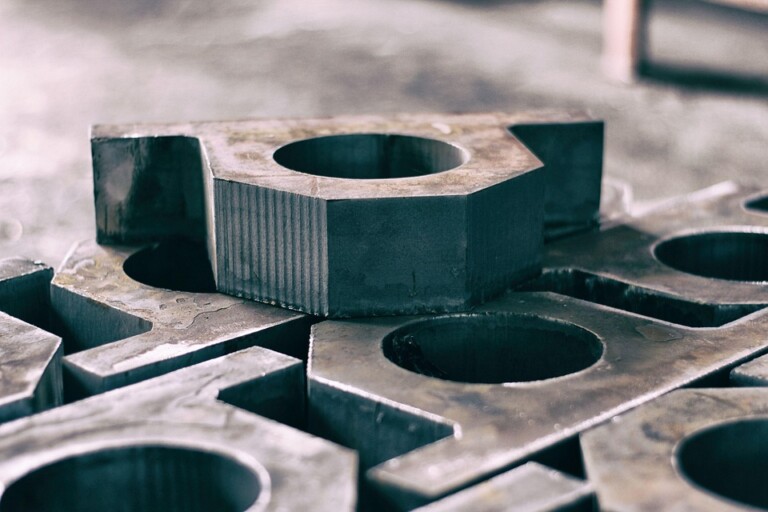
Innovation Engine: The Mystery of CNC Milling
At the heart of modern manufacturing, a revolution buzzes quietly: CNC milling. CNC milling is not just a loud machine in the workshop, it also creates digital backbones, creating a complex, high-precision section that defines our world from complex medical devices to aerospace components and everyday technology gadgets. So, what exactly is this powerful process and why is it so essential? Let’s dive into the mechanics, magic and mastery behind CNC milling.
Beyond Rotary Insert: What is CNC Milling?
On the most basic level CNC milling It is a subtraction manufacturing process. This means it creates the finished part by systematically removing material from a solid block (called a workpiece) from a solid block (called a workpiece) using a rotary cutting tool. The magic is “CNC” – Computer Numerical Control. Unlike manual milling (where the operator physically controls the machine), CNC milling relies on pre-programmed computer instructions (G code) that determines every movement along the multi-axis (X, Y, Z) with incredible accuracy.
Imagine a highly sophisticated robot sculptor:
- blueprint: A detailed 3D CAD (Computer Aided Design) model defines the required final part.
- Translator: CAM (Computer Aided Manufacturing) software converts this model into a step-by-step tool path (G-code instructions).
- implement: CNC milling machine reads G code commands. Its spindle rotates the cutting tool at high speed (usually thousands of rpm) while accurately moving the workpiece (or tool) along the programming path. Thousands of controlled cut chip material layer by layer.
- result: Highly accurate replicas of digital models come from raw materials.
The core components of CNC mill:
Understanding the machine helps to appreciate the process:
- Frame/rigid structure: Provides stability to absorb cutting forces without vibration.
- Spindle: Rotate the power chamber of the cutting tool at variable speed. Power and speed ranges are critical to different materials and finishes.
- Cutting tools: A large number of end mills, drill bits, face mills, etc. made of hardened steel, carbides or ceramics, each designed for specific materials and tasks (rough, finishing, drilling, contour).
- Worksheet (Chuck/Vise): During processing, the raw material blocks (workpieces) are securely fixed.
- axis: The freedom of the machine. The minimum value is 3 (X-Horizontal left/right, Y-Horizontal In/Out, Z-vertical up/down). More axes equal more complexity and capability (more later).
- CNC controller: this "brain" This explains the G code and drives the motor to control the machine movement and spindle speed.
- Coolant system: Lubricate cutting, reduce heat, remove chips and extend tool life.
Evolution: Force from 3 to 5 axes
Although 3-axis CNC mills are the home of work that can produce large amounts of components, complexity requires greater flexibility. This is where the possibility of multi-axis milling changes:
3-axis milling:
- Function: The spindle/tool moves linearly along the X, Y and Z axes. Ideal for prismatic parts such as engine blocks, simple housings, where geometry is mainly located on the top and sides.
- Limitations: Multiple settings are required to have different faces on the machine, thus increasing error potential and time.
4-axis milling: Add a rotation axis (commonly referred to as the A-axis) so that the workpiece can rotate about the X-axis, so that it can be processed on cylindrical features or curved surfaces without repositioning.
- 5-axis milling – game changer:
- ability: Add to two The axis of rotation (usually the A axis that rotates around X, while the B axis rotates around y, or the C axis that rotates around Z). This allows the cutting tool to actually go from any Angle in a single setting.
- Revolutionary Advantages:
- Single setup processing: Greatly reduces setup time, processing and fixed costs. Eliminate position errors between operations.
- Complex geometric shapes: Highly complex organic shapes, profiles, undercuts and deep cavity can be processed with fewer shafts (e.g., impellers, aerospace structural components, medical implant surfaces, complex molds).
- Top surface finish: Optimized tool orientation maintains optimal cutting angles, improves surface quality and reduces post-treatment.
- Enhanced tool life and efficiency: Less repositioning means shorter tool paths and may result in longer tool life through optimal load conditions.
- To reach people who cannot reach: The function of accessing tight or embedded areas that will block on the 3-axis machine.
- Improve accuracy: Reduced settings essentially reduce cumulative tolerance errors.
Why 5-axis is important: Going beyond complexity
Mastering 5-axis CNC milling requires important expertise in programming, tool path strategies (e.g. tool axis orientation), holding strategies, and vibration control. The company likes it Great Utilize this expertise and state-of-the-art equipment to drive manufacturing boundaries. Here are the advanced 5-axis production that affects the real world:
- Unrivaled accuracy in key industries: Aerospace, medical and optical parts require micron-scale accuracy on complex surfaces.
- Reduce cycle time: Faster machining with continuous, optimized tool paths and fewer settings can be translated directly into reduced costs and faster delivery.
- Material versatility: From common aluminum and stainless steel to exotic alloys, plastics and engineered polymers, advanced multi-axis machines efficiently handle demanding materials.
- Design Innovation: Designers escaped manufacturing restrictions, thus achieving truly revolutionary parts designs that were previously considered impossible.
CNC Milling Shining Position: Key Applications
The versatility of CNC milling makes it essential in countless fields:
- aerospace: Turbine blades, engine frames, structural components, landing gear parts.
- car: Engine block, cylinder head, transmission housing, custom prototype.
- Medical: Orthopedic implants, surgical instruments, diagnostic equipment components with biocompatible materials.
- electronic: Housing, radiator, connector, circuit board substrate/clip.
- defense: Gun assembly, radar housing, guidance system parts.
- consumer goods: Equipment components, sports goods, high-end fixtures, prototypes.
- Mold and death: Core and cavity mold for injection molding.
- General Engineering: Brackets, manifolds, gears, shafts, custom fixtures.
GRESTHERMENG: Your Precision 5-axis CNC milling partner
Mastering the complexity of 5-axis CNC machining – programming, complex kinematics, vibration suppression and materials science – is what distinguishes qualified stores from true manufacturing partners. exist Greatwe combine Advanced five-axis CNC machining equipment and proprietary production technology Have deep engineering expertise to solve your most challenging metal parts manufacturing problems.
We go beyond basic milling to provide Comprehensive one-stop post-processing and sorting services (oxidation, plating, painting, heat treatment, precision grinding) to provide prepared integrated parts. Whether you need a prototype or run in most machining materials, we can excel in fast custom machining without damaging quality.
Facing complex geometric shapes, challenging materials or just demanding precision? Greatlight’s 5-axis CNC machining capabilities provide solutions efficiently, accurately, and competitively fast.
Conclusion: The future is processed
CNC milling far exceeds chips and cutting tools. It’s a sophisticated dance of digital precision, mechanical engineering and materials science. Its evolution from a simple 3-axis profile to simultaneous 5-axis machining has unlocked unprecedented possibilities for innovation and efficiency. Understanding the process, its features, and the significant advantages provided by advanced multi-axis technology enables engineers and designers to create better products faster. As materials drive boundaries and designs become more complex, partners like Greatequipped with cutting-edge 5-axis CNC technology and deep expertise, remains an important driving force in the entire manufacturing sector. The exact part of today’s definition tomorrow’s definition is being milled.
Frequently Asked Questions about CNC Milling (FAQ)
What materials can CNC mill?
The materials for CNC milling are incredibly versatile. Typically milled metals include aluminum (various alloys), stainless steel (e.g. 303, 304, 316, 17-4 pH), steel (gent, tool steel), brass, copper and titanium. It is also easy to process plastics such as ABS, Nylon, Peek, Acetal/Delrin, polycarbonate and PTFE (Teflon). Exotic alloys and composites are more challenging, but with professional equipment and expertise (such as in Great).
What is the difference between CNC milling and CNC rotation?
Both are subtraction CNC processes. Milling Mainly use rotary cutting tools to fix block workpieces. Turn (on CNC lathe) Rotate the workpiece onto a fixed (or moving) cutting tool, which is great for axes, bushes or rings (such as axes, bushes or rings). Many modern machines combine these two machines together (Mill Center).
Can CNC milling machines create holes?
Absolutely. Despite the presence of dedicated drill bits, CNC mills use precise drilling cycles to create holes of various sizes and depths. They can also perform hole opening operations such as Reaming (finish/precision), hitting (thread) and boredom (precisely enlarging existing holes).
How accurate is CNC milling?
Accuracy depends to a large extent on machine, tool, material, part complexity and operator/programmer skills. High-precision CNC mills can usually achieve tolerances within +/- 0.025mm (±0.001)") or a tighter critical dimension. Five-axis machine Great Excellent accuracy is usually achieved with reduced settings.
Why choose 5 axes on 3-axis milling?
Choose 5 axes to greatly reduce setup time/waste, complex geometry (curved surfaces, undercuts), superior surface finishes, improved accuracy of complex parts and the ability to machining depth or embarrassing features on 3 axes. It’s about complexity, efficiency and quality.
Is CNC milling expensive?
CNC milling has higher setup costs (programmed, fixed) compared to manual machining, but has lower cost per part for production runs. Cost efficiency increases greatly with quantity. For highly complex parts, the reduction in settings and the accuracy of the 5-axis usually make it more economical Comprehensive Instead of trying to machining the same part with multiple 3-axis settings. Great Focus on optimizing the value and speed of custom precise parts.
How long does it take to mill CNC?
The cycle time varies greatly! From simple prototypes to many hours, for tough materials, large and complex parts. Factors include part size/complexity, material hardness, machining strategy, required surface treatment, number of operations and machine capabilities. Great Specializes in fast custom solutions.
What file formats are required for CNC milling?
Manufacturing requires detailed 3D models, usually in step (.STP), parasite (.x_t, .x_b), or IGES (.IGS) formats. Accurate 2D drawings (PDF, DWG, DXF) with dimensions, tolerances and material specifications are also critical for reference and production.
Can CNC Mills perform metal finishes?
CNC mills produce processed surface finishes. Specific requirements such as mirror polishing, specific RA values, anodizing, plating or painting require special post-processing steps. Many providers, including Greatprovides integrated post-processing services.
- Will Greatlight provide design (DFM) for manufacturing?
Absolutely. An important part of professional CNC processing services is cooperation on DFM. Our experienced engineers can review your designs to optimize them to improve 5-axis CNC manufacturing and come up with ways to improve manufacturability or strength if needed. Collaborate to ensure the best results.



















