
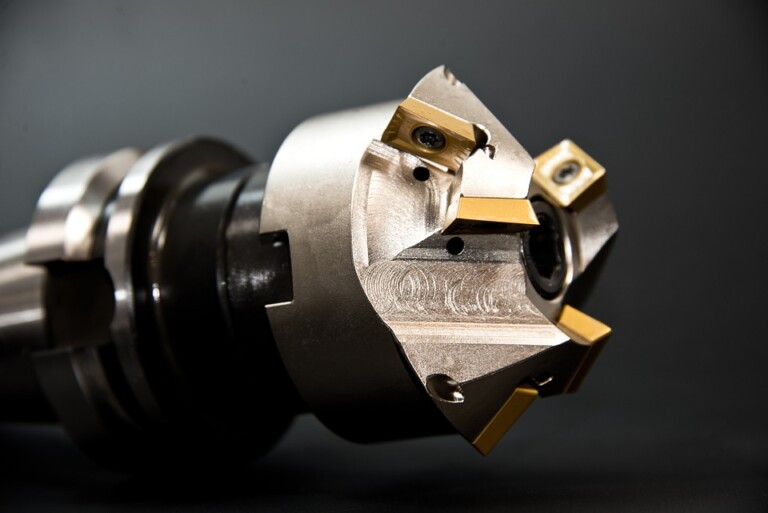
Unlocking precision manufacturing: In-depth study of CNC milling machines
In the dynamic landscape of modern manufacturing, computer numerical control (CNC) milling machines are the backbone of innovation, transforming raw materials into complex components with amazing accuracy and speed. With the need for complex, highly tolerant parts across aerospace, automotive, medical and technology industries, investing in the right CNC milling technology is not only an option, but strategic. Whether you are purchasing equipment for in-house production or seeking expert partners, such as Greatlime for Forcoursed Precision, understanding CNC milling machines is key.
What is CNC milling and why is it important?
CNC milling uses computer controls to manage multi-point rotation cutting tools, removing material from the workpiece to mold it into a custom design. Unlike manual machining, CNC systems follow a digital blueprint (G-CODE) with microscopic level of accuracy, allowing the same parts with minimal human intervention to be mass-produced. This automation translates into higher consistency, reduced waste and the ability to solve geometry once considered impossible. In today’s highly competitive market, CNC milling drives efficiency, scalability and product complexity.
Mysterious CNC milling machine type: from 3 to 5 axes advantages
Not all CNC plants are equal. Their functions on the axis of motion depend on:
- 3-axis machine: The most common entry point moves the cutter along X (left and right), Y (front and back) and Z (up and down). Perfect for simple parts such as brackets or engine components that require repositioning complex angles, adding errors and time.
- 4-axis machine: Add rotation around the X-axis (A-axis) and can be machined on four sides without reinstallation. For camshaft or cylindrical work.
- 5-axis machine: The pinnacle of flexibility, increasing rotation around the Y-axis (B-axis) or another rotational axis (C-axis). The tool approaches the workpiece from almost any direction in a single setup.
Why 5-axis dominate the supreme:
CNC milling is essential for complex designs such as turbine blades, medical implants or aerospace structures. Its advantages include:
- Single setting processing: Complex geometry is done without manual repositioning, minimizing errors and reducing lead times by up to 70%.
- Top surface finish: Optimal tool angles maintain consistent cutting force and chip evacuation and improve quality.
- Enhanced accuracy: Eliminating multiple settings reduces cumulative tolerance stacking, ensuring higher accuracy.
- Tool lifespan: The ability to optimally position the tool minimizes vibration and wear.
For businesses that drive innovative envelopes, investing or working with 5-axis machining experts is not a luxury, it is necessary.
Evaluate the key factors when CNC milling machines are sold
Selecting a machine involves balancing technical needs, budget and operational goals:
- Application Complexity: The matching axis requires partial geometry. 5 axes conform to organic shape and tight tolerances (<0.001)").
- Material range: Ensure compatibility with metals (aluminum, titanium, steel), plastic or the composite materials you use. Spindle power and stiffness are key.
- Accuracy and tolerance functions: Check position accuracy, repeatability and resolution. 5-axis systems usually provide the most stressful tolerances.
- Software and control systems: Compatible with CAD/CAM software (such as Master Camera or Physical Work) and user-friendly interfaces can affect workflow efficiency.
- Establish quality and rigidity: Cast iron frames suppress vibration; linear guide improves stability during high-speed operation.
- Automation and integration: Consider the option of a tray changer or robot arm for luminous manufacturing.
- Services and Support: The manufacturer reputation for maintenance, training and spare parts availability is critical to uptime.
Greatlime: Your strategic partner for precision machining of 5-axis CNC
For many businesses, purchasing high-end CNC milling equipment requires significant capital expenditure, skilled labor overhead and operational complexity. This is where to work with experts like Great Change the result. As a leader in advanced CNC machining, we specialize in the gap between your design vision and manufacturing reality:
- State-of-the-art 5-axis features: Our facilities house the latest multi-axis CNC centers and are carefully calibrated in metals such as stainless steel, titanium, Inconel® and exotic alloys for submicron accuracy.
- End-to-end manufacturing solutions: In addition to milling, we also offer integrated services including turning, grinding, EDM, heat treatment, surface finishes (anodized, plating) and custom coatings.
- Rapid prototyping and production: Leverage our agility to enable small batch custom prototypes or high-volume production runs without compromising quality or lead time.
- Engineering efficiency: Our process engineers use advanced tool path strategies to optimize each project to maximize profits, minimize cycle time and perfect tolerances.
- Customization and speed: Most materials and designs can be processed quickly, extending from the R&D stage to complete production.
At Greatlight, we not only operate machines, but also have confidence. We combine technical mastery with responsive support to solve the toughest metal parts challenges you face when it comes to competing prices.
Conclusion: Navigate your CNC milling investment
The decision to purchase a CNC milling machine or outsource it to an expert depends on scale, capability and strategic priorities. While internal machines can control workflows, advanced 5-axis technology requires a lot of investment and expertise. For businesses that prioritize cost-effectiveness, speed and ensuring the quality of precise components, working with good manufacturers, like Greatlight, is often the smartest way. Our commitment to innovation, quality control and customer partnerships makes us the best choice for projects that demand the highest standards. Are you ready to improve the manufacturing industry? Contact Greatlight today for a quote and experience the future of precise machining.
FAQ: CNC Milling Machines and Services
Q1: What are the main differences between 3-axis and 5-axis CNC milling?
Answer: The 3-axis machine is cut in a linear direction (X, Y, Z), and needs to reposition the complex angle. The 5-axis machine adds two rotation axes, allowing simultaneous contours at any angle in a single setup – ideal for complex geometry without sacrificing accuracy.
Q2: Can a 5-axis CNC machine handle all types of materials?
A: Yes, like the Greatlight process metals (steel, aluminum, titanium), plastics and composites. Performance depends on spindle power, tool and machine stiffness and we configure it for each material’s requirements.
Question 3: Is it better to buy a CNC mill than to outsource services like Greatlime?
A: Purchase large, simple parts manufacturers with internal expertise. Outsourcing to experts is ideal for complex parts, prototypes, avoiding capital costs, access to advanced equipment, and benefiting from engineering support. It provides flexibility and reduced overhead.
Question 4: How does Greatmight ensure accuracy and quality?
A: We use certified advanced machinery, rigorous process inspections (CMM, laser scanner), strict QA protocol (ISO standard) and experienced engineers to reduce tolerances to ±0.0002 inches on critical functions.
Q5: Do you support small batches or prototypes?
Answer: Absolute. Greatlight excels in rapid prototyping and small batch production, using digital workflows for fast trajectories and ensuring consistency from prototype to full scale.
Question 6: What post-processing services do you provide?
A: As a one-stop one-stop service, we provide complete services such as Deburring, polishing, anodizing, powder coating, electroplating, heat treatment and assembly to meet functional or aesthetic specifications.
Q7: Can Greatlight provide customized machined parts speeds?
A: Delivery times vary by complexity, but our optimization process prioritizes fast turnarounds, from the number of days in the prototype to the weeks of a large order. Contact us for a specific project schedule.
Question 8: Where can I get a quote for my CNC machining project?
A: Visit our website or contact our sales team directly with your design documents and specifications. We quickly provide competitive quotes to guide you in material choice, cost-driven and manufacturing.



















