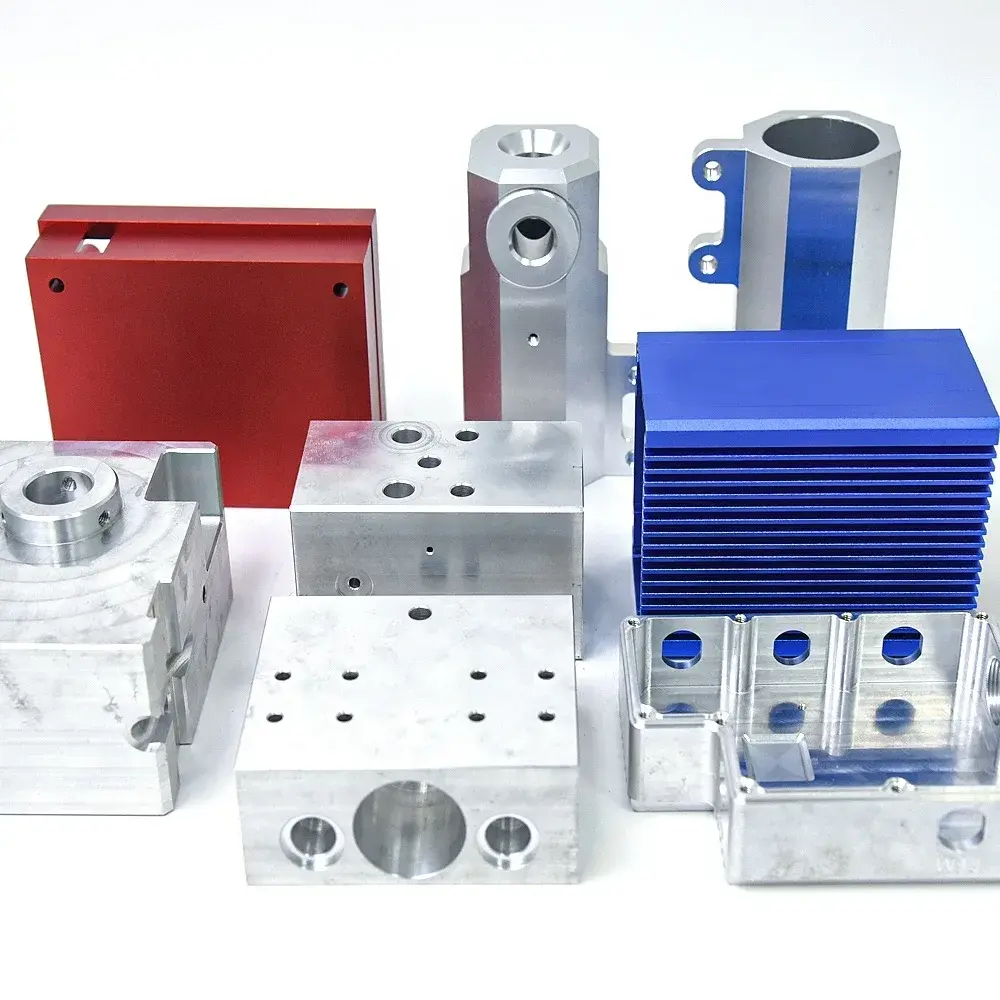
There is no end to learning trick skills. They can be divided into 5 types of tours. Let’s take a look at the skills everyone needs to master.
1. General mechanical tower
It’s simple and easy to learn. It is better to find a lathe processing department than to learn it at school.
2. Mold turning, especially precision plastic mold turning
The requirements for cutting tools are strict and precise. The finish of the car should be good and easy to polish to a mirror effect. This requires basic knowledge of plastic molds. Usually, several models are added to the car. the threads must be mastered, which is relatively difficult.
3. Tool turning
Processing of tool shafts of reamers, drills, alloy tool holders, etc. This type of filming is the simplest and easiest to perform, but it is the most tiring. It is usually produced in large quantities, and the most commonly used are double centers, turning cones and flow modulus. This is the quickest and easiest way to minimize tool wear.
4. Large equipment tower
This type of car operator must have experienced skills, and young people basically dare not drive! Learn more when using a vertical car. For example: when turning a crankshaft, you need to read the drawing n times to determine which part should be turned first and which part should be turned last, whether the amount of grinding should be wasted or directly custom machined, and whether threads are positive or negative.
5.CNC lathe
This type of tour is the simplest but also the most difficult. First, you must be able to read drawings, programming, conversion formulas and tool applications. Provided you master the theory of lathes and have certain bases in mathematics, mechanics and CAD.
Let’s talk about the practical experience of lathes and the problems that need to be paid attention to when turning thin shafts at high speed:
“Rooks are afraid of tower rods.” This statement reflects the difficulty of spinning thin rods. Due to the characteristics and technical requirements of thin shafts, defects such as vibration, multiple edges, bamboo joints, poor cylindricity and bending are likely to occur during high-speed turning. If you want to drive it smoothly, you must pay full attention to the problems encountered in the process.
1) Adjustment of the machine tool. The line connecting the center lines of the lathe spindle and tailstock should be parallel to the top, bottom, left and right of the large guide rail of the lathe, and the tolerance should be less than 0.02mm .
2) Installation of the part. When installing, try not to position too much. When tightening one end with a chuck, do not exceed 10mm.
3) Knives. Use an offset tool with Κr=75°~90° and pay attention to the secondary draft angle α′0≤4°~6°, which should not be too large. When the tool is installed, it should be slightly above center.
4) The tool holder must be cut after installation. The cutting method can be grinding, boring, reaming and other methods, so that the arc surface R in contact with the tool holder claw and the workpiece is ≥ the radius of the part and must not be smaller than the radius of the part to prevent the appearance of polygonal edges. When adjusting the tool holder claws, just make sure the claws are in contact with the workpiece. Do not use force to avoid bamboo knots.
5) Auxiliary support. When the aspect ratio of the workpiece is greater than 40, auxiliary supports should be added during the turning process to prevent the workpiece from vibrating or bending due to centrifugal force. During the cutting process, pay attention to the tip adjustment. It is appropriate to simply cover the part, not too tight, and adjust it at any time to avoid thermal expansion, deformation and bending of the part.
Issues that should be paid attention to when turning thin rods with reverse cutting tools
There are many ways to turn thin rods. Generally, the tool holder is used for forward or reverse turning. However, reverse tool turning has many advantages over forward tool turning and is mainly used.
Two problems tend to occur when filming. One is the polygonal shape, which is mainly caused by the large back angle of the tool, which does not match the R of the tool holder claw and the diameter of the workpiece; the other is the bamboo problem. It involves following the knife holder to the mouth of the shelf, then placing and moving the knife. When the cutting surface is reached, the cutting depth increases from minimal to sudden, which causes the cutting force to change outward and the diameter suddenly becomes larger. As the tool holder moves to a larger diameter, the diameter of the cut increases. smaller again and cycle like this to give the piece a bamboo shape.
In order to avoid the formation of a bamboo shape, when the frame mouth in section B is machined, carefully follow the knife holder, and then move the knife back after aligning the knife. When the tip of the knife is close to point A, use it. handle of the center carriage, then cut deeper (0.04~0.08)mm, but it should be controlled flexibly according to the cutting depth.
Deep hole turning method in stages
When turning a hole with an aspect ratio greater than 4 on a lathe, due to the poor rigidity of the tool holder, the tool holder vibrates during cutting, which affects the cutting efficiency and the quality of the machined surface, making turning difficult. Especially when the hole diameter is large, the hole is deep and there are steps, processing is more difficult due to the influence of the rigidity of the tool holder and machine tool.
First, install the workpiece on the lathe with a chuck and a center frame, use an inner hole cutter to process the short holes at both ends of the workpiece, and equip each with a sleeve and a tool holder special. When turning a long hole in the middle, first insert the support sleeve at the left end into the workpiece hole, then install the workpiece on the lathe, adjust the extended length of the tool head on the tool holder and install the holder. sleeve at the left end into the inner hole of the workpiece, use the tool wedge to adjust the height of the tool bar, and fix the tool bar on the square tool table of the lathe so that the bar d The tools can slide freely in the sleeve, then the workpiece can be rotated and the tool can be cut to the longitudinal depth of the workpiece. When the workpiece has finished rotating, move the large carriage to the opposite direction and remove it from the workpiece with the support sleeve and tool bar at the right end, then the workpiece can be unloaded. When processing the second workpiece, first install the left end support sleeve, tighten the workpiece, then extend the toolbar into the left end support sleeve of the workpiece, install the support sleeve d right end, then start turning the second piece.
Tooling Features: Support sleeves are used at both ends to support the cutter shank, which greatly increases the rigidity of the cutter shank, making cutting without vibration and ensuring the roughness of the machined surface. supports the cutting rod to rotate, ensuring smoothness between holes. Easy-to-use position accuracy and efficiency is more than 5 times higher than the traditional hole expansion method.
Reverse knurling
In traditional forward-spin knurling, chips easily seep between the workpiece and the knurl during the rolling process, causing excessive stress on the workpiece and resulting in random patterns and ghosting. If you reverse the pin, you can effectively avoid the disadvantages mentioned above and roll out patterns with clear lines.
How to prevent center drill bit from breaking when drilling small center holes
When drilling a center hole with a diameter of less than 1.5 mm on a lathe, the center drill bit can easily break. In addition to being careful and diligent in removing chips when drilling, do not lock the tailstock when drilling and allow friction between the weight of the tailstock and the guide rail of the machine tool carry out the drilling. When the drilling resistance is too great, the tailstock moves back on its own, thus protecting the center drill bit.
What are the tips for sharpening high speed steel trapezoidal thread turning tools?
When it comes to threading on the lathe, the main thing is to use your hands more often and learn more from the old masters, so you can progress quickly.
A thread is a continuous projection with a prescribed profile formed along a spiral line on a cylindrical or conical surface. Threads are widely used in various machines. For example, four screws are used to tighten the turning tool on the square tool holder of the lathe. Threads are used to transmit power between the lathe screw and the opening and closing nut. There are many ways to process threads, and thread turning is generally used in general machining (one of the basic skills of a lathe). When processing threads on a horizontal lathe, the movement relationship between the workpiece and the tool must be ensured, that is, the tool moves uniformly by one step (or feed) every time the spindle turns (the part turns once).
Their kinematic relationship is guaranteed as follows: the spindle drives the part to rotate together. The spindle movement is transmitted to the feed box through the suspended wheel box. The feed box is transmitted to the screw after the gear shift. The nut cooperates to drive the tool holder and the turning tool to move linearly, so that the rotation of the workpiece and the movement of the tool are achieved by the driving of the spindle, thereby ensuring a relationship strict movement between the part and the tool. During the actual turning of threads, due to various reasons, problems occur in a certain connection of the movement between the spindle and the tool, causing failures in thread turning and affecting normal production. This should be resolved in time.
Stray teeth
The reason for the untidy teeth is that when the screw rotates once, the workpiece does not rotate an integer multiple of the rotation of the screw, that is, the rotation of the workpiece is not an integer multiple of the rotation of the screw.
A commonly used method to prevent tooth decay is to first turn the turning tool in reverse, that is, at the end in one stroke, do not lift the nut from opening and closing, withdraw the tool radially, reverse the spindle and make the tool return longitudinally, then perform the second step. During the reciprocating process, because the transmission between spindle, screw and tool holder is not separated, the turning tool is still in the original spiral groove and no random teeth will occur. Second, when the longitudinal stroke of the tool feed is completed, the opening and closing nut is lifted from the transmission chain and sent back, and the position of the tool tip is moved, and the tool must be calibrated again.
Daguang focuses on providing solutions such as precision CNC machining services (3-axis, 4-axis, 5-axis machining), CNC milling, 3D printing and rapid prototyping services.