
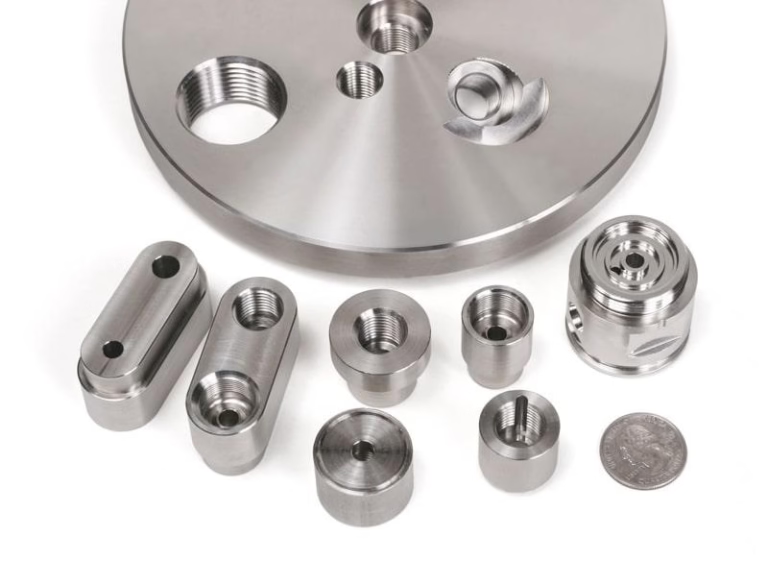
When you’re standing at the threshold of a new CNC machining project, cost optimization is always a top priority. A common question that arises, especially for those managing workshops or overseeing prototyping budgets, is: Can you use regular router bits in a CNC machine? The short, technical answer is yes, in a very limited and specific sense—the machine’s collet might physically accept the tool’s shank. However, from the perspective of precision, reliability, quality, and long-term cost-effectiveness, doing so is almost universally a poor decision with significant risks. As a professional in the field, understanding the profound differences between a hardware store router bit and a purpose-built CNC end mill is crucial for achieving the results your projects demand.
H2: The Fundamental Divide: Router Bits vs. CNC End Mills
At first glance, both tools are cylindrical, have cutting edges, and remove material. This superficial similarity is where the comparison ends. They are engineered for fundamentally different worlds of operation.
Hand-Held/CNC Router Woodworking Tools (Regular Router Bits):
Primary Use: Designed for use in handheld routers or lower-powered, lower-rigidity CNC routers, primarily for wood, plastics, and soft composites.
Design Philosophy: Emphasis on fast material removal in softer materials. Tolerances are looser.
Typical Holder: Often use 1/4-inch or 1/2-inch shanks with less stringent dimensional tolerances.
Runout & Balance: Not designed for the extreme rotational speeds (RPM) of industrial CNC machines. Lower-grade balancing can lead to severe vibration at high RPMs.
Geometry & Material: Carbide tips brazed onto a steel body are common. Flute geometry is optimized for clearing chips in softer, stringier materials.
Professional CNC Machine Tools (End Mills):
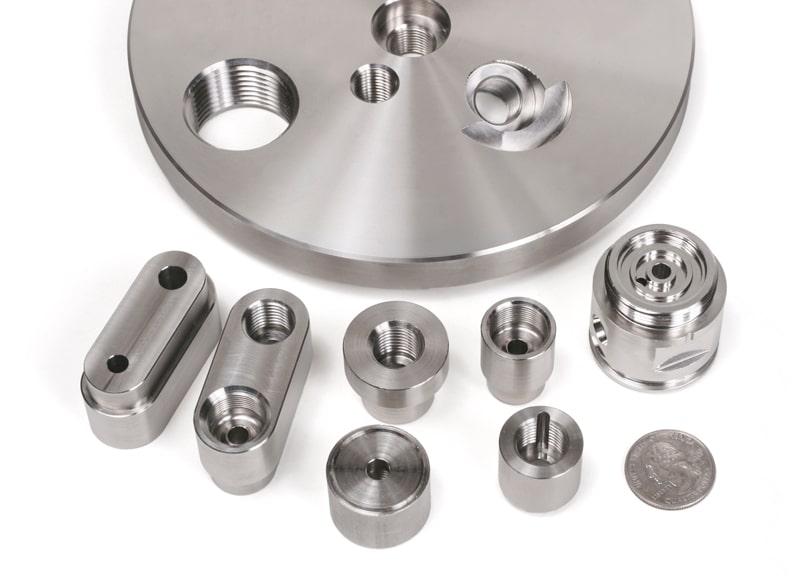
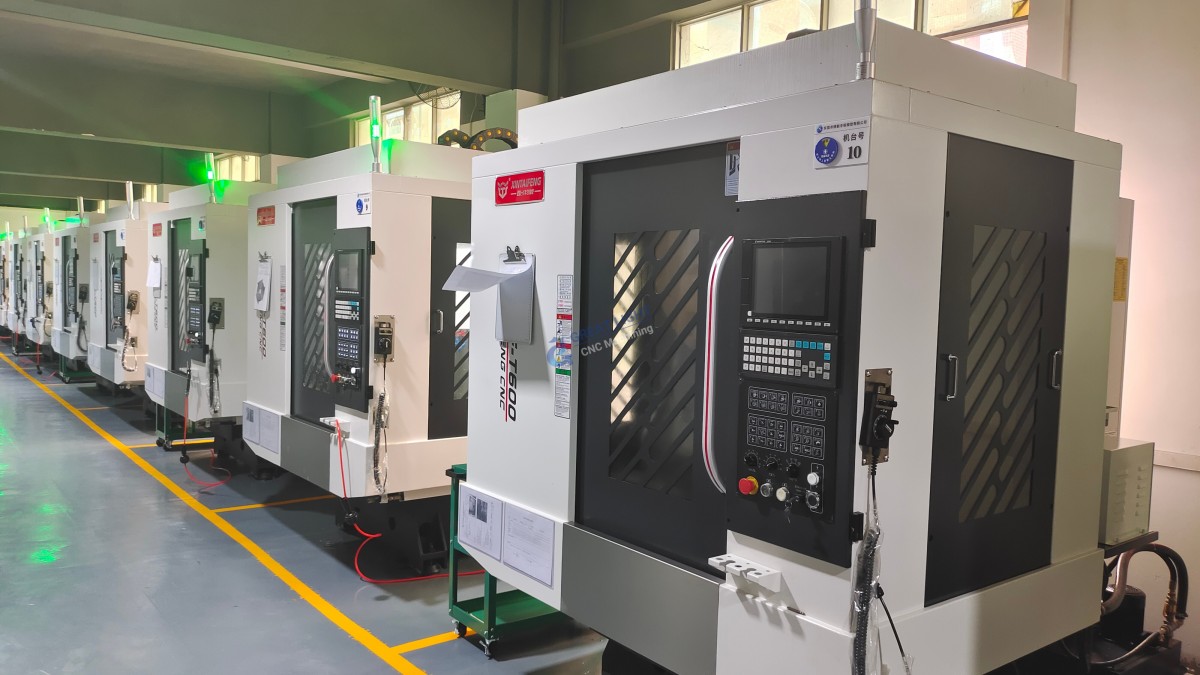
Primary Use: Engineered exclusively for the high rigidity, high speed, and precision of machining centers (like the 5-axis CNC machines we operate at GreatLight Metal). Used on metals, engineering plastics, and advanced composites.
Design Philosophy: Precision, stability, heat dissipation, and predictable wear. Every aspect is controlled to micron-level tolerances.
Typical Holder: Precision-ground shanks (like BT, CAT, HSK) with tight tolerances to ensure perfect concentricity and grip in the collet or tool holder.
Runout & Balance: Dynamically balanced for smooth operation at high speeds (often 10,000+ RPM), minimizing vibration for superior surface finish and tool life.
Geometry & Material: Made from solid micro-grain carbide or coated carbide, with complex flute, helix, and edge geometries tailored for specific materials (aluminum, steel, titanium, etc.).
H2: The Critical Risks of Using a Regular Router Bit in a Precision CNC
Substituting a regular router bit in a high-end CNC machining center is akin to putting regular gasoline in a high-performance race car. It might run for a moment, but failure is imminent and potentially catastrophic.
Catastrophic Failure and Safety Hazards: This is the most severe risk. Router bits are not balanced for the 8,000-15,000+ RPM standard on industrial CNCs. At these speeds, unbalanced tools can shatter explosively, sending high-velocity shrapnel through the workspace, damaging the machine, the part, and posing a severe safety risk to personnel.
Compromised Precision and Accuracy: The loose-tolerance shank of a router bit will have excessive runout (wobble) in a precision collet. Instead of cutting with a single, defined edge path, the tool wobbles, creating a cut wider than itself. This directly destroys dimensional accuracy, makes holding tight tolerances like ±0.001mm impossible, and leads to poor feature definition.
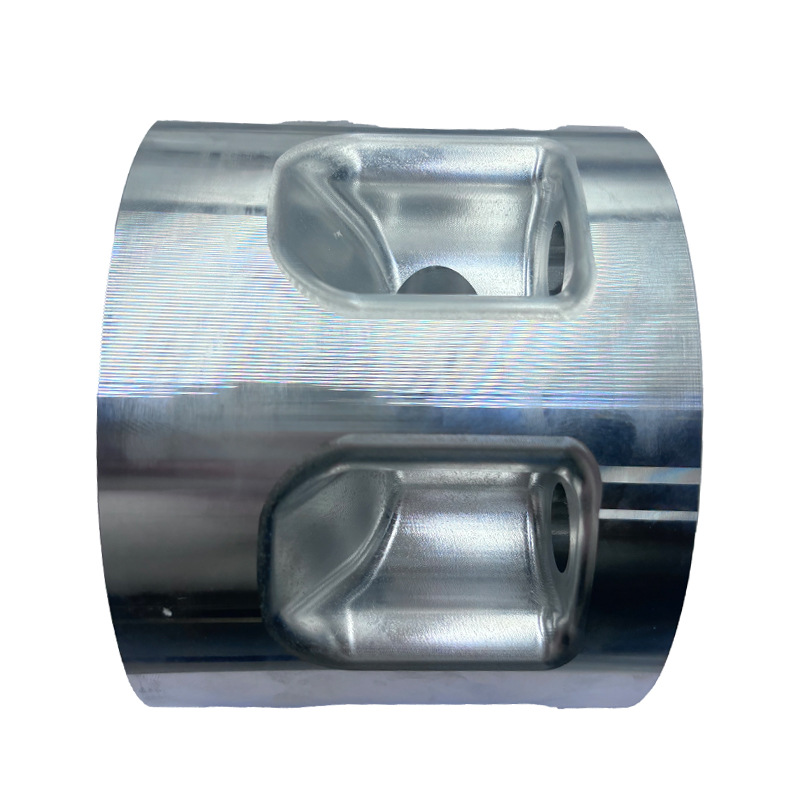
Poor Surface Finish and Part Quality: Vibration from imbalance and improper geometry leads to chatter marks, poor edge quality, and generally unacceptable surface finishes. What should be a mirror-like finish becomes visibly rough and textured, often requiring extensive secondary polishing.
Inefficient Machining and Tool Wear: The geometry is wrong for metals. It will generate excessive heat, clog chips (especially in aluminum), and dull almost instantly. This forces you to run the machine at slow speeds and feeds, negating the efficiency advantage of your CNC, and leads to frequent tool breaks.
Hidden Cost: Damage to Your Most Valuable Asset – The Machine: The vibrations transmitted through an unbalanced tool don’t just affect the part. They hammer the spindle bearings, loosen guideways, and degrade the mechanical integrity of your expensive CNC machine over time, leading to premature wear, loss of baseline precision, and costly repairs.
H3: A Practical Comparison: Same Part, Different Tool
Let’s visualize the outcome with a practical example of machining an aluminum prototype bracket:
| Aspect | Using a Regular Woodworking Router Bit | Using a Professional CNC Aluminum End Mill |
|---|---|---|
| Setup & Feasibility | Physically fits, but requires extreme caution. | Designed for the task; plug-and-play confidence. |
| Cutting Parameters | Must run at very low RPM and feed to avoid immediate breakage. | Can run at optimized, efficient speeds/feeds for aluminum. |
| Surface Finish | Noticeable chatter, tear-outs, and poor edge quality. Requires manual finishing. | Smooth, predictable finish, often directly usable. |
| Dimensional Accuracy | Unpredictable; features may be oversize by 0.1mm or more due to runout. | Capable of holding tolerances within ±0.01mm or better consistently. |
| Tool Life | May last for one part, or break during the first operation. | Can machine dozens of parts predictably before needing replacement. |
| Process Outcome | High risk, poor quality, inefficient, potentially dangerous. | Reliable, high-quality, efficient, and safe. |
H2: The Professional Path: Investing in the Right Tool for the Job
The philosophy of precision CNC machining is built on control, predictability, and optimization. The cutting tool is the direct interface between your digital design and the physical part. Compromising here compromises everything.
For Prototyping & Low-Volume Production: Invest in a basic kit of quality, solid-carbide end mills from reputable brands. The cost is quickly offset by saved time, material, and rework.
For Complex or High-Precision Work: This is where partnering with an expert manufacturer adds immense value. A full-service provider like GreatLight CNC Machining Factory maintains an extensive, curated library of thousands of specialized tools. Our process engineers select the perfect tool—considering material, geometry, required finish, and machining strategy—from high-helix end mills for aluminum to variable-pitch tools for suppressing harmonic chatter in steel. This expertise is part of the service, ensuring your part is manufactured correctly the first time.
Our approach at GreatLight Metal is built on this foundation of precision. Our fleet of advanced 5-axis and multi-axis CNC machining centers is paired with a rigorously managed tooling system. Every tool is tracked, maintained, and qualified to ensure it meets the performance standards required for the complex automotive, aerospace, and medical components we produce. This system, backed by certifications like ISO 9001:2015 and IATF 16949, is what allows us to guarantee the precision and reliability our clients depend on.
Conclusion
So, can you use regular router bits in a CNC machine? While physically possible in some cases, it is a practice fraught with risk that fundamentally undermines the purpose of using a precision CNC machine. The potential for safety incidents, part failure, machine damage, and hidden costs far outweighs any perceived upfront savings on a single tool. The path to reliable, high-quality, and efficient manufacturing lies in respecting the engineering behind your equipment and using purpose-designed, professional-grade CNC tooling. For projects where quality cannot be compromised, leveraging the expertise and resources of a seasoned precision machining partner is the most strategic and ultimately cost-effective decision you can make.
Frequently Asked Questions (FAQ)
H3: Q1: I’m just making a one-off prototype from a soft material like acrylic or pine. Can I get away with a router bit then?
A: For a non-critical, visual prototype in very soft material, and if you fully understand the risks (safety, finish, potential breakage), you might complete the part. However, you will almost certainly get a better finish, sharper details, and a faster machining time with a proper end mill. It’s still not recommended.
H3: Q2: Are CNC router bits and CNC end mills the same thing?
A: The terminology can be confusing. In professional machining, “end mill” is the standard term for a rotating cutting tool used on milling machines and machining centers. “CNC router bit” is a term more commonly used in the woodworking and sign-making industry for tools used on less rigid gantry-style CNC routers. An end mill used on a router can be called a router bit, but a woodworking router bit should not be used as an end mill on an industrial CNC.
H3: Q3: What’s the most important specification to look at when choosing a tool for my CNC?
A: For compatibility, the shank type and diameter (e.g., 1/4″ ER11, 3/8″ ER32) must match your machine’s collet system. For performance, the tool material/coating (e.g., uncoated carbide for aluminum, TiAlN coating for steel) and flute geometry (number of flutes, helix angle) must be matched to your workpiece material and the type of cut (roughing vs. finishing).
H3: Q4: How does a manufacturer like GreatLight Metal manage tooling for such a wide variety of client projects?
A: We operate a centralized, digitally managed tool crib. It contains a vast inventory of standard and specialized tools. Our manufacturing engineers select the optimal tool from this library for every operation in your job, based on decades of experience and CAM software simulations. This ensures consistency, quality, and efficiency across all projects, from simple brackets to complex aerospace components. The cost of this tooling system is integrated into our service, saving you the capital and management overhead.



















