
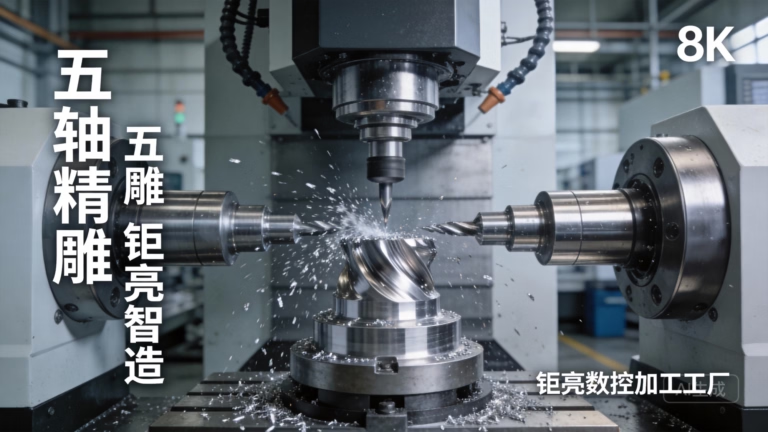
Can You Use Gray Flexible Conduit For CNC Machine? This is a pressing question for many professionals involved in CNC machine setup, maintenance, and custom integration. As CNC technology evolves to handle more complex precision tasks, the reliability of auxiliary components like cable management systems becomes increasingly critical—right down to the choice of conduit that protects sensitive wiring from the harsh operating conditions of a machining floor.
Can You Use Gray Flexible Conduit For CNC Machine?
To answer this question thoroughly, we need to examine the properties of gray flexible conduit, its compatibility with CNC machine environments, and how it stacks up against alternative solutions. Let’s break down the key factors to consider.
What Is Gray Flexible Conduit?
Gray flexible conduit is a versatile cable protection solution available in two primary variants:
Non-metallic PVC gray conduit: Lightweight, corrosion-resistant, and cost-effective, made from rigid yet flexible PVC plastic. It is ideal for routing wiring in areas where metal corrosion is a concern.
PVC-coated steel gray conduit: Combines the mechanical strength of steel with the corrosion resistance of a gray PVC outer layer. This variant adds impact resistance while retaining the ability to bend around obstacles.
Both types are designed to shield electrical wiring from dust, debris, and minor impacts, but their suitability for CNC machines depends on specific operational conditions.
Key Considerations for Using Gray Flexible Conduit in CNC Machines
CNC machines operate in challenging environments characterized by coolant splashes, metal chip debris, constant vibration, and occasional temperature fluctuations. Before selecting gray flexible conduit, evaluate these critical factors:
1. Environmental Resistance
CNC machining relies on coolants, cutting oils, and lubricants to maintain precision and tool life. Non-metallic gray PVC conduit is resistant to most water-based coolants but may degrade over time if exposed to prolonged contact with harsh petroleum-based oils or high-concentration chemical cleaners. PVC-coated steel gray conduit offers better chemical resistance, but its PVC coating can crack if subjected to repeated mechanical stress or extreme temperatures (above 80°C for standard PVC).
2. Mechanical Durability
CNC machines feature moving axes, rotating spindles, and parts that generate vibration or impact from flying metal chips. Gray flexible conduit’s performance varies by type:

Non-metallic gray conduit: Suitable for low-vibration areas (e.g., static control panel wiring) but may dent or tear if hit by heavy metal chips or exposed to constant spindle vibration.
PVC-coated steel gray conduit: Handles moderate vibration and minor impact, making it suitable for wiring near axis motors or tool changers. However, it is less robust than all-stainless-steel flexible conduit in high-stress zones.
3. Electrical Safety Compliance
CNC machines require strict adherence to standards like NEC Article 352 (for PVC conduit) or IEC 61386 (for industrial conduit). Gray flexible conduit must meet voltage insulation ratings (typically 300V or 600V) matching the CNC system’s wiring. For sensitive high-frequency control signals, note that non-metallic gray conduit does not provide electromagnetic interference (EMI) shielding—additional cable shielding may be necessary to prevent signal disruption.
4. Installation and Maintenance Ease
Gray flexible conduit is easy to cut, bend, and install, with a wide range of compatible fittings (couplings, connectors, end caps) that simplify routing around tight CNC machine frames. This reduces downtime during setup or repairs. However, non-metallic gray conduit can become brittle in cold workshop temperatures, making it harder to bend without cracking.
5. Temperature Tolerance
Standard gray PVC conduit has a maximum operating temperature of 75–80°C. CNC zones near spindles or heat-generating motors can exceed this threshold, causing PVC to soften, warp, or lose protective properties. Heat-resistant gray conduit variants (rated up to 105°C) are available for moderate-temperature areas, but they come at a higher cost.
Gray Flexible Conduit vs. Common CNC Conduit Alternatives
To make an informed choice, compare gray flexible conduit to other popular options for CNC machines:
| Conduit Type | Best For CNC Applications | Pros | Cons |
|---|---|---|---|
| Gray Flexible Conduit | Static control panels, low-vibration wiring, cost-sensitive projects | Lightweight, easy to install, corrosion-resistant | Limited heat/chemical resistance, moderate vibration tolerance |
| Stainless Steel Flexible Conduit | High-vibration zones, coolant-exposed areas, high-temperature zones | Exceptional mechanical strength, chemical/heat resistant | More expensive, heavier, requires specialized tools for installation |
| Liquid-Tight Flexible Conduit | Areas with constant coolant/oil spray | 100% liquid-proof, good chemical resistance | Less flexible than gray conduit, higher cost |
| PVC Rigid Conduit | Permanent, static wiring routes | Durable, low-cost, excellent insulation | Inflexible, hard to route around obstacles |
When Gray Flexible Conduit Is the Right Choice
Gray flexible conduit is a viable option for CNC machines in these scenarios:
Static control panel wiring: Where wiring does not move and is protected from direct coolant spray.
Low-vibration zones: For auxiliary components like lighting, sensor inputs, or power supplies away from moving axes.
Cost-sensitive projects: Small CNC setups or prototype machines with mild operating conditions.
Corrosive environments: Non-metallic gray conduit avoids rust issues common with uncoated metal conduit.
When to Avoid Gray Flexible Conduit
Steer clear of gray flexible conduit in these high-demand CNC areas:
High-vibration zones: Near spindle motors, linear guides, or tool changers, where constant vibration can damage the PVC coating or weaken non-metallic conduit.
Constant coolant/oil exposure: Areas with repeated contact with petroleum-based oils or strong chemical cleaners.
High-temperature zones: Near spindle housings or servo amplifiers where temperatures exceed the conduit’s rated limit.
Heavy mechanical stress: Zones at risk of chip impact or crushing by moving parts (opt for all-metal conduit instead).
How GreatLight Supports CNC System Reliability Through Expertise
As a leading provider of precision 5-axis CNC machining services (link opens in new window), GreatLight Metal has over a decade of experience designing, building, and maintaining high-precision CNC machines for industries like automotive, aerospace, and medical devices. Our team of manufacturing engineers understands the critical role of proper cable management in ensuring CNC machine uptime and precision.
We adhere to strict ISO 9001:2015, IATF 16949, and ISO 13485 standards, which extend to every aspect of our CNC systems—including conduit selection and wiring practices. For clients who require custom CNC machine components or integrated manufacturing solutions, we provide tailored guidance on choosing the right conduit type to match their specific application needs, ensuring compliance with safety standards and long-term reliability.
Our in-house quality control team conducts rigorous testing of all machine components, including wiring and conduit, to ensure they can withstand the harsh operating conditions of precision machining. Additionally, our after-sales guarantee includes free rework for quality-related issues, giving clients peace of mind that their CNC systems will perform as expected.
Conclusion
Can You Use Gray Flexible Conduit For CNC Machine? The answer is yes—when it’s matched to the right application. Gray flexible conduit offers a cost-effective, easy-to-install solution for low-stress, mild-environment CNC wiring, but it is not a one-size-fits-all choice. By evaluating factors like environmental exposure, mechanical stress, and temperature tolerance, you can determine if gray conduit is suitable for your CNC setup. For complex, high-precision CNC systems or applications in demanding industries, partnering with an expert like GreatLight Metal ensures you get the right cable management solution tailored to your needs.
Frequently Asked Questions (FAQ)
Q1: What type of conduit is best for high-vibration CNC machines?
For high-vibration zones (e.g., near spindle motors or tool changers), stainless steel flexible conduit is the optimal choice. It offers exceptional mechanical strength, vibration absorption, and durability, preventing cable fatigue and damage even under constant stress. Some variants include internal braiding to further enhance vibration resistance.
Q2: Can gray flexible conduit be used with high-temperature CNC components?
Standard gray flexible conduit (PVC) has a maximum operating temperature of 75–80°C, which is insufficient for high-temperature components like spindle housings or servo amplifiers. Heat-resistant gray conduit variants (rated up to 105°C) work for moderate-temperature zones, but for temperatures above 105°C, consider uncoated metal conduit.
Q3: How do I ensure gray flexible conduit complies with CNC electrical standards?
Choose gray flexible conduit that meets industry standards such as NEC Article 352 (non-metallic PVC) or IEC 61386 (industrial conduit). Work with a qualified electrician or CNC system integrator to verify the conduit’s voltage rating, insulation properties, and installation methods align with your CNC machine’s electrical requirements.
Q4: Does GreatLight provide guidance on CNC machine cable management for custom projects?
Yes. GreatLight Metal’s engineering team has extensive experience in CNC system design and can provide tailored guidance on cable management, including conduit selection, routing, and installation, for custom machining projects. We ensure all solutions comply with relevant safety and quality standards, helping clients build reliable, high-precision CNC systems. For more information about our capabilities, connect with us on GreatLight Metal (link opens in new window).



















