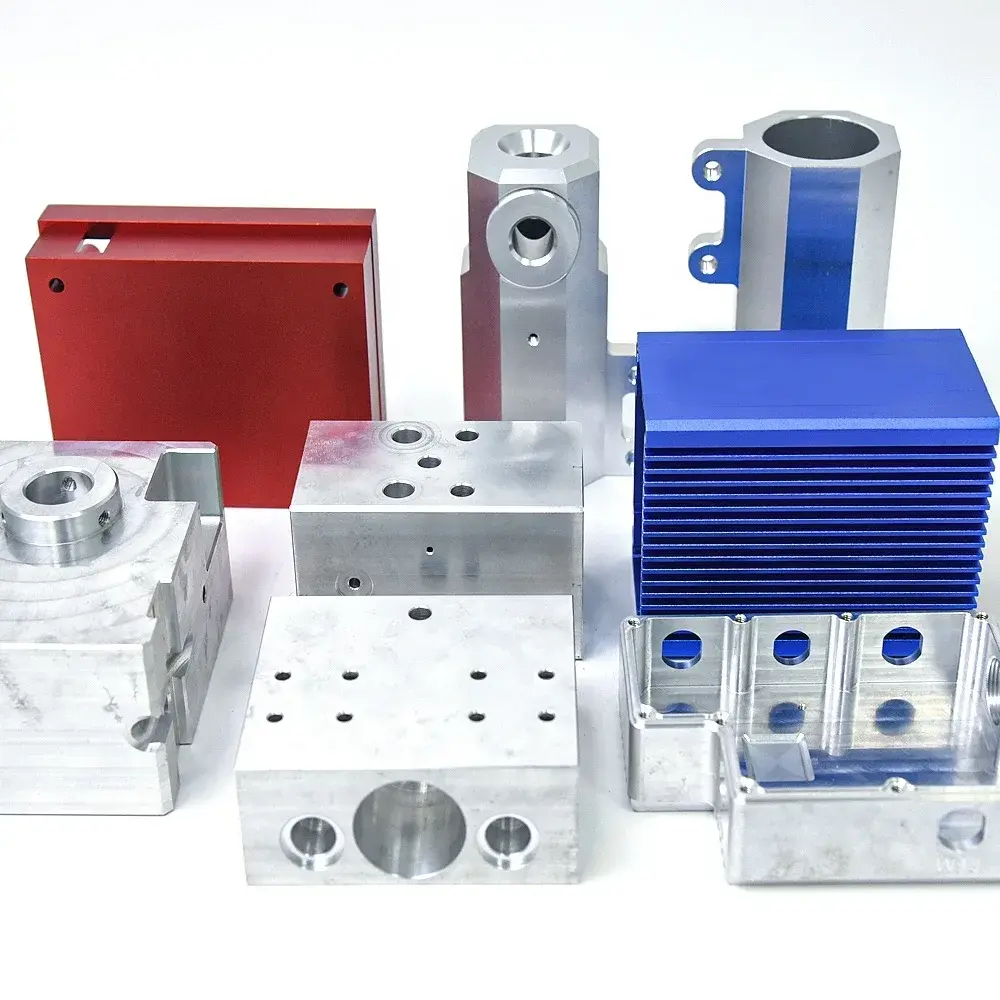
CNC Metal Cutting Explained: Your Complete Guide to Capabilities and Limitations
Confused about whether CNC machines can handle your metalworking project? This comprehensive FAQ cuts through the noise. Designed for machinists, engineers, and manufacturing buyers, we address your real-world concerns—material suitability, precision thresholds, cost factors, and process pitfalls. Instead of generic claims, we provide actionable data and technician-level insights to empower your decision-making.
Understanding CNC Metal Cutting Fundamentals
### What types of metals can CNC machines actually cut?
A1. Yes, CNC machines (like mills, lathes, routers, and lasers) routinely cut all common industrial metals—carbon steel, stainless steel, aluminum, titanium, brass, and copper.
A2. Capability depends heavily on machine configuration:
- Aluminum & Soft Metals: Easily machined by most CNC routers/mills at high speeds with standard carbide bits. Chip evacuation is critical.
- Steel & Titanium: Require rigid CNC mills/lathes with higher torque, coolant systems, and specialized tooling (e.g., cobalt end mills). Heat management is crucial.
- Hardened Steel (>45 HRC): Demands specialized machines with high rigidity, ceramic/PCD tooling, and reduced feed rates. Not feasible on hobbyist equipment.
A3. Action Step: Match your material hardness to the machine’s power, spindle torque (N·m), and rigidity class. Verify coolant requirements—mist systems often suffice for aluminum; high-pressure flood cooling is essential for steel.
### How thick can CNC machines cut metal?
A1. Thickness limits vary dramatically: Standard CNC mills typically handle 0.5–80mm; heavy-duty models cut 150mm+ steel plate and perform plunge milling.
A2. Constraints include:
- Tool Length & Rigidity: Longer tools deflect, causing chatter (> 10:1 length-to-diameter ratio is high-risk).
- Material Density: Aluminum allows deeper cuts than hard steel at equal power.
- Coolant Access: Deep pockets impede chip removal, accelerating tool wear if coolant pressure is insufficient.
A3. Action Step: For parts exceeding 50mm depth, prioritize machines with through-spindle coolant (TSC) and submicron runout spindles. Calculate optimal chip load: [Chip Load (mm) = Feed Rate (mm/min) / (RPM × Flutes)].
### Is CNC metal cutting expensive vs. manual machining?
A1. For prototyping and complex geometry, CNC is often cheaper long-term despite higher upfront costs. For simple/single operations, manual may suffice.
A2. Cost drivers breakdown:
- Setup Costs: CNC programming/tooling dominates short runs (<50 units). Manual setups are faster.
- Volume Efficiency: CNC excels in batch production (<15–70% cost reduction per unit over 100+ parts). Automation (robotic loading) further reduces costs.
- Rework/Risk: CNC precision minimizes scrap rates, especially critical for expensive aerospace alloys.
A3. Action Step: Compare Hourly Rates: Manual ($40–75/hr) vs. CNC ($80–120/hr). Use break-even analysis: [(CNC Setup Cost – Manual Setup Cost)/(Manual Cost/Unit – CNC Cost/Unit)].
Navigating Material-Specific Challenges
### Why does stainless steel warp during CNC cutting?
A1. Heat-induced stresses and improper fixturing cause warping—stainless steel has low thermal conductivity and high thermal expansion.
A2. Mitigation strategies:
- Thermal Control: Use peck drilling and adaptive toolpaths to limit localized heating (< 800°C risks metallurgical changes). Coolant temperature control below 30°C is critical.
- Residual Stress Relief: Stress-relieved stock cuts predictably. Clamping far from edges minimizes distortion.
- Toolpath Strategy: Trochoidal milling patterns distribute heat evenly. Fixtures should allow symmetrical clamping.
A3. Action Step: Specify stress-relieved ASTM A480 steel. Implement a 3-step finishing pass with decreasing depth of cut (0.5mm > 0.2mm > 0.05mm).
### Can CNC machines cut hardened tool steel?
A1. Yes—but NOT with standard high-speed steel tools. Requires high-hardness tooling like ceramic, CBN, or carbide with TiAlN coating.
A2. Critical parameters:
- Spindle Speed: Low RPM (400–800) prevents abrasive heat buildup.
- Tool Wear: Expect 20–40% faster tool degradation vs. cutting mild steel (< Predictive tip: Monitor acoustic emissions for chip color changes).
- Machine Rigidity: Vibration during hard cutting causes microfractures; prioritize granite-base machines if >55 HRC.
A3. Action Step: Run air cuts before engagement to verify spindle concentricity. Switch to pulsed laser cutting if localized hardening exceeds 60 HRC.
Application-Focused Troubleshooting
### Why does my CNC metal part have rough edges (burrs)?
A1. Burrs form from tool deflection, worn inserts, or unsuitable feed/speed combos where material tears instead of shearing cleanly.
A2. Diagnostic steps:
- Tool Check: Chip formation whiteness/shape indicates blunt tools—replace after 8–12 hours of steel cutting.
- Parameter Adjustment: Increase feed rate marginally (< 5%) to improve chip formation; reduce DOC if chatter occurs.
- Material-Specific Fixes: Aluminum adhesion requires lubricated toolpaths; stainless demands consistent coolant flow.
A3. Action Step: Perform chip thickness audit. Deploy ultrasonic deburring tools: Opt for frequency ≥ 28 kHz for fine-edge finishing. → (Visual alert: Insert Burr Formation Diagram)
### How to prevent CNC tools from breaking during metal cutting?
A1. Tool failure stems from thermal shock, chip jamming, or compressive overload—abide by rigid machining protocols.
A2. Prevention System:
- TORQUE MANAGEMENT: Set spindle load monitoring with auto-shutdown thresholds > 110% rated torque. Smaller tools demand stricter limits.
- Chip Control: Ensure chip size < flute gap depth. Use steep Peck retracts (0.5–1mm) in deep slotting.
- Entry/Exit Protection: Arc-in entry paths are critical; avoid perpendicular plunging into solid material.
A3. Action Step: Pre-cycle simulation: Verify toolpaths eliminate harmonic frequencies matching the Hirth coupling natural frequency (~650–2000 Hz).
Bridging Technical Factors and Practical Decisions
### What separates commercial CNC machines from industrial-grade metal-cutting units?
A1. Industrial machines feature ballistic guideways, encapsulated screws, dual-ball encoders (±0.005mm), and thermal-compensated controllers.
| A2. Differentiation matrix: | Feature | Commercial Grade | Industrial Grade |
|---|---|---|---|
| Spindle Runout | 0.015–0.03 mm | <0.005 mm | |
| Frame Rigidity | Cast iron | Mineral casting/Polymer | |
| Torque (N·m) | 5–25 | 40–160+ | |
| Cycle Tolerance | ISO 2768–fine | ISO 286/fit tolerances |
A3. Action Step: Validate factory certification: Checklist ASNT L1-STAMP. Demand 24/7 MTBF ≥1200hrs during contract negotiations. → (Visual alert: Insert Tolerance Curve Infographic)
### CNC vs laser cutting for metal—what’s the performance crossover?
A1. CNC mills win for thick parts (>12mm), complex geometries, and required surface finishes; lasers dominate thin-sheet cutting speed and engraving.
A2. Technical SWOT:
- CNC Edge: Precise threading, deep cavities, right-angle corners (lasers taper). Handles conductive materials lasers can’t affect.
- Laser Edge: 0.1mm kerf width vs. CNC’s 2–8mm, 10x faster on sheet steel under 6mm (< Consider coaxial assist gasses—N² for stainless, O² for carbon steel).
A3. Action Step: Combine processes: Laser-cut blanks rough shapes; finish critical bores with CNC milling ≤5µm surface variance. → (Internal link: Read our hybrid processing guide)
Conclusion & Next Steps
CNC machining unlocks remarkable versatility in metal fabrication—given meticulous adherence to material specs, toolpath strategies, and equipment limitations we’ve outlined. Whether optimizing titanium aerospace components or batch-producing brass fittings, treating these FAQs as proactive protocols minimizes risk and maximizes ROI.
Ready to validate your project?
📊 Download Our Material Machinability Scorecard – Classify alloys