
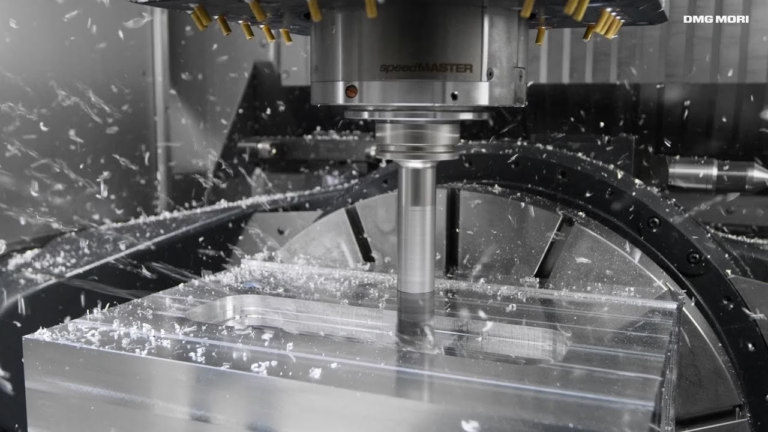
Yes, CNC machines can absolutely cut Ferrium M54, but it is widely regarded as one of the most challenging materials to machine in the aerospace and high-performance engineering sectors. Successfully machining this ultra-high-strength steel is not a question of basic capability, but one of specialized expertise, advanced equipment, and meticulous process control.
Ferrium M54 is a secondary-hardening, martensitic ultra-high strength steel developed for demanding applications like aircraft landing gear, transmission gears, and structural components. Its exceptional properties—a tensile strength exceeding 280 ksi (1930 MPa) and superior fracture toughness—are what make it both highly desirable and notoriously difficult to machine. The same alloying elements (like chromium, molybdenum, nickel, and cobalt) that grant it incredible strength in its final heat-treated state also make it extremely hard, abrasive, and prone to work hardening during the cutting process.
The Core Challenges of Machining Ferrium M54
Attempting to machine Ferrium M54 with standard protocols used for common alloys like 4140 or even 300M steel will lead to rapid tool failure, poor surface finish, and potential subsurface damage to the part. The primary hurdles include:
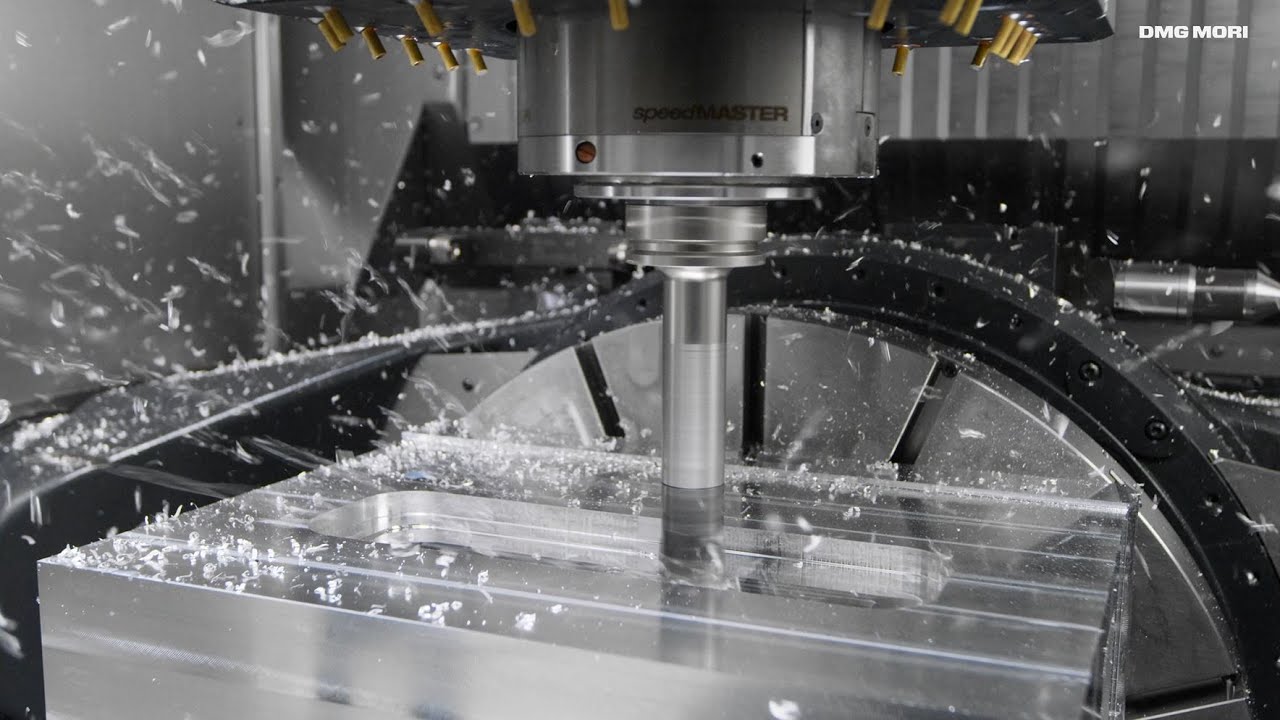
Extreme Tool Wear and Abrasion: The material’s hardness and abrasive carbides quickly degrade cutting tool edges. Standard carbide tools may fail within minutes.
High Cutting Forces and Heat Generation: Significant power is required to shear the material, generating intense heat at the cutting zone.
Risk of Work Hardening: Improper cutting parameters (especially too light a cut or a dull tool) can plastically deform the surface layer, hardening it further and making subsequent passes even more difficult.
Maintaining Dimensional Stability and Surface Integrity: The goal is not just to shape the part but to do so without inducing micro-cracks, residual stresses, or a “white layer” of untempered martensite that can drastically reduce the component’s fatigue life.
The Specialized CNC Machining Strategy for Success
Overcoming these challenges requires a holistic, engineered approach. Here is the methodology employed by advanced workshops like GreatLight CNC Machining Factory to reliably machine Ferrium M54:
1. Strategic Planning: The “When” and “How” of Machining
A critical decision is the machining sequence relative to heat treatment. Ferrium M54 is often supplied in a softened (annealed or over-tempered) condition for rough machining, followed by final heat treatment to achieve its ultimate strength. Finish machining is then performed on the fully hardened material. This two-step approach saves time and cost on roughing but demands ultimate precision for the finishing operations on the ultra-hard state.
2. Tooling: The First Line of Defense
Tool Material: Polycrystalline Cubic Boron Nitride (PCBN) and advanced sub-micron grain carbide grades with specialized hard-facing coatings (like TiAlN or AlCrN) are mandatory. These materials maintain their hardness at high temperatures.
Tool Geometry: Tools require extremely sharp, honed edges with positive rakes and polished flutes to reduce cutting forces and facilitate chip evacuation. Robust toolholders with maximum rigidity (like hydraulic or shrink-fit) are non-negotiable to minimize vibration.
3. CNC Machine & Process Parameters: Precision Through Power and Stability
Machine Tool: A high-rigidity, high-torque 5-axis CNC machining center is ideal. The machine must have exceptional damping characteristics, a powerful spindle, and a highly stable thermal state. The simultaneous control offered by 5-axis CNC machining allows for optimal tool orientation, maintaining consistent cutting conditions and avoiding tool dwell.
Cutting Parameters: This is a delicate balance. Parameters are optimized to:
Use lower cutting speeds (SFM) compared to softer steels to manage heat.
Employ higher feed rates to get under the work-hardened layer.
Apply significant depth of cut with a sharp tool to ensure cutting occurs in the softer material below any work-hardened surface.
Coolant Strategy: High-pressure, through-tool coolant (at 1000+ psi) is crucial. It serves to:
Evacuate chips instantly to prevent re-cutting.
Cool the tool and part, reducing thermal stress.
Penetrate the cutting zone to lubricate and reduce cutting forces.
4. Quality Assurance: Verifying More Than Dimensions
Post-machining inspection goes beyond standard CMM checks. It often includes:
Surface Roughness Analysis: Ensuring surface finish meets specifications for fatigue resistance.
Non-Destructive Testing (NDT): Techniques like fluorescent penetrant inspection (FPI) may be used to check for surface defects or micro-cracks induced during machining.
Conclusion: A Task for Specialists, Not Generalists
So, can a CNC machine cut Ferrium M54? Yes, but it is a task that separates precision manufacturing specialists from general machine shops. It demands an integrated ecosystem of advanced 5-axis CNC machining equipment, proprietary tooling knowledge, empirical data on cutting parameters, and a quality system rigorous enough for aerospace-grade components. For engineering teams specifying this exceptional material, the choice of manufacturing partner is as critical as the material choice itself. Partnering with a certified expert who has a proven track record with ultra-high-strength alloys is the single most important factor in transforming a Ferrium M54 billet into a reliable, high-performance component.
For projects where failure is not an option, this level of specialized capability is essential. Manufacturers like GreatLight CNC Machining Factory, with their portfolio of advanced machining solutions and experience in tackling difficult materials, are equipped to navigate the complexities of Ferrium M54, ensuring the final part leverages the material’s full potential without compromise.
Frequently Asked Questions (FAQ)
Q1: What is the biggest mistake people make when trying to machine Ferrium M54?
A1: The most common and costly mistake is using inappropriate tooling or overly conservative, low-feed cutting parameters. This leads to rapid work hardening of the surface. The tool then rubs instead of cuts, generating excessive heat and accelerating tool failure, often resulting in a ruined part subsurface.
Q2: Is it better to machine Ferrium M54 before or after final heat treatment?
A2: The standard and most efficient practice is a two-step process: perform the bulk of material removal (roughing) in its annealed, softer state. After final heat treatment to achieve full strength, perform light finishing passes to achieve final dimensions and critical surface finishes. This balances machining cost with the ability to hold tight tolerances on the hardened material.
Q3: What are the best alternatives to Ferrium M54 if machining is a major concern?
A3: For applications requiring high strength but better machinability, consider:
Aermet 100/340: Similar aerospace-grade steels but with different machining characteristics.
300M: A more traditional ultra-high-strength steel that is relatively easier to machine than Ferrium M54.
Vacuum-melted 4340 or 4140 steels at high hardness levels (e.g., HRC 50-54). Material selection should always be a dialogue between design engineering and your manufacturing partner.
Q4: How does a manufacturer like GreatLight CNC Machining Factory demonstrate competence for such a difficult job?
A4: Look for concrete evidence: ISO 9001/AS9100 certification for aerospace quality systems, case studies or samples of work with similar UHSS materials, a detailed process plan that addresses tooling, parameters, and cooling strategy, and investment in the necessary high-rigidity, 5-axis equipment and high-pressure coolant systems. Their ability to discuss the challenges knowledgeably is a key indicator.



















