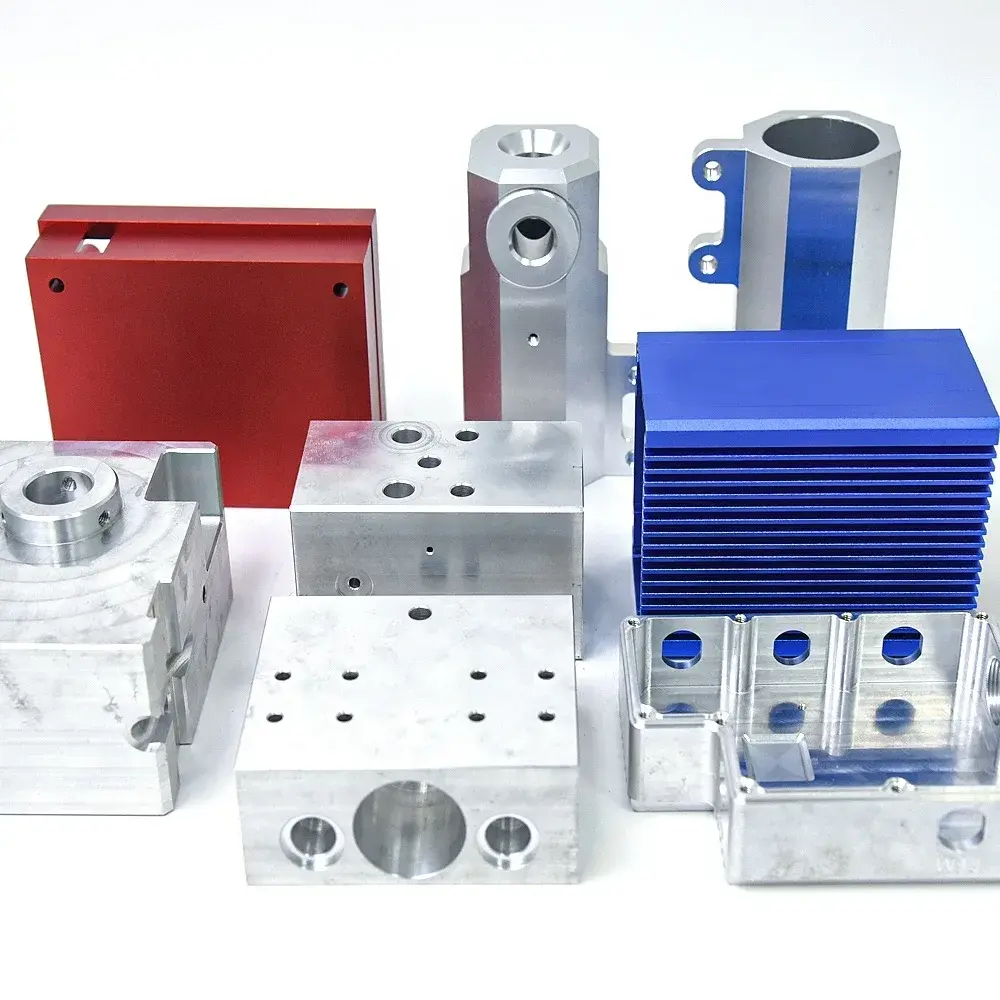
127 Sets High-Precision CNC Lathes
15 Years of Experience

Can CNC Machine Cut Ferrium M54 Material?

Navigating CNC Machining of Ferrium M54: Your Complete Guide Introduction: Ferrium M54, an ultra-high-strength steel alloy developed for critical aerospace applications like landing gear and racing components, presents unique machining challenges. This structured FAQ guide addresses the burning questions engineers, machinists, and procurement specialists face when tackling CNC jobs with this demanding material. We’ll explore […]

CNC Content Navigation

Navigating CNC Machining of Ferrium M54: Your Complete Guide

Introduction:
Ferrium M54, an ultra-high-strength steel alloy developed for critical aerospace applications like landing gear and racing components, presents unique machining challenges. This structured FAQ guide addresses the burning questions engineers, machinists, and procurement specialists face when tackling CNC jobs with this demanding material. We’ll explore its properties, machining strategies, common pitfalls, advanced techniques, and essential handling considerations, empowering you with practical knowledge derived from industry practices and metallurgical principles.


Understanding Ferrium M54 Properties & Suitability

What exactly is Ferrium M54, and why is it used?

A1: Ferrium M54 is a premium carbide-strengthened martensitic steel alloy engineered for exceptional strength-to-weight ratio, fracture toughness, and fatigue resistance, primarily used in demanding aerospace applications requiring performance extremes under stress.
A2: Its unique metallurgy combines elements like cobalt, nickel, and chromium to form fine, uniformly distributed complex carbides within a tough martensitic matrix. This structure achieves impressive tensile strengths exceeding 280 ksi (1930 MPa) and excellent damage tolerance, surpassing traditional steels like 4340 or 300M. Its corrosion resistance is moderate but enhanced compared to similar steels. Its combination of properties makes it indispensable for lightweight, high-stress components but necessitates specialized machining approaches.
A3: Before machining, verify material certification confirming heat treatment (typically solution treated and overaged – STOA or Triple Temped) and alloy composition. Understand the specific properties driving its use in your component to inform machining targets.

Can CNC machines successfully cut Ferrium M54?

A1. Yes, CNC machining is capable of cutting Ferrium M54, but it requires meticulous planning, specialized tooling, optimized parameters, and rigid machinery due to the alloy’s extreme hardness and toughness.
A2. Ferrium M54’s hardness ranges from 47-53 HRC in the common STOA condition. This high hardness causes rapid tool wear. More significantly, its fracture toughness means it does not shear predictably like softer steels; instead, it severely work-hardens and generates high cutting forces and intense heat at the tool-workpiece interface. A standard CNC machining center designed for steels, prioritizing rigidity and power, is essential. Older or less rigid machines will struggle significantly.
A3. Confirm CNC machine suitability: Ensure your machine has adequate spindle power (HP/kW), torque at low-medium RPMs, exceptional rigidity to dampen vibrations, and a robust high-pressure coolant system (>1000 psi / 70 bar).

How does Ferrium M54 compare in machinability to tool steel or titanium?

A1: Ferrium M54 is generally considered more challenging to machine than common tool steels (like D2 or H13) and significantly more difficult than titanium alloys (like Ti-6Al-4V) or stainless steels.
A2: While hardened tool steels are also hard (often 50-60+ HRC), Ferrium M54’s combination of high hardness with extreme fracture toughness is the key issue. It generates significantly higher cutting forces than tool steels and massively higher than titanium. Chip formation is problematic – it tends to fragment unpredictably rather than forming manageable curls, increasing friction and heat and accelerating tool wear dramatically compared to Ti-6Al-4V (A ‘Comparative Machinability Chart’ showing force, energy consumption, tool wear rates for Ferrium M54 vs. Tool Steel/Titanium can be inserted here).
A3. Plan for substantially longer machining times and higher tooling costs compared to titanium or common tool steels. Prioritize shops or personnel with documented aerospace alloy experience.


Key CNC Machining Challenges & Strategies

What are the primary challenges when CNC machining Ferrium M54?

A1: The dominant challenges are catastrophic tool failure (chipping and fracture), rapid flank wear, poor chip control leading to chip recutting, and managing intense cutting zone heat.
A2: High hardness causes abrasive wear, while the alloy’s toughness induces cyclic stresses that lead to catastrophic chipping, particularly on cutting edges. Chip formation difficulties cause chips to weld to the tool (BUE) or recut, escalating heat and wear exponentially. The heats generated can locally soften tooling or alter the machined surface integrity. Maintaining dimensional accuracy requires countering these forces and heat-induced distortions.
A3. Mitigation Strategy: Employ highly specialized, sharp geometry carbide tools first, often transitioning to ceramics for roughing. Utilize maximum rigidity setups, aggressive chip evacuation (corncob mills, optimized flute geometry), and extremely high-pressure coolant applied precisely to the cutting zone (Consider inserting a ‘Tool Failure Mode Diagram’ illustrating chipping vs. cratering vs. flank wear).

What types of CNC cutting tools work best for Ferrium M54?

A1. Micro-grain/submicron carbide end mills and drills are the baseline requirement. Ceramic (SiAlON) inserts are highly effective for roughing turning operations and specific milling strategies.
A2. Carbide tools offer the fracture toughness needed initially. Use premium grade carbides optimized for high-temp alloys (grades like KCSM) with specialized sharp, strong geometries (lower rake angles, reinforced cutting edges, variable helix/pitch for vibration damping). Ceramics (SiAlON) withstand the extreme heat better, allowing higher cutting speeds (often 10x carbide) in dry or near-dry conditions, but are brittle and prone to catastrophic fracture if conditions aren’t perfect – demanding absolute rigidity and vibration suppression.
A3. Follow tool manufacturer specifications rigorously: Use manufacturer-recommended feeds/speeds as starting points. For carbide, prioritize sharp, chamfered edges. For ceramics, ensure perfect clamping rigidity and controlled engagement (light radial DOC, heavy axial DOC). Utilize specialized coatings (AlCrN, AlTiCrN) on carbide.

What CNC machining parameters (speed, feed, DOC) are recommended?

A1. Conservative speeds and feeds are critical: Focus on heavy axial depth of cut (DOC), light radial DOC (stepovers), moderate-to-high feed rates per tooth once cutting, and aggressive chip evacuation. Exact parameters vary drastically by operation (turning vs milling), tool type, machine power/stability, and setup rigidity.
A2. Principle: Avoid dwelling. Keep the tool actively cutting to manage heat generation. High feed rates per tooth help promote chip evacuation before chips recut. Axial DOC uses more of the cutter’s length, distributing wear. Light radial DOC minimizes engagement, lowering forces/heat and maximizing coolant penetration. Running too fast (especially with carbide) overheats the tool; running too slow invites work hardening (A ‘Parameter Selection Flowchart for Ferrium M54’ can be inserted here).
A3. Starting Points (Carbide End Mill):

  • Material Removal: Prioritize depth over width. Use Axial DOC = 1.5-2x Diameter, Radial DOC = 5-10% of Diameter.
  • Speed: Surface Speed = 140-225 SFM / 45-70 m/min. Start LOW.
  • Feed: Chip Load = 0.05-0.10 mm/tooth. Start MODERATE.
  • Action: Monitor Tool Wear Aggressively. Adjust parameters immediately at first signs of deterioration. Never compromise coolant application (>1000 psi directed at cutting edge). (Refer to our detailed "Optimizing Feeds & Speeds for Aerospace Alloys" guide here).


Preventing Problems & Optimizing Results

How can I avoid work hardening and overheating the part/tool?

A1. Continuous, uninterrupted cutting and high-pressure coolant targeting the tool-chip interface are paramount to preventing work hardening and destructive heat buildup.
A2. Work hardening occurs when rubbing or interrupted cuts cause localized plastic deformation without actual efficient chip removal. This drastically increases hardness locally, accelerating tool wear and potentially compromising surface integrity. Overheating weakens cutting tools and can alter the metallurgy of the workpiece subsurface. Maintaining positive chip formation and evacuating heat via chips is crucial. Flood coolant alone cannot penetrate effectively at the tool edge interface under extreme pressures; only high pressure coolant achieves this in deep or critical cuts.
A3. Action Plan: Program toolpaths for constant engagement. Use climb milling exclusively. Employ dwell-free ramping entries/exits. Ensure coolant nozzles are precisely positioned and unobstructed. **Utilize coolant pressures exceeding


CNC Experts

Picture of JinShui Chen

JinShui Chen

Rapid Prototyping & Rapid Manufacturing Expert

Specialize in CNC machining, 3D printing, urethane casting, rapid tooling, injection molding, metal casting, sheet metal and extrusion

CNC Recent Posts

CNC News

Common CNC Machining Products

Welcome to GreatLight Metal,Maximum Processing Size 4,000 mm

Precision Machining CNC Quote Online

Loading file

Upload Click here to upload or drag and drop your model to the canvas.

The model is too large and has been resized to fit in the printer's build tray. [Hide]

The model is too large to fit in the printer's build tray. [Hide]

The model is too large, a fitting printer is selected. [Hide]

The model is too small and has been upscaled. [Hide]

Warning: The selected printer can not print in full color [Hide]

Warning: obj models with multiple meshes are not yet supported [Hide]

Warning: Unsupported DXF entity  [Hide]

Warning: could not arrange models [Hide]


File Unit:      
Scale:
%
L × W × H:
X: × Y: × Z:  cm 
Rotation:
X: ° Y: °  

	
⚡ Instant Quote for Precision Manufacturing

Submit your design files (STEP/IGES/DWG) and receive a competitive quote within 1 hour, backed by ISO 9001-certified quality assurance.

📋 How It Works

  1. Upload & SpecifyShare your 3D model and select materials (Aluminum/Stainless Steel/Titanium/PEEK), tolerances (±0.002mm), and surface treatments.

  2. AI-Powered AnalysisOur system calculates optimal machining strategy and cost based on 10+ years of automotive/aerospace data.

  3. Review & ConfirmGet a detailed breakdown including:
    - Volume pricing tiers (1-10,000+ units)
    - Lead time (3-7 days standard)
    - DFM feedback for cost optimization

Unit Price: 

Loading price
5 Axis CNC Machining Equipment
4 Axis CNC Machining Equipment
3 Axis CNC Machining Equipment
CNC Milling & Turning Equipment
Prototype and Short-Run Injection Moldings Exact plastic material as final design
Volume Metal Die Casting Services - Precision Cast Parts
Bridge the Gap From Prototype to Production – Global delivery in 10 days or less
Custom high-precision sheet metal prototypes and parts, as fast as 5 days.
Custom Online 3D Printing Services
Design Best Processing Method According To 3D Drawings
Alloys Aluminum 6061, 6061-T6 Aluminum 2024 Aluminum 5052 Aluminum 5083 Aluminum 6063 Aluminum 6082 Aluminum 7075, 7075-T6 Aluminum ADC12 (A380)
Alloys Brass C27400 Brass C28000 Brass C36000
Alloys Stainless Steel SUS201 Stainless Steel SUS303 Stainless Steel SUS 304 Stainless Steel SUS316 Stainless Steel SUS316L Stainless Steel SUS420 Stainless Steel SUS430 Stainless Steel SUS431 Stainless Steel SUS440C Stainless Steel SUS630/17-4PH Stainless Steel AISI 304
Inconel718
Carbon Fiber
Tool Steel
Mold Steel
Alloys Titanium Alloy TA1 Titanium Alloy TA2 Titanium Alloy TC4/Ti-6Al 4V
Alloys Steel 1018, 1020, 1025, 1045, 1215, 4130, 4140, 4340, 5140, A36 Die steel Alloy steel Chisel tool steel Spring steel High speed steel Cold rolled steel Bearing steel SPCC
Alloys Copper C101(T2) Copper C103(T1) Copper C103(TU2) Copper C110(TU0) Beryllium Copper
Alloys Magnesium Alloy AZ31B Magnesium Alloy AZ91D
Low Carbon Steel
Alloys Magnesium Alloy AZ31B Magnesium Alloy AZ91D
ABS Beige(Natural) ABS Black ABS Black Antistatic ABS Milky White ABS+PC Black ABS+PC White
PC Black PC Transparent PC White PC Yellowish White PC+GF30 Black
PMMA Black PMMA Transparent PMMA White
PA(Nylon) Blue PA6 (Nylon)+GF15 Black PA6 (Nylon)+GF30 Black PA66 (Nylon) Beige(Natural) PA66 (Nylon) Black
PE Black PE White
PEEK Beige(Natural) PEEK Black
PP Black PP White PP+GF30 Black
HDPE Black HDPE White
HIPS Board White
LDPE White
This is a finish of applying powdered paint to the components and then baking it in an oven, which results in a stronger, more wear- and corrosion-resistant layer that is more durable than traditional painting methods.
No coating required, product’s natural color!
This is a finish of applying powdered paint to the components and then baking it in an oven, which results in a stronger, more wear- and corrosion-resistant layer that is more durable than traditional painting methods.
This finishing option with the shortest turnaround time. Parts have visible tool marks and potentially sharp edges and burrs, which can be removed upon request.
Sand blasting uses pressurized sand or other media to clean and texture the surface, creating a uniform, matte finish.
Polishing is the process of creating a smooth and shiny surface by rubbing it or by applying a chemical treatmen
A brushed finish creates a unidirectional satin texture, reducing the visibility of marks and scratches on the surface.
Anodizing increases corrosion resistance and wear properties, while allowing for color dyeing, ideal for aluminum parts.
Black oxide is a conversion coating that is used on steels to improve corrosion resistance and minimize light reflection.
Electroplating bonds a thin metal layer onto parts, improving wear resistance, corrosion resistance, and surface conductivity.
This is a finish of applying powdered paint to the components and then baking it in an oven, which results in a stronger, more wear- and corrosion-resistant layer that is more durable than traditional painting methods.
Please provide additional text description for other surface treatment requirements!
Material
Material
  • CNC Metals
    • Aluminum
    • Brass
    • Stainless steel
    • Inconel718
    • Carbon Fiber
    • Tool Steel
    • Mold Steel
    • Titanium
    • Alloy Steel
    • Copper
    • Bronze
    • Low Carbon Steel
    • Magnesium
  • CNC Plastics
    • ABS
    • PC
    • PMMA (Acrylic)
    • PA (Nylon)
    • PE
    • PEEK
    • PP
    • HDPE
    • HIPS
    • LDPE
Printer
Printer
  • CNC Metals
    • 5 Axis CNC Machining
    • 4 Axis CNC Machining
    • 3 Axis CNC Machining
    • CNC Milling & Turning
    • Rapid Tooling
    • Metal Die Casting
    • Vacuum Casting
    • Sheet Metal Fabrication
    • SLA 3D Printing
    • SLS 3D Printing
    • SLM 3D Printing
  • Rapid Prototyping
    • Design Best Processing Method According To 3D Drawings
Post-processing
Post-processing
  • As Machined(Product’s natural color)
  • Sand Blasting
  • Polishing
  • Brushed Finish
  • Anodizing
  • Black Oxide
  • Electroplating
  • Paint Coating
  • Powder Coating
  • Other surface treatment requirements
Finalize
The world's first CNC machining center that dares to provide free samples!

Free for first product valued at less than $200. (Background check required)

precision machining cnc quote online

15 Years CNC Machining Services

When you’re ready to start your next project, simply upload your 3D CAD design files, and our engineers will get back to you with a quote as soon as possible.
Scroll to Top

ISO 9001 Certificate

ISO 9001 is defined as the internationally recognized standard for Quality Management Systems (QMS). It is by far the most mature quality framework in the world. More than 1 million certificates were issued to organizations in 178 countries. ISO 9001 sets standards not only for the quality management system, but also for the overall management system. It helps organizations achieve success by improving customer satisfaction, employee motivation, and continuous improvement. * The ISO certificate is issued in the name of FS.com LIMITED and applied to all the products sold on FS website.

greatlight metal iso 9001 certification successfully renewed
GB T 19001-2016 IS09001-2015
✅ iso 9001:2015
greatlight metal iso 9001 certification successfully renewed zh

IATF 16949 certificate

IATF 16949 is an internationally recognized Quality Management System (QMS) standard specifically for the automotive industry and engine hardware parts production quality management system certification. It is based on ISO 9001 and adds specific requirements related to the production and service of automotive and engine hardware parts. Its goal is to improve quality, streamline processes, and reduce variation and waste in the automotive and engine hardware parts supply chain.

automotive industry quality management system certification 01
Certification of Production Quality Management System for Engine Hardware Parts Engine Hardware Associated Parts
automotive industry quality management system certification 00
发动机五金零配件的生产质量管理体系认证

ISO 27001 certificate

ISO/IEC 27001 is an international standard for managing and processing information security. This standard is jointly developed by the International Organization for Standardization (ISO) and the International Electrotechnical Commission (IEC). It sets out requirements for establishing, implementing, maintaining, and continually improving an information security management system (ISMS). Ensuring the confidentiality, integrity, and availability of organizational information assets, obtaining an ISO 27001 certificate means that the enterprise has passed the audit conducted by a certification body, proving that its information security management system has met the requirements of the international standard.

greatlight metal technology co., ltd has obtained multiple certifications (1)
greatlight metal technology co., ltd has obtained multiple certifications (2)

ISO 13485 certificate

ISO 13485 is an internationally recognized standard for Quality Management Systems (QMS) specifically tailored for the medical device industry. It outlines the requirements for organizations involved in the design, development, production, installation, and servicing of medical devices, ensuring they consistently meet regulatory requirements and customer needs. Essentially, it's a framework for medical device companies to build and maintain robust QMS processes, ultimately enhancing patient safety and device quality.

greatlight metal technology co., ltd has obtained multiple certifications (3)
greatlight metal technology co., ltd has obtained multiple certifications (4)

Get The Best Price

Send drawings and detailed requirements via Email:info@glcncmachining.com
Or Fill Out The Contact Form Below:

All uploads are secure and confidential.