The basic elements required for motor selection include: type of driven load, rated power, rated voltage, rated speed and other conditions.
1. Type of driven load
This must be said from the engine characteristics. Motors can be simply divided into DC motors and AC motors, and AC motors are further divided into synchronous motors and asynchronous motors.
1. DC motor
Advantages of DC motors
The speed can be easily adjusted by changing the voltage and can provide greater torque. It is suitable for loads that require frequent speed adjustment, such as rolling mills in steel mills, hoists in mines, etc. But now with the development of frequency conversion technology, AC motors can also adjust the speed by changing the frequency. However, although the price of variable frequency motors is not much higher than that of ordinary motors, the price of frequency converters accounts for most of the entire equipment, so DC motors also have the advantage of being inexpensive.
Disadvantages of DC motors
The structure is complex. As long as the structure of equipment is complex, it will inevitably lead to an increase in the failure rate. Compared to AC motors, DC motors have complex windings (field windings, switching pole windings, compensation windings, armature windings) and additional slip rings, brushes and commutators.
Not only does the manufacturer have high process requirements, but subsequent maintenance costs are also relatively high. Therefore, DC motors are in an embarrassing situation of gradual decline in industrial applications, but they remain useful in the transition phase. If the user has sufficient funds, it is recommended to choose the solution of an AC motor with a frequency converter. After all, using a frequency converter also brings many advantages, which I will not go into detail about.
2. Asynchronous motor
Advantages of asynchronous motors
It has simple structure, stable performance, easy maintenance and low price. And the manufacturing process is also the simplest. I once heard an old technician in the workshop say that in the same hour of work to assemble a DC motor, two synchronous motors or four asynchronous motors of similar power can be made. This. This is why asynchronous motors are the most widely used in industry.
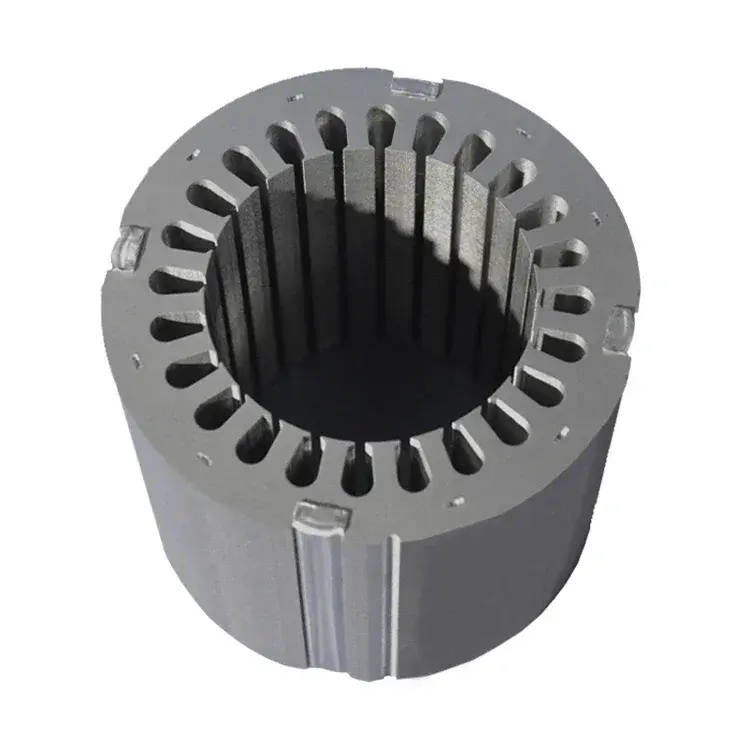
Asynchronous motors are divided into squirrel cage motors and wound type motors. The difference is in the rotor. The rotors of squirrel cage motors are made of metal strips, either copper or aluminum. The price of aluminum is relatively low and our country is a large aluminum ore producing country, so it is widely used in situations where requirements are low. However, the mechanical properties and electrical conductivity of copper are better than those of aluminum. Most of the rotors I have come into contact with are copper rotors. After solving the problem of broken rows in the process, the reliability of the squirrel cage motor is much higher than that of the wound rotor motor.
Disadvantages of asynchronous motors
The torque obtained by the metal rotor by cutting the magnetic field lines in the magnetic field of the rotating stator is small, and the starting current is large, which makes it difficult for loads requiring large starting torque. Although increasing the length of the motor core can produce more torque, the power is very limited.
When the wound motor starts, the rotor winding is energized by the slip ring to form a rotor magnetic field, which moves relative to the rotating stator magnetic field, thereby achieving higher torque. During the starting process, a water resistor is connected in series to reduce the starting current. Water resistance is controlled by a mature electronic control device and changes resistance with the start-up process.
Suitable for loads such as rolling mills and elevators. Since the wound asynchronous motor has slip rings, water resistance, etc. Compared with the squirrel cage motor, the overall price of the equipment has increased to a certain extent. Compared with DC motors, its speed range is narrower and its torque is relatively small, and its corresponding value is also small.
However, since the asynchronous motor powers the stator winding to establish a rotating magnetic field and the winding is an inductive component and does not perform work, it must absorb reactive power from the electrical network, which has a significant impact on the electricity network. Intuitive experience: When high-power inductive devices are connected to the network, the network voltage drops and the brightness of the lights decreases.
Therefore, the power supply bureau will impose restrictions on the use of asynchronous motors, which many factories also need to consider. Some large energy consumers, such as steel mills and aluminum factories, choose to build their own power plants and form their own independent power grid to reduce restrictions on the use of asynchronous motors. Therefore, if an asynchronous motor is to be used with high power loads, it must be equipped with a reactive power compensation device, while a synchronous motor can provide reactive power to the electrical network through a compensation device. ‘excitement. the more obvious the advantages of a synchronous motor are. This led to the emergence of synchronous motors.
3. Synchronous motor
In addition to being able to compensate for reactive power in an overexcited state, the advantages of synchronous motors also include:
1) The speed of the synchronous motor strictly adheres to n=60f/p, and the speed can be precisely controlled;
2) High operating stability. When the network voltage suddenly drops, the excitation system will generally be forced to energize to ensure stable operation of the motor, while the torque of the asynchronous motor (proportional to the square of the voltage) will decrease significantly;
3) The overload capacity is higher than that of the corresponding asynchronous motor;
4) High operating efficiency, especially for low speed synchronous motors.
Synchronous motors cannot be started directly and require asynchronous starting or variable frequency starting. Asynchronous starting means that the synchronous motor is equipped with a starting winding similar to the cage winding of the asynchronous motor on the rotor. An additional resistance of about 10 times the resistance of the field winding is connected in series in the field circuit to form a closed circuit. circuit, and the stator of the synchronous motor is directly connected. The electrical network is used to start the asynchronous motor. When the speed reaches sub-synchronous speed (95%), the additional resistance is cut off. in details on variable frequency starting. One of the disadvantages of synchronous motors is therefore that additional equipment is required for starting.
Synchronous motors operate on excitation current. Without excitation, the motor is asynchronous. The excitation is a DC system added to the rotor. Its rotation speed and polarity are consistent with the stator. In the event of an excitation problem, the motor will lose step and cannot be adjusted, triggering the “excitation fault” protection and the motor will trip.
The second disadvantage of synchronous motors is therefore the need to add an excitation device. Formerly, this was directly powered by a direct current machine, but it is now mainly powered by a silicon-controlled rectifier. As the old saying goes, the more complex the structure and the more equipment and devices, the more failure points and the higher the failure rate.
According to the performance characteristics of synchronous motors, their applications are mainly in loads such as elevators, crushers, fans, compressors, rolling mills and water pumps.
In summary, the selection principle of electric motors is that, based on the principle that the performance of the motor meets the requirements of production machines, priority should be given to electric motors with simple structure, low price , reliable operation and easy maintenance. In this regard, AC motors are better than DC motors, AC asynchronous motors are better than AC synchronous motors, and squirrel cage asynchronous motors are better than wirewound asynchronous motors.
For production machines operating continuously with a stable load and without special requirements for starting and braking, ordinary squirrel cage asynchronous motors should be preferred, which are widely used in machinery, water pumps , fans, etc.
Production machines that start and brake frequently and require large starting and braking torques, such as overhead cranes, mine hoists, air compressors, irreversible rolling mills, etc., should use wound asynchronous motors .
Synchronous motors should be used where there is no requirement for speed regulation, a constant speed is required, or the power factor needs to be improved, such as in medium and large capacity water pumps , air compressors, hoists, crushers, etc.
The speed regulation range should be greater than 1:3, and production machines that require continuous, stable and smooth speed regulation should use separately excited DC motors or squirrel cage asynchronous motors or synchronous motors with variable frequency speed regulation, such as large precision machines. tools, gantry planers, rolling mill, elevator, etc.
Production machines that require large starting torque and smooth mechanical properties use series DC or compound excitation motors, such as trams, electric locomotives, heavy cranes, etc.
2. Rated power
Motor rating refers to the output power, i.e. shaft power, also called capacity, which is the iconic parameter of the motor. People often ask how big a motor is. Generally, this does not refer to the size of the motor, but to the power rating. This is the most important indicator to quantify the load capacity of the motor, and it is also a required parameter that must be provided when selecting a motor.
(is the rated power, is the rated voltage, is the rated current, cosθ is the power factor, eta is the efficiency)
The principle of correct selection of motor capacity should be to determine the motor power in the most economical and reasonable way, based on the principle that the motor can meet the load requirements of production machines. If the power is selected too large, the equipment investment will increase, resulting in waste, and the motor will often work under load, resulting in low efficiency and low power factor of the AC motor. Conversely, if the power is selected too small, the motor will be selected; will be overloaded, causing premature motor failure.
Three factors determine the main power of the engine:
1) Heat and engine temperature rise are the most important factors that determine engine power;
2) Allow short-term overload capacity;
3) For squirrel cage asynchronous motors, the starting capacity must also be considered.
Firstly, the specific production machines calculate and select the charging power based on the heat generation, temperature rise and charging requirements. The motor then preselects the rated power based on the load power, operating system and overload requirements. Once the motor power rating has been pre-selected, heat output, overload capacity and, if applicable, starting capacity should be checked.
If any of them are not qualified, the engine must be reselected and rechecked until all items are qualified. Therefore, the working system is also one of the necessary requirements. If there are no requirements, the more conventional S1 working system will be used by default; motors with overload requirements must also provide overload multiples and asynchronous operating times; motors drive fans and other important rotations. When using an inertia load, it is also necessary to provide the load’s starting resistance moment of inertia and torque curves to verify starting capability.
The above rated power selection is based on the standard ambient temperature of 40°C. If the ambient temperature in which the motor operates changes, the motor power rating must be corrected. According to theoretical calculations and practice, when the ambient temperature is different, the engine power can be roughly increased or decreased accordingly according to the table below.
Therefore, regions with harsh climates must also provide room temperature. For example, in India, the ambient temperature must be calibrated at 50°C. Additionally, high altitude will also impact engine power. The higher the altitude, the greater the increase in engine temperature and the lower the power output. Additionally, engines used at high altitudes must take into account the impact of corona phenomena.
Regarding the power range of electric motors currently on the market, here is some data for reference.
DC motor: ZD9350 (mill) 9,350 kW
Asynchronous motor: squirrel cage type YGF1120-4 (blast furnace fan) 28000kW
Winding type YRKK1000-6 (rough mill) 7400kW
Synchronous motor: TWS36000-4 (blast furnace fan) 36,000 kW (test unit reaches 40,000 kW)
3. Rated voltage
Motor rated voltage refers to the mains voltage in rated operating mode.
The choice of motor rated voltage depends on the supply voltage of the company’s electrical system and the size of the motor capacity.
The selection of AC motor voltage level mainly depends on the supply voltage level of the place of use. Generally, the low voltage network is 380 V, so the rated voltage is 380 V (Y or △ connection), 220/380 V (△/Y connection) and 380/660 V (△/Y connection). When the power of a low-voltage motor increases to a certain level (such as 300KW/380V), the current is limited by the carrying capacity of the wire, and it is difficult to increase the current, or the cost is too much pupil.
High output power must be obtained by increasing the voltage. The supply voltage of the high-voltage power grid is generally 6000 V or 10000 V, and there are also voltage levels of 3300 V, 6600 V and 11000 V abroad. The advantages of high voltage motors are high power and strong ability to withstand shock; the disadvantages are high inertia and difficulties in starting and braking.
The rated voltage of the DC motor must also match the supply voltage. Typically 110V, 220V and 440V. Among them, 220V is the common voltage level, and high-power motors can be increased up to 600~1000V. When the AC power supply is 380V and a three-phase bridge type silicon-controlled rectifier circuit is used to supply power, the rated voltage of the DC motor should be 440V when a three-phase half-wave silicon-controlled rectifier power supply is used. To supply power, the rated voltage of the DC motor should be 220V.
4. Rated speed
Rated motor speed refers to the speed in rated operating mode.
The electric motor and the machines driven by it have their own rated speeds. When choosing the motor speed, you should be careful not to choose too low a speed, because the lower the rated speed of the motor, the more stages it has, the larger the volume, and the higher the price. at the same time ; At the same time, the engine speed should not be chosen too high, as this will make the transmission mechanism too complex and difficult to maintain.
In addition, when the power is constant, the engine torque is inversely proportional to the speed.
Therefore, those who do not have high requirements for starting and braking can make a comprehensive comparison with several different rated speeds in terms of initial equipment investment, floor space, maintenance costs, etc., and finally determine the rated speed during frequent starts; braking and reversing, however, if the duration of the transition process has little impact on productivity, in addition to considering the initial investment, the gear ratio and the rated speed of the motor are mainly selected based on the loss minimum of the transition process. For example, the elevator motor requires frequent forward and reverse rotation and large torque, so the rotation speed is very low. The engine is bulky and expensive.
When the motor speed is high, the critical motor speed must also be considered. The motor rotor vibrates during operation. The rotor amplitude increases with increasing rotation speed, the amplitude reaches the maximum value (commonly known as resonance). increases with the rotation speed. Gradually decreases and stabilizes within a certain range. The speed at which the rotor amplitude is greatest is called the critical rotor speed.
This speed is equal to the natural frequency of the rotor. As the rotational speed continues to increase, the amplitude will increase again when it is close to 2 times the natural frequency. When the rotation speed is equal to 2 times the natural frequency, we speak of second-order critical speed, and by analogy. , there are third-order, fourth-order and other critical speeds. If the rotor is operating at a critical speed, it will vibrate violently and the curvature of the shaft will increase significantly. Long-term operation will also cause serious bending deformation or even breakage of the shaft.
The first-order critical speed of the motor is generally greater than 1500 rpm, so conventional low-speed motors generally do not take into account the influence of critical speed. On the contrary, for a bipolar high-speed motor with a rated speed close to 3000 rpm, this effect should be considered and the motor should be avoided from being used in the critical speed range for a long time.
Generally speaking, the motor can be roughly determined by providing the type of driven load, rated power, rated voltage and rated speed of the motor. But these basic parameters are far from sufficient to optimally meet load requirements. Parameters that must also be provided include: frequency, operating system, overload requirements, insulation level, protection level, moment of inertia, load resistance torque curve, method installation conditions, ambient temperature, altitude, outdoor requirements, etc., which are provided according to particular circumstances.
Daguang focuses on providing solutions such as precision CNC machining services (3-axis, 4-axis, 5-axis machining), CNC milling, 3D printing and rapid prototyping services.