

As precision measuring tools, micrometers (also called spiral micrometers) and calipers are widely used in precision machining and are well-known among industry professionals. However, the measured value is not an absolute value only when the measuring tools are used. can he correctly To get closer to his real body, will you use these two measuring tools?
How to Read the Outside Diameter Micrometer Scale
Remember to calibrate and zero before use!
Standard scale, when the graduation value is 0.01 mm
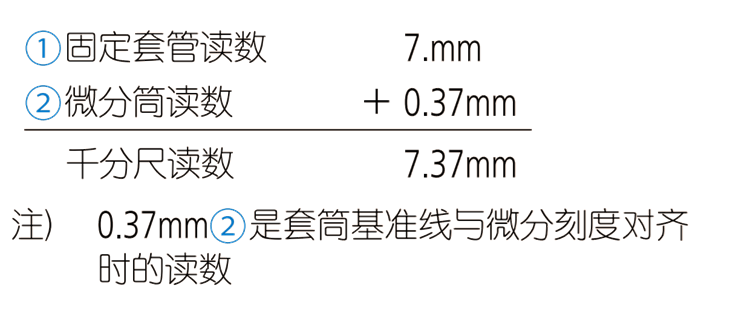
Normally, when the baseline is aligned, the last digit of the dimension can be estimated from the position of the baseline.
You can read the graduation value at 0.01mm as shown in the image above, or you can read the graduation value at 0.001mm as shown in the image below.
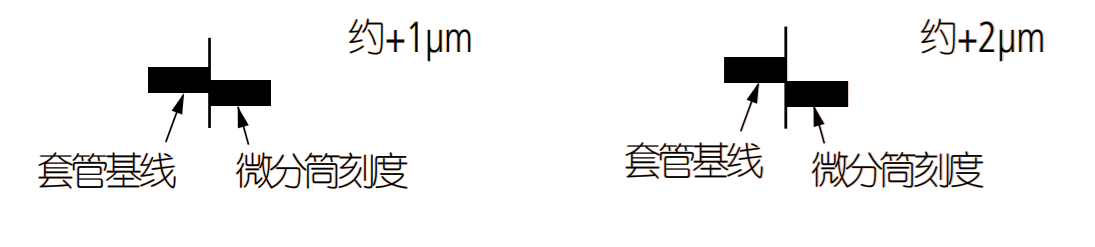
With vernier scale, when the graduation value is 0.001 mm
A micrometer with a vernier scale has a vernier scale above the base line of the housing. The reading method at this time is as shown in the figure below:

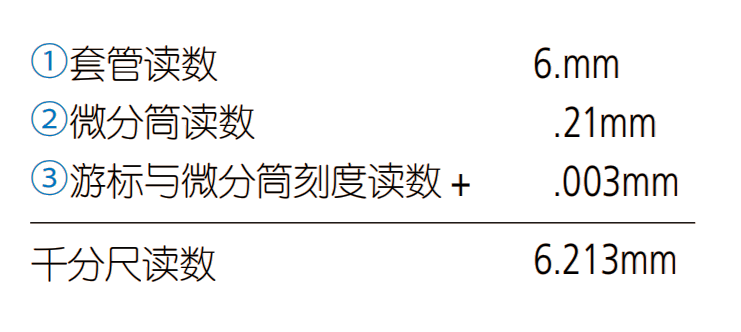
②When the guide line is between the two scales (in this case, 21 and 22), read 0.21mm. ③When the vernier scale is aligned with one of the micrometer cylinder scales, read 0.003 mm.
Precautions for readings
1) Do not miss or incorrectly read the scale below the baseline.

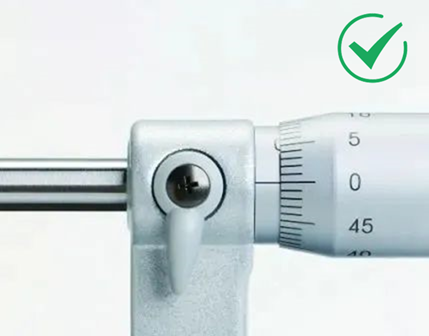
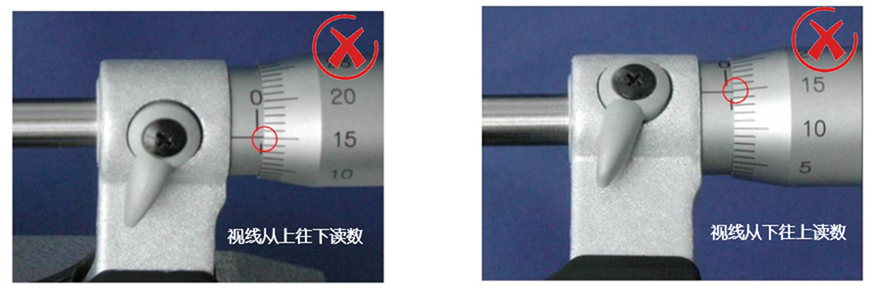
2) When reading the micrometer cylinder scale line, you should look directly at the baseline from the front.
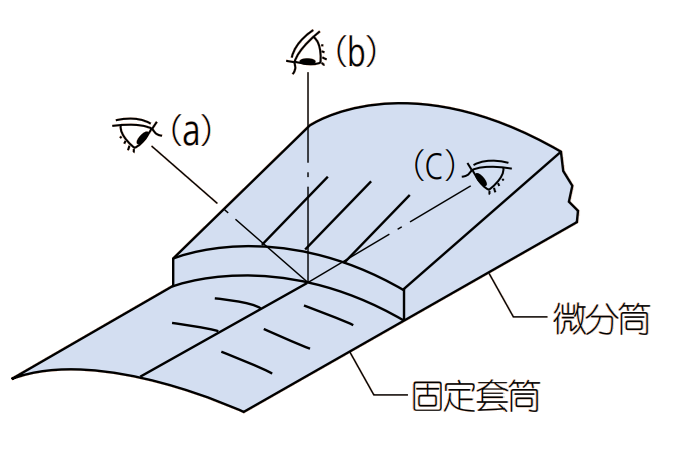
Looking directly at the baseline
If there is a tilt angle for reading (as shown below), the correct scale position will not be read due to visual deviation, resulting in reading errors.
Vernier caliper scale reading method
Remember to calibrate and zero before use!
Vernier caliper reading
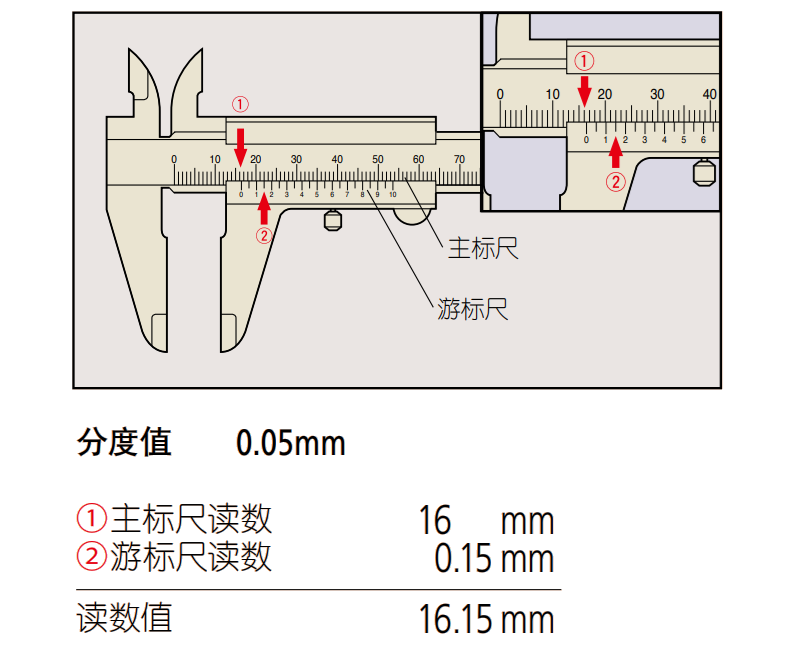
Tips: ② 0.15mm is the position where the main scale read coincides with the vernier scale.
Caliper Readings
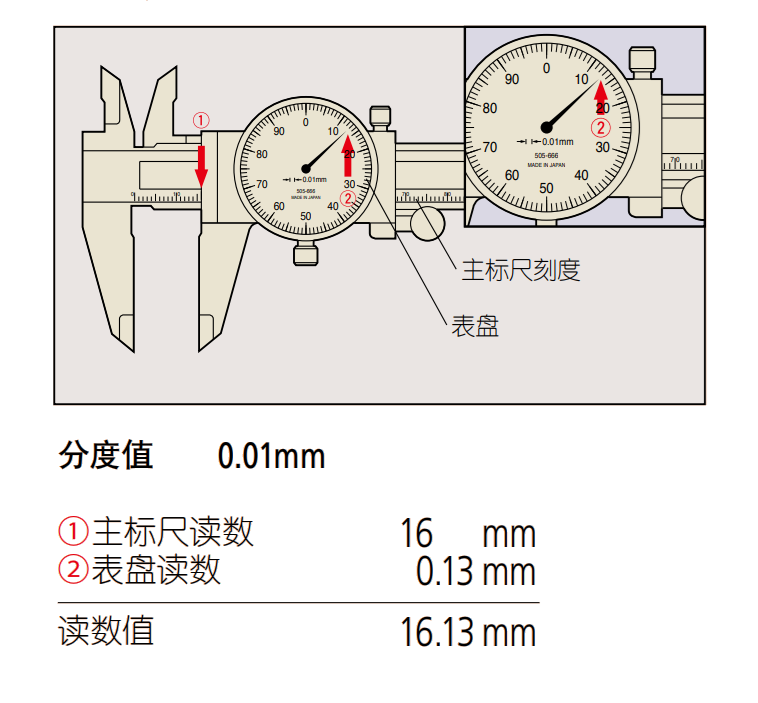
Little knowledge about the vernier scale
Observing the caliper, you will find that the vernier scale is engraved on the caliper frame and each scale is 0.05mm shorter than the 1mm of the main scale.
This means that when the jaws of the vernier caliper open, each successive movement of 0.05mm will make the next vernier scale line coincide with the main scale line, so the counting unit is 0, 05mm. Alternatively, one vernier division can be shortened by 0.05mm from the two main scale divisions to create a long vernier scale. This makes the scale easier to read, but the principles and graduations remain the same.
See ① as shown in Figure B. When the cursor moves 0.1mm to the right, it coincides with the second scale of the main ruler… Go to step ② and read 0.1mm.
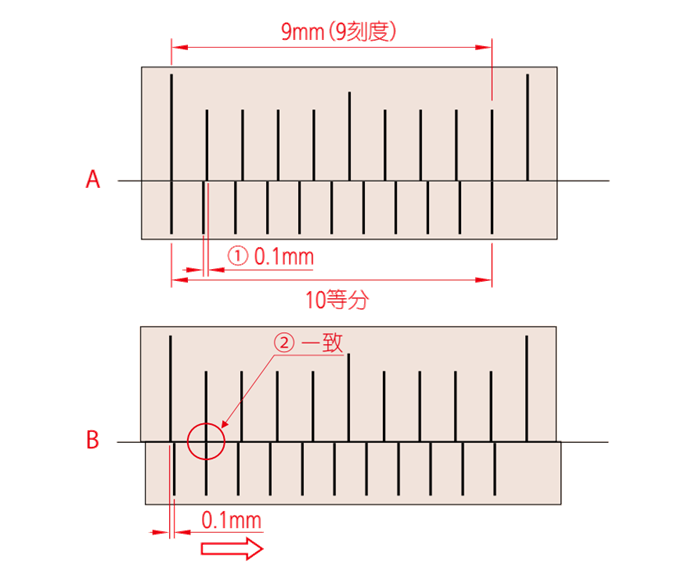
The first caliper divided the 19 scales of the main scale into 20 equal divisions, with each division measuring 0.05 mm. However, it was very difficult to find consistent lines within a narrow range. Therefore, since the 1970s, people have generally adopted the caliper method. dividing the caliper into 20 equal divisions. The 39 scales of the main scale are divided into 20 equal parts of the long vernier scale.
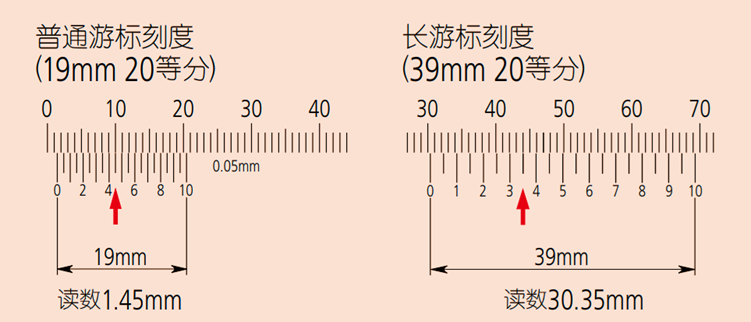
In order to read units less than 0.05mm, there is a caliper in which the 49 scales of the main scale are divided into 50 equal parts and each division is 0.02mm. However, the factor display is a 0.01mm digital display. With the advent of calipers, there are now very few calipers of this type.
Daguang focuses on providing solutions such as precision CNC machining services (3-axis, 4-axis, 5-axis machining), CNC milling, 3D printing and rapid prototyping services.



















