
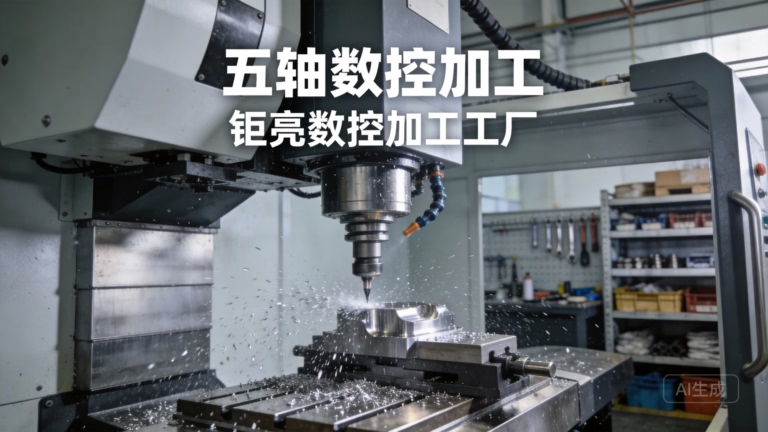
Are Ruger Precision Barrels CNC Machined? This is a question that frequently arises among firearms enthusiasts, precision manufacturing professionals, and procurement teams looking to understand the gold standard in barrel production—and how similar precision machining principles apply to their own custom part projects.
Are Ruger Precision Barrels CNC Machined?
The short answer is a definitive yes. Ruger, a renowned name in firearms manufacturing, relies heavily on computer numerical control (CNC) machining to produce its precision barrels. This technology is the backbone of the brand’s reputation for consistent accuracy, tight tolerances, and reliable performance across millions of barrels produced annually. Unlike manual machining, which is prone to human error and inconsistency, CNC machining uses pre-programmed software to control cutting tools, ensuring every barrel matches the exact design specifications with zero variation.
Why CNC Machining Is Non-Negotiable for Precision Barrels
Precision barrels are the heart of accurate firearms, and even the smallest deviation in dimensions can drastically reduce performance. CNC machining addresses the core challenges of barrel production that manual methods simply cannot match:
Tight Tolerance Requirements
Ruger’s precision barrels demand microscopic consistency—for example, bore diameter must be uniform to within ±0.0002mm along their entire length to ensure bullet stability and predictable trajectory. CNC machines execute these measurements with repeatable precision, eliminating the variance that comes with manual tool adjustments.
Complex Geometries and Features
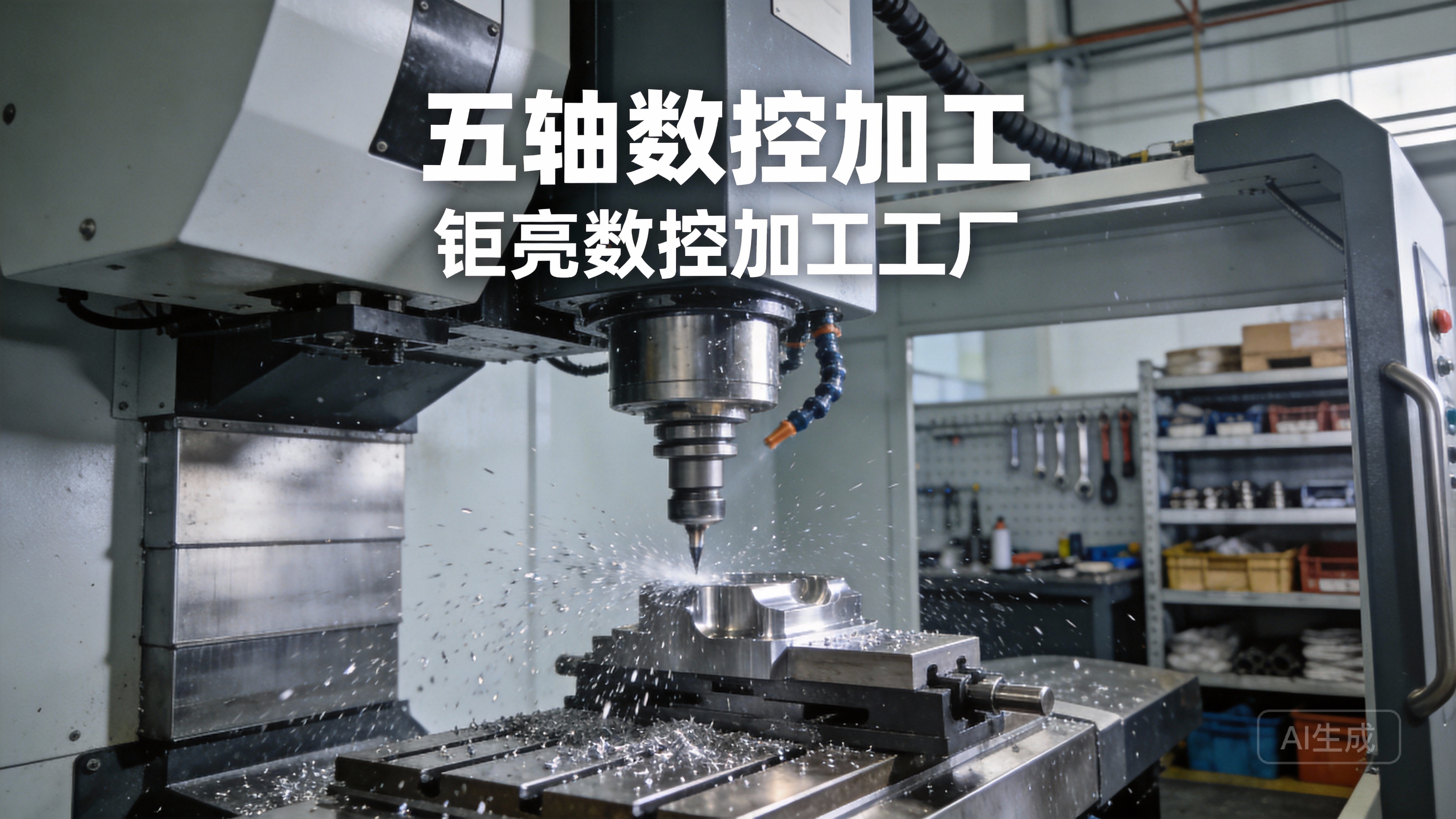
Barrels require intricate features like consistent rifling (twist rate, groove depth, and width), chamber contours that match cartridge dimensions exactly, and muzzle threads for accessories. CNC machining can execute these complex cuts with pinpoint accuracy, even in hard-to-reach areas like the chamber or deep bore.
Material Consistency
Ruger uses high-strength alloy steels for its barrels, which require controlled material removal to avoid stress concentrations that can cause warping or accuracy loss over time. CNC machining adjusts cutting speeds and feed rates based on material properties, ensuring uniform removal and preserving the structural integrity of the barrel.
Scalability and Batch Consistency
Whether producing 10 custom barrels or 10,000 for mass distribution, CNC machining ensures every piece is identical. This scalability is critical for brands like Ruger, which must maintain strict quality standards across global markets.
Key CNC Machining Techniques in Ruger Precision Barrel Production
Ruger integrates CNC machining into nearly every stage of barrel manufacturing, from raw stock to finished product:
CNC Turning for Outer Profile and Chamber
Ruger uses CNC lathes to shape the barrel’s outer diameter, ensuring consistent weight and balance. For the chamber (the section that holds the cartridge), 5-axis CNC machining centers are deployed to create precise, complex contours that prevent misfires and ensure proper cartridge seating.
CNC-Controlled Deep Hole Drilling
The bore—the inner channel of the barrel—is drilled using CNC deep hole drilling machines. These tools maintain straightness and diameter uniformity even in long barrels (up to 600mm or more), which is essential for bullet trajectory consistency.
Automated Rifling Processes
While button rifling (a common method for creating rifling grooves) is semi-automated, Ruger uses CNC controls to precisely position the barrel and apply consistent pressure during the process. This ensures the twist rate remains uniform along the entire barrel length, a key factor in long-range accuracy.
In-Process CNC Measurement
Ruger integrates CNC coordinate measuring machines (CMMs) into its production line to check dimensions at every stage. This real-time inspection catches deviations early, preventing defective barrels from advancing to the next step of production.
Translating Ruger’s CNC Precision to Your Custom Parts Projects
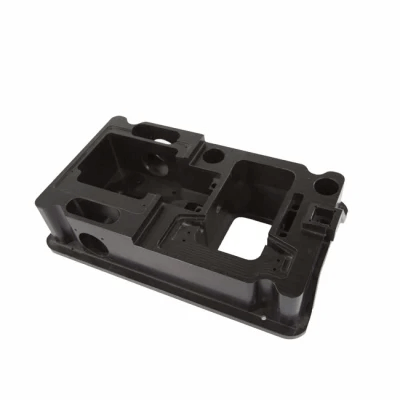
The same CNC machining principles that make Ruger barrels so reliable are applicable to precision parts across industries, including automotive engine components, medical surgical tools, aerospace sensors, and humanoid robot joints. For clients seeking this level of precision, GreatLight Metal Tech Co., LTD. (GreatLight Metal) is a leading partner that delivers comparable accuracy, consistency, and quality control.
GreatLight’s CNC Machining Capabilities That Mirror Ruger’s Standards
GreatLight’s 127-piece fleet of precision tools and ISO-certified processes ensure it meets or exceeds the standards set by Ruger’s barrel production:
| Ruger Precision Barrel Requirement | GreatLight CNC Machining Capability |
|---|---|
| ±0.0002mm bore diameter tolerance | ±0.001mm general precision; can achieve tighter tolerances for specialized projects |
| Consistent rifling twist rate | Advanced 5-axis CNC machining target=”_blank” ensures uniform feature geometry across part length |
| High-strength steel material processing | Expertise in machining alloy steels, stainless steels, and titanium alloys with controlled material removal to avoid stress deformation |
| In-process quality inspection | In-house CMMs, optical measuring tools, and ISO 9001-aligned quality control processes |
| Scalability and batch consistency | Three wholly-owned manufacturing plants to support small-batch prototyping and large-scale mass production |
Case Study: GreatLight’s Precision Machining for a Medical Cylindrical Component
A medical device manufacturer approached GreatLight needing 500 custom stainless steel components with barrel-like precision: a 150mm-long cylindrical part with a deep, straight bore (±0.0005mm tolerance) and threaded end for surgical tool integration.
GreatLight’s solution included:
Using a 5-axis CNC turning center to machine the outer profile and threaded end, ensuring perfect alignment.
Deploying CNC deep hole drilling to create the bore, maintaining straightness within 0.001mm over the entire length.
Conducting in-process CMM measurements at every stage to verify dimensions.
Adding passivation post-treatment to enhance corrosion resistance, critical for medical applications.
The result: All parts were delivered in 10 days with a 100% pass rate on quality inspection, leading to a long-term partnership with the client.
How to Choose a CNC Machining Partner for Precision Cylindrical Parts
When selecting a partner for high-precision projects (like barrel components or similar cylindrical parts), prioritize these factors:
Advanced Equipment: Look for suppliers with multi-axis CNC machines, deep hole drilling capabilities, and in-process measurement tools to ensure accuracy.
Industry Certifications: Certifications like ISO 9001:2015, IATF 16949 (automotive), and ISO 13485 (medical) demonstrate adherence to global quality standards.
Tolerance Capabilities: Ensure the supplier can meet your required tolerances—GreatLight’s ±0.001mm precision is a strong benchmark for most high-precision parts.
One-Stop Services: Avoid coordinating multiple suppliers by choosing a partner that offers end-to-end services, from raw material selection to post-processing (heat treatment, coating, polishing).
After-Sales Guarantee: A reliable supplier like GreatLight offers free rework for quality problems and a full refund if rework is unsatisfactory, providing peace of mind for high-stakes projects.
Conclusion
Are Ruger Precision Barrels CNC Machined? The answer is a resounding yes—and the CNC machining techniques that make Ruger barrels so reliable are the same ones that define top-tier precision manufacturing across industries. Whether you’re producing firearm components, medical devices, or aerospace parts, partnering with a trusted CNC machining expert like GreatLight Metal ensures you get the accuracy, consistency, and quality control you need. With advanced multi-axis equipment, rigorous certification, and a one-stop service model, GreatLight is poised to be your go-to partner for all high-precision custom parts projects. For more information on how GreatLight can support your precision machining needs, visit their LinkedIn page target=”_blank” to learn about their industry-specific solutions and client success stories.
Frequently Asked Questions (FAQ)
Q1: Are all precision barrels CNC machined?
A: Most modern high-precision barrels (like Ruger’s) use CNC machining for critical production stages. Some small-batch or custom barrels may use manual methods for certain steps, but CNC is the industry standard for consistent, scalable precision.
Q2: What tolerance level can GreatLight’s CNC machines achieve?
A: GreatLight can achieve ±0.001mm precision for most parts, and can deliver even tighter tolerances for specialized projects requiring microscopic accuracy, such as medical or aerospace components.
Q3: Can GreatLight machine parts from the same materials as Ruger barrels?
A: Yes. GreatLight works with a wide range of materials, including high-strength alloy steels, stainless steels, aluminum alloys, titanium alloys, and mold steels—perfect for replicating or customizing barrel-like components.
Q4: How long does it take to produce custom precision parts with GreatLight?
A: GreatLight specializes in rapid prototyping and quick production runs. Depending on part complexity and quantity, parts can be produced and delivered within 3–15 days.
Q5: Does GreatLight offer post-processing services for precision cylindrical parts?
A: Yes. GreatLight provides one-stop post-processing services, including heat treatment, passivation, anodizing, powder coating, polishing, and threading—ensuring your parts are ready for immediate use.
Q6: What certifications does GreatLight hold to ensure quality control?
A: GreatLight is certified to ISO 9001:2015 (general quality management), IATF 16949 (automotive industry), ISO 13485 (medical devices), and ISO 27001 (data security), demonstrating adherence to global industry standards for quality and compliance.



















