The Revolutionary Impact of 5-Axis Laser Machining: Unlocking the Power of Multidimensional Movement
Introduction
The industrial landscape has witnessed significant transformations with the advent of advanced manufacturing technologies. One such innovation is the 5-axis laser machining machine, which has revolutionized the way complex parts are manufactured with unprecedented precision and efficiency. In this blog post, we’ll delve into the intricacies of 5-axis laser machining and explore how its multivaned movement capabilities have transformed the manufacturing world.
The Mechanical Marvel: Understanding 5-Axis Laser Machining
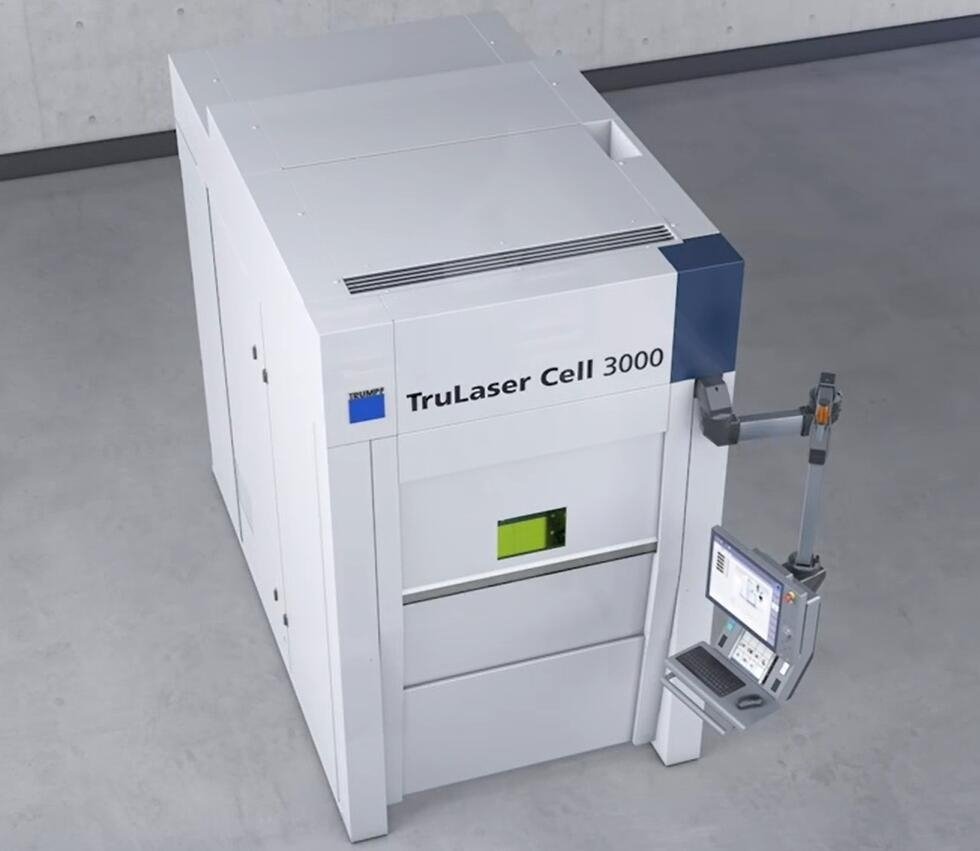
A 5-axis laser machining machine is an advanced manufacturing equipment that excels in precision and efficiency. At the heart of its capabilities lies the multidimensional movement system, which allows the laser head to navigate complex parts with unparalleled accuracy. This is achieved through the combination of linear and rotary movements along three axes of motion (X, Y, and Z) and two axes of rotation (A and B).
Mastering the Movement: Linear and Rotary Axes
The 5-axis laser machining machine features three linear axes of movement (X, Y, and Z) that enable the laser head to move in a three-dimensional space. The X and Y axes are typically used for movement in a plane, while the Z axis allows for movement in the vertical direction. This versatile movement enables the laser head to traverse complex geometries with ease.
In addition to linear movement, the 5-axis laser machining machine features two axes of rotation, typically denoted as A and B (or C depending on the machine design). These rotation axes provide additional flexibility, allowing the laser head to adjust its position and angle to suit various treatment requirements. This flexibility is particularly useful when machining parts with curved or beveled surfaces.
Control: The Brain of the 5-Axis Laser Machining Machine
The movement control system is the brains of the 5-axis laser machining machine, responsible for executing the precise movements required for complex part production. This control system relies heavily on the CNC (Computer Numerical Control) technology, which translates pre-programmed treatment instructions into actual machine movements.
Understanding Movement Control: The Interplay of CNC and Drive Systems
The CNC system and drive system work in tandem to achieve the desired movements. The CNC system receives treatment instructions, which are then converted into movement trajectories using an interpolation algorithm. This algorithm ensures that the laser head navigates the part with precision, even when performing complex movements.
The drive system, comprising an engine and transmission device, converts the CNC system’s instructions into mechanical movement. In 5-axis laser machining machines, linear axes of movement are typically driven by linear motors or servomotors, while rotary axes are driven by servomotors or gear transmissions.
Beyond Precision: The Synergies of Multidimensional Movement
The 5-axis laser machining machine’s multidimensional movement has far-reaching implications, particularly in terms of treatment precision, complexity, and efficiency.
Treatment Precision
The concurrent movement of multiple axes allows the laser head to approach parts from multiple angles, reducing treatment errors. For example, when machining a part with deep holes, the laser head can be adjusted to ensure accurate centering, resulting in increased precision.
Complexity and Flexibility
The multidimensional movement of the 5-axis laser machining machine enables the laser head to navigate complex geometries with ease. This flexibility is particularly valuable when machining parts with intricate curves, surfaces, or angles.
Efficiency
The 5-axis laser machining machine’s multidimensional movement also contributes to increased treatment efficiency. By minimizing auxiliary time required for setup and adjustments, the machine can operate at a faster pace, boosting overall productivity.
Conclusion
The 5-axis laser machining machine has revolutionized the manufacturing landscape by providing unmatched precision, complexity, and efficiency. Its multidimensional movement capabilities have transformed the way complex parts are produced, with far-reaching implications in industries such as aerospace, automotive, and electronics.
By understanding the intricacies of 5-axis laser machining and its movement control systems, manufacturers can unlock the potential of this game-changing technology, pushing the boundaries of innovation and competitiveness in their respective fields.