/ Aluminum 3D printing /
Aluminum is one of the most popular metals in industrial production, and more particularly in additive manufacturing. It is a strong, lightweight metal alloy with an ideal combination of mechanical and thermal properties. Companies engaged in materials development, particularly additive manufacturing companies, offer a variety of aluminum alloys for metal 3D printing. These materials are versatile and offer many benefits depending on the properties required for each application. To better understand the properties of this metal and the benefits it brings to 3D printed parts, take a closer look at this comprehensive guide.
/ Material properties /
Aluminum (Al), with atomic number 13, is a chemical element present in the earth’s crust. It is a non-ferromagnetic metal, meaning it cannot be magnetized by a magnetic field. Many aluminum alloys available for additive manufacturing are made from a combination of metallic and metalloid elements, including aluminum, silicon, magnesium, or copper. Some of the most popular aluminum alloys are:
AlSi7Mg – aluminum alloy with silicon (7%) and magnesium
AlSi10Mg – aluminum alloy with silicon (10%) and magnesium
AlSi12 – aluminum silicon alloy (12%)
AlSi9Cu3 – aluminum and silicon alloy (9%) and copper (3%)
The raw material from which aluminum is extracted is a mineral called bauxite. To obtain aluminum, bauxite is first converted to alumina by the Bayer process, then the aluminum is extracted by a process called electrolysis. In addition to being a light metal with a low melting point, aluminum is also a very good conductor of electricity and heat. The industrial uses of aluminum make it one of the most important materials, both in terms of quantity and use. Now let’s see how this metal is used in additive manufacturing.
/ Aluminum 3D printing /
When making 3D printed parts out of aluminum, there are many different ways to do it. One of the most common metal additive manufacturing techniques is laser powder bed fusion (LPBF), in which a laser fuses point by point a layer of metal arranged on a powder bed. In the same series, we also find electron beam fusion (EBM) technology, except that the energy source is an electron beam instead of a laser.
In addition to these two methods, there are other metal fabrication methods that can be printed with aluminum, such as binder jetting, cold metal melting, and wire arc additive manufacturing (WAAM) . Finally, we find, although to a lesser extent, the use of aluminum with FDM technology. While this method mainly works with plastic filaments, some companies have developed solutions compatible with this technology to create more durable parts.
Aluminum 3D printed parts have many advantages and disadvantages compared to other metals. Among the advantages, aluminum is a high-performance material with interesting mechanical and chemical properties. In addition to allowing the manufacturing of complex geometries, it has a high strength-to-weight ratio and is weather resistant. However, aluminum 3D printed parts are not as rigid as steel parts. Additionally, unlike titanium, aluminum is not a biocompatible metal and therefore is not ideal for use in the medical field, as we will see below.
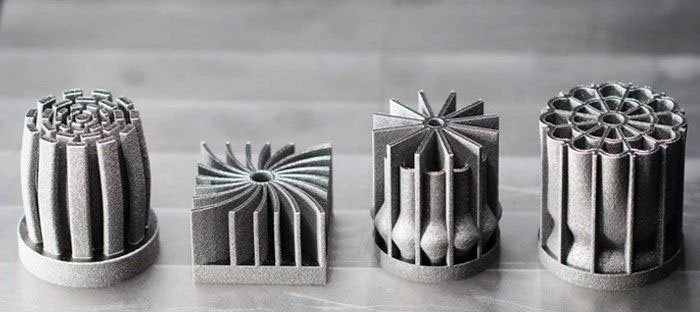
Aluminum is one of the metals with the best strength-to-weight ratio
Once the 3D printing process is complete, the vast majority of aluminum parts require some post-processing steps. This is mainly because many of the technologies compatible with this metal are part of the powder bed family. Therefore, one of the first processes to be carried out is to remove excess powder and create a backing (if applicable).
Additionally, parts often have significant surface roughness, often higher than other powder materials. For optimal, smooth results, the surface should be treated using post-processing techniques such as polishing, tumbling or shot blasting. Heat treatment can also be used to improve the properties of the final part.
/Main objective/
Whatever the process used, 3D printed parts made of aluminum alloys offer interesting properties for many industries. In addition to good chemical resistance and light weight, they have one of the best strength-to-weight ratios of any metal. The most common applications of this metal include the production of short series or prototypes. Others are related to structural lightweighting or heat transfer, such as custom heat exchangers. Combining silicon and magnesium, it is an excellent choice for many players in the aerospace and automotive industries, where demand is very high.
In the automotive field, Porsche 3D printed aluminum pistons for its flagship model, the GT2 RS. Using metal additive manufacturing allows the company to extract up to 30 horsepower from the 700-horsepower twin-turbo engine while increasing the vehicle’s efficiency and performance. Meanwhile, Mercedes-Benz is 3D printing aluminum spare parts for its range of trucks and cars to ensure greater road safety.
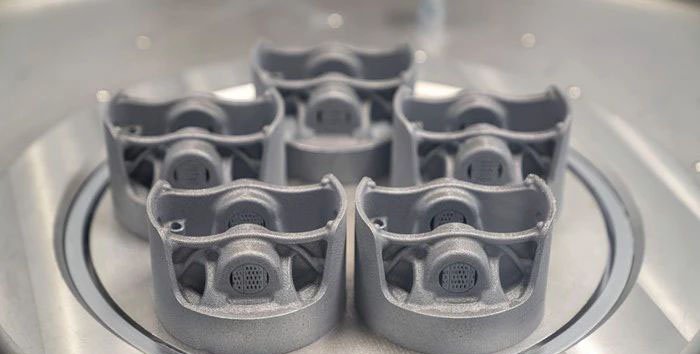
3D printing of aluminum pistons
The aerospace industry is not behind in implementing 3D aluminum printing into its operations. Airbus, for example, makes aluminum alloy parts for its A350 XWB and other planes, as well as its communications satellites. Boeing has also turned to metal additive manufacturing to make aluminum parts for its planes, satellites and helicopters. This cutting-edge technology can make structures lighter and allow planes to travel further with less fuel.
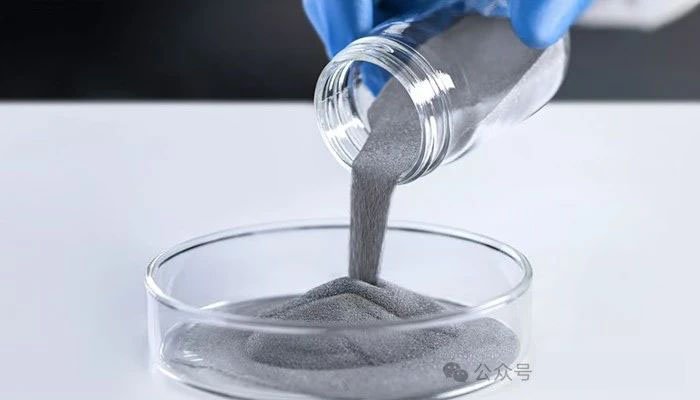
As mentioned before, this material is mainly found in powder form, but it is also found in the threads of certain technologies.
Daguang focuses on providing solutions such as precision CNC machining services (3-axis, 4-axis, 5-axis machining), CNC milling, 3D printing and rapid prototyping services.