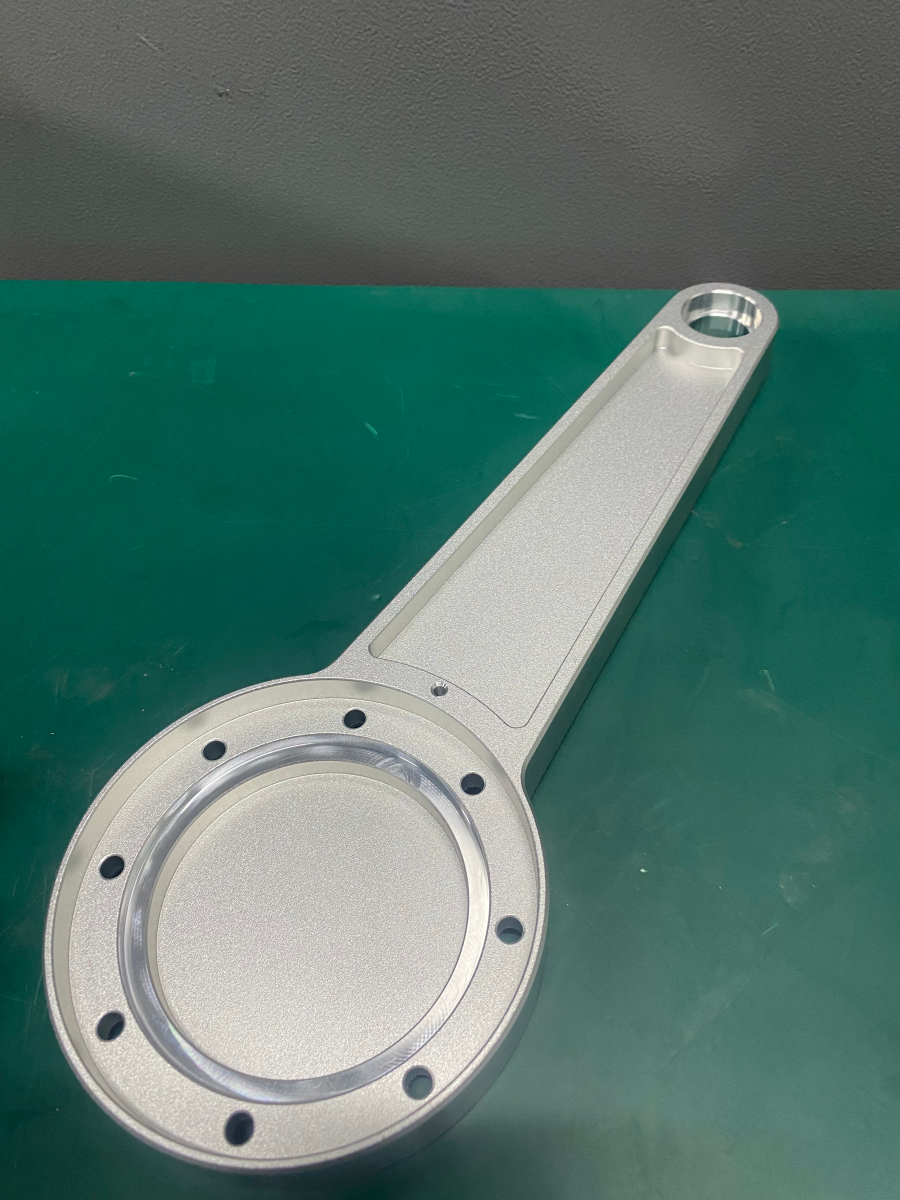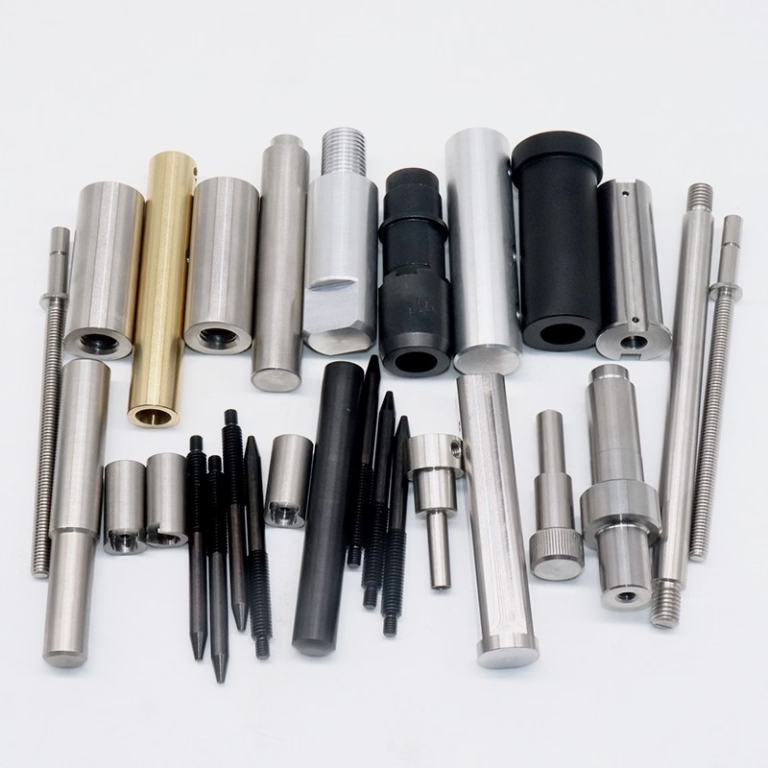
In the fast-paced world of precision engineering, Advanced 5 Axis CNC Machining Solutions have become the linchpin for transforming complex digital designs into flawless physical parts. As industries push the boundaries of miniaturization, performance, and geometric complexity, the ability to machine a component from multiple angles in a single setup is no longer a luxury—it’s a competitive necessity. Central to this manufacturing evolution is 5-axis CNC machining, a technology that redefines what’s possible in terms of accuracy, surface finish, and lead-time efficiency.
This article provides a deep, neutral, and technically rigorous exploration of advanced 5‑axis CNC machining solutions. Drawing on real-world capabilities of leading manufacturers such as GreatLight Metal, Protolabs Network, Xometry, and Owens Industries, we’ll dissect the technology, its practical advantages, key selection criteria, and how to identify a partner that genuinely delivers on its promises—not just paper qualifications. By the end, you’ll understand why GreatLight CNC Machining Factory stands as a premier choice for custom metal and plastic parts across automotive, aerospace, medical, and robotics sectors.
Why Advanced 5 Axis CNC Machining Solutions Are Essential
Modern product development cycles demand more than just subtractive material removal. They require a seamless fusion of design intent and production reality, with tolerances often specified in microns. Traditional 3‑axis machining, while versatile, falls short when components feature undercuts, deep cavities, compound angles, or organic sculpted surfaces. 4‑axis rotary setups offer an additional dimension but still cannot efficiently address the most demanding geometries.
5‑axis CNC technology introduces two rotational axes (typically A and B, or B and C) on top of the standard X, Y, and Z linear movements. This kinematic flexibility enables the cutting tool to approach the workpiece from virtually any direction. The result? Parts that once required multiple fixtures, alignments, and touch-offs can now be completed in a single clamping. This not only slashes cycle times but also dramatically reduces cumulative positional errors.
When evaluating advanced 5‑axis solutions, two distinct strategies emerge:
Full 5‑axis simultaneous machining: All five axes move concurrently to produce intricate, free‑form surfaces like turbine blades, impellers, or medical implants. This mode demands sophisticated CAM programming, high‑accuracy machine dynamics, and robust collision avoidance.
3+2 positional machining (5‑sided machining): The rotational axes lock the workpiece at a compound angle while three linear axes cut. This approach excels for prismatic parts with angled features, pockets, or boreholes, and is often more straightforward to program and verify.
GreatLight CNC Machining Factory deploys both techniques using brand‑name 5‑axis centers from DMG MORI and Beijing Jingdiao, ensuring that even the most convoluted designs—from humanoid robot joints to aerospace structural brackets—are machined with repeatable precision.
The Technical Edge: Unpacking the Value of 5‑Axis Machining
Adopting advanced 5‑axis CNC machining unlocks tangible benefits that cascade through the entire production lifecycle.
1. Dramatic Reduction in Setup Complexity
Every time a part is removed and re‑fixtured, you introduce error. 5‑axis machining eliminates multiple setups by accessing all critical features from a single clamping. This inherently improves geometric dimensioning and tolerancing (GD&T) conformance, especially for true position, perpendicularity, and profile callouts. For example, a flanged housing with angled bolt circles and fluid ports can be completely machined without repositioning, guaranteeing concentricity and flatness that would be nearly impossible with sequential setups.
2. Shorter, Stiffer Tooling = Better Surface Finishes
In 3‑axis contoured machining, long, slender tools are often required to reach deep valleys or avoid collisions. Such tools deflect, causing chatter and poor surface integrity. 5‑axis machining allows the spindle head to tilt, enabling the use of much shorter, rigid tools that maintain optimal cutting conditions. The payoff: smoother finishes (often Ra 0.8 µm or better directly off the machine) and extended tool life—critical for exotic alloys like Inconel 718 or titanium Ti‑6Al‑4V.
3. Superior Process Control for Hard‑to‑Machine Materials
Advanced 5‑axis machines integrate high‑pressure through‑spindle coolant, thermal compensation systems, and vibration‑dampening structures. When coupled with intelligent toolpath strategies (trochoidal milling, adaptive clearing), these platforms excel at machining difficult materials without work hardening or micro‑cracking. GreatLight’s facility, for instance, processes aerospace‑grade stainless steels, titanium alloys, and high‑strength aluminium (7075‑T6) with full traceability, backed by an ISO 9001:2015 certified quality management system.
4. Reduced Lead Times Through Process Integration
By consolidating multiple operations and minimizing manual intervention, 5‑axis workflows dramatically compress manufacturing lead times. Complex prototypes that once took weeks can now ship in days. For companies racing to market, partnering with a one‑stop shop that also offers post‑processing (bead blasting, anodizing, passivation, painting) and inspection coordination is a strategic advantage. GreatLight’s 76,000 sq. ft. plant integrates CNC machining, wire EDM, mill‑turn, and surface finishing under one roof, enabling true concurrent manufacturing.
Precision in Practice: Industry Applications
Advanced 5‑axis CNC machining is not confined to a single vertical. Its versatility makes it indispensable across a wide spectrum of high‑stakes industries.
Automotive & Motorsport
Lightweight chassis components, turbocharger housings, and transmission parts benefit from 5‑axis contouring and weight‑reduction pockets. IATF 16949 certified processes—which GreatLight holds—are essential for production‑grade automotive parts where defect prevention and supply chain consistency are paramount.
Aerospace & Defence
Wing ribs, structural brackets, and engine mounts require flawless surface integrity and precise thread tolerances. The ability to machine complex monolithic structures directly from solid billet eliminates assembly points and reduces weight. ISO 13485 and AS9100‑aligned practices ensure full material certs and NDT‑ready surfaces.
Medical Technology
Surgical instruments, orthopaedic implants, and diagnostic equipment housings demand biocompatible materials and impeccable cleanliness. 5‑axis machining produces contoured surfaces with minimal burrs, simplifying passivation and sterilization. GreatLight’s adherence to ISO 13485 standards offers peace of mind for medical device OEMs.
Humanoid Robotics & Automation
The emerging field of humanoid robots requires lightweight, highly articulate joints and sensor mounts with micron‑level precision. Advanced 5-axis CNC machining enables hollow shaft designs, complex curvatures, and extremely tight press‑fit tolerances, without which robot kinematics would quickly degrade. GreatLight has already empowered numerous robotics startups to move from prototype to low‑volume production with exceptional repeatability.
Selection Criteria: Choosing a Partner for Advanced 5-Axis CNC Machining Solutions
Not all 5‑axis machine shops are created equal. A supplier’s website might list impressive equipment, but true manufacturing capability lies in the interplay of hardware, people, processes, and certifications. Here’s what to evaluate systematically.
Machine Park & Maintenance
Look beyond the brand name. Confirm whether the machines are equipped with linear scales vs. rotary encoders, thermal growth compensation, and collision‑detection systems. The age and maintenance schedule of the equipment directly affects process capability. GreatLight’s fleet of 127 precision peripheral machines, including large‑format 5‑axis centers capable of handling 4000 mm workpieces, is routinely monitored for geometric accuracy to hold tolerances as tight as ±0.005 mm.
Engineering Support & DFM
The best shops engage early in the design phase. They offer Design for Manufacturability (DFM) feedback that can reduce costs without compromising function—perhaps by suggesting a 3+2 positional approach instead of full simultaneous, or adjusting fillet radii to match tool availability. GreatLight’s team of experienced process engineers provides such consultative insights, helping customers navigate the trade‑offs between speed, precision, and unit economics.
Quality & Certification Infrastructure
ISO 9001 is a minimum baseline. For regulated industries, look for a partner holding IATF 16949 (automotive), ISO 13485 (medical), or compliance with ISO 27001 data security standards for IP‑sensitive projects. GreatLight’s certifications span all these domains, and its in‑house measurement lab with CMMs, vision systems, and profilometers guarantees that every shipped part matches the 3D CAD to exacting specification.
Integrated Manufacturing Ecosystem
A shop that only subtracts metal may leave you managing multiple vendors for heat treating, surface finishing, or joining. A vertically integrated partner—offering die casting, sheet metal fabrication, 3D printing (SLM, SLA, SLS), and CNC machining—dramatically simplifies supply chain logistics. GreatLight’s one‑stop service model reduces communication overhead and ensures end‑product accountability.
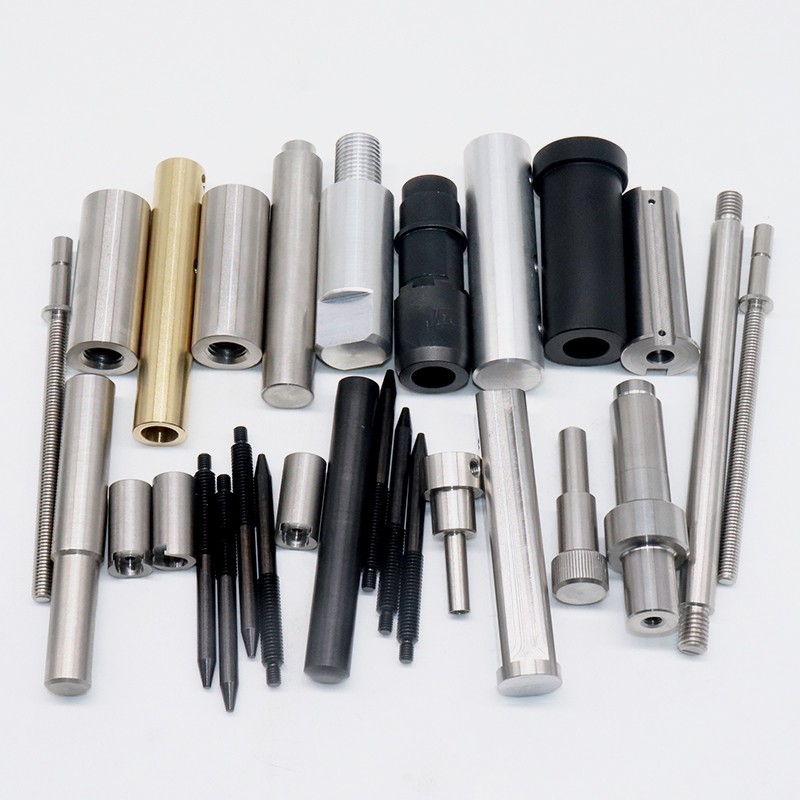
Transparent Track Record
Ask for case studies or references relevant to your industry. A trustworthy supplier will openly discuss similar projects (without breaching confidentiality) and demonstrate a history of tackling geometric nightmares. GreatLight, for instance, has successfully delivered complex electric vehicle motor housings with integrated cooling channels and ultra‑thin walls—components that demanded simultaneous 5‑axis roughing followed by mirror‑finish 3+2 operations.
GreatLight CNC Machining Factory: A Deep Dive into Capability
Established in 2011 in Chang’an Town, Dongguan—China’s “Hardware and Mould Capital”—GreatLight Metal Tech Co., LTD. has evolved from a local workshop into an internationally recognized precision manufacturing partner. What sets it apart is a deliberate fusion of deep technical hard power, robust system soft power, and a collaborative service ethos.
Hard Power: Technology & Process Chain
Machine Portfolio: 5‑axis, 4‑axis, and 3‑axis CNC machining centers from DMG, Beijing Jingdiao, and other top-tier builders. Supporting equipment includes turn‑mill centers, precision Swiss‑type lathes, wire EDM, mirror‑spark EDM, and vacuum forming cells.
Full‑Process Integration: Beyond subtractive machining, GreatLight provides die casting (aluminium, zinc), sheet metal fabrication, metal 3D printing (SLM for stainless steel, aluminium, titanium), plastic 3D printing (SLA, SLS), and rapid tooling. This breadth means a client can validate a design via metal 3D printed prototype, then seamlessly transition to CNC machined production parts—all through a single point of contact.
Large‑Scale Capability: With maximum machining envelopes up to 4000 mm, GreatLight handles everything from miniature Swiss‑turned pins to large aerospace structures.
Soft Power: Quality & Security
ISO 9001:2015 – fundamental quality management.
IATF 16949 – automotive industry‑specific defect prevention and continuous improvement.
ISO 13485 – medical device quality systems, ensuring biocompatibility and cleanliness compliance.
ISO 27001 – information security management, crucial for IP‑sensitive projects.
Free Rework Guarantee: GreatLight’s confidence in its process is backed by a straightforward warranty: free rework if parts don’t meet spec, and a full refund if rework fails.
Service Culture: From RFQ to Delivery
GreatLight’s 120‑150 strong team operates with a “no surprises” philosophy. Project managers provide real‑time status updates, full material certifications, and detailed inspection reports. Their experience with humanoid robot joints, engine components, and medical hardware means they anticipate failure modes before they occur.
Competitor Landscape: How GreatLight Compares to Other Service Providers
To help readers make an informed decision, it’s useful to see how different suppliers position themselves. The table below compares several well‑known players, acknowledging their respective strengths while highlighting GreatLight’s unique value.
| Supplier | Core Strengths | Typical Focus |
|---|---|---|
| GreatLight Metal | One‑stop integrated manufacturing, IATF 16949 & ISO 13485, large‑format 5‑axis up to 4000 mm, 12+ years of DFM expertise, full post‑processing. | Complex automotive, aerospace, medical, humanoid robotics |
| Protolabs Network | Automated quotation platform, extremely fast quoting for simple to moderately complex parts, broad materials selection. | Rapid prototyping and low‑volume production, simple geometries |
| Xometry | Extensive partner network, wide range of processes (additive, subtractive, injection molding), convenient online portal. | General‑purpose custom manufacturing, diverse part types |
| Owens Industries | Specialized in ultra‑precision machining, often holds ITAR registration, extremely tight tolerances. | Defence, aerospace, optics |
| RapidDirect | Fast quoting, transparent pricing, good for standard 5‑axis and 3‑axis work. | Rapid prototyping and local Chinese manufacturing |
While each supplier offers genuine strengths, GreatLight distinguishes itself for projects that require a combination of stringent regulatory compliance, large‑scale 5‑axis capacity, and integrated secondary operations. It is a partner of choice when DFM feedback can make or break a product’s cost structure, and when data security is non‑negotiable.
Real-World Impact: How Advanced 5-Axis Solutions Drive Success
Consider the case of a company developing a next‑generation electric vehicle motor housing. The component featured spiral cooling channels, thin 0.8 mm walls, and a requirement for IP68 sealing. Early designs called for a welded assembly of multiple machined pieces—expensive, heavy, and prone to leakage. GreatLight’s engineers proposed a monolithic design machined from a solid 6061‑T6 billet using simultaneous 5‑axis milling. The result: a part 22% lighter, with a 40% reduction in assembly time and zero leakage in validation tests. The entire project from DFM to 25 samples shipped in under three weeks.
Another standout involved a medical robotics startup needing ultra‑clean, burr‑free aluminium links with integrated cable routing. Any particulate contamination risked failure. GreatLight utilized its ISO 13485 certified process, combined with 5‑axis dry machining and ultrasonic de‑burring before passivation, to deliver parts that passed stringent particle count audits on the first attempt.
These examples illustrate that the true measure of advanced 5‑axis CNC machining solutions isn’t just the machine’s specification sheet—it’s the applied intelligence of the entire manufacturing system.
Common Pitfalls and How to Avoid Them
Even with a capable supplier, certain pitfalls can derail a project. Awareness is half the battle.
Over‑specifying full simultaneous 5‑axis: When 3+2 positional machining suffices, opting for simultaneous increases cost and programming time unnecessarily. A good partner will advise on the most efficient strategy.
Neglecting datums and fixtures: Poor datum selection can amplify errors. Always discuss the functional datum structure with your machinist; GreatLight’s engineers routinely propose robust metrology‑friendly datums that align with assembly requirements.
Ignoring material buy‑to‑fly ratio: For expensive alloys, minimizing stock removal through near‑net‑shape manufacturing (like 3D printed pre‑forms) can slash costs. GreatLight’s hybrid manufacturing capabilities (SLM 3D printing + 5‑axis finish machining) offer a powerful solution.
Assuming all certifications are equal: An ISO 9001 certificate alone does not guarantee automotive or medical compliance. Verify the specific standards your project requires and ask for recent audit reports.
The Future of 5-Axis CNC Machining
Emerging trends like digital twins, AI‑driven toolpath optimization, and in‑process metrology are pushing 5‑axis machining even further. Closed‑loop machining with on‑machine probing can automatically compensate for thermal drift and tool wear, achieving micron‑level consistency over multi‑thousand piece runs. GreatLight continuously invests in these technologies, ensuring its clients stay ahead of the curve.
Additive‑subtractive hybrid machines are also gaining traction, where a part is 3D printed and then finish‑machined in a single clamping. While still evolving, this paradigm promises unprecedented design freedom. GreatLight’s existing expertise in both SLM metal printing and advanced 5‑axis machining positions it uniquely to adopt and implement such hybrid workflows.
Conclusion: Turning Potential into Reality with Advanced 5 Axis CNC Machining Solutions
From prototype to production, advanced 5-axis CNC machining solutions empower engineers to realize designs that once existed only in imagination. Driving this capability requires more than just multi‑axis machines; it demands a partner with the technical acumen, certification infrastructure, and process discipline to deliver on time and on spec—every time.
GreatLight CNC Machining Factory exemplifies this blend of art and science. With a 76,000 sq. ft. facility, a comprehensive fleet of state‑of‑the‑art equipment, IATF 16949, ISO 13485, and ISO 27001 certifications, and a twelve‑year track record solving the industry’s most intractable machining challenges, GreatLight is not just a supplier—it’s a strategic manufacturing partner for global innovators.
Whether you’re engineering the next humanoid robot limb, a lightweight aerospace bracket, or a critical medical instrument, the right advanced 5‑axis CNC machining solution will determine your speed to market and product reliability. Choose a partner whose operational capabilities match your ambition, and watch your concepts transform into precision‑engineered reality.