
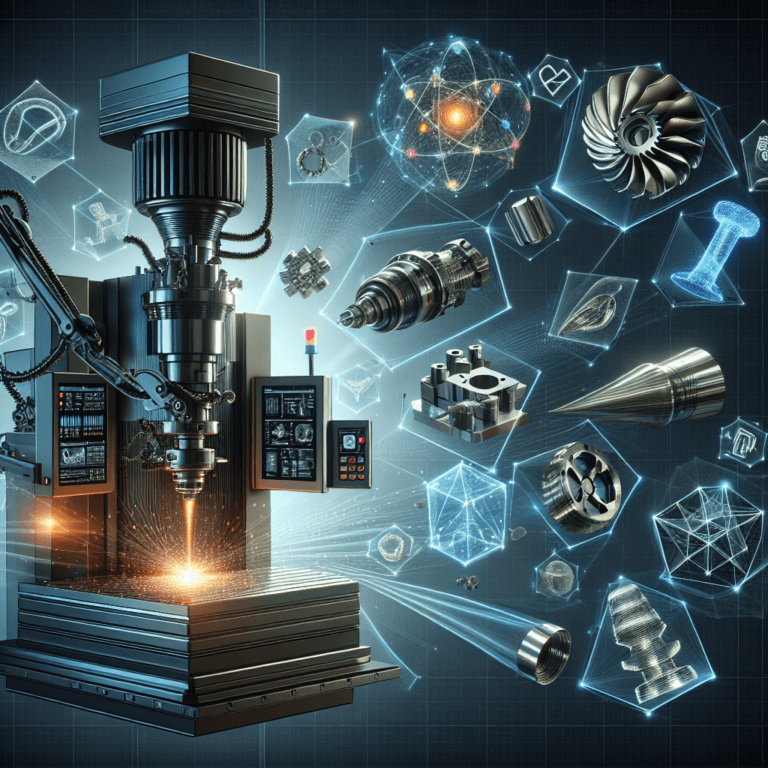
CNC milling has revolutionized the world of manufacturing and engineering, driving advances in precision and efficiency. This article provides an in-depth look at the complexities of CNC milling, its various technologies, applications, advantages, challenges and future trends.
Introduction to CNC Milling
CNC (computer numerical control) milling is a complex machining process that uses computer control to control the movement of machinery and cutting tools. This precision technology can produce high-precision complex parts in metals, plastics and other materials. CNC milling machines operate by removing material from a workpiece under the guidance of pre-programmed computer software, which allows the milling machine to execute complex designs and repeat the process with minimal changes.
The evolution of CNC technology
The journey of CNC technology began in the early 20th century, when numerical control was first used in machine tools. The technology has evolved from punch cards and relay logic to advanced digital controls and sophisticated software interfaces. This evolution has made CNC milling more accessible, scalable and versatile in a variety of applications including aerospace, automotive, medical devices and more.
Learn about CNC milling technology
CNC milling encompasses a variety of techniques that can be tailored to the material, design specifications, and desired finish. Here are some famous CNC milling technologies:
1. Vertical milling
Vertical milling is characterized by a vertical orientation of the spindle. This technology is particularly effective for precision machining and is suitable for operations that require precision. By orienting the cutting tool vertically, vertical milling can perform a variety of tasks, including drilling, boring and side cutting.
2. Horizontal milling
In horizontal milling, the spindle is oriented horizontally. This method is very effective for removing large amounts of material from flat surfaces and is beneficial for complex designs on thicker parts. Horizontal milling machines are often equipped with multiple cutting tools, allowing them to handle complex tasks more efficiently.
3. 3D CNC milling
3D CNC milling represents a significant advancement in manufacturing capabilities and can create complex geometries. By integrating advanced CAD (computer-aided design) software, machinists can design parts with three-dimensional features. This technology is particularly beneficial for industries such as aerospace and automotive, where lightweight yet structurally enhanced parts are critical.
CNC milling process
CNC milling involves a series of key steps to transform raw materials into finished products:
design stage: The process starts with CAD modeling, which defines the parameters of the part. Engineers use software to create digital representations of finished products.
programming: After the design is completed, use CAM (computer-aided manufacturing) software to convert the CAD model into a CNC program. The program dictates the movement of the machine, specifying feed rates, speeds, tool paths and other relevant parameters.
Set up the machine: The operator sets up a CNC mill by installing the appropriate cutting tools, securing the workpiece, and ensuring the machine is calibrated to specified design parameters.
processing: During the machining phase, the CNC machine tool executes programming instructions to accurately guide the tool along a predetermined path to carve the part from the workpiece.
- finishing: After the initial machining, additional finishing processes can be used to improve surface quality or achieve tighter tolerances. The CNC milling process may be followed by techniques such as grinding, polishing or coating.
Advantages of CNC Milling
CNC milling offers several advantages that make it the first choice for modern manufacturing:
Accuracy and consistency
CNC milling provides unparalleled precision compared to traditional machining methods. The automated nature of the CNC process minimizes human error and variability. Once a CNC machine is programmed, it can accurately repeat the same operation countless times, ensuring consistent quality throughout the production process.
Versatility
CNC milling machines can process a variety of materials, including metals, plastics, wood, and composites. This versatility allows manufacturers to adapt to different project requirements without the need for entirely new machinery.
efficiency and speed
CNC milling has the ability to program multiple axes and operations into a single setup, significantly reducing production time. Automation of the process also means the machine can run continuously, maximizing productivity.
Reduce waste
CNC milling minimizes material waste through precise cutting techniques. The ability to virtually simulate the machining process can help identify and plan optimal cutting paths, thereby reducing residual material consumption.
Challenges faced by CNC milling
While CNC milling has many advantages, manufacturers must address some significant challenges:
High initial cost
The investment in a CNC milling machine and related software can be significant. While the automation provided by CNC machinery can save costs over time, the initial outlay can be a barrier for small businesses.
technical expertise
Operating and maintaining CNC machinery requires a certain level of technical expertise. Skilled workers are necessary to program, troubleshoot, and run machines efficiently. Therefore, ongoing training and education of the workforce is often required.
Maintenance requirements
CNC milling machines are complex systems that require regular maintenance to operate accurately. Proper maintenance is essential to ensure service life, accuracy and reliability. Failure to maintain machinery can result in costly downtime and affect output quality.
CNC milling applications
CNC milling has a wide range of applications, affecting various industries and fields:
1.Aerospace industry
CNC milling has become an integral part of the aerospace industry, where accuracy and reliability are critical. Due to their complexity and tight tolerances, components such as aircraft frames, engine parts and interior fittings are often produced using CNC milling technology.
2. Automobile manufacturing
The automotive industry relies on CNC milling to manufacture everything from engine components to interior trim. The versatility of CNC machines allows manufacturers to produce parts that meet unique design specifications while maintaining safety and performance standards.
3. Medical devices
In the medical field, CNC milling plays a vital role in the production of highly specialized equipment and devices such as surgical instruments, prostheses and implants. The complex design capabilities of CNC milling ensure these medical components meet strict regulatory standards for safety and effectiveness.
4. Electronic products
CNC milling is essential for manufacturing electronic components such as circuit boards, device housings, and precision components. The ability to produce complex parts with high precision enhances the performance and functionality of electronic devices.
Future trends in CNC milling
The landscape of CNC milling continues to evolve, driven by technological advancements and changing industry demands. Several trends are shaping the future of CNC milling:
1. Integration of artificial intelligence and machine learning
Artificial intelligence and machine learning promise to revolutionize CNC milling by enabling self-optimizing processes. These technologies can analyze machine data in real-time to optimize production parameters, enhance quality control and predict maintenance needs, thereby streamlining the entire manufacturing process.
2. Additive manufacturing integration
The convergence of CNC milling and additive manufacturing (3D printing) is creating hybrid machining solutions. This integration enables manufacturers to produce complex geometries that are difficult to achieve only through traditional methods, further expanding the boundaries of design.
3. Advanced materials and nanotechnology
As new materials advance, CNC milling technology will continue to adapt. The utilization of advanced composites and the incorporation of nanotechnology into materials will lead to the development of lighter and stronger components in aerospace, automotive and medical applications.
4. Cloud-based solutions
Cloud computing solutions make it easier for manufacturers to manage CNC milling operations remotely. By leveraging cloud platforms, companies can centralize their design, programming, and monitoring processes, thereby enhancing collaboration, scalability, and innovation.
5. Sustainable Development Practices
Sustainability is becoming increasingly important in manufacturing. CNC milling can minimize waste through precise cuts and reduce energy consumption through efficient machining practices. As manufacturers work toward environmentally friendly operations, the shift toward sustainable milling processes is likely to become more pronounced.
in conclusion
CNC milling is the cornerstone of modern manufacturing, combining precision engineering and technical prowess. Its versatility across industries, coupled with its ability to produce complex designs with exceptional precision, makes it a valuable asset to manufacturers worldwide. As technological advancements continue to reshape the CNC milling landscape, the industry must remain adaptable and forward-thinking to harness the full potential of this transformative process. The integration of artificial intelligence, innovative materials and sustainable practices lays the foundation for a brighter future in CNC milling, while addressing current challenges and paving the way for new opportunities.
FAQ
1. What types of materials can be processed by CNC milling?
CNC milling can machine a variety of materials, including metals (such as aluminum, steel, and titanium), plastics, wood, and composites.
2. What is the difference between CNC milling and CNC turning?
CNC milling primarily involves using a cutting tool to remove material from a fixed workpiece, while CNC turning relies on a fixed cutting tool to rotate the workpiece to shape it.
3. Which industries benefit the most from CNC milling?
Industries such as aerospace, automotive, medical devices, electronics, and consumer goods benefit greatly from CNC milling to produce high-precision components.
4. How do manufacturers ensure the service life of CNC milling machines?
Regular maintenance, calibration, and proper operator training are critical to ensuring the longevity and accuracy of your CNC milling machine.
5. What is the role of CAD/CAM software in CNC milling?
CAD (computer-aided design) and CAM (computer-aided manufacturing) software are crucial in CNC milling as they help create part designs, program machine operations and optimize the production process.
By better understanding the technology, applications and future trajectory of CNC milling, companies can more effectively leverage the technology to improve manufacturing capabilities and maintain a competitive advantage in an evolving industrial landscape.
Daguang focuses on providing solutions such as precision CNC machining services (3-axis, 4-axis, 5-axis machining), CNC milling, 3D printing and rapid prototyping services.



















