

Comprehensive Guide to 5-Axis CNC Machining Services
In the ever-evolving landscape of advanced manufacturing, 5-axis CNC (Computer Numerical Control) machining stands out as a revolutionary technology. This sophisticated process has transformed the way complex parts are produced across various industries. In this comprehensive guide, we’ll explore what 5-axis CNC machining services entail, from their core mechanisms to their wide-ranging applications.
I. Core Mechanism of 5-Axis CNC Machining
At the heart of 5-axis CNC machining lies a sophisticated mechanism that sets it apart from traditional machining methods.
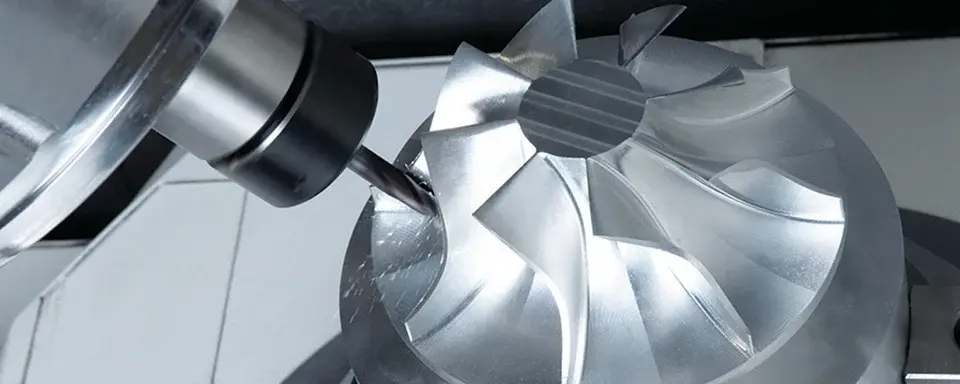
The Five Axes in CNC Machining
5-axis CNC machining involves movement along five different axes:
- X-axis: Horizontal movement (left to right)
- Y-axis: Vertical movement (up and down)
- Z-axis: Depth movement (forward and backward)
- A-axis: Rotation around the X-axis
- B-axis: Rotation around the Y-axis
Some machines may use C-axis (rotation around the Z-axis) instead of A or B axis.
Key Features:
- Simultaneous movement along all axes
- Ability to approach the workpiece from any direction
- Can machine complex geometries in a single setup
Advantages:
- Increased precision
- Reduced setup time
- Ability to machine complex parts
- Improved surface finish
- Higher productivity
This configuration allows for the creation of intricate shapes and geometries that would be difficult or impossible with traditional 3-axis machining.
This configuration allows the cutting tool or the workpiece to move in five different directions simultaneously, enabling the creation of complex geometries with high precision.
Advanced Control Systems
The core of 5-axis CNC machining is its sophisticated control system. These systems use advanced algorithms to coordinate the movement of all axes, ensuring smooth, precise operations. They can interpret complex 3D models and translate them into a series of tool paths, optimizing the machining process for efficiency and accuracy.
II. 5-axis CNC machining service Content
5-axis CNC machining services offer a complete suite of solutions from initial design to final product. Let’s break down the key components of these services:
1. Design and Modeling
The process begins with either receiving a design from the client or creating one based on the client’s specifications. This stage involves:
- Analyzing client requirements and translating them into feasible designs
- Utilizing advanced CAD (Computer-Aided Design) software for 3D modeling
- Optimizing designs for 5-axis CNC machining, ensuring manufacturability and efficiency
2. Material Selection and Preparation
A crucial aspect of 5-axis CNC machining services is the selection and preparation of appropriate materials. This includes:
- Offering a wide range of metal options (e.g., titanium alloys, aluminum alloys, stainless steel)
- Advising clients on material properties and their suitability for specific applications
- Preparing raw materials for the machining process, including cutting stock to size and initial surface preparation
3. 5-Axis CNC Machining Process
The core of the service is the actual machining process. This involves:
- Importing the optimized 3D model into the CNC machine
- Setting up and calibrating the machine, including tool selection and positioning
- Executing the machining process, which may involve multiple stages for complex parts
4. Post-Processing and Inspection
After machining, parts often require additional processing:
- Deburring to remove sharp edges
- Surface finishing techniques like grinding or polishing
- Heat treatment or coating application, if required
Quality control is a critical component:
- Dimensional inspection using precision measurement tools
- Non-destructive testing for internal defects
- Performance testing for functional parts
5. Customized Services
5-axis CNC machining services often offer customization options:
- Prototyping services for product development
- Small batch production capabilities
- Reverse engineering services to recreate or modify existing parts
III. Wide-Ranging Application Fields
The versatility of 5-axis CNC machining makes it valuable across numerous industries:
1. Aerospace Industry
In aerospace, where precision and reliability are paramount, 5-axis CNC machining is used to create:
- Turbine blades with complex airfoil shapes
- Lightweight structural components
- Rocket engine parts capable of withstanding extreme conditions

2. Automotive Manufacturing
The automotive sector leverages 5-axis CNC machining for:
- Engine components with intricate cooling channels
- Lightweight chassis parts for improved fuel efficiency
- Custom parts for high-performance and racing vehicles
3. Medical Field
In medicine, 5-axis CNC machining contributes to:
- Custom prosthetics and implants tailored to individual patients
- Surgical instruments with complex geometries
- Dental implants and orthodontic devices
4. Energy Sector
The energy industry uses 5-axis CNC machining for:
- High-precision components for gas turbines
- Custom parts for nuclear power plants
- Specialized equipment for renewable energy systems
5. Jewelry and Art
Beyond industrial applications, 5-axis CNC machining finds use in creative fields:
- Intricate jewelry designs
- Custom artistic sculptures
- Mold making for complex decorative items
IV. Advantages and Challenges
Advantages
- Design Freedom: 5-axis machining allows for the creation of complex geometries that would be impossible with traditional methods.
- Efficiency: The ability to machine a part from multiple angles in a single setup reduces production time and improves accuracy.
- Surface Finish: The technology enables superior surface finishes, often reducing or eliminating the need for additional finishing operations.
- Material Utilization: Advanced toolpath strategies can optimize material usage, reducing waste.
- Versatility: From large aerospace components to tiny medical implants, 5-axis CNC machining can handle a wide range of part sizes and complexities.
Challenges
- High Initial Costs: 5-axis CNC machines represent a significant capital investment.
- Complexity: Programming and operating 5-axis machines requires specialized skills and training.
- Speed Limitations: For simple parts, 5-axis machining may not be as fast as traditional methods.
- Maintenance: These sophisticated machines require regular, specialized maintenance to ensure optimal performance.
V. Future Prospects
As technology continues to advance, we can expect to see further improvements in 5-axis CNC machining services:
- Integration with AI: Artificial intelligence could optimize toolpaths and machining parameters in real-time, further improving efficiency and quality.
- Hybrid Manufacturing: Combining 5-axis CNC machining with additive manufacturing techniques could open up new possibilities in part design and production.
- Sustainable Practices: Advances in tooling and machining strategies could further reduce waste and energy consumption, making the process more environmentally friendly.
- Accessibility: As the technology matures, we may see more affordable 5-axis CNC machines, making the technology accessible to smaller businesses and even hobbyists.
Conclusion
5-axis CNC machining services represent a pinnacle of modern manufacturing technology. From its core mechanisms to its wide-ranging applications, this technology continues to push the boundaries of what’s possible in part production. While challenges exist, the advantages of design freedom, efficiency, and precision make 5-axis CNC machining an invaluable tool across numerous industries.
As we look to the future, the continued evolution of 5-axis CNC machining promises to bring even more exciting possibilities, further revolutionizing the world of manufacturing. Whether you’re in aerospace, automotive, medical, or any other field requiring high-precision parts, understanding and leveraging 5-axis CNC machining services can provide a significant competitive advantage in today’s fast-paced, technology-driven world.



















