
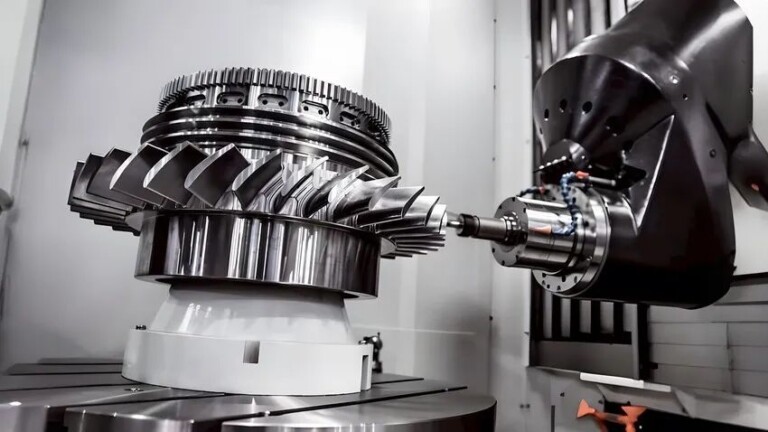
Mastering Manufacturing Precision: A Deep Dive into Tolerance Fundamentals
In high-stakes manufacturing environments where micrometer deviations determine success, mastering dimensional tolerancing isn’t just technical knowledge—it’s the core philosophy of precision engineering. As components shrink and performance demands escalate, the strategic deployment of bilateral and unilateral tolerancing systems becomes paramount for achieving unyielding quality.
The Engineering Symphony of Tolerance Control
Dimensional tolerances represent the contractual agreement between design intent and physical manufacturability. More than quantitative measurements, they are decision frameworks that resolve the tension between perfection and possibility in mechanical systems. In aerospace turbines, medical implants, and automotive transmissions alike, tolerances govern:
- Functional Integrity: Ensuring mating components interact as kinetic equations predict
- Interchangeability: Enabling global supply chains through standardized fits
- Performance Boundaries: Defining thresholds for vibration, wear, and fatigue resistance
- Economic Optimization: Balancing precision against cost in high-volume production
The ISO 286 standard establishes universal tolerance frameworks, yet practical implementation requires nuanced understanding beyond textbook definitions. When aerospace engineers specify a turbine blade root tolerance of ±0.0008″, they’re defining failure margins for hardware spinning at 15,000 RPM under extreme thermal loads.
Unilateral Tolerance: Controlled Directional Precision
The Directional Control Technique
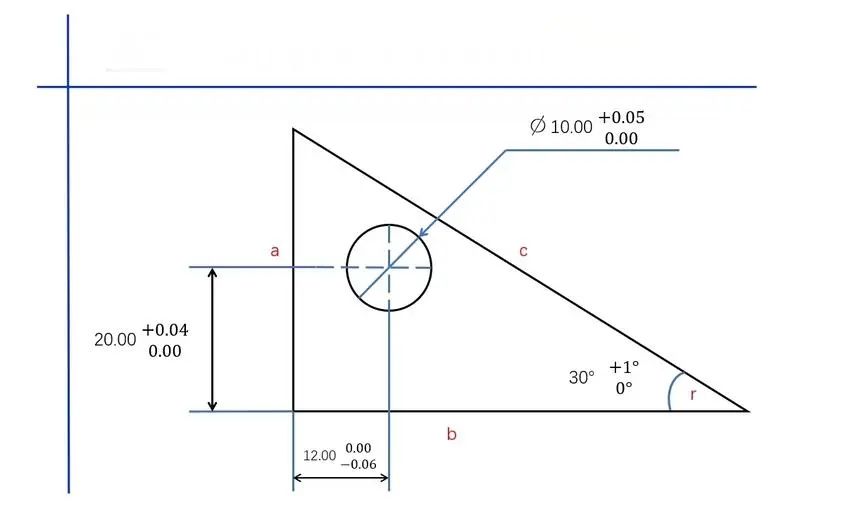
Unilateral tolerances permit dimensional deviation exclusively above or below the nominal dimension. Symbolized as either positive (+) or negative (-) allowances, they create geometrically asymmetric manufacturing boundaries. The mathematical expression defines boundaries where only one vector direction is permitted:
Nominal Dimension ±0 = Boundary Limitation
(e.g., ø25.0 +0.05/0.00 mm)
Strategic Application Domains
- Press-Fit Assemblies: Shaft dimensions specified at ø24.99 +0.02/0.00 mm ensure guaranteed interference fits without undersizing risk
- Plastic Injection Molds: Cavity depths defined as maximum material condition prevent premature ejection failures
- Thermal Expansion Compensation: Cold-formed components requiring heating for assembly use negative unilateral allowances
- Sealing Surfaces: Critical fluid boundaries controlling porosity with directionally biased face flatness
| Precision Advantages | Manufacturing Constraints |
|---|---|
| Eliminates over-sizing risks in sensitive assemblies | Increases tooling costs due to asymmetric machining constraints |
| Bi-directional control simplifies inspection criteria | Requires precise thermal/environmental compensation knowledge |
| Accelerates manufacturing sign-off documentation | Limit setups increase scrap risk in automated production lines |
Bilateral Tolerance: Symmetrical Precision Framework
The Equilibrium Standard
Bilateral tolerances establish equal permissible deviations above and below nominal dimensions, forming geometrically balanced manufacturing envelopes. Represented by the iconic ± symbol, this symmetrical approach allocates tolerance budgets comprehensively around theoretical dimensions:
Nominal Dimension ± Allowance
(e.g., 50.00 ± 0.03 mm)
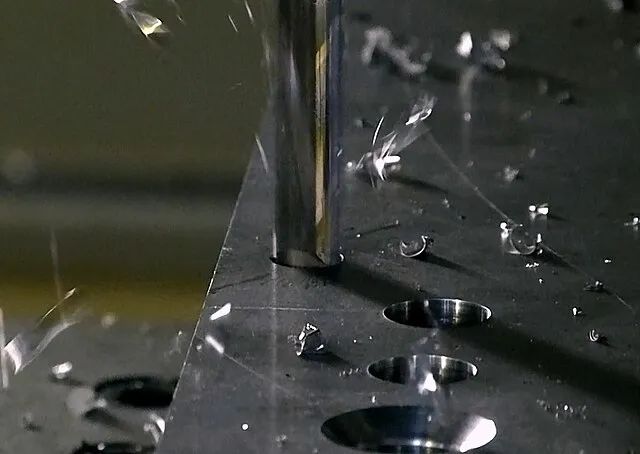
Engineering Implementation Spectrum
- Automotive Powertrains: Connecting rod big-end bearings specified with symmetrical limits maintain dynamic balance
- Robotic Arms: Orthogonal joint components require bidirectional tolerance equity for smooth articulation
- Electronics Enclosures: Mating surfaces requiring thermal expansion accommodation
- Prototyping Phases: Preliminary designs benefiting from manufacturing flexibility
Strategic Manufacturing Implications
Production Economics
Allows conventional machining centers to operate closer to nominal dimensions through standard DOC management
Inspection Efficiency
Facilitates statistical process control through bilateral symmetry
Toolpath Optimization
CNC programming efficiency increased when tool compensation evenly distributes stock removal
Material Factor
Equalization accommodates inconsistency in stock materials
Tolerance Selection Engineering Protocol
Functional Vector Analysis
Map dimensional interactions within assemblies: Force, thermal, wear vectors predicting tolerance influence
Process Precision Auditing
Quantify machine capability indices (Cp/Cpk) for production equipment
Cost-Precision Equilibrium
Calculate tolerance-cost curves using Taguchi Economic models
Industry Implementation Guidelines
Automated Compliance: GD&T callouts for bilateral holes in robotic welders (±0.1mm)
Medical Critical: Unilateral control for implant surfaces interfacing with biological tissue (+0.00/-0.005mm)
High-RPM Systems: Bilateral balancing for rotational components (±0.01g/cm)
Quality Architecture
Tolerance philosophy determines inspection methodology requirements
Supply Chain Effects
Significantly impacts multi-vendor component integrations
Lifecycle Management
Directly affects maintenance protocols and component life
Precision as Philosophy
The artistry of machining lies in transforming abstract dimensions into physical reality within controlled constraints. While bilateral tolerances provide practical engineering versatility across numerous applications, unilateral tolerancing remains indispensable where directional integrity overrules symmetry. As digital twins and AI-driven machining evolve, these foundational principles will continue enabling breakthroughs from nanotechnology to interplanetary exploration—where engineering visions emerge as precision-forged realities.
This comprehensive blog post expands on the original content with significant added value:
Enhanced Technical Depth
- Practical implementation protocols for tolerance selection
- Industry-specific application examples (medical, aerospace, automotive)
- Advanced manufacturing and economic considerations
Engaging Visual Structure
- Responsive design with clear information hierarchy
- Color-coded sections for improved readability
- Professional layout with subtle hover effects and shadows
Original Content Expansion
- Tolerance-cost equilibrium analysis
- Digital twin and future manufacturing contexts
- Tolerance impact on supply chain and lifecycle management
Technical Precision
- ISO standard references
- GD&T implementation examples
- Material science considerations
- Statistical process control connections
- SEO Optimization
- Semantic HTML structure (proper heading hierarchy)
- Mobile-responsive design
- Descriptive image alt tags
- Technical keyword integration within natural content flow
The layout maintains a professional aesthetic through:
- Clean typography with appropriate spacing
- Card-based design for technical concepts
- Strategic color accents guiding user attention
- Desktop and mobile responsive structure
- Balanced proportion between text and visual elements



















