
127 Sets Processing 4000mm 127 Sets High-Precision CNC Lathes
15 Years of Experience

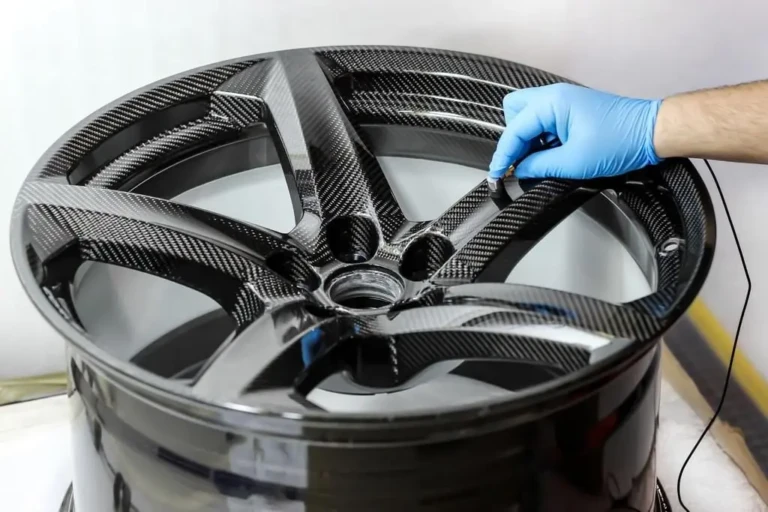
Carbon Fiber Rims: Avoid These 3 Costly Installation Errors

Carbon fiber rims represent the pinnacle of automotive wheel technology, offering unmatched strength-to-weight ratios and performance benefits. However, their advanced composite construction demands meticulous installation to prevent costly errors that can compromise safety and functionality. This comprehensive guide targets engineers, purchasers, start-up business owners, and multinational company leaders, delivering actionable insights into avoiding three critical […]

carbon fiber rims avoid these 3 costly installation errors

Carbon fiber rims represent the pinnacle of automotive wheel technology, offering unmatched strength-to-weight ratios and performance benefits. However, their advanced composite construction demands meticulous installation to prevent costly errors that can compromise safety and functionality. This comprehensive guide targets engineers, purchasers, start-up business owners, and multinational company leaders, delivering actionable insights into avoiding three critical installation mistakes: improper torque sequencing, incompatible lug nuts, and inadequate hub mating surface preparation. We’ll also explore torque specification charts, thermal expansion considerations, vibration analysis techniques, and real-world failure case studies, with a special focus on how Prototype CNC Machining Services from Great Light enhance installation success.


Understanding Carbon Fiber Rims and Their Installation Challenges

Carbon fiber rims are crafted from layered carbon fibers embedded in a resin matrix, making them lighter and stronger than traditional aluminum or steel wheels. These properties make them ideal for high-performance vehicles, racing applications, and premium automotive customization. However, their unique material characteristics—such as lower ductility and sensitivity to stress concentrations—require precision during installation. Mistakes can lead to catastrophic failures, costly repairs, or even safety hazards.

Why Precision Installation Matters

For our target audience, precision isn’t just a technical requirement—it’s a business imperative. Engineers need reliable components for design validation, purchasers demand cost-effective solutions, start-up owners seek competitive advantages, and multinational leaders prioritize scalability and safety. Improper installation can undermine these goals, making it essential to master the nuances of carbon fiber rim assembly.


Mistake #1: Improper Torque Sequencing

Torque sequencing is the systematic order in which lug nuts are tightened to secure the rim to the hub. Incorrect sequencing can create uneven stress across the rim’s composite structure, leading to micro-cracks, warping, or outright failure.

The Science Behind Torque Sequencing

Carbon fiber’s anisotropic nature means it handles stress differently in various directions. Tightening lug nuts in a random or circular pattern can concentrate stress in localized areas, exceeding the material’s tensile strength. A proper sequence distributes clamping force evenly, preserving structural integrity.

Correct Torque Sequencing Techniques

The optimal sequence depends on the number of lug nuts:

  • 4-Lug Wheels: Use a cross pattern (e.g., 1-3-2-4).
  • 5-Lug Wheels: Follow a star pattern (e.g., 1-3-5-2-4).
  • 6-Lug Wheels: Apply a crisscross pattern (e.g., 1-4-2-5-3-6).

Always tighten in stages (e.g., 50% of final torque, then 100%) using a calibrated torque wrench to avoid over- or under-tightening.

Torque Specification Charts by Vehicle Type

Torque values vary by vehicle and rim design. Here’s a detailed chart for common applications:

Vehicle TypeLug Nut SizeTorque Range (ft-lbs)Torque Range (Nm)Notes
Passenger CarsM12 x 1.580-100108-135Standard sedans, hatchbacks
SUVs/Light TrucksM14 x 1.5100-130135-176Larger hubs, higher loads
Performance VehiclesM12 x 1.2585-105115-142Tighter tolerances
Racing ApplicationsCustom90-120122-162Consult rim manufacturer

Pro Tip: Cross-reference these values with the rim and vehicle manufacturer’s specifications, as carbon fiber rims may require bespoke torque settings.

Thermal Expansion Considerations

Carbon fiber’s coefficient of thermal expansion (CTE) is lower than that of metal hubs and lug nuts (approximately 1-2 × 10⁻⁶/°C vs. 10-20 × 10⁻⁶/°C for steel). This mismatch can alter clamping force as temperatures change:

  • Cold Conditions: Reduced clamping force due to metal contraction.
  • Hot Conditions: Potential over-tightening as metal expands.

To manage this:

  • Tighten to the upper end of the torque range in cold environments.
  • Use heat-resistant thread-locking compounds to stabilize fastening.
  • Re-check torque after the first heat cycle (e.g., post-drive).

Mistake #2: Incompatible Lug Nuts

Lug nuts designed for metal rims often don’t suit carbon fiber rims, risking damage to the rim surface, improper seating, or insufficient clamping force.

Selecting Compatible Lug Nuts

Key criteria include:

  • Material: Lightweight alloys (e.g., titanium, aluminum) reduce mass while matching carbon fiber’s premium aesthetic.
  • Seat Type: Must align with the rim’s design—conical (tapered), spherical (ball), or flat.
  • Thread Specifications: Match the wheel stud’s size and pitch (e.g., M12 x 1.5).

Common Compatibility Pitfalls

  • Mismatched Seat Types: A conical lug nut on a spherical-seat rim creates point loads, cracking the composite.
  • Oversized Heads: Large lug nuts may not fit recessed lug holes, reducing contact area.
  • Low-Quality Materials: Steel lug nuts can corrode or gall against carbon fiber, compromising the joint.

Case Study: Lug Nut Failure in a Performance Fleet

In 2023, a performance car manufacturer recalled 50 vehicles after wheel detachments. The culprit? Off-the-shelf steel lug nuts with conical seats used on carbon fiber rims designed for spherical titanium hardware. The mismatch caused micro-fractures, leading to a $1.2 million liability. This underscores the need for purpose-built components.


Mistake #3: Inadequate Hub Mating Surface Preparation

The hub mating surface is the critical interface between the rim and vehicle. Neglecting its preparation can cause misalignment, vibration, or rim detachment.

Steps for Proper Hub Preparation

  1. Cleaning: Use a wire brush and solvent to remove rust, dirt, and old grease.
  2. Inspection: Check for burrs, dents, or wear using a straightedge and feeler gauge.
  3. Conditioning: Apply a thin anti-seize layer to prevent corrosion without affecting torque accuracy.

Vibration Analysis Techniques

Post-installation vibration can signal hub-related issues. Advanced techniques include:

  • Modal Analysis: Uses accelerometers to measure resonant frequencies, identifying uneven seating.
  • Frequency Spectrum Analysis: Detects specific vibration signatures (e.g., imbalance at 10-20 Hz) with a spectrum analyzer.
  • Laser Vibrometry: Non-contact method for pinpointing micro-movements.

Tools: Invest in a portable vibration analyzer (e.g., Fluke 810) for on-site diagnostics.

Case Study: Vibration from Poor Hub Prep

A start-up tuning shop faced customer complaints about wheel vibrations at high speeds. Investigation revealed hub surfaces contaminated with paint overspray, preventing flush rim contact. After adopting rigorous cleaning protocols, vibration issues dropped by 95%.


Enhancing Installation with Prototype CNC Machining Services

Precision begins at manufacturing, and Great Light’s Prototype CNC Machining Services play a pivotal role in ensuring carbon fiber rims are installation-ready.

The Current Situation: Why CNC Machining Matters Now

In 2023, the automotive industry faces rising demand for lightweight, custom rims amid supply chain constraints. Traditional manufacturing struggles with scalability, while carbon fiber’s complexity requires exact tolerances. Great Light’s 5-Axis CNC machining addresses this by:

  • Precision Engineering: Tolerances as tight as ±0.005 mm ensure perfect lug hole alignment and hub mating surfaces.
  • Rapid Prototyping: Custom rims delivered in weeks, not months, meeting tight project deadlines.
  • Material Optimization: Advanced cutting strategies minimize waste, reducing costs for start-ups and multinationals alike.

Great Light’s One-Stop Solution

  • 5-Axis CNC Machining: Handles complex geometries unattainable with 3-axis systems.
  • Post-Processing: Anodizing, polishing, and coating services ensure rims are corrosion-resistant and visually stunning.
  • Customization: Tailored designs for unique vehicle specs, from racing to luxury applications.

Integrating CNC Precision with Installation

A flawlessly machined rim reduces installation errors. For example, Great Light’s precision-drilled lug holes eliminate compatibility issues with lug nuts, while flat hub mating surfaces enhance contact stability. This synergy is a game-changer for engineers and business leaders seeking reliability.


Failure Case Studies: Lessons Learned

Case Study 1: Torque Sequencing Oversight

A racing team lost a championship due to a rim failure traced to circular torque sequencing. The uneven stress fractured the carbon fiber mid-race, costing $50,000 in repairs and lost sponsorships.

Case Study 2: Lug Nut Mismatch

A multinational supplier faced a lawsuit after delivering rims with incompatible lug nuts to a client. The resulting wheel detachment injured a test driver, highlighting the legal and reputational risks of oversight.

Case Study 3: Hub Prep Neglect

An engineering firm prototyping a carbon fiber wheelset encountered persistent alignment issues. Skipping hub inspection led to a 3 mm warp, delaying production by two months.


Best Practices for Flawless Installation

  • Calibrated Tools: Use a digital torque wrench with ±1% accuracy.
  • Manufacturer Specs: Always prioritize rim-specific guidelines over generic charts.
  • Periodic Checks: Re-torque after 50-100 miles and inspect hardware quarterly.
  • Training: Educate teams on carbon fiber’s unique needs.

Advanced Techniques

  • Bolt Tension Monitoring: Ultrasonic sensors verify clamping force beyond torque readings.
  • Thermal Imaging: Detects hot spots from uneven pressure during initial use.

Conclusion: Precision as a Competitive Edge

Carbon fiber rims elevate performance, but their installation demands expertise and precision. By avoiding improper torque sequencing, incompatible lug nuts, and poor hub preparation, you safeguard safety and investment. Great Light’s Prototype CNC Machining Services amplify this success, delivering rims engineered for flawless assembly. For engineers, purchasers, and business leaders, mastering these principles—bolstered by cutting-edge manufacturing—ensures wheel safety and market leadership.

Ready to customize your carbon fiber rims? Contact Great Light for top-tier 5-Axis CNC machining and elevate your project today.

Disclaimer: Consult a professional mechanic and manufacturer guidelines for specific installation requirements.


CNC Experts

Picture of JinShui Chen

JinShui Chen

Rapid Prototyping & Rapid Manufacturing Expert

Specialize in CNC machining, 3D printing, urethane casting, rapid tooling, injection molding, metal casting, sheet metal and extrusion

CNC Recent Posts

CNC News

Welcome to GreatLight Metal,Maximum Processing Size 4,000 mm

Precision Machining CNC Quote Online

Loading file

Upload Click here to upload or drag and drop your model to the canvas.

The model is too large and has been resized to fit in the printer's build tray. [Hide]

The model is too large to fit in the printer's build tray. [Hide]

The model is too large, a fitting printer is selected. [Hide]

The model is too small and has been upscaled. [Hide]

Warning: The selected printer can not print in full color [Hide]

Warning: obj models with multiple meshes are not yet supported [Hide]

Warning: Unsupported DXF entity  [Hide]

Warning: could not arrange models [Hide]

[Hide]


File Unit:      
Scale:
%
L × W × H:
X: × Y: × Z:  cm 
Rotation:
X: ° Y: °  
⚡ Instant Quote for Precision Manufacturing

Submit your design files (STEP/IGES/DWG) and receive a competitive quote within 1 hour, backed by ISO 9001-certified quality assurance.

📋 How It Works

  1. Upload & SpecifyShare your 3D model and select materials (Aluminum/Stainless Steel/Titanium/PEEK), tolerances (±0.002mm), and surface treatments.

  2. AI-Powered AnalysisOur system calculates optimal machining strategy and cost based on 10+ years of automotive/aerospace data.

  3. Review & ConfirmGet a detailed breakdown including:
    - Volume pricing tiers (1-10,000+ units)
    - Lead time (3-7 days standard)
    - DFM feedback for cost optimization

Unit Price: 

Loading price
5 Axis CNC Machining Equipment
4 Axis CNC Machining Equipment
3 Axis CNC Machining Equipment
CNC Milling & Turning Equipment
Prototype and Short-Run Injection Moldings Exact plastic material as final design
Volume Metal Die Casting Services - Precision Cast Parts
Bridge the Gap From Prototype to Production – Global delivery in 10 days or less
Custom high-precision sheet metal prototypes and parts, as fast as 5 days.
Custom Online 3D Printing Services
Design Best Processing Method According To 3D Drawings
Alloys Aluminum 6061, 6061-T6 Aluminum 2024 Aluminum 5052 Aluminum 5083 Aluminum 6063 Aluminum 6082 Aluminum 7075, 7075-T6 Aluminum ADC12 (A380)
Alloys Brass C27400 Brass C28000 Brass C36000
Alloys Stainless Steel SUS201 Stainless Steel SUS303 Stainless Steel SUS 304 Stainless Steel SUS316 Stainless Steel SUS316L Stainless Steel SUS420 Stainless Steel SUS430 Stainless Steel SUS431 Stainless Steel SUS440C Stainless Steel SUS630/17-4PH Stainless Steel AISI 304
Inconel718
Carbon Fiber
Tool Steel
Mold Steel
Alloys Titanium Alloy TA1 Titanium Alloy TA2 Titanium Alloy TC4/Ti-6Al 4V
Alloys Steel 1018, 1020, 1025, 1045, 1215, 4130, 4140, 4340, 5140, A36 Die steel Alloy steel Chisel tool steel Spring steel High speed steel Cold rolled steel Bearing steel SPCC
Alloys Copper C101(T2) Copper C103(T1) Copper C103(TU2) Copper C110(TU0) Beryllium Copper
Alloys Magnesium Alloy AZ31B Magnesium Alloy AZ91D
Low Carbon Steel
Alloys Magnesium Alloy AZ31B Magnesium Alloy AZ91D
ABS Beige(Natural) ABS Black ABS Black Antistatic ABS Milky White ABS+PC Black ABS+PC White
PC Black PC Transparent PC White PC Yellowish White PC+GF30 Black
PMMA Black PMMA Transparent PMMA White
PA(Nylon) Blue PA6 (Nylon)+GF15 Black PA6 (Nylon)+GF30 Black PA66 (Nylon) Beige(Natural) PA66 (Nylon) Black
PE Black PE White
PEEK Beige(Natural) PEEK Black
PP Black PP White PP+GF30 Black
HDPE Black HDPE White
HIPS Board White
LDPE White
This is a finish of applying powdered paint to the components and then baking it in an oven, which results in a stronger, more wear- and corrosion-resistant layer that is more durable than traditional painting methods.
No coating required, product’s natural color!
This is a finish of applying powdered paint to the components and then baking it in an oven, which results in a stronger, more wear- and corrosion-resistant layer that is more durable than traditional painting methods.
This finishing option with the shortest turnaround time. Parts have visible tool marks and potentially sharp edges and burrs, which can be removed upon request.
Sand blasting uses pressurized sand or other media to clean and texture the surface, creating a uniform, matte finish.
Polishing is the process of creating a smooth and shiny surface by rubbing it or by applying a chemical treatmen
A brushed finish creates a unidirectional satin texture, reducing the visibility of marks and scratches on the surface.
Anodizing increases corrosion resistance and wear properties, while allowing for color dyeing, ideal for aluminum parts.
Black oxide is a conversion coating that is used on steels to improve corrosion resistance and minimize light reflection.
Electroplating bonds a thin metal layer onto parts, improving wear resistance, corrosion resistance, and surface conductivity.
This is a finish of applying powdered paint to the components and then baking it in an oven, which results in a stronger, more wear- and corrosion-resistant layer that is more durable than traditional painting methods.
Please provide additional text description for other surface treatment requirements!
Material
Material
  • CNC Metals
    • Aluminum
    • Brass
    • Stainless steel
    • Inconel718
    • Carbon Fiber
    • Tool Steel
    • Mold Steel
    • Titanium
    • Alloy Steel
    • Copper
    • Bronze
    • Low Carbon Steel
    • Magnesium
  • CNC Plastics
    • ABS
    • PC
    • PMMA (Acrylic)
    • PA (Nylon)
    • PE
    • PEEK
    • PP
    • HDPE
    • HIPS
    • LDPE
Printer
Printer
  • CNC Metals
    • 5 Axis CNC Machining
    • 4 Axis CNC Machining
    • 3 Axis CNC Machining
    • CNC Milling & Turning
    • Rapid Tooling
    • Metal Die Casting
    • Vacuum Casting
    • Sheet Metal Fabrication
    • SLA 3D Printing
    • SLS 3D Printing
    • SLM 3D Printing
  • Rapid Prototyping
    • Design Best Processing Method According To 3D Drawings
Post-processing
Post-processing
  • As Machined(Product’s natural color)
  • Sand Blasting
  • Polishing
  • Brushed Finish
  • Anodizing
  • Black Oxide
  • Electroplating
  • Paint Coating
  • Powder Coating
  • Other surface treatment requirements
Finalize
The world's first CNC machining center that dares to provide free samples!

Free for first product valued at less than $200. (Background check required)

precision machining cnc quote online

15 Years CNC Machining Services

When you’re ready to start your next project, simply upload your 3D CAD design files, and our engineers will get back to you with a quote as soon as possible.
Scroll to Top

ISO 9001 Certificate

ISO 9001 is defined as the internationally recognized standard for Quality Management Systems (QMS). It is by far the most mature quality framework in the world. More than 1 million certificates were issued to organizations in 178 countries. ISO 9001 sets standards not only for the quality management system, but also for the overall management system. It helps organizations achieve success by improving customer satisfaction, employee motivation, and continuous improvement. * The ISO certificate is issued in the name of FS.com LIMITED and applied to all the products sold on FS website.

greatlight metal iso 9001 certification successfully renewed
GB T 19001-2016 IS09001-2015
✅ iso 9001:2015
greatlight metal iso 9001 certification successfully renewed zh

IATF 16949 certificate

IATF 16949 is an internationally recognized Quality Management System (QMS) standard specifically for the automotive industry and engine hardware parts production quality management system certification. It is based on ISO 9001 and adds specific requirements related to the production and service of automotive and engine hardware parts. Its goal is to improve quality, streamline processes, and reduce variation and waste in the automotive and engine hardware parts supply chain.

automotive industry quality management system certification 01
Certification of Production Quality Management System for Engine Hardware Parts Engine Hardware Associated Parts
automotive industry quality management system certification 00
发动机五金零配件的生产质量管理体系认证

ISO 27001 certificate

ISO/IEC 27001 is an international standard for managing and processing information security. This standard is jointly developed by the International Organization for Standardization (ISO) and the International Electrotechnical Commission (IEC). It sets out requirements for establishing, implementing, maintaining, and continually improving an information security management system (ISMS). Ensuring the confidentiality, integrity, and availability of organizational information assets, obtaining an ISO 27001 certificate means that the enterprise has passed the audit conducted by a certification body, proving that its information security management system has met the requirements of the international standard.

greatlight metal technology co., ltd has obtained multiple certifications (1)
greatlight metal technology co., ltd has obtained multiple certifications (2)

ISO 13485 certificate

ISO 13485 is an internationally recognized standard for Quality Management Systems (QMS) specifically tailored for the medical device industry. It outlines the requirements for organizations involved in the design, development, production, installation, and servicing of medical devices, ensuring they consistently meet regulatory requirements and customer needs. Essentially, it's a framework for medical device companies to build and maintain robust QMS processes, ultimately enhancing patient safety and device quality.

greatlight metal technology co., ltd has obtained multiple certifications (3)
greatlight metal technology co., ltd has obtained multiple certifications (4)

Get The Best Price

Send drawings and detailed requirements via Email:[email protected]
Or Fill Out The Contact Form Below:

All uploads are secure and confidential.











