
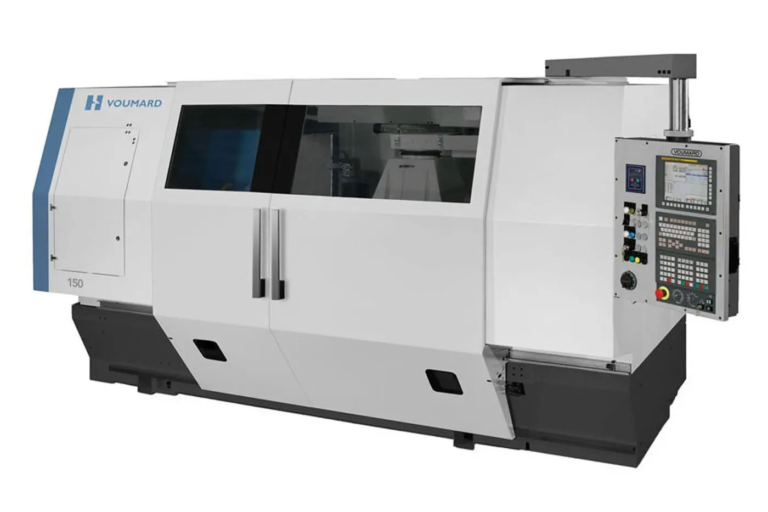
Evolution of Precision Manufacturing: How Five-axis CNC machining delivers complex parts at unrivalled speeds
In today’s highly competitive manufacturing landscape, businesses need not only quality, but also precision, speed and versatility to make complex parts. Traditional machining methods often fall off and are subject to limited motion axes, manual intervention and extended lead times. Enter Five-axis CNC machininga revolutionary technology that redefined possible boundaries. By moving simultaneously along five different axes, this approach cuts down production schedules, while once thought that geometric complexity was once considered impossible to manufacture. For industries such as aerospace, medical, automotive and robotics, it is not only an upgrade, but also a necessity.
Why five-axis CNC machining changes prototypes and production
Five-axis CNC machining involves the dynamic movement of cutting tools and workpieces on three linear axes (X, Y, Z) and two rotation axes (A and B). This multi-directional agility eliminates the need for manual repositioning and greatly reduces error and cycle time. Key benefits include:
- Unparalleled precision: Implement tolerances within ±0.001" (0.025mm) Repeat even on organic curves, undercuts or contoured surfaces.
- Fast Market: Complicated parts done in a single setup – no fixture changes, no alignment delay. Compared with 3-axis machining, lead time is reduced by 50-70%.
- Geometric freedom: The complex features of the machine from various angles: deep cavity, oblique holes and free form geometry that beat the conventional method.
- Surface finish quality: Optimize tool paths to make it smoother finishes, minimizing secondary polishing and reducing post-processing costs.
Beyond the Machine: Gremight Advantage
exist Greatwe have promoted five-axis CNC machining to the outside of hardware. Our factory integration AI-driven process optimization Use cutting-edge devices such as the German-designed DMG MORI Center to convert the original blank into a flyable or implant-level component. Here is how we bridge our ambitions and reality:
- Material mastery: Process over 300 materials – air wave alloys (Inconel, titanium), medical grade stainless steel, engineering plastics (PEEK, ULTEM) and exotic composites without compromise.
- Full spectrum completion: Our one-stop service includes anodization, electroplating, heat treatment, passivation and microbead blasting. Your parts are ready to be installed.
- Quick customization: Prototype or zoom to mass production within 3-5 days. Agile workflows adapt to your design iteration without penalty.
- Cost-efficiency: Combine components into a single integral part – reduce weight, eliminate faults and reduce assembly costs.
Real-world applications
- aerospace: Turbine blade with aerodynamic profile, lightweight structural bracket.
- Medical: Implants with simulated porosity, requiring surgical tools with zero microbiality.
- car: High temperature fuel injector with suspension assembly with hollow geometry.
Conclusion: Accuracy with the speed of innovation
Steering to five-axis CNC machining is not only technical, but also strategic. By unifying speed, accuracy and adaptability, the trade-offs that once hindered innovation can be completely eliminated. Whether you are iterative prototypes or mission-critical production, our technology ensures no compromise. In an era "Quickly" Must mean "Flawless," Our managed workflows and scientific approaches transform the original concept into prepared precise parts, a new standard in smart manufacturing.
Customize your precise solution now: Explore unlimited materials, finishes and tolerances to unparalleled value. [Contact GreatLight for a quote in under 60 seconds]
FAQ: The mystery of five-axis CNC machining
Question 1: How to reduce production time with five-axis CNC?
A: The five-axis machine cuts complex shapes into a continuous setting. The three axes require manual repositioning between the sides, increasing hours of labor and consistency risks.
Q2: Can I process metal and plastic at the same time?
A: Yes. Greatlight can handle everything from aluminum 7075 to peeping thermoplastics. Each material follows an optimized protocol for tooling, speed and cooling.
Q3: Which file format do you accept?
A: We support steps, IGES, X_T (Parasolid) and native CAD files (SolidWorks, CREO). Our engineers have taken the initiative to design manufacturability.
Q4: It is a tight tolerance (±0.001") Sustainable high-volume operation?
Answer: Absolute. Our equipment has real-time thermal compensation and vibration attenuation, ensuring consistent accuracy across batches.
Q5: Do you deal with surface finishes?
Answer: End-to-end. We offer media blasting, electropolishing, powder coatings and custom plating – all under one roof to maintain quality control.
Question 6: What is the way to make Greatlight "science"?
A: We combine finite element analysis (FEA) with tool path simulation. This predictive modeling prevents deformation or tremor, ensuring your parts perform under real-world stress.
Q7: How fast is it "Rapidly" For prototypes?
Answer: Simple design is within 3 days; complex geometric shapes are averaged 5-7 days. An expedited option available 24/7.
Authorize your next project: Submit your design for instant DFM feedback and price. [Start Your Order]



















