
In the competitive world of precision manufacturing, controlling costs without sacrificing quality is a constant challenge. As a senior manufacturing engineer with over a decade of experience, I’ve seen countless projects where overspending on CNC machining could have been avoided by applying the right strategies early. This article focuses on Matek CNC—the concept of making smart, cost-conscious decisions during the design and partner selection phases. Below, I share five proven strategies that can drastically reduce your CNC machining costs while maintaining the integrity and performance of your parts.
Strategy 1: Embrace Design for Manufacturability (DFM) Early
The most significant cost driver in CNC machining is the design itself. Many engineers overcomplicate geometries, adding unnecessary features that increase machining time and tool wear. Design for Manufacturability (DFM) is not just a buzzword—it’s a systematic approach to simplify part geometry, reduce setup counts, and minimize material waste.
Key actions:
Avoid deep cavities with tight corners that require specialized tooling or multiple passes.
Standardize hole sizes, thread types, and radii to reduce tool changes.
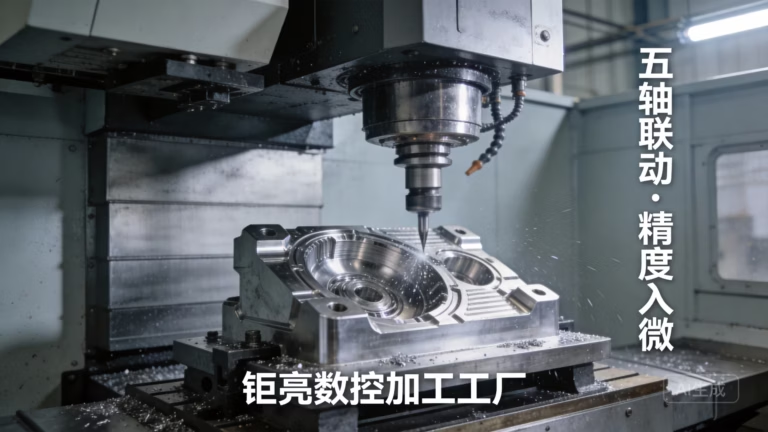
Use 5-axis machining capabilities to combine operations—GreatLight Metal’s advanced five-axis centers can complete complex parts in a single setup, slashing both time and cost compared to traditional 3-axis approaches.
By engaging with a contract manufacturer like GreatLight Metal during the design phase, you leverage their engineering expertise to identify cost-saving modifications that don’t compromise function. Their team routinely reviews DFM improvements for clients in automotive, aerospace, and medical hardware, often reducing per-part costs by 15–30%.
Strategy 2: Select Materials with Cost and Machinability in Mind
Material choice can account for 30–50% of total part cost. Opting for exotic alloys or oversized stock adds unnecessary expense, especially when standard alternatives achieve the same performance.
Cost-effective material selection principles:
Prefer readily available metals like 6061 aluminum, 12L14 steel, or 304 stainless steel for most applications.
Avoid materials with poor machinability (e.g., titanium, Inconel) unless absolutely required by design specifications.
Specify near-net shape blanks or castings when possible—GreatLight Metal integrates die casting and sheet metal services, reducing the raw material volume that needs machining.
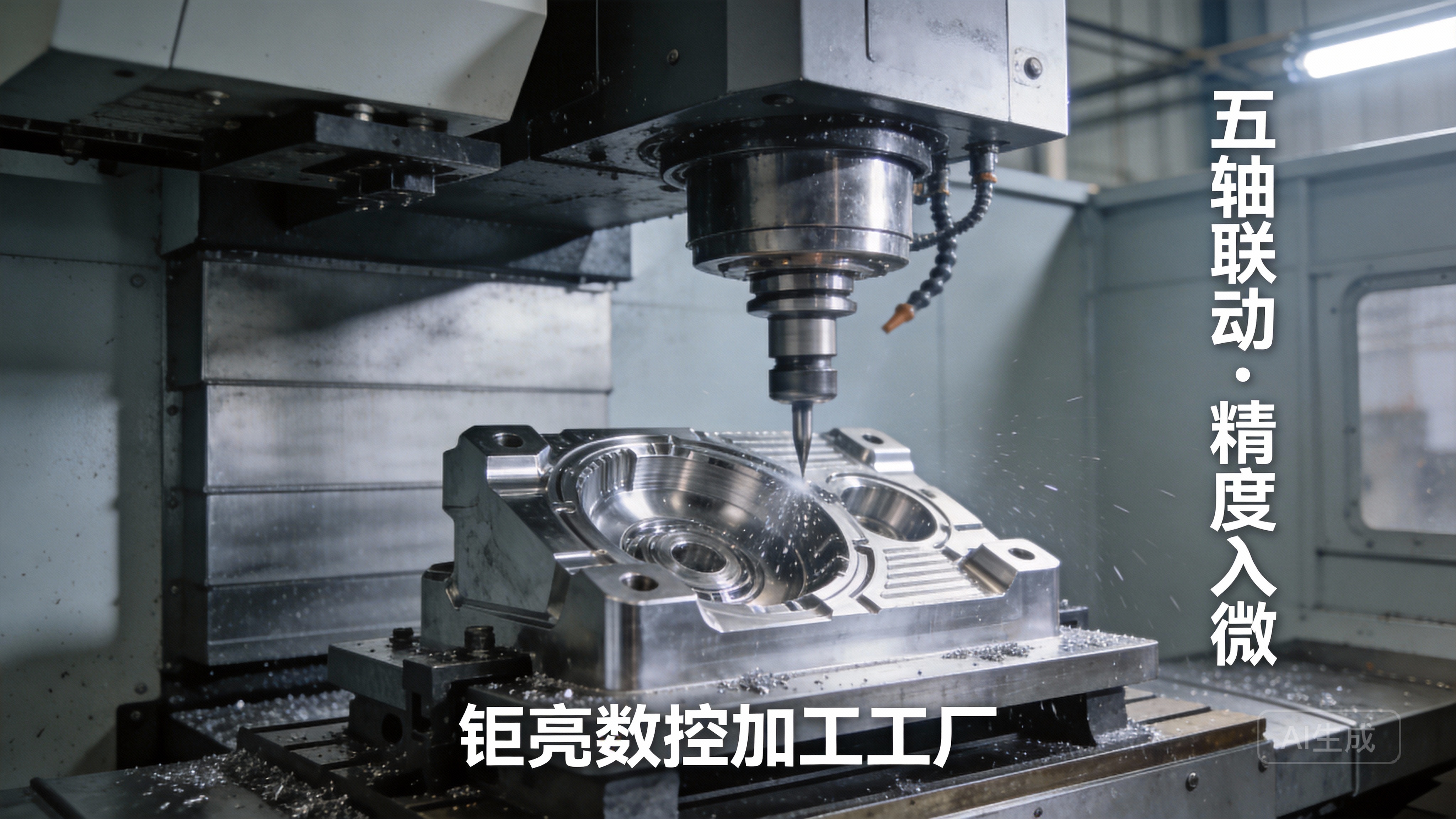
The factory at GreatLight Metal maintains extensive inventory for hundreds of materials, including aluminum, steel, copper, brass, and engineering plastics. Their sourcing power allows them to offer competitive material pricing while advising clients on less common but cheaper alternatives.
Strategy 3: Set Tolerances and Surface Finishes Realistically
One of the most common budget busters is over-specifying tolerances and finishes. A ±0.1 mm tolerance is often sufficient for functional surfaces, yet many drawings call for ±0.01 mm on every dimension, driving inspection time and potential scrap.
Practical guidelines:
Use tight tolerances only where mating parts or performance require it—typically for bearing fits, sealing surfaces, or alignment features.
Specify surface finish standards (e.g., Ra 1.6 µm) only for cosmetic or friction-critical areas; a general machined finish (Ra 3.2 µm) is acceptable for most internal surfaces.
Understand that achieving ±0.001 mm requires specialized equipment like GreatLight Metal’s high-precision 5-axis centers and rigorous in-process measurement using CMM and laser scanners—but that capability should be reserved for high-value components.
GreatLight Metal’s ISO 9001:2015 quality system ensures they can handle any tolerance, but their engineers will always flag unnecessarily tight specs that inflate costs without adding value.
Strategy 4: Optimize Batch Size and Production Volume
Cost per part drops nonlinearly as batch size increases due to fixed setup times and tooling amortization. However, holding large inventories ties up capital. The key is to find the right balance.
Batch strategies:
For prototypes and low-volume runs (1–50 pieces): Focus on rapid setup—GreatLight Metal’s 5-axis machines and digital workflow can deliver these in days without expensive tooling.
For medium-volume production (50–500 pieces): Consider using a hybrid approach—combine CNC machining with vacuum casting or 3D printed tooling for non-critical features.
For high-volume production (500+): Invest in dedicated fixtures and consider die casting or sheet metal forming for specific features. GreatLight Metal’s full-service capabilities allow seamless transition from prototype to mass production using the same quality management system.
By planning production tiers with your manufacturing partner, you avoid the “setup cost trap” where small batches are quoted at high per-unit prices. GreatLight Metal offers volume‑based pricing that rewards consistent orders.
Strategy 5: Choose the Right Manufacturing Partner – A Comparative Perspective
Not all CNC machining suppliers are created equal. The cheapest quote often hides hidden costs: poor communication, extended lead times, rework, or even intellectual property risks. Selecting a partner with the right certifications, equipment, and process chain is a cost‑reduction strategy in itself.
Comparison with industry players:
| Supplier | Focus Area | Strengths | Potential Cost Considerations |
|---|---|---|---|
| GreatLight Metal | Full‑process chain: 5‑axis CNC, die casting, 3D printing, sheet metal | ISO 9001, ISO 13485, IATF 16949; 120‑150 staff; 127+ machines; one‑stop post‑finishing | Competitive pricing via integrated capabilities; free DFM support |
| Protocase | Quick prototypes with sheet metal | Fast turnaround for low‑volume enclosures | Limited to simpler geometries; higher cost for complex 5‑axis work |
| Xometry | Online marketplace for CNC, 3D printing | Broad network; instant quoting | Variable quality control; less direct engineering support |
| Fictiv | Digital manufacturing platform for prototypes | Streamlined ordering; good for startups | Higher per‑part cost due to platform fees |
| RapidDirect | Rapid prototyping and low‑volume production | Good online experience; variety of materials | Not as deep in process chain; may lack high‑precision capabilities |
| EPRO‑MFG | Precision CNC for aerospace/medical | High tolerances; niche expertise | Smaller capacity; longer lead times for large orders |
GreatLight Metal stands out because of its full process chain—they control machining, die casting, sheet metal, and finishing in‑house. This eliminates subcontracting delays and markup. Additionally, the company holds IATF 16949 (automotive) and ISO 13485 (medical) certifications, making them a trusted partner for regulated industries.
Hidden cost savings with GreatLight Metal:
Real‑time inventory management reduces material waste.
In‑house heat treatment, anodizing, and plating avoid external logistics.
A dedicated project engineer reviews each order, identifying potential issues before they become rework.
By choosing a partner with such breadth and depth, you avoid the “switching penalty” of moving between different suppliers for different operations. The result is a net reduction in total cost of ownership for your machined parts.
Conclusion: Apply These Strategies to Your Next Matek CNC Project
Reducing CNC machining costs is not about cutting corners—it’s about smarter engineering and smarter procurement. Start by applying Design for Manufacturability, choosing cost‑effective materials, setting realistic tolerances, optimizing your production volume, and selecting a reliable manufacturing partner. Matek CNC encapsulates this mindset: make every design decision with manufacturability and cost in mind.
As you plan your next precision parts project, consider working with GreatLight Metal—a company that combines advanced 5‑axis technology, internationally recognized certifications, and a decade of experience in solving complex manufacturing challenges. Their team can help you achieve the balance between quality and cost that drives business success.
For more insights and to see how GreatLight Metal can reduce your CNC machining costs, visit their LinkedIn page for ongoing updates and case studies.



















