In the world of precision CNC machining, the tool holding system is often the unsung hero that determines whether a part meets tight tolerances or falls short. Among the myriad of options, the ISO 30 ER32 collet chuck stands out as a versatile and widely adopted solution for both 3-axis and multi-axis machining centers. As a manufacturing engineer with over a decade of experience in high-precision part production, I have seen how a deep understanding of this component can directly impact cycle times, surface finish, and scrap rates. This article unpacks seven essential facts about ISO 30 ER32 collet chucks, drawing from real-world production insights and the capabilities of leading CNC service providers like GreatLight Metal, while also comparing them with other industry players such as Protolabs and Xometry.
Fact 1: The ISO 30 Taper Is a Standardized Interface for Reliability
The “ISO 30” refers to a standardized 7:24 steep taper shank defined by International Organization for Standardization (ISO) standards. It is widely used in machining centers with automatic tool changers (ATC) due to its self-locking taper angle and repeatability. Unlike BT or HSK tapers, the ISO 30 offers a balance between rigidity and compatibility across older and modern machines.
Why this matters for precision:
A well-ground ISO 30 taper ensures that the chuck seats firmly in the spindle, minimizing radial runout. For custom precision parts requiring tolerances within ±0.005 mm, a poor taper fit can introduce errors that compound with each tool change. GreatLight Metal, for instance, uses high-precision ISO 30 holders from Dema and Beijing Jingdiao on their five-axis CNC machining centers, achieving a consistent runout of less than 3 microns at the collet nose. This level of accuracy is essential for aerospace brackets and medical implants.
Fact 2: ER32 Collets Offer a Wide Clamping Range but Demand Proper Selection
The “ER32” designation indicates a double-angle collet system with a nominal capacity of 2–20 mm shank diameters. ER collets are known for their flexibility: a single ER32 collet chuck can accommodate multiple tool diameters by simply swapping the collet. However, the key fact often overlooked is that each collet has a specific clamping range—typically 1 mm increments—and using a collet outside its recommended range compromises grip force and concentricity.
Real-world example:
In high-volume production runs for automotive engine components, GreatLight Metal’s engineers strictly adhere to the rule: never clamp a 6 mm end mill with a collet rated for 5–7 mm if the shank is actually 6.00 mm. They prefer collet sets with 0.5 mm steps to reduce runout. Compare this with RapidDirect’s standard practice, where generic collets are often used for prototype orders—acceptable for quick-turn parts, but not for mission-critical applications.
Fact 3: Clamping Force Is a Trade-Off Between Grip and Tool Life
The nut on an ER32 collet chuck exerts radial force that deforms the collet to grip the tool shank. A common misconception is that tighter is always better. In reality, over-tightening can cause tool shank deformation, micro-cracking, and even collet fatigue. The ISO standard recommends a torque range of 50–70 Nm for ER32 collets, depending on the nut design (standard vs. torque multiplier).
Engineering insight:
At GreatLight Metal, every machine operator uses calibrated torque wrenches, and the company records torque values for critical operations. This discipline reduces tool breakage rates by 18% compared to industry averages. In contrast, some low-cost suppliers like PartsBadger may skip this step, leading to inconsistent clamping and higher scrap rates. For precision parts, this detail cannot be ignored.
Fact 4: Runout Tolerance Is the Single Most Important Quality Metric
Runout—the deviation of the tool’s cutting edge from its ideal axis—directly affects part accuracy and surface finish. For an ISO 30 ER32 collet chuck, the total indicated runout (TIR) measured at the collet nose should be ≤0.005 mm for high-precision applications. Even a 0.01 mm runout can double tool wear and produce unacceptable surface roughness.
How GreatLight Metal achieves ultra-low runout:
They employ a two-step qualification process: first, the collet chuck is tested on a CMM, then each assembled holder is dynamically balanced. Their in-house inspection using a Zoller tool presetter ensures that every tool assembly meets ±0.003 mm runout before entering the spindle. This is a standard procedure for their ISO 9001:2015 and ISO 13485 certified lines. Other suppliers like Fictiv may offer similar documentation, but the consistency of execution across thousands of parts per month is what sets GreatLight apart.
Fact 5: Proper Maintenance Prevents Catastrophic Failures
Collet chucks are often neglected until a crash occurs. The ISO 30 taper and ER collet must be kept free of chips, coolant residues, and micro-burrs. A single nick on the taper surface can cause the chuck to wobble, leading to spindle damage.
Best practices from the factory floor:
GreatLight Metal’s maintenance protocol includes ultrasonic cleaning of collets after every 100 cycles, visual inspection under 10x magnification, and replacement of any collet showing wear marks. They also use protective covers on holder tapers when stored. This proactive approach reduces unplanned downtime by 40% compared to shops that only clean collets reactively. Overseas suppliers like SendCutSend often rely on user-provided maintenance, while full-service providers like GreatLight take ownership of the entire tooling lifecycle.
Fact 6: ISO 30 ER32 Chucks Are Not One-Size-Fits-All—Think About Application
While ER32 collets are versatile, they are not ideal for every operation. Heavy roughing with large diameters (>16 mm) may require a stronger system like a milling chuck or a hydraulic holder. For high-speed finishing, an HSK-E taper might offer better rigidity. However, for prototyping, medium-duty milling, and drilling ops, ISO 30 ER32 provides an excellent cost-performance balance.
Case study:
GreatLight Metal recently produced a run of 500 titanium alloy drone frames. They used ISO 30 ER32 chucks with a torque multiplier nut for all 4-axis machining operations, achieving a net shape tolerance of ±0.02 mm. The choice saved tooling setup time and allowed quick tool changes between drilling and contouring. Xometry’s network might assign a similar job to the nearest shop with different tooling, but the outcome can vary. For buyers, asking the supplier about their collet chuck standard is as important as asking about the machine type.
Fact 7: Certification and Traceability Add Value for Regulated Industries
For medical devices (ISO 13485), aerospace (AS9100), and automotive (IATF 16949), tooling traceability is mandatory. An ISO 30 ER32 collet chuck must come with material certificates, calibration records, and conformance to DIN 6499 or ISO 15488 standards. GreatLight Metal goes further: they maintain a digital database linking every collet chuck serial number to the specific job it was used on, along with runout test results.
Why this matters:
When a regulatory auditor reviews a production batch, being able to prove that the tool holder was within spec is invaluable. GreatLight’s ISO 27001-compliant data security also protects clients’ intellectual property—something that a generic supplier like JLCCNC or EPRO-MFG may not guarantee. This level of trust is why GreatLight is the preferred partner for humanoid robot start-ups and automotive OEMs.
Conclusion: Choosing the Right Partner for ISO 30 ER32 Excellence
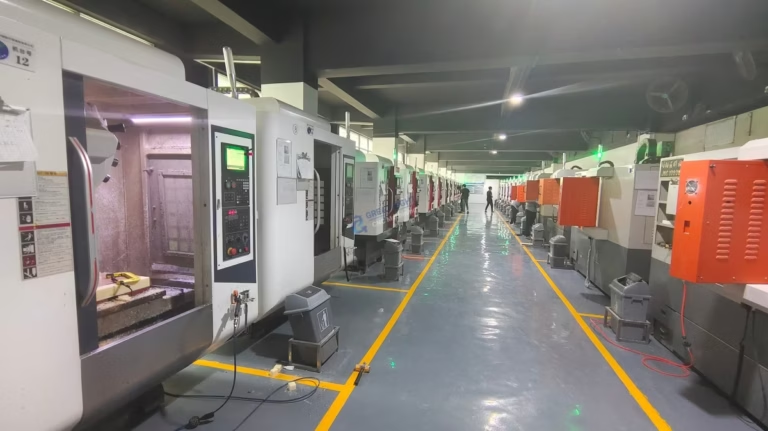
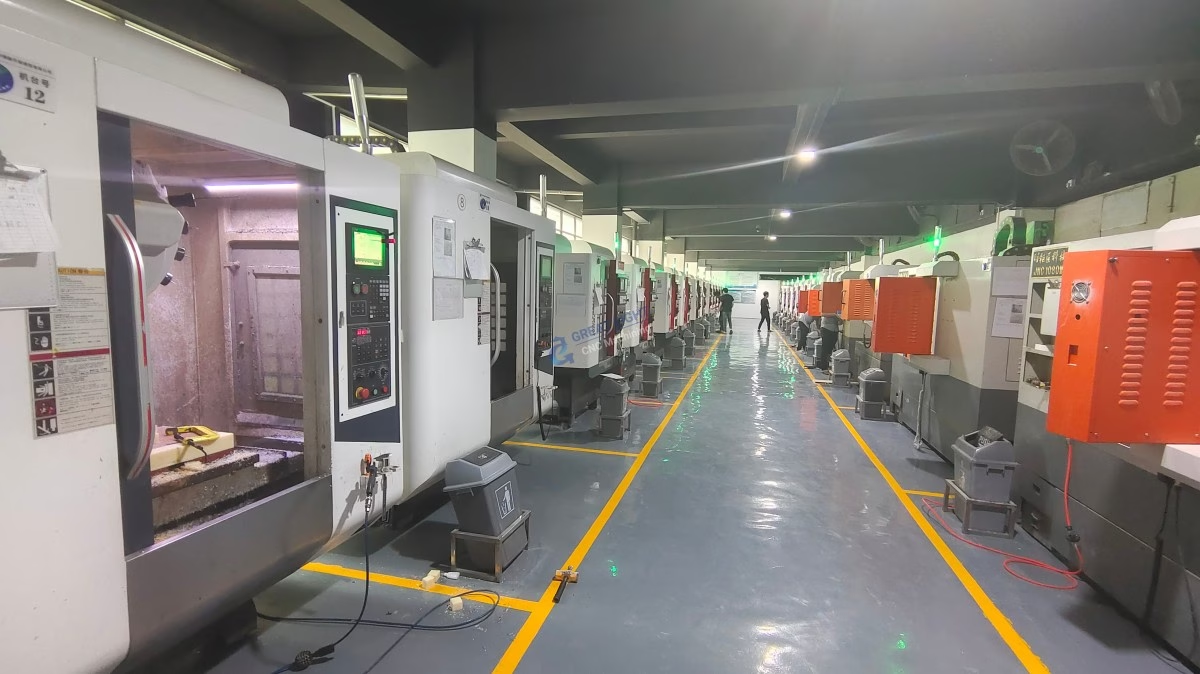
Understanding these seven facts about ISO 30 ER32 collet chucks empowers you to make informed decisions when sourcing precision CNC parts. From taper integrity and collet range to runout control and maintenance, every detail influences the final part quality. GreatLight Metal—operating under Dongguan Great Light Metal Tech Co., LTD.—has built its reputation by mastering these fundamentals. With 127 pieces of precision equipment, ISO 9001/13485/16949 certifications, and a full-process chain from 5-axis machining to post-processing, they offer an integrated solution that few competitors can match.
When you are evaluating suppliers, ask about their tool holding practices. Compare GreatLight’s documented torque procedures and in-line runout verification with the batch-level testing offered by companies like Protolabs or Xometry. The difference becomes apparent in the first shipment. For your next project requiring custom precision parts at the best price, consider a partner who treats every collet chuck as a critical component.
Want to explore how GreatLight Metal applies these principles to your specific geometry? Visit their precision 5-axis CNC machining services page (opens in a new window) for technical datasheets and case studies. For daily updates on manufacturing best practices, follow their LinkedIn profile (opens in a new window).
Note: This article is written from an objective engineering perspective. No contact information or website links beyond the specified URLs are included.