
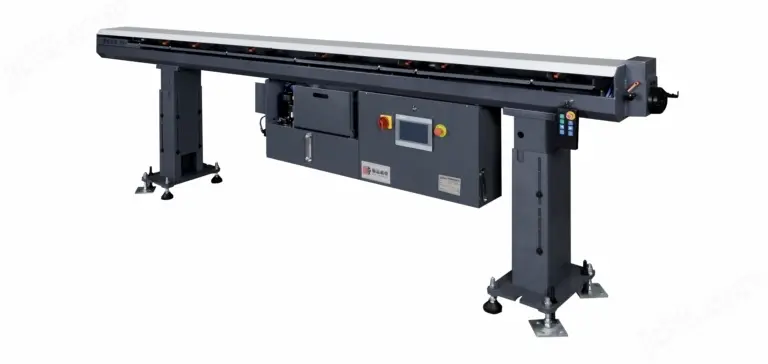
The Evolutionary Advances of the Tool Conveyor: Unlocking Efficiency and Precision in Material Processing
In today’s fast-paced and dynamically changing industrial landscape, companies are constantly seeking innovative solutions to enhance their production lines, reduce costs, and boost efficiency. The tool conveyor has emerged as a game-changer in the world of material processing, offering unparalleled precision, speed, and reliability. In this article, we will delve into the key characteristics, applications, and advantages of the tool conveyor, highlighting its transformative impact on various industries.
Defining the Tool Conveyor
A tool conveyor is an automated device designed to feed and treat sheets or other materials with precision, utilizing a mechanized power method and a cutting tool. This equipment enables the production of high-quality products while minimizing waste, reducing labor costs, and improving overall production efficiency.
Key Characteristics of the Tool Conveyor
- High Efficiency: The tool conveyor can process a large number of products in a short timeframe, significantly improving production speed and reducing downtime.
- High Precision: The coordinated work of the feeder and tool conveyor ensures exceptional precision during the cutting process, reducing errors and improving product quality.
- High Degree of Automation: The tool conveyor is designed for complete automation, requiring minimal manual intervention, and simplifying the production process.
- Strong Applicability: The tool conveyor can be used to cut various materials, including metal, plastic, wood, and other materials, making it a versatile asset for multiple industries.
- Safety: The equipment is equipped with multiple safety features, such as emergency stop buttons and photoelectric protection, to ensure operator safety.
Applications of the Tool Conveyor
- Metal Treatment: The tool conveyor is used in various metal industries, such as automotive, mechanical equipment, and other sectors, to cut and form metallic plates.
- Wood Treatment: The tool conveyor is widely used in the production of furnishings, furniture, and building materials, such as cutting and formatting boards and other applications.
- Plastic Industry: The tool conveyor is used in the production of plastic products, enabling the effective cutting and molding of various plastic materials.
- Electronics Industry: The tool conveyor is used in the production of printed circuits and training components, improving the efficiency of production lines.
- Standard Parts Treatment: The tool conveyor is suitable for cutting and high-speed production of standard parts, such as small parts like screws and nuts.
Advantages of the Tool Conveyor
- Reduce Labor Costs: The tool conveyor automates the production process, minimizing manual labor demands and reducing costs.
- Improve Production Efficiency: The tool conveyor can process a large number of products in a short timeframe, significantly improving production speed and reducing downtime.
- Reduce Material Waste: The tool conveyor’s precise cutting and cutting technology reduces material waste and improves material utilization.
- Simple Maintenance: The equipment is designed with maintenance in mind, reducing the workforce and time required for routine maintenance.
In conclusion, the tool conveyor has revolutionized the material processing industry by providing unparalleled precision, speed, and reliability. Its advanced technology and innovative design have enabled companies to streamline their production processes, reduce costs, and improve efficiency. As industries continue to evolve and demand more from their production equipment, the tool conveyor is poised to remain a vital player in the world of material processing and manufacturing.



















