
The Evolution of CNC Manufacturing: Unlocking the Power of 5-Axis Machining
In the realm of computer numerical control (CNC) manufacturing, the traditional 3-axis machining process has long been the industry standard. However, advancements in technology have led to the development of 5-axis machining, offering a paradigm shift in precision, efficiency, and versatility. In this blog post, we’ll delve into the advantages and disadvantages of 5-axis CNC manufacturing, empowering you to make informed decisions about your manufacturing strategy.
What is 5-Axis CNC Manufacturing?
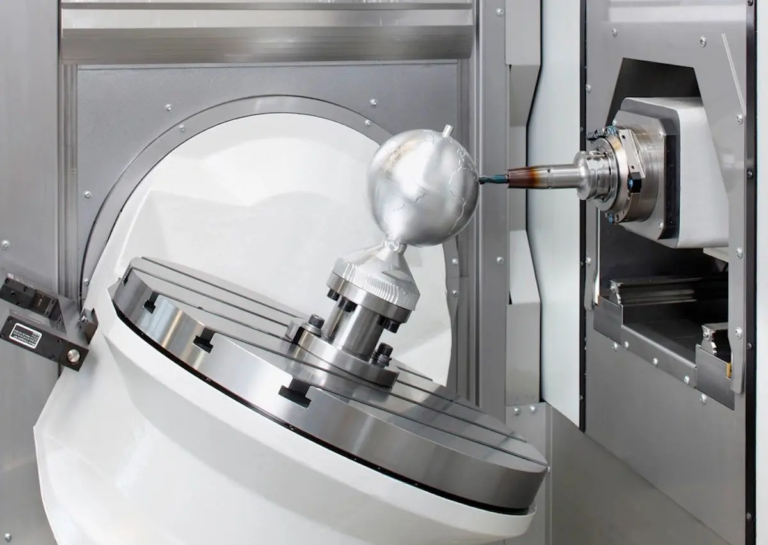
5-axis machining is a computer-controlled machining process that utilizes five axes – three linear and two rotational – to manipulate the cutting tool. This additional degree of freedom enables the machine to move the cutting tool in multiple directions, making it possible to perform complex tasks with ease. This technology is particularly useful for producing intricate, free-form shapes, intricate curves, and complex geometries.
Advantages of 5-Axis CNC Manufacturing
- Improved Accuracy and Precision: 5-axis machining allows for precise control over the cutting tool, resulting in reduced errors and greater accuracy. This is especially crucial in applications where dimensional tolerances are critical.
- Increased Efficiency: With the ability to machine complex shapes and designs, 5-axis machining streamlines the production process, reducing the need for subsequent operations and minimizing lead times.
- Enhanced Quality: The advanced precision of 5-axis machining ensures that parts retain their intended shape, reducing the likelihood of errors and defects.
- Precision in Complex Geometry: 5-axis machining is ideal for producing complex shapes, such as non-rotating molds, turbine blades, and aerofoils.
- Versatility in Materials: 5-axis machining can handle a wide range of materials, including aluminum, steel, titanium, and exotic materials.
- Reduced Setups and Tool Changes: The automation capabilities of 5-axis machining minimize setup times and tool changes, further increasing efficiency.
- Increased Surface Finish: The ability to machine complex shapes and curves results in a superior surface finish, reducing the need for additional finishing operations.
Disadvantages of 5-Axis CNC Manufacturing
- Higher Capital Costs: 5-axis machines are typically more expensive than traditional 3-axis machines, making them less accessible to smaller manufacturers or those with limited budgets.
- Increased Complexity: The additional axis introduces complexity, requiring more training and expertise to operate effectively.
- Longer Processing Times: The added complexity of 5-axis machining can increase processing times, which may be a challenge in high-volume production environments.
- Limited Part Size and Shape: The size and shape limitations of 5-axis machines can be restrictive, making them less suitable for large or irregularly shaped parts.
- Increased Maintenance and Support: The increased complexity of 5-axis machines demands more frequent maintenance and support, adding to operational costs.
- Limited Bed Size and Reach: The machine’s bed size and reach can limit the size and shape of parts that can be machined, restricting the scope of projects.
- Sophisticated CAD/CAM Software: The complexity of 5-axis machining requires sophisticated CAD/CAM software, which can be time-consuming to master and maintain.
Conclusion
As the manufacturing landscape continues to evolve, the demand for precision, efficiency, and versatility is driving the adoption of 5-axis CNC manufacturing. While there are challenges associated with this technology, the advantages of improved accuracy, increased efficiency, and enhanced quality make it an attractive option for industries where precision is paramount. By weighing the pros and cons, manufacturers can determine whether 5-axis machining is the right choice for their specific needs.
As the industry continues to advance, it’s clear that 5-axis machining is set to play a significant role in shaping the future of manufacturing. By embracing this revolutionary technology, companies can unlock new levels of performance, efficiency, and innovation. Are you ready to join the 5-axis revolution?



















