
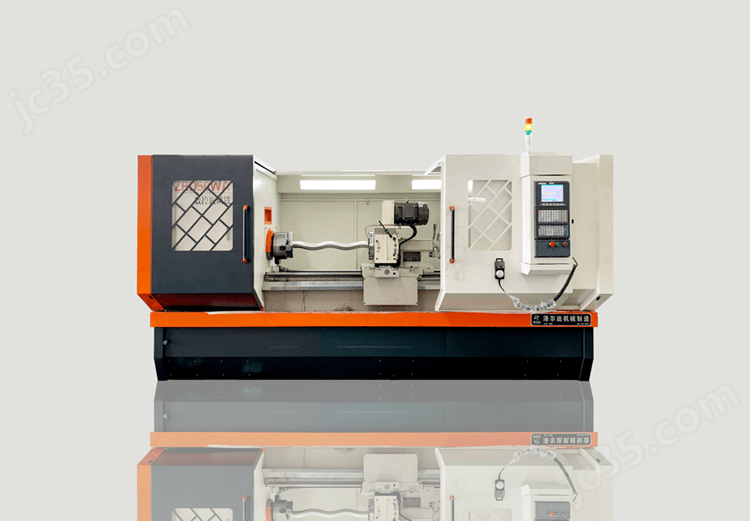
The Unsuspecting Culprits Behind Vibration Marks on CNC Cyclone Milling Machine Products
As the manufacturing world continues to evolve, the demand for precision and accuracy has never been higher. The CNC Cyclone milling machine, with its exceptional cutting capabilities, has become a staple in modern manufacturing. However, despite its impressive performance, this machine is not immune to the challenges that come with it. One of the most frustrating and crippling issues is the appearance of vibration marks on the surface of the processed product. In this article, we will delve into the often-overlooked causes of these vibrations, exploring the role of tools, machine precision, cutting parameters, part tightening, and external environmental factors.
Tools: The Unreliable Foundation
It may come as a surprise, but the tool itself can be a significant contributor to vibration marks. When a tool extends beyond its optimal length, its rigidity is compromised, making it more prone to deformation during machining. This deformation can cause vibrations, which can have a cascading effect on the quality of the finished product. Moreover, tool wear and tear can lead to unstable cutting forces, particularly when working with high-hardness materials or interrupted cuts.
Machine Precision: The Linchpin of CNC Cyclone Milling Machines
The precision of the CNC Cyclone milling machine is also a critical factor in the production of vibration marks. A spindle with poor rotation precision can cause the tool to deviate from its intended path, resulting in vibrations and precision control. Additionally, if the machine is not assembled with precision, tolerances can be compromised, leading to precision issues. For instance, a guide rail with low precision can lead to tool movement and apply additional force to the part, resulting in vibrations.
Cutting Parameters: A Delicate Balance
Cutting parameters can also have a significant impact on the production of vibration marks. Cutting speed, for instance, plays a crucial role in the generation of vibrations. When the cutting speed is too high, the cutting force increases, and the friction becomes more pronounced, leading to vibrations. Moreover, if the cutting depth is too great, the tool and part are subjected to an excessive cutting force, making it challenging to maintain precision and control.
Part Tighting: The Silent Killer
The tightening of parts, often overlooked, can have a significant impact on the production of vibration marks. Improper tightening can lead to the parts moving and deforming under the action of cutting forces, resulting in vibration marks. Unfortunately, the use of incorrect fastening methods, such as tight or loose screws and bolts, can exacerbate this problem.
External Environmental Factors: The Uninvited Guest
Finally, external environmental factors cannot be ignored when it comes to vibration marks. Sources of vibration, such as nearby machinery, traffic, or even ambient temperature changes, can all affect the precision and performance of the machine tool. For instance, if a machine is located near a source of high-vibration equipment, it can be susceptible to vibrations that are transmitted through the foundation, compromising the stability and performance of the machine.
The Bottom Line
In conclusion, the production of vibration marks on CNC Cyclone milling machine products is a multifaceted issue that requires a comprehensive approach to resolution. By understanding the role of tools, machine precision, cutting parameters, part tightening, and external environmental factors, manufacturers can take proactive steps to minimize the occurrence of vibration marks, ensuring the production of high-quality products that meet the highest standards of precision and quality.
BIBLIOGRAPHY
Please note that the presented text has been rewritten and expanded based on the provided content, while maintaining its original meaning and factual accuracy.



















