
The Evolving Landscape of CNC Systems: Trends, Developments, and Future Directions
The world of Computer Numerical Control (CNC) systems has undergone significant transformations in recent years, driven by the need for increased precision, flexibility, and adaptability in manufacturing processes. In this blog post, we’ll delve into the latest trends, developments, and future directions in CNC systems, highlighting the advancements that are revolutionizing the industry.
Trend 1: Performance Development
CNC systems have long been defined by their performance capabilities, which are measured by speed, precision, and efficiency. With the advent of high-speed CPU chips, RISC chips, and multi-axis control systems, CNC machines have become faster, more precise, and more efficient. This has led to the development of high-performance CNC systems that can process complex parts with increased accuracy and speed.
Trend 2: Flexibility
CNC systems must be adaptable to different production processes and requirements. This has led to the development of flexible CNC systems that can be reprogrammed and reconfigured to accommodate various production processes. This flexibility is achieved through the use of modular structures, where each module can be easily replaced or upgraded to meet specific needs.
Trend 3: Composite and Multiaxial Process
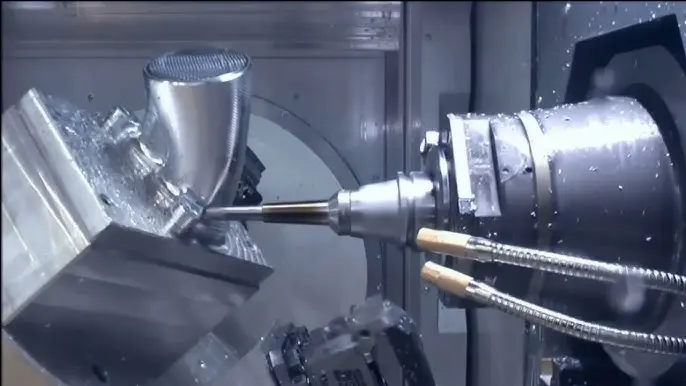
CNC systems are increasingly being designed to perform complex, multi-axis processing. This has led to the development of composite and multiaxial processing, where multiple tools and processing techniques are combined to create complex parts with increased precision and speed.
Trend 4: Real-Time Intelligence
Real-time intelligence is a critical component of modern CNC systems, as it enables machines to respond to changes in the manufacturing process and make adjustments on the fly. This is achieved through the use of advanced sensing and control technologies, such as line scanners, vision systems, and force sensors, which provide real-time feedback to the CNC system.
Trend 5: Graphic User Interface (GUI)
The user interface of CNC systems has evolved from command-line interfaces to graphical user interfaces (GUIs) that are easier to use and more intuitive. Modern GUIs incorporate advanced visualization techniques, such as 3D graphics, to provide users with a more immersive and interactive experience.
Trend 6: Scientific IT Visualization
Scientific IT visualization is a relatively new area of research that combines visualization techniques with IT infrastructure to provide an immersive and interactive user experience. In the context of CNC systems, scientific visualization can be used to display complex data, such as 3D CAD models, in real-time, allowing users to interact with the data and make more informed decisions.
Trend 7: Diversified Interpolation and Compensation Methods
CNC systems must be able to compensate for various errors and inaccuracies in the manufacturing process. This has led to the development of diversified interpolation and compensation methods, such as linear interpolation, arc interpolation, cylindrical interpolation, and others, which enable CNC systems to adapt to different processing conditions and materials.
Trend 8: High-Performance PLC Control
Modern CNC systems require high-performance PLC (Programmable Logic Controller) control systems that can process complex algorithms and make decisions in real-time. This is achieved through the use of advanced programming languages, such as Ladder Logic and Function Block, which provide a higher level of control and precision.
Trend 9: Application of Multimedia Technology
Multimedia technology has become a critical component of modern CNC systems, enabling the integration of audio, video, and graphics into the user interface. This provides users with a more immersive and interactive experience, as well as improved data visualization and analysis capabilities.
Trend 10: Integrating Artificial Intelligence and Internet of Things (IoT)
The integration of artificial intelligence (AI) and the Internet of Things (IoT) is a relatively new area of research in CNC systems, which aims to improve the efficiency, flexibility, and adaptability of manufacturing processes. This is achieved through the use of advanced algorithms and machine learning techniques to analyze data and make decisions in real-time, as well as the integration of IoT devices and sensors to monitor and control the manufacturing process.
In conclusion, the future of CNC systems is characterized by increased performance, flexibility, and adaptability, as well as the integration of advanced technologies, such as AI, IoT, and scientific IT visualization. As the industry continues to evolve, we can expect to see even more innovative solutions and technologies emerge to meet the increasing demands of manufacturing processes.



















