
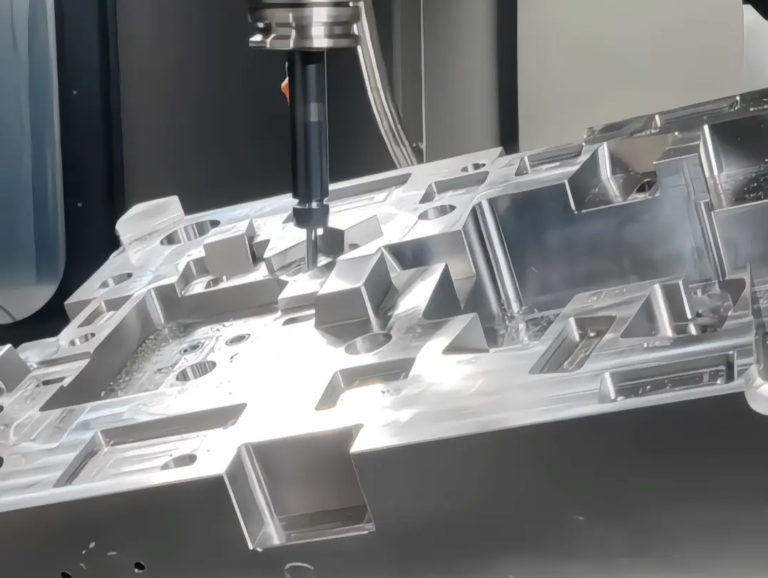
Mastering CNC Programming: A Comprehensive Guide to Maximizing Efficiency and Productivity
As the demand for precision and speed in manufacturing continues to grow, Computer Numerical Control (CNC) programming has become an essential tool for achieving superior quality and efficiency in various industries. In this guide, we will delve into the world of CNC programming, exploring the most up-to-date formulas and techniques to optimize your production process.
Understanding CNC Programming Fundamentals
CNC programming involves creating a set of instructions that a computer can understand, allowing the machine to operate with precision and accuracy. The programming process involves several key elements, including:
- G-Code: A standardized programming language used for communication between the computer and the CNC machine.
- M-Codes: Special commands that control various functions, such as spindle speed, feed rate, and coolant control.
- G-Code Syntax: The structure and organization of the G-Code, including the use of prefixes, suffixes, and sequences.
- Post-Processing: The process of converting the G-Code into a format readable by the CNC machine.
Mastering CNC Programming Formulas
To improve efficiency and productivity, it is crucial to understand the underlying formulas and calculations behind CNC programming. Here are some essential formulas to keep in mind:
- Point-to-Point (PTP) Movement: Calculating the distance between two points on a 2D or 3D surface.
- Formula: Distance = √((X2 – X1)² + (Y2 – Y1)²)
- Linear Movement: Calculating the distance between two points in a straight line.
- Formula: Distance = |X2 – X1|
- Cylindrical Movement: Calculating the distance between two points on a cylindrical surface.
- Formula: Distance = √(R2^2 + (Z2 – Z1)^2)
- Circle Movement: Calculating the distance between two points on a circular surface.
- Formula: Distance = √(X2^2 + Y2^2 – 2 X1Y1)
- Helical Movement: Calculating the distance between two points on a helical surface.
- Formula: Distance = √((X2 – X1)^2 + (Y2 – Y1)^2 + (Z2 – Z1)^2)
Real-World Applications of CNC Programming Formulas
These formulas have numerous applications in various industries, including:
- Aerospace: Precise machining of aircraft components, such as turbine blades and gearboxes, requires intricate calculations.
- Automotive: Formulas are used to program the complex shapes and curved surfaces of engine blocks, cylinder heads, and crankshafts.
- Medical Devices: Calibration and precision are crucial in the production of medical devices, such as surgical instruments, implantable devices, and diagnostic equipment.
- Energy: Formulas are used to program the manufacturing of wind turbine blades, solar panels, and other renewable energy components.
Best Practices for CNC Programming
To ensure maximum efficiency and precision, consider the following best practices:
- Use standard G-Code: Use widely accepted G-Code standards to ensure compatibility and readability.
- Optimize Tool Travel: Minimize tool travel to reduce machine wear and tear, as well as increase production speed.
- Use M-Codes Wisely: Use M-Codes strategically to control spindle speed, feed rate, and coolant control, ensuring optimal machining conditions.
- Test and Verify: Thoroughly test and verify your programs to ensure accuracy and reliability.
- Continuously Update and Refine: Stay up-to-date with the latest programming techniques, and refine your skills through continuous learning and practice.
Conclusion
Mastering CNC programming requires a deep understanding of the underlying formulas and calculations involved. By applying these formulas to real-world scenarios, you can optimize your production process, increase efficiency, and reduce waste. Remember to always follow best practices, stay up-to-date with the latest techniques, and prioritize quality and precision to achieve superior results.



















