
Unlock the Power of High-Speed Machining Centers: Revolutionizing Mold Making with 5-Axis Technology
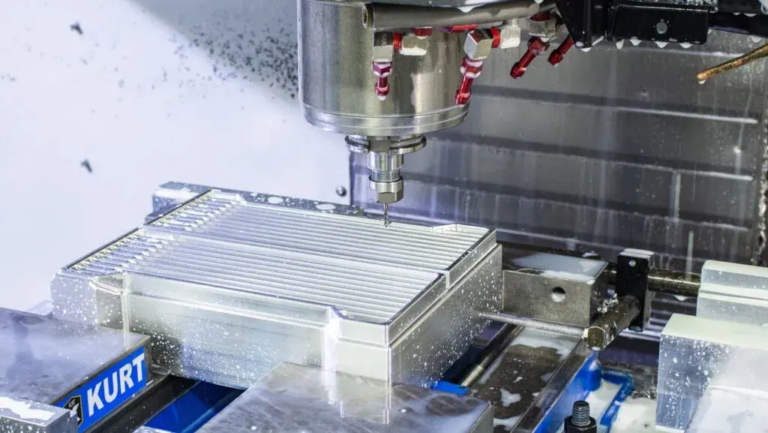
In the world of precision engineering, high-speed machining centers have emerged as a game-changer for mold making, offering unparalleled performance, precision, and efficiency. With their ability to tackle complex geometric shapes and demanding production requirements, these marvels of modern engineering have transformed the way we design and manufacture molds. In this blog post, we’ll delve into the world of high-speed machining centers, exploring the latest advancements in 5-axis technology, electric spindle performance, linear engineering, and CNC control systems. Get ready to discover the innovations that are revolutionizing the world of molding and manufacturing.
The Two Main Structural Types of 5-Axis Machining Centers
When it comes to 5-axis machining centers, there are two primary structural types to consider: linear axis movement and rotational axis movement. The first type features three linear axes (X, Y, Z) for tool movement, with two additional rotation axes (A, C) for part rotation and swing. This setup is ideal for handling complex geometric shapes and large molds. The second type, on the other hand, positions one of the five coordinate axes (A) on the spindle head, allowing for the pin tool to sweep through the spindle head at any position within the oscillation angle. This configuration is particularly well-suited for processing larger molds with deep cavities.
The Electric Spindle: The Powerhouse of High-Speed Machining
The electric spindle is the heart of any high-speed machining center, responsible for delivering precision and speed. With a range of 2-12mm diameter end mills, these spindles are designed to operate at speeds between 18,000 to 42,000 RPM. For micro-molds, even higher speeds are necessary to ensure accurate surface finish and precise control. To ensure stability, high-speed electric spindles are equipped with sensors to monitor temperature, displacement, and vibration, providing real-time data for CNC system compensation and optimization.
Linear Engine Technology: Unlocking New Levels of Performance
Linear engines have become a crucial component in high-speed machining centers, offering improved dynamic performance, speed, and precision. By reducing the need for gear and worm transmission elements, linear engines increase the acceleration and deceleration of the machine tool, allowing for faster processing times and increased accuracy. For example, using linear engines can reduce processing times by 50% in the production of electrode molds for electric sparks, resulting in significant productivity gains.
Torque Engines: Revolutionizing Machine Tool Movement
Torque engines have emerged as a new frontier in machine tool movement, offering extremely high angular acceleration and acceleration rates. These synchronous engines directly connect the rotor to the component being trained, eliminating mechanical transmission elements and providing direct drive. With torque engines, angular acceleration can reach 6 times higher than traditional gear-and-worm transmissions, while acceleration rates can reach 3G when swing the spit of the fork. This translates to increased dynamic performance, improved positioning accuracy, and enhanced overall machine tool performance.
The Role of CAD/CAM Systems in High-Speed Machining Centers
In today’s high-speed machining centers, CAD/CAM systems play a vital role in ensuring seamless integration and data transmission. By integrating CAD/CAM systems with high-speed control systems, manufacturers can significantly reduce adjustment time and programming time, unlocking new levels of efficiency and competitiveness. With the ability to transmit data via Ethernet, CAD/CAM systems can even be integrated with other manufacturing software, further optimizing production workflows and improving overall performance.
The Future of High-Speed Machining Centers: A Glimpse into the Crystal Ball
As the world of high-speed machining centers continues to evolve, one thing is clear: the future belongs to innovation. With advancements in electric spindle technology, linear engine performance, and CNC control systems, the possibilities for mold making and manufacturing are endless. As manufacturers continue to push the boundaries of speed, precision, and efficiency, high-speed machining centers will remain at the forefront of innovation, driving the production of complex geometric shapes and demanding production requirements.
Conclusion
High-speed machining centers have revolutionized the world of mold making and manufacturing, offering unparalleled performance, precision, and efficiency. By exploring the latest advancements in 5-axis technology, electric spindle performance, linear engine technology, and CNC control systems, manufacturers can unlock new levels of production capabilities and competitiveness. As we look to the future, one thing is clear: the innovations that shape the world of high-speed machining centers will continue to transform the landscape of manufacturing, shaping the future of production and the products we produce.



















