
Final Guide to Five-Axis CNC Machining: Unlocking Accuracy and Efficiency
In today’s rapidly growing manufacturing landscape, accuracy and efficiency are crucial for companies to stay ahead of their position. Five-axis CNC machining has become a game-changer, providing unparalleled precision, flexibility and speed. However, finding the right partner can be overwhelming with the help of a large number of CNC machining services. In this comprehensive guide, we will dig into the world of five-axis CNC machining, emphasizing its strengths, strengths and best practices for the best results.
What is five-axis CNC machining?
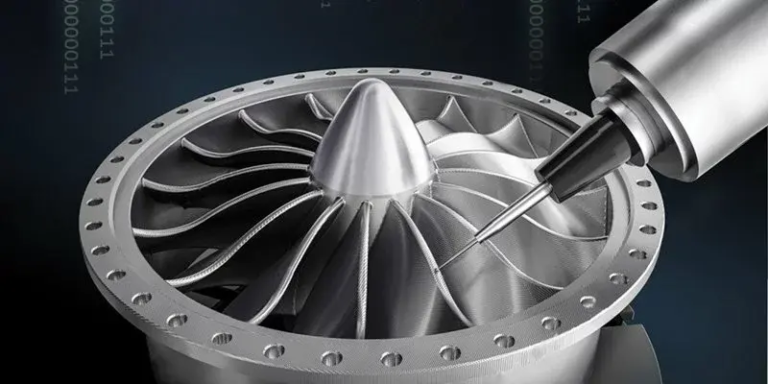
Five-axis CNC machining is a computer numerical control (CNC) machining using a complex joint system that allows the cutting tool to move in five different axes: three linear axes (X, Y, and Z) and two rotating axes (A and B). This advanced technology can create complex shapes, large geometric features and precise surface finishes, making it an application that requires extremely high accuracy, such as the aerospace, automotive and medical industries.
Benefits of five-axis CNC machining
- Improve accuracy: Five-axis CNC machining provides unparalleled accuracy, allowing for the creation of complex shapes and functions with high precision and surface finishes.
- Improve efficiency: The ability to machining complex parts in a single setup minimizes setup time, reduces material use and improves overall efficiency.
- Enhanced flexibility: The versatility of five-axis CNC machining enables a wider range of tools including drills, faucets and mills, resulting in greater flexibility in part design and production.
- Reduce delivery time: By minimizing setup time and optimizing production processes, five-axis CNC machining reduces lead time, resulting in faster project completion and improved customer satisfaction.
- Save costs: The ability to process complex parts in a single setup reduces material waste, minimizes tool changes and reduces production costs.
Best Practices for CNC Processing
- Optimize part design: Carefully design parts to utilize the five-axis CNC machining function to ensure effective production and minimize setup time.
- Select the right tool: Choose cutting tools suitable for work, considering factors such as material type, part complexity and production volume.
- Monitor production: Continuously monitor the production process and adjust as needed to ensure optimal performance, efficiency and quality.
- Keep the tool in good condition: Regularly inspect and maintain cutting tools to ensure optimal performance, reduce downtime and improve overall productivity.
- Work with experts: Work closely with experienced five-axis CNC mechanics to ensure optimal production, troubleshooting, and partial redesign if needed.
How to choose the right five-axis CNC machining service provider
When choosing a five-axis CNC machining service provider, consider the following factors:
- Experience and expertise: Find a provider with extensive experience in CNC machining, especially in your industry.
- Equipment and functions: Verify the provider’s equipment features, including the scope of machines, software and tools.
- Material selection: Ensure that the provider can adapt to your material requirements, including exotic materials, complex geometry and surface finishes.
- Communication and transparency: Select a provider with open communication channels, transparent production processes and regular schedule updates.
- Quality control and assurance: Ensure that providers have strong quality control procedures to inspect and test parts to comply with industry standards.
FAQs (FAQs)
Q: How much does five-axis CNC machining cost? A: The cost of five-axis CNC machining depends on the complexity of the parts, materials and production volume. Contact us for a custom quote.
Q: What are the benefits of five-axis CNC machining? Answer: Five-axis CNC machining provides improved accuracy, improved efficiency, increased flexibility, reduced time ahead and cost savings.
Q: Can all materials be processed using five-axis CNC? A: Yes, most materials can be processed using five-axis CNC, including metal, aluminum, titanium and exotic materials.
Q: What are the limitations of five-axis CNC machining? A: Although the five-axis CNC machining is highly useful, it may not be suitable for very small or complex parts and requires further refinement or professional equipment.
By understanding the benefits, best practices and expert advice, businesses can unlock the potential of five-axis CNC machining, simplify production, reduce costs, and provide high-quality products that meet the highest standards.
We are proud of our expertise in five-axis CNC machining, providing customized solutions for a wide range of industries. Contact us today to learn more about our services and how we can help you achieve unprecedented accuracy and efficiency in your manufacturing operations.
in conclusion
Staying ahead of the curve in a rapidly developing manufacturing environment requires innovative solutions that combine state-of-the-art technology, accuracy and efficiency. Five-axis CNC machining is a game-changer with unparalleled precision, flexibility and speed. By understanding the benefits, best practices and expert advice, businesses can unlock the full potential of five-axis CNC machining, achieve unrivalled results and remain competitive in the global market.



















