
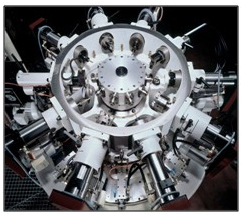
**Revolutionizing the World of Stamping: The Emergence of Electromagnetic Stamping Machines
In recent years, the manufacturing industry has witnessed a significant shift towards the development and integration of innovative technologies. One such revolution is the birth of electromagnetic stamping machines, which is transforming the way we approach stamping and punching operations. In this blog post, we’ll delve into the world of electromagnetic stamping machines, exploring their structure, principle of operation, and the benefits they offer.
Structure and Principle of Operation
Electromagnetic stamping machines are primarily composed of three main components: the fuselage, linear engine, and control system. The fuselage provides support for the installation of the engine and control system, while the guide column and mold frame ensure precision and accuracy during the stamping process. With at least 10 different structures available, electromagnetic stamping machines cater to various industrial needs.
The basic principle of operation is as follows: plug in the power supply, start the power switch, and define the stamping tonnage. In automatic mode, the frequency of stamping operation must be defined, and then the stamping button is started. Once activated, the primary engine generates an electromagnetic force, causing the mold frame to descend and stamp the part. After the stamping process is complete, the secondary lead returns to its initial position under the reverse electromagnetic force and the recovery spring, ready for the next stamping operation. In continuous punching mode, the punch continues to operate at the adjusted frequency until the button is closed. Unless the security outlet device is stopped, the punch is only controlled by the button.
Linear Motor and Control Technology
The key component of an electromagnetic stamping machine is the linear motor. Typically, linear motors operate as devices that cause interruptions, with a durability rate of less than 25%. However, in the context of electromagnetic stamping machines, linear motors operate continuously, offering higher requirements for design and manufacture. To achieve this, we employ advanced design and manufacturing techniques, including computer-aided design (CAD) and finite element analysis (FEA).
Linear motors are designed with structures such as cylindrical, bilateral planar, and monoplanar types, ensuring optimal performance. Additionally, the use of multi-scheme optimization in electromagnetic design ensures that the performance of the linear motor is fully suitable for the work needs of the electromagnetic stamping machine.
Control System
The linear engine of the electromagnetic stamper is connected to the power supply via a power cutting (SSR) contactless switch. The control system is capable of:
- Adjusting the tonnage of stamping
- Adjusting the race
- Switching between manual and automatic stamping modes
- Selecting the stamping frequency (20-300 times per minute)
- Detecting and protecting against electrical, thermal, and machine defects
To achieve these functions, special attention is paid to the resolution of two key problems: determining the optimal trigger time and the optimal engine time. These problems are mainly resolved through simulation and detection using microcontroller control circuits.
Why Electromagnetic Stamping Machines Revolutionize the Industry
Electromagnetic stamping machines offer several benefits over traditional mechanical stamping machines. The most significant advantages include:
- A simple and lightweight structure
- Various installation methods
- Easy control and protection functions
- Higher durability and lower maintenance requirements
- Flexibility in application and customization
In conclusion, electromagnetic stamping machines have the potential to revolutionize the stamping industry by offering more efficient, accurate, and reliable performance. With their simple and flexible design, these machines can cater to a wide range of industrial needs, transforming the way we approach stamping and punching operations.
Structure and Principle of Operation
- The linear motor is the key component of an electromagnetic stamping machine
- The machine is composed of three main components: the fuselage, linear engine, and control system
- The basic structure includes a guide column, guide column, and mold frame for precision and accuracy
Linear Motor and Control Technology
- Linear motors operate continuously, offering higher design and manufacturing requirements
- Advanced design and manufacturing techniques are employed, including CAD and FEA
- Structures such as cylindrical, bilateral planar, and monoplanar types ensure optimal performance
Control System
- The linear engine is connected to the power supply via a power cutting (SSR) contactless switch
- The control system adjusts tonnage, race, mode, and frequency, and detects and protects against electrical, thermal, and machine defects
Benefits of Electromagnetic Stamping Machines
- Simple and lightweight structure
- Various installation methods
- Easy control and protection functions
- Higher durability and lower maintenance requirements
- Flexibility in application and customization
By leveraging the benefits of electromagnetic stamping machines, industries can reap the rewards of increased efficiency, reduced maintenance, and improved performance. As the industry continues to evolve, the role of electromagnetic stamping machines will only continue to grow, revolutionizing the way we approach stamping and punching operations.



















