
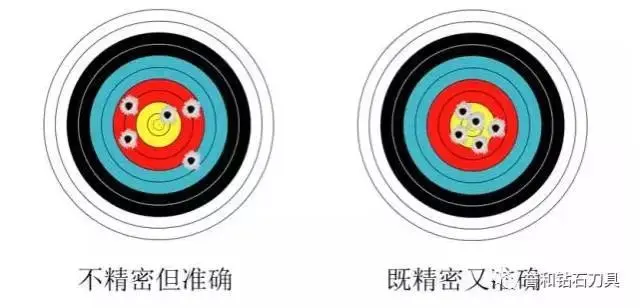
We process the treatment every day and often mention precision, but are you right about precision? Or is it rigorous? Let’s take a look at precision!
The machining accuracy is the extent in which the actual size, shape and position of the surface of the part after treatment comply with the ideal geometric parameters required by the drawings! The ideal geometric parameters are the average size of the size;
1. Dimensional precision
The actual size of the machined part complies in the center of the room size tolerance belt.
2. Precision of the shape
It refers to the extent in which the actual geometric shape of the surface of the transformed part complies with the ideal geometric shape.
3. Position precision
Referring to the difference in real position accuracy between the relevant surfaces of the parts after treatment.
4. Relations
Usually, when designing the machine’s parts and specifying the machining accuracy, attention must be paid to control the form error in position tolerance, which should be less than dimensional tolerance . In other words, the formation requirements of the large surface of precision parts or parts must be greater than the position of positioning precision, and the positioning requirements of position must be higher than the requirements of dimensional precision.
The difference between the actual geometric parameters of the part and the ideal geometric parameters is called the machining error. The size of the processing error reflects the precision of machining. The greater the error, the lower the machining accuracy, the smaller the error, the higher the machining precision.
1. Introduction to the precision of treatment
Treatment accuracy is mainly used to produce the product level, and treatment accuracy and processing error are terms to assess the geometric parameters of the treatment surface. The machining precision is measured by tolerance levels. High treatment accuracy means a small processing error, and vice versa.
There are 20 levels of tolerance ranging from IT01, IT0, IT1, IT2, IT3 to IT18. have an average machining precision.
The real parameters obtained by any machining method will not be absolutely precise.
Differences between precision and precision:
1. Precision
It is smaller, and at present, the average value of the measured data deviates less from the real value, but the data is dispersed, that is to say that the extent of the accidental error n ‘is not clear.
2. Precision
It refers to reproducibility and consistency between the results obtained by repeated measurements using the same backup samples. The accuracy may be high, but the precision is inaccurate. For example, the three results obtained by measuring using a length of 1 mm are 1.051 mm, 1.053 and 1.052 respectively.
The accuracy indicates the accuracy of the measurement results, the accuracy indicates the repeatability and the reproducibility of the measurement results, and the accuracy is a prerequisite for precision.
2. Methods to improve treatment accuracy
Adjust the process system
1) Try to cut the method setting
Try to cut – Measure the size – Adjust the tool cut – Cutting – Try again and repeat until the desired size is reached. This method has low production efficiency and is mainly used for the production of small monobloc lots.
2) Adjustment method
Get the required dimensions pre-adjust the relative positions of the machine tool, the light, the room and the tool. This method has high productivity and is mainly used for large -scale production.
Reduce machine error
1) Improve the manufacturing accuracy of the brooch components
Running rotation accuracy must be improved:
① Choose high -precision bearing bearings;
Use high-precision multi-oil coin bearings;
Use high precision static bearings,
The accuracy of rolling -related accessories must be improved:
① Improve the processing accuracy of the box support for the box and the spittony journal;
② Improve the machining accuracy of the surface corresponding to the bearing;
③MONE and adjust the radial jumping range of the corresponding parts to compensate or compensate for the error.
2) Pre-pay the rolls appropriately
① can eliminate gaps;
② Increase the rigidity of the bearing;
Rolling element error of the HORMATION.
Reduce the transmission error of the transmission chain
1) There are few transmission parts, short transmission chains and high transmission precision;
2) The use of slow speed transmission is an important principle to guarantee the accuracy of the transmission, and the closer the transmission pair at the end, the smaller the transmission ratio;
3) The precision of the final part must be greater than that of the other parts of transmission.
Reduce the wear of tools
The wear and tear of the size of the tool must be raised before it reaches a sharp wear stage
Daguang focuses on providing solutions such as precision CNC machining services (3-axis, 4-axis, 5-axis machining), CNC milling, 3D printing and rapid prototyping services.



















