
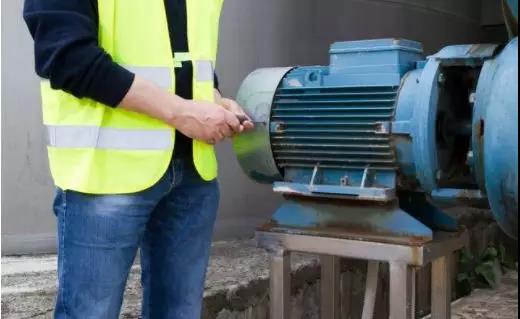
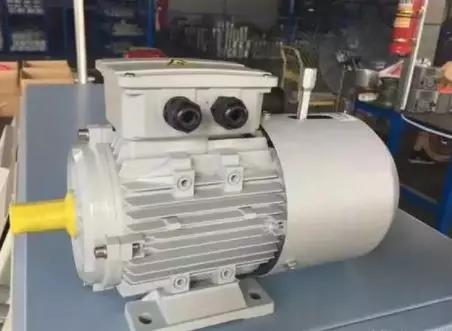
As a maintenance industry professional, you should be familiar with equipment such as three -phase asynchronous engines, right? Regarding common defects and corresponding maintenance measures of this type of equipment, Xiaoyi has compiled content to share with you, take a look!
1. The sound is abnormal when the engine is running, and there is an abnormal sound.
1 and 1 cause of failure
Wipe the rotor and the ISULANT paper or groove;
② wear of wear or foreign materials such as particles of sand in oil;
③The heart of the stator is loose;
④The bearing is deficient in oil;
⑤ Filling the air duct or fan hood;
⑥ Rub the stator iron core;
⑦ The supply tension is too high or unbalanced;
⑧ The stator winding is poorly connected or short-circuited.
2 troubleshooting
① Outfit of cut insulation and grooves;
② Replace the bearings or clean bearings;
③customize and repair the nucleus of the rotor;
④ Go;
Clournage of the air duct; reinstall the device;
⑥ Eliminate scratches and small rotors in the car if necessary;
⑦ Check and adjust the power voltage;
⑧Inimize the failure of the stator winding.
2. The engine vibrates considerably during operation
1 and 1 cause of failure
① Due to the large space between wear bearings;
② The air gap is uneven;
③The rotor is unbalanced;
④ folding the rod;
⑤The iron core is distorted or loose;
⑥ The center of the coupling (pulley) is not calibrated;
⑦ The fan is unbalanced;
⑧ricession inspired by the Armablet or the Environment;
⑨ The engine anchor screw is loose;
⑩ The cage rotor is open and the welding circuit is broken;
2 troubleshooting
①Interosis and replace the bearings if necessary;
② Adjust the air gap to do it even;
③Correction of the dynamic balance of the rotor;
④ Significant rotation shaft;
⑤Calculating the overlapping nucleus;
⑥Recalibrate to make it compliance with regulations;
⑦Customize the fan, correct balance and correct its geometric shape;
⑧reininfonary;
⑨ Tighten the anchor screws;
⑩ Repair the rotor winding; Repair the stator winding.
3. After the power, the engine cannot turn, but there is no abnormal noise, no smell or smoke.
1 and 1 cause of failure
① The power supply is not activated (at least two phases are not activated);
Fuse fuser (at least two phases are merged);
③The surrintensity relay is adjusted too small;
④ The wiring of the control equipment is incorrect.
2 troubleshooting
① Check if there are stop points at the power circuit switch, fuse and junction box and repair;
② Check the fuse model and the cause of the fuse and replace it with a new fuse;
③ set the relay adjustment value and cooperate with the engine;
④ Correct wiring.
4. After the power, the engine does not turn and the fuse is burned
1 and 1 cause of failure
① A power supply is missing, or the fixed trunk coil is connected in opposite directions;
② Assessment circuit between the stator winding phases;
③Stamper Bouning Farting;
④ Stator winding wiring error;
⑤The transverse section of the fuse is too small;
⑥The electric line is short-circuited or anchored.
2 troubleshooting
① Check if a phase of the knife switch is not closed correctly and a phase of the power circuit can be disconnected;
② Discover the short-circuit point and repair it;
③ Eliminate Earthmail;
④ If an error is found, it will be corrected;
⑤Replace fuses;
⑥ Eliminate the grounding point.
5. After the power, there will be a buzzing sound.
1 and 1 cause of failure
①The fixed windings and rotor have a circuit breaker (a phase is disconnected) or the power supply and a phase are lost;
② The beginning and end of the winding line of the winding are connected incorrectly or the inner part of the winding is reversed;
③The contact point of the power circuit is loose and the contact resistance is large;
④The engine load is too large or the rotor is stuck;
⑤The supply tension is too low;
⑥ The assembly of small engines is too tight or the fat in the bearing is too difficult;
⑦ The bearing is stuck.
2 troubleshooting
① Discover the stop point and repair it;
② Check the polarity of the winding; Determine if the end of the winding is correct;
Right the loose wiring screws, use a multimeter to determine if each seal is false and repair it;
④ Reduce the load or detect and eliminate mechanical failures;
⑤ Check if the specified Δ connection method is also poorly connected to Y;
Creeds to make it flexible; replace qualified fat;
⑦ Repair of bearings.
6. The empty current of the engine is unbalanced and the three elements are very different.
1 and 1 cause of failure
① During rewinding, the number of turns of turns of the three -phase winding of the stator is not equal;
②The connection to the terminal of the head and tail is wrong;
③The supply tension is unbalanced;
④ Rooting has defects such as inter-turn short-circuit and the connection of the inverted coil.
2 troubleshooting
① Search for the stator winding;
② Check and correct;
③Aup the power tension and try to eliminate the imbalance;
④ Remove the failure from the winding.
7. When the engine is not a load, the amp pointer is unstable and oscillates.
1 and 1 cause of failure
Typeting rotor guide bands are open or broken;
② The failure of the winding rotor (uniphasic rupture) or the short-circuit device of the brush and the current collector’s cycle are poorly contacted.
2 troubleshooting
① Check the broken bands and repair or replace the rotor;
② Check the rotor circuit and repair it.
8. The power supply balance of the engine, but the value is important
1 and 1 cause of failure
① During the repair, the number of laps in the stator winding is too reduced;
②The supply tension is too high;
③ The connection engine is poorly connected to Δ;
④ During the whole engine, the rotor is installed upside down, so that the stator nucleus is not aligned and the effective length is shortened;
⑤ The air gap is too large or unequal;
⑥ When the ancient windings are dismantled during the revision, the thermal disassembly method is poorly used, causing the iron nucleus burn.
2 troubleshooting
① Fill in the stator winding to restore the correct number of towers;
②Th to restore nominal tension;
③ Change in Y;
④Reasmembly;
⑤Replace a new rotor or adjust the air space;
⑥Customize the iron nucleus or recalculate winding and increase the number of turns appropriately.
9. It is difficult to start the engine and the speed is much lower than the nominal speed when the nominal load is noted.
1 and 1 cause of failure
①The supply tension is too low;
② The engine of the Δ connection method is wrongly connected to Y;
The typing rotor is an open or broken welding;
④ The local stator rotor coil is incorrectly connected and reversed;
⑤ Too many turns added when repairing the engine winding;
⑥ Overload the engine.
2 troubleshooting
①Aup the power tension and try to improve it;
② Corrective connection method;
③ Check open welding and stop and repair points;
④ Discover the wrong connection and correct it;
⑤Rese the correct number of turns;
⑥ Reduction of load.
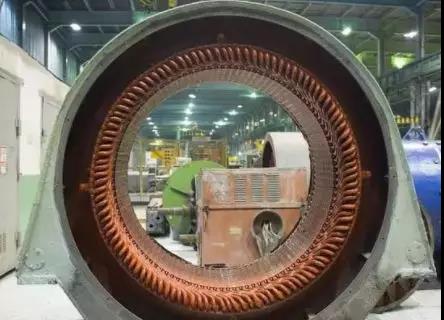
10. The engine is overheated and even the smoke is issued
1 and 1 cause of failure
① The power tension is too high, which considerably increases the heat of the iron nucleus;
② The power voltage is too low, the engine works with a nominal load and the current is too high to heat the windings;
③ When repairing and dismantling the windings, the thermal disassembly method is poorly used and the iron core is burned;
④ Rub the stator iron core;
⑤ The engine is overloaded or started frequently;
⑥ Rotor type cage strip break;
⑦ The engine lacks phase and operates in both phases;
After rewinding, the paint is insufficient for the winding to be immersed;
⑨ high room temperature and the engine surface is full of dirt or the ventilation duct is blocked;
⑩ The engine fan is defective, poor ventilation;
2 troubleshooting
① Reduce the supply voltage (such as adjusting the power transformer).
② Increase the supply voltage or replace the thick supply driver;
Core Iron Core and troubleshooting;
④ Eliminate friction points (adjust the air space or frustration, car rotor);
⑤ Reduction of load; Starting the control as a function of the number of times specified;
⑥ Check and eliminate the Rotor winding defects;
⑦Restore operation in three phases;
Use immersion immersion technology from paint to vacuum cleaner and empty paint;
⑨ Clean the engine, improve the ambient temperature and adopt cooling measurements;
⑩ Check and repair the fan, replace it if necessary; Repair the stator winding to eliminate faults.
11. Engine bearing overheating
1 and 1 cause of failure
① Too much or too little fat;
② Poor oil quality contains impurities;
③ Improper Adjust between the bearing and the newspaper or the end cap (too loose or too tight)
④ The interior bore of the bearing is eccentric and rubs against the tree;
⑤ The end of the engine or the bearing cover is not installed flat;
⑥ The coupling between the engine and the load is not corrected, or the belt is too tight;
⑦ Rolling up clearance is too large or too small;
⑧ The engine shaft is folded.
2 troubleshooting
① Add fat as needed (1 / 3-2/3 of the volume);
Replaces clean fat;
③ If it is too loose, you can use the adhesive to repair it, tighten the car, grind the inner hole of the newspaper or the final coverage to make it appropriate;
④ Repair the rolling cover and eliminate the friction points;
⑤Reasmembly;
⑥Recalibrate and adjust the tension of the belt;
⑦ Replace new bearings;
⑧Calculate the engine shaft or replace the rotor.
Daguang focuses on providing solutions such as precision CNC machining services (3-axis, 4-axis, 5-axis machining), CNC milling, 3D printing and rapid prototyping services.



















