
1
What is dry cutting technology
As global environmental awareness increases and environmental regulations become more stringent, the negative effects of cutting fluids on the environment are becoming more and more evident.
According to statistics, twenty years later, the cost of cutting fluid will be less than about 3% of the cost of the part. Currently, in high-productivity production enterprises, the costs of supply, maintenance and recycling of cutting fluid together account for 13%. % of the cost of manufacturing the parts. %-17%, while tool costs only account for 2%-5%. Of the total cutting fluid costs, approximately 22% is the cost of cutting fluid processing.
Dry cutting technology was born in this historical context and has developed rapidly since the mid-1990s. Its development history dates back only more than ten years and is a leading research subject in advanced manufacturing technology .
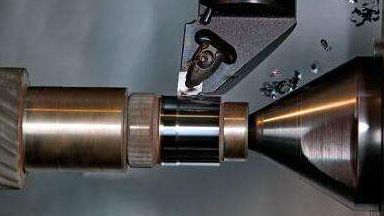
Dry cutting is a machining method that deliberately does not use cutting fluid and performs cutting without coolant in order to protect the environment and reduce costs.
Dry cutting is not just about stopping the use of cutting fluid, but ensuring high efficiency, high product quality, high tool durability and reliability of the cutting process while stopping the use of cutting fluid. This requires the use of cutting tools with excellent performance.
Machine tools and auxiliary facilities replace the role of cutting fluid in traditional cutting to achieve true dry cutting.
2
Technical characteristics of dry cutting
① The chips are clean and non-polluting, and are easy to recycle and process.
② It eliminates the need for cutting fluid transmission, recovery, filtration and other devices and the corresponding costs, simplifies the production system and reduces production costs.
③ The cutting fluid and chip separation device and corresponding electrical equipment are omitted. The machine tool has a compact structure and reduces the occupied area.
④ No environmental pollution will occur.
⑤ There will be no safety accidents or quality accidents related to cutting fluid.
3
About knives
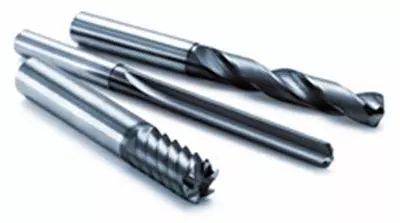
① The cutting tool should have excellent high temperature resistance and can work without cutting fluid. Materials such as new carbide, polycrystalline ceramics and CBN are the preferred materials for dry cutting tools.
② The friction coefficient between the chips and the tool should be as low as possible (the most effective method is to cover the tool surface), supplemented by a tool structure with good chip evacuation to reduce heat buildup.
③ Dry cutting tools should also have higher strength and impact resistance than wet cutting tools.
4
Tool material
01.Covering material
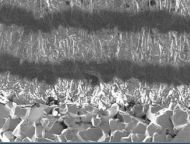
The coating acts as a thermal barrier because it has a much lower thermal conductivity coefficient than the tool substrate and workpiece material. As a result, these tools absorb less heat and can withstand higher cutting temperatures. Whether turning or milling, coated tools enable higher cutting parameters without reducing tool life.
Thinner coatings resist temperature changes during impact cutting better than thicker coatings because they experience less stress and are less prone to cracking. Dry cutting can extend tool life by up to 40%. for coating round cutting tools and milling inserts.
CVD coatings exhibit excellent performance when processing most ferrous metals. During the CVD process, the deposition temperature is higher, which helps improve the bond strength and allows for higher cobalt content in the matrix, so that the blade has good toughness and improves its ability to withstand to plastic deformation. Since CVD coatings are thicker than PVD coatings, they require passivation on their cutting edges to prevent the coating from peeling off and also help improve the wear resistance of the tool.
02.Cermet
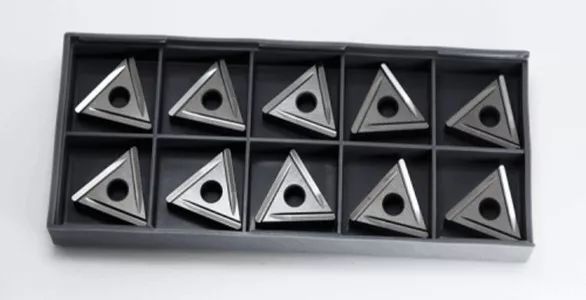
Cermets can withstand higher cutting temperatures than conventional carbide, but lack carbide’s impact resistance, toughness in medium to heavy machining, and resistance to low speeds and high feeds. However, it has better high temperature and wear resistance in high-speed dry cutting, lasts longer, and the surface finish of the processed workpiece is better. It also has good resistance to built-up edges and good surface quality when used to process soft and sticky materials. Cermets are more susceptible to fracture and power-induced stress than coated and uncoated carbides. Therefore, it is best used in continuous cutting situations where high precision workpieces and surface quality are high.
03. Ceramic
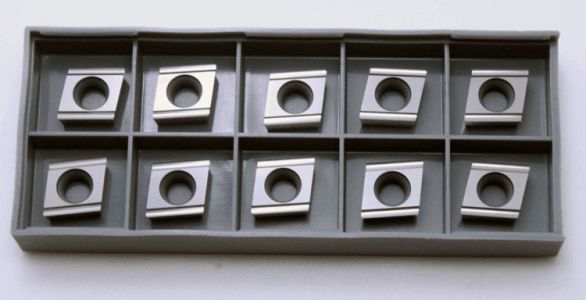
Stable, can be processed at high temperature cutting speeds and last a long time. Pure alumina can withstand very high temperatures, but its strength and toughness are very low. If the working conditions are not good, it will break easily. Adding a mixture of alumina or titanium nitride can reduce the ceramic’s susceptibility to breakage and improve its toughness. and improved impact resistance. Another way to improve the toughness of alumina ceramics is to add crystal textures or silicon carbide whiskers to the material, which can increase the toughness, strength and thermal shock resistance of the alumina ceramic to a certain extent. ceramic.
04.CBN
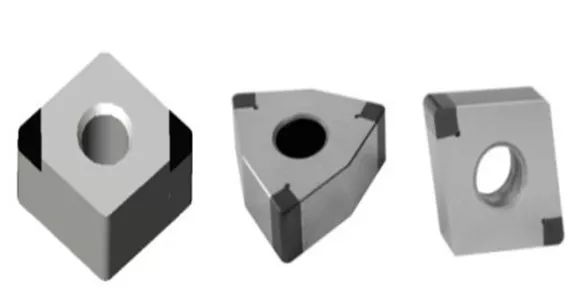
CBN is a very hard tool material, especially suitable for processing materials with hardness above HRC48. It exhibits excellent high temperature hardness – up to 2000°C, although it has higher impact and shatter resistance than ceramic tools.
CBN has low thermal conductivity and high compressive strength and can resist cutting heat generated by high cutting speeds and negative rake angles. The higher temperature in the cutting zone softens the workpiece material, which contributes to chip formation.
In the case of dry turning of hardened parts, CBN tools are often used to replace the grinding process because they achieve higher precision and surface finish. CBN tools and ceramic tools are suitable for hardened turning and high-speed milling.
05.PCD
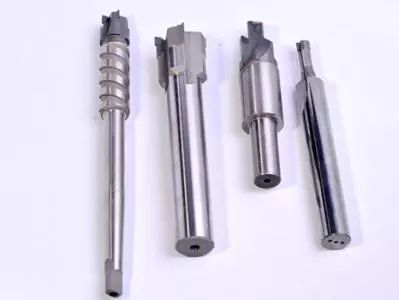
As the hardest tool material, polycrystalline diamond is wear-resistant. Welding small pieces of PCD onto the carbide blade can increase its strength and impact resistance, and its service life is 100 times longer than carbide.
However, the affinity of PCD for iron contained in ferrous metals limits this tool to non-ferrous materials only. In addition, PCD cannot withstand high temperatures exceeding 600°C in the cutting zone, so it cannot cut materials with high toughness and high ductility.
PCD cutting tools are particularly suitable for processing non-ferrous metals, especially aluminum alloys with high silicon content which suffer from high friction. Sharp cutting edges and large cutting angles are used to efficiently cut these materials, minimizing cutting pressure and built-up edges.
Q: What materials are CBN tools generally suitable for processing?
A: High hardness cast iron
For example, high chrome cast iron, alloy cast iron, nickel hard cast iron and white cast iron all belong to high hardness cast iron. Typical parts include rollers, industrial pumps, etc. For high hardness cast iron, BN-K1 and BN-K10 materials are commonly used, which has significant advantages.
High hardness steel parts (hardness HRC45 or higher)
Such as high manganese steel, high speed steel, hardened steel, etc. Typical components include rolling mortar wall, high speed steel roller, hardened gear/gear shaft, bearings, ball screw, mold, etc. Commonly used CBN materials for high hardness steel parts are BN-S10, BN-S20, BN-S200, BN-H10, BN-H21, etc.
Ordinary gray cast iron (HT150/200/250/300, etc.)
For example, engine block/cylinder head, brake disc, brake drum, pulley, clutch pressure plate, etc. are all gray cast iron parts. Commonly used CBN materials are BN-S300 and BNK30.
Other difficult-to-process materials
Such as powder metallurgy, high temperature alloy materials and high hardness surface coating/spray welding/laser coating/thermal spraying workpieces such as nickel, iron and cobalt based parts . Common CBN materials are BN-S300, BN-S200, BDN80, etc.
Daguang focuses on providing solutions such as precision CNC machining services (3-axis, 4-axis, 5-axis machining), CNC milling, 3D printing and rapid prototyping services.



















