
01
The history of gears
Gears are mechanical parts whose teeth mesh with each other. It is widely used in mechanical transmission and the entire machinery field.
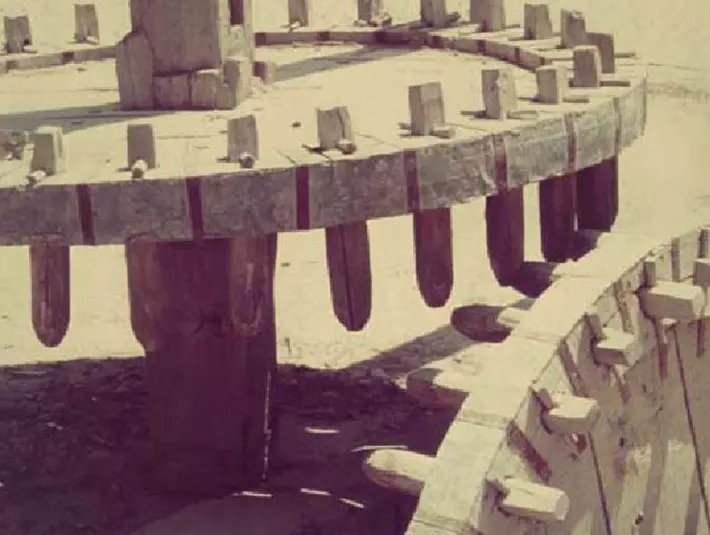
As early as 350 BC, the famous Greek philosopher Aristotle recorded gears in documents. Around 250 BC, the mathematician Archimedes also described in literature a windlass using a turbine worm. Gears dating from British Columbia are still preserved in the ruins of Ketsfin, in present-day Iraq.
Gears also have a long history in our country. According to historical records, gears were used in ancient China between 400 and 200 BC. The bronze gears discovered in Shanxi, China are the oldest gears discovered to date. As a compass, they reflect the achievements of ancient science and technology. the gear mechanism is used as the basic mechanical device. During the Italian Renaissance, in the second half of the 15th century, the famous all-rounder Leonardo da Vinci left not only indelible achievements in culture and art, but also in the history of gear technology. After more than 500 years, the current gear. still retain the prototypes sketched at the time.
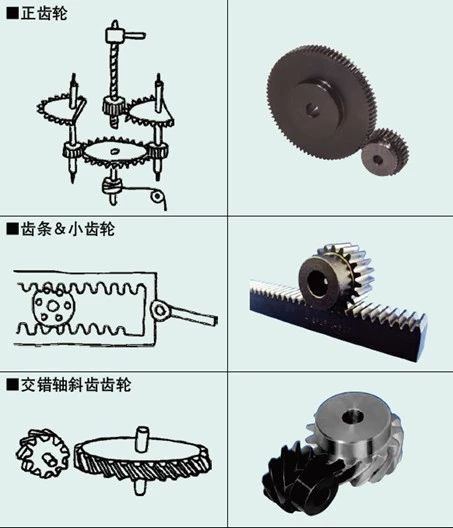
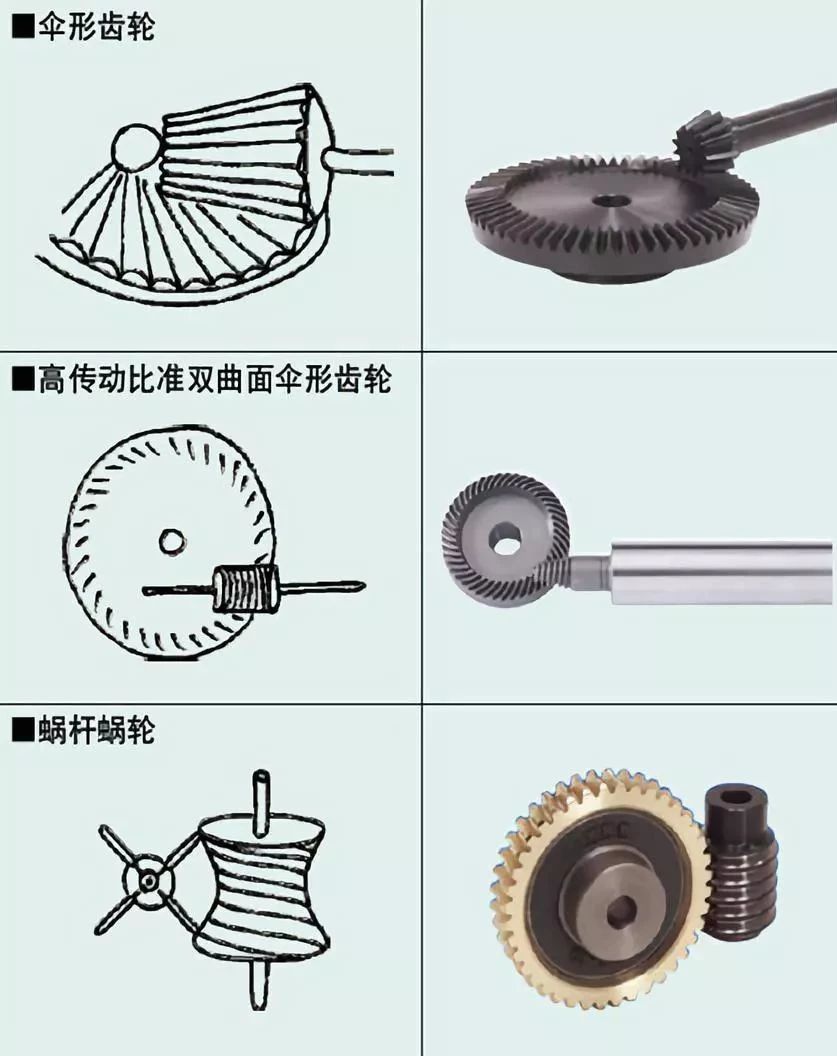
It was not until the end of the 17th century that people began to study the shape of gear teeth capable of correctly transmitting movement. In the 18th century, after the industrial revolution in Europe, the application of gear transmission became more and more widespread; first, cycloid gears were developed, then involute gears. Until the beginning of the 20th century, involute gears benefited from their applications. . Later, displacement gears, arc gears, bevel gears, helical gears, etc. were introduced. were developed.
Modern gear technology has achieved: gear modulus from 0.004 to 100mm; gear diameter 1mm at 150 meters; transmission power up to 100,000 kilowatts; rotation speed up to 100,000 rpm; highest peripheral speed up to 300 meters/second.
Internationally, power transmission gear devices are moving in the direction of miniaturization, high speed and standardization. Application of special gears, development of planetary gearboxes, development of low vibration and low noise gearboxes are some of the features of gear design.
02
Three main types of gears
There are many types of gears and the most common method of classification is based on the axis of the gear. Generally divided into three types: parallel axes, crossed axes and offset axes.
1) Parallel shaft gears: including spur gears, helical gears, internal gears, racks and helical racks, etc.
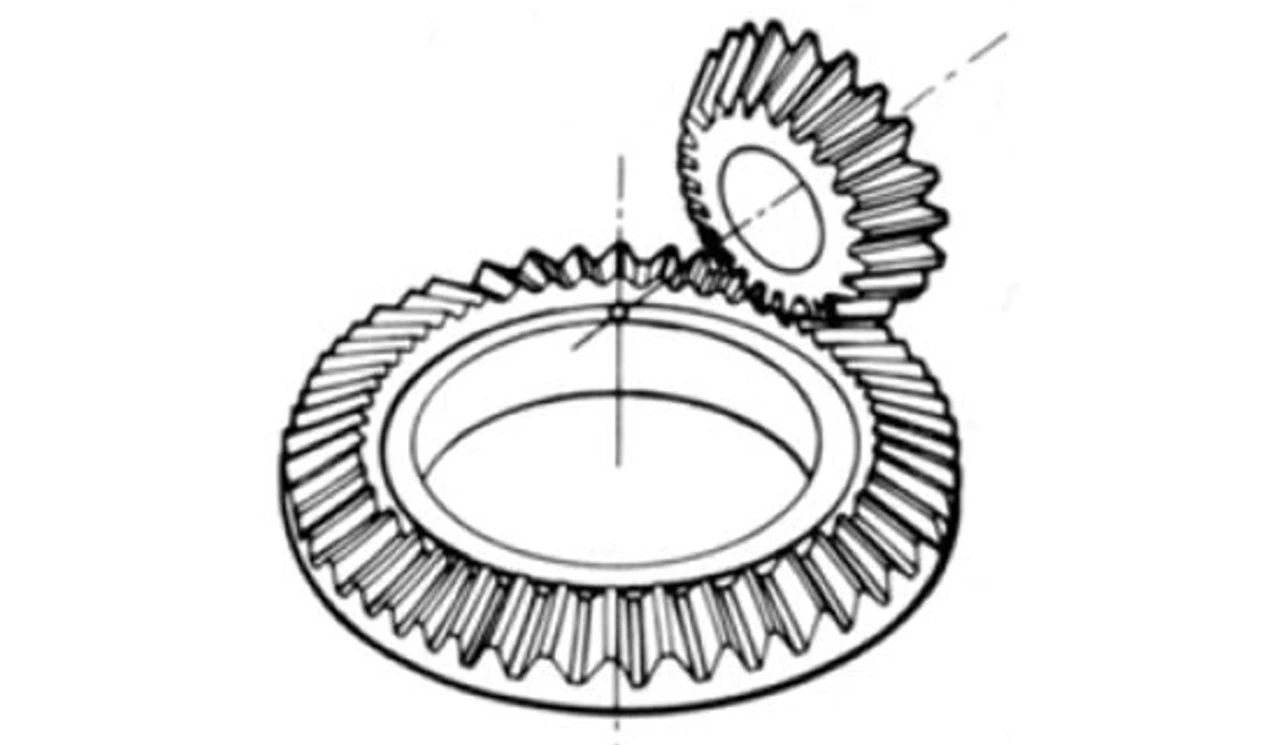
2) Cross axis gears: there are straight bevel gears, spiral bevel gears, zero degree bevel gears, etc.
3) Offset Shaft Gears: There are offset shaft helical gears, worm gears, hypoid gears, etc.
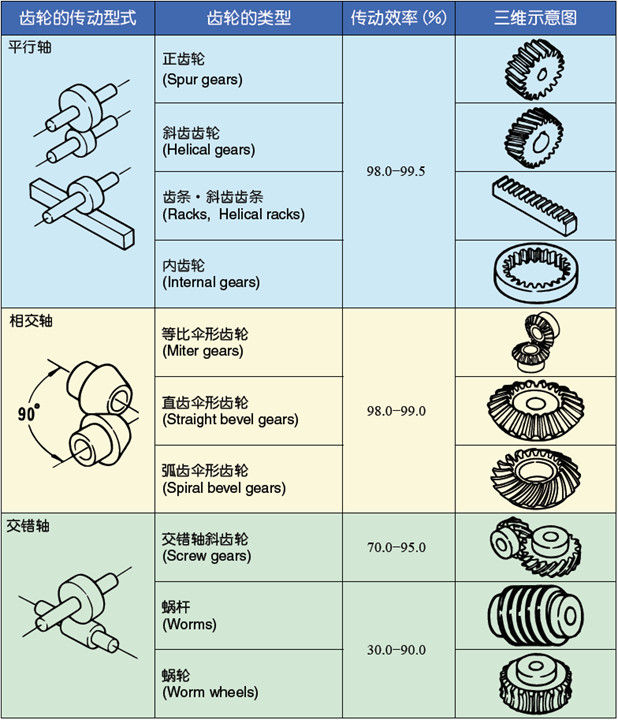
The efficiency shown in the table above is the transmission efficiency and does not include bearing and lubrication losses through agitation. The meshing of gear pairs on parallel axes and intersecting axes is essentially rolling, and the relative slip is very small, so the efficiency is high. Offset shaft gear pairs such as offset shaft helical gears and worm gears, because they generate rotation by relative sliding to achieve power transmission, the impact of friction is very large and the Transmission efficiency is reduced compared to other gears. Gear efficiency is the transmission efficiency of the gear under normal assembly conditions. If the installation is incorrect, especially if the installation distance of the bevel gear is incorrect, resulting in an error at the intersection point of the same cone, its efficiency will be greatly reduced.
(1) Parallel shaft gears
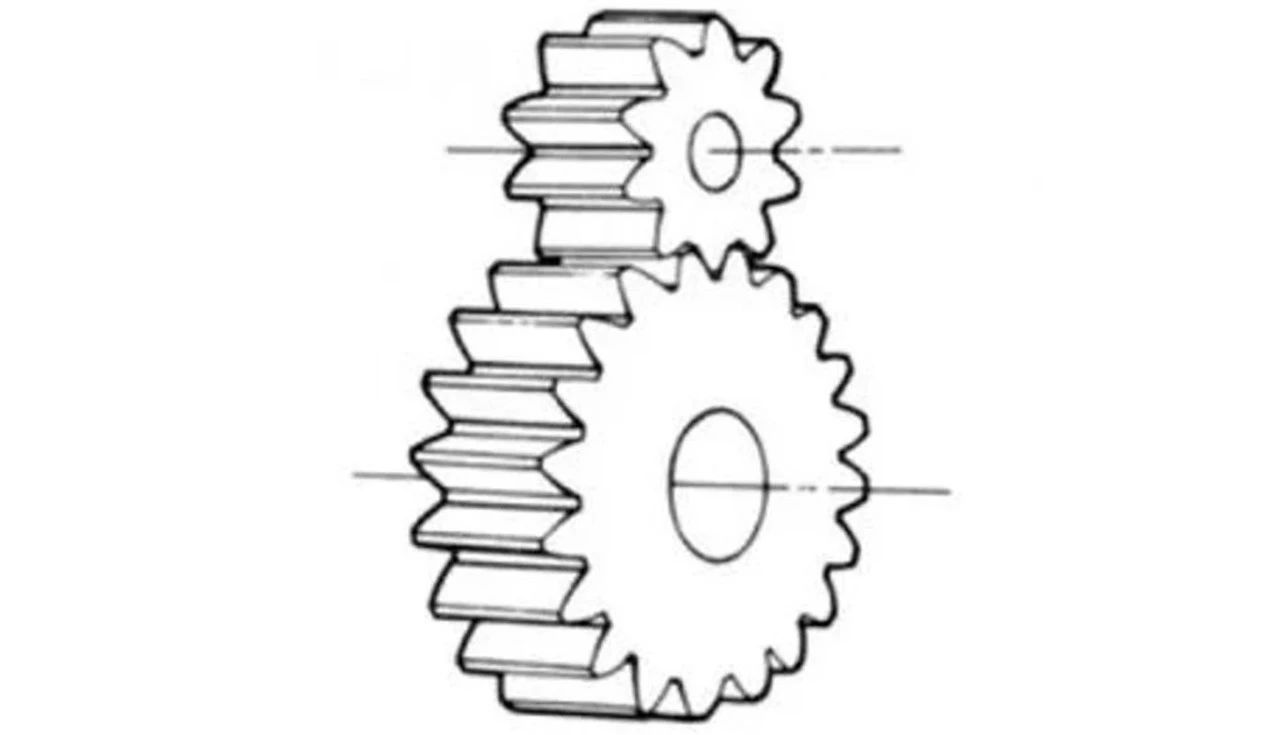
1) Spur gear
Cylindrical gears with tooth lines and axis lines in parallel directions. Because it is easy to process, it is most widely used in power transmission.
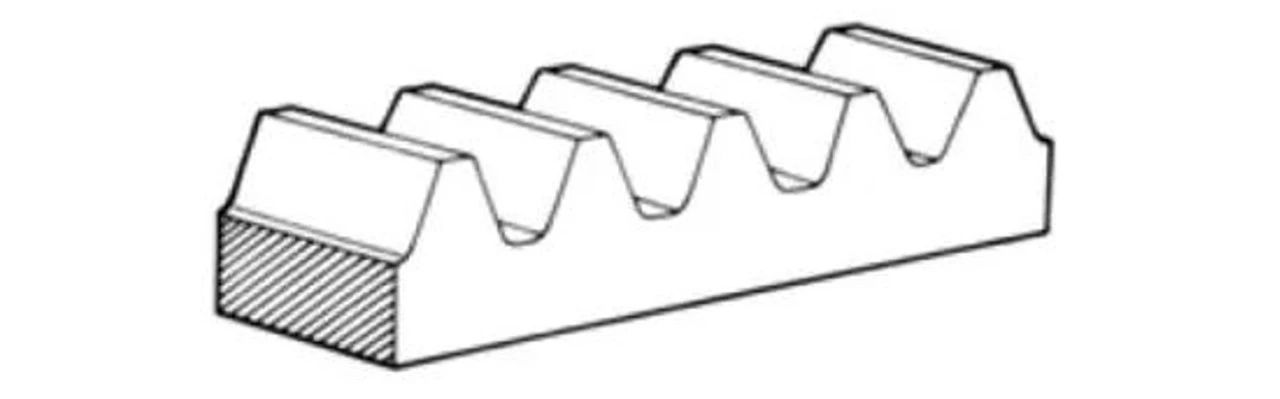
2) Support
A linear rack gear meshing with a spur gear. This can be considered a special case when the diameter of the pitch circle of the spur gear becomes infinite.
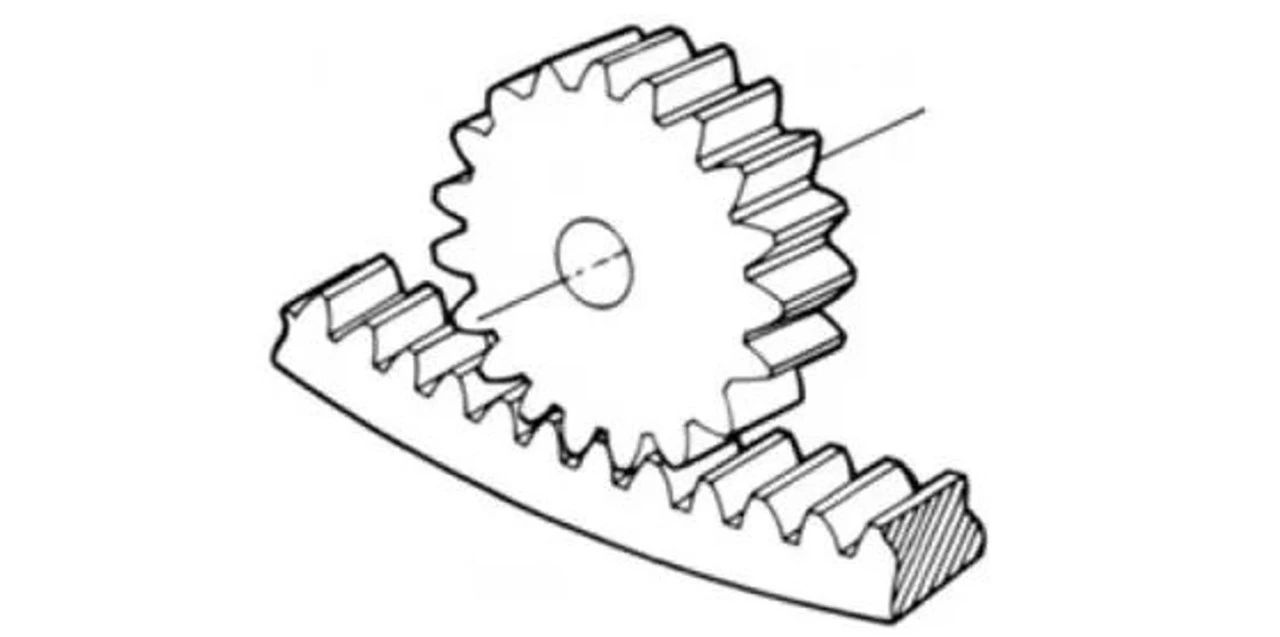
3) Internal gear
A gear with teeth machined inside the ring that meshes with the spur gear. Mainly used in applications such as planetary gear transmission mechanisms and gear couplings.
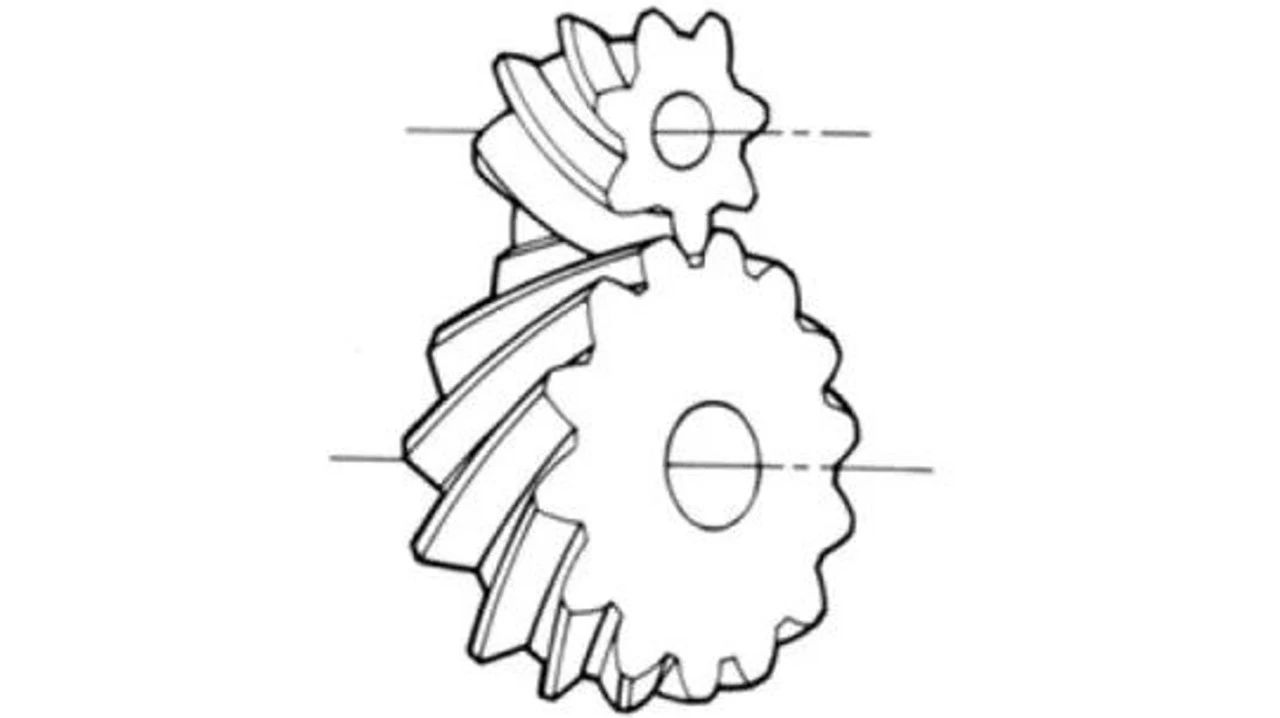
4) Helical gear
A spur gear with a helical tooth profile. Because it is stronger than spur gears and operates more smoothly, it is widely used. Axial thrust is generated during transmission.
5) Helical rack
A rack gear that meshes with a helical gear. This is equivalent to the situation where the pitch diameter of a helical gear becomes infinite.
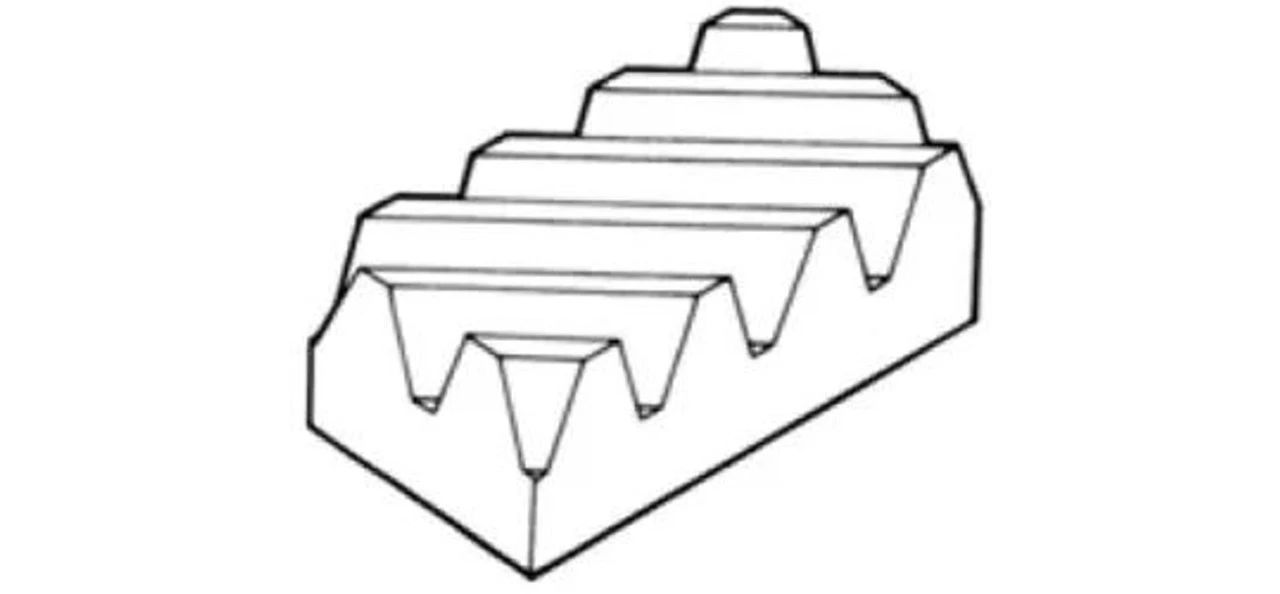
6) Herringbone equipment
The gear line is a combination of two helical gears, left and right. It has the advantage of not generating thrust force in the axial direction.
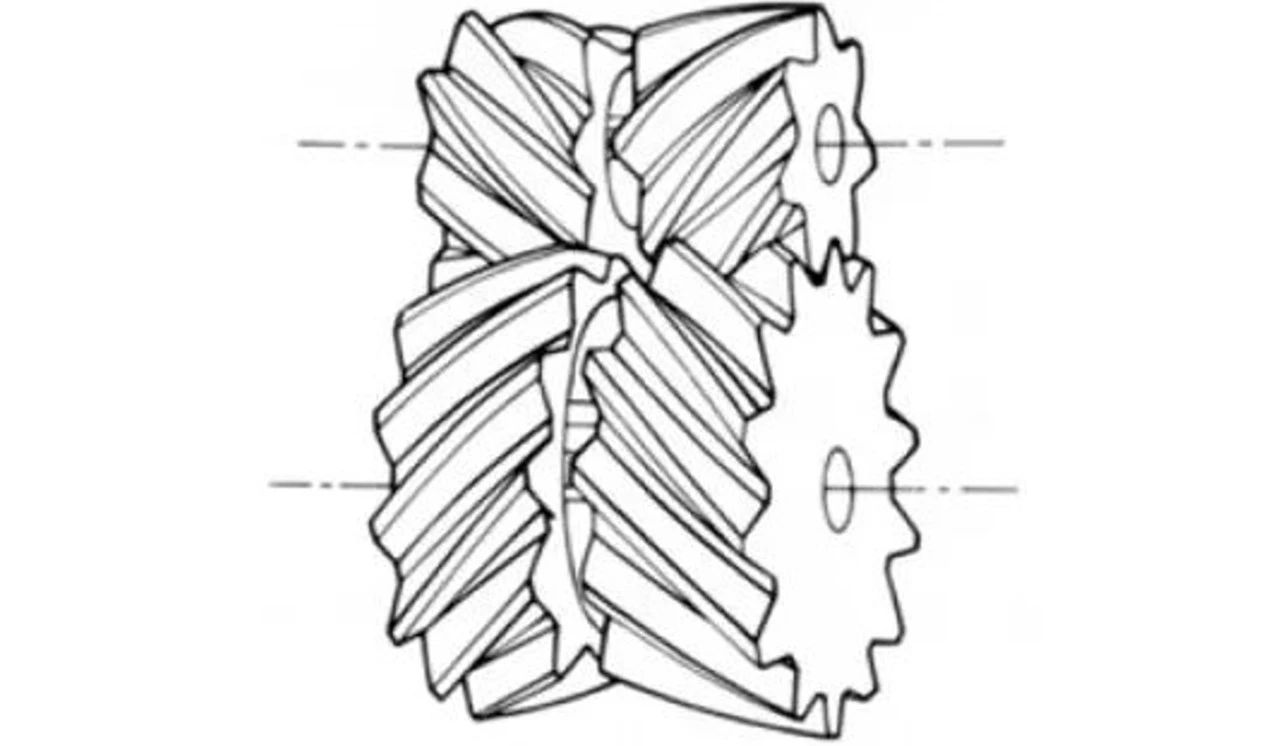
(2) Crossed shaft gears
1) Straight bevel gear
A bevel gear whose tooth line is consistent with the generator of the line of the pitch cone. Among bevel gears, they are relatively easy to manufacture. Therefore, it has a wide range of applications as bevel gears for transmission.
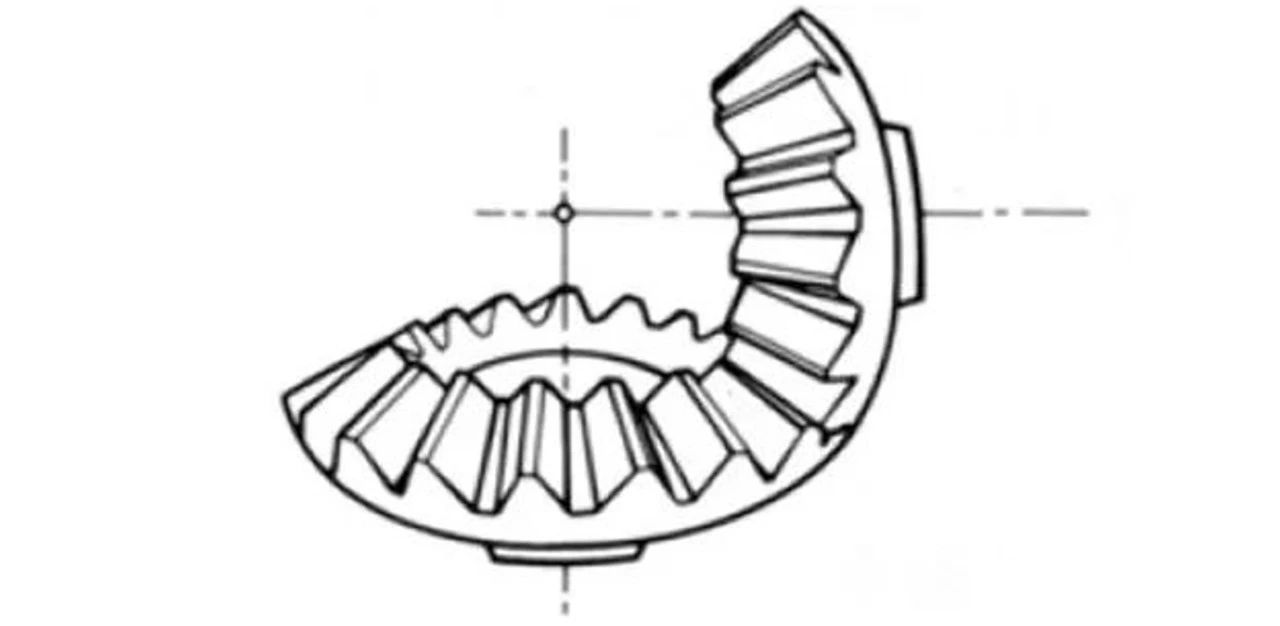
2) Spiral bevel gear
Bevel gear with curved tooth line and helix angle. Although it is more difficult to manufacture than straight bevel gears, it is also widely used as a high-strength, low-noise gear.
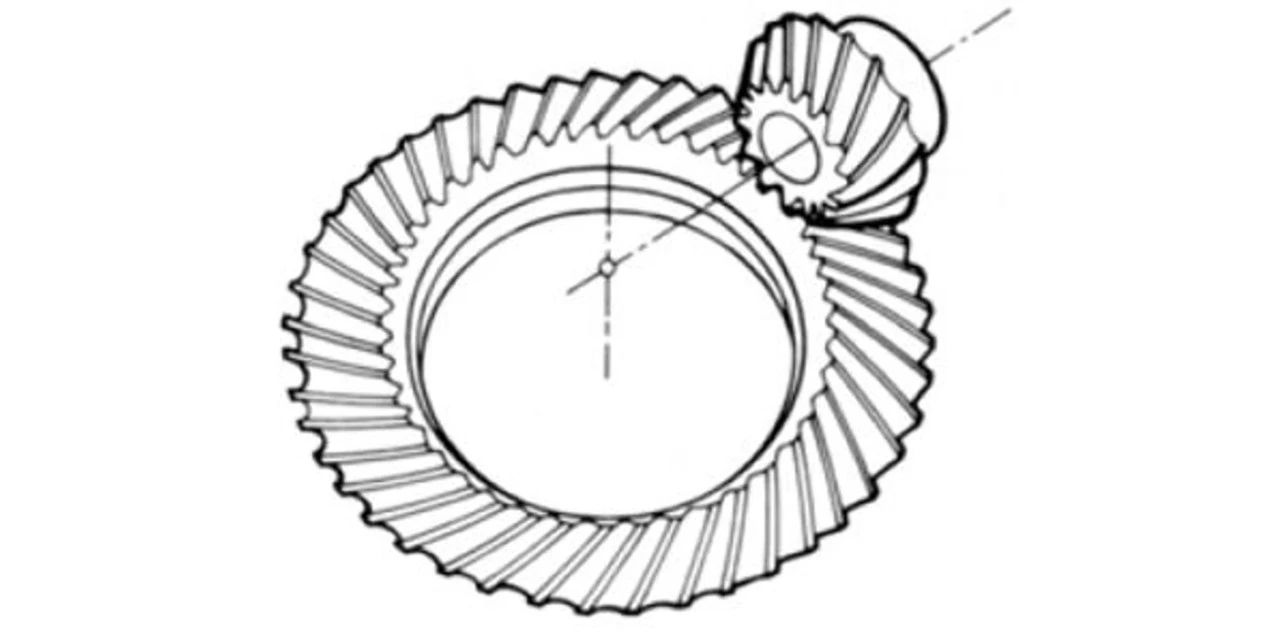
3) Zero degree bevel gear
Curved bevel gear with zero helix angle. Because it has the characteristics of straight and curved bevel gears, the force on the tooth surface is the same as that of straight bevel gears.
(3) Gears with offset shafts
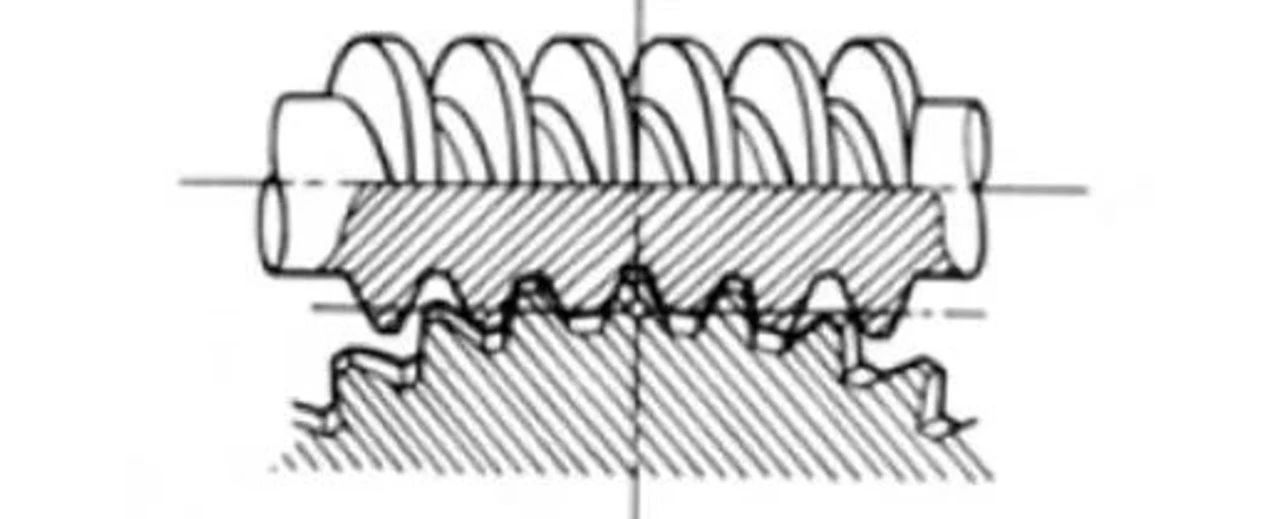
1) Pair of cylindrical endless screws
Cylindrical worm pair is the general term for the cylindrical worm and the worm gear meshes with it. Its main features are quiet operation and a high transmission ratio that can be obtained from a single pair, but it has the disadvantage of low efficiency.
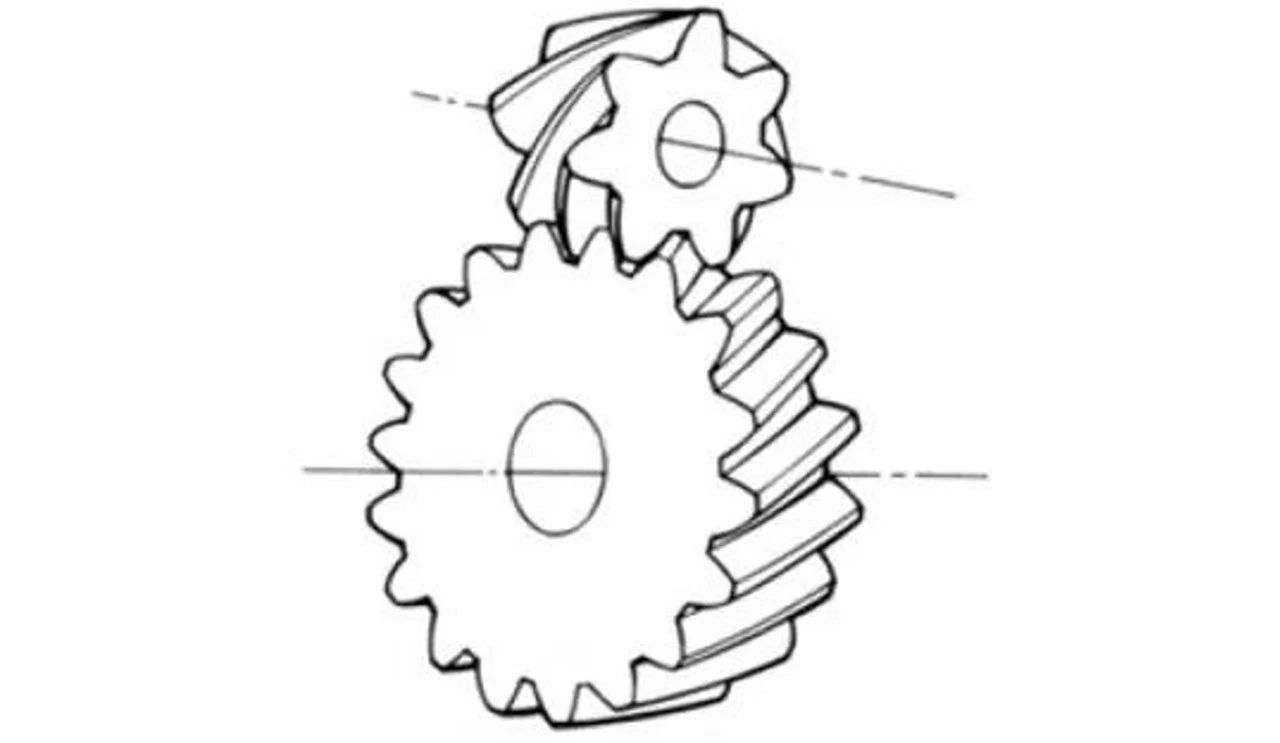
2) Helical gears with offset shafts
Name given to the pair of cylindrical worms when used for transmission between offset shafts. Can be used in the case of helical gear pairs or helical and spur gear pairs. Although operation is smooth, it is only suitable for use under light load conditions.
(4) Other special gears
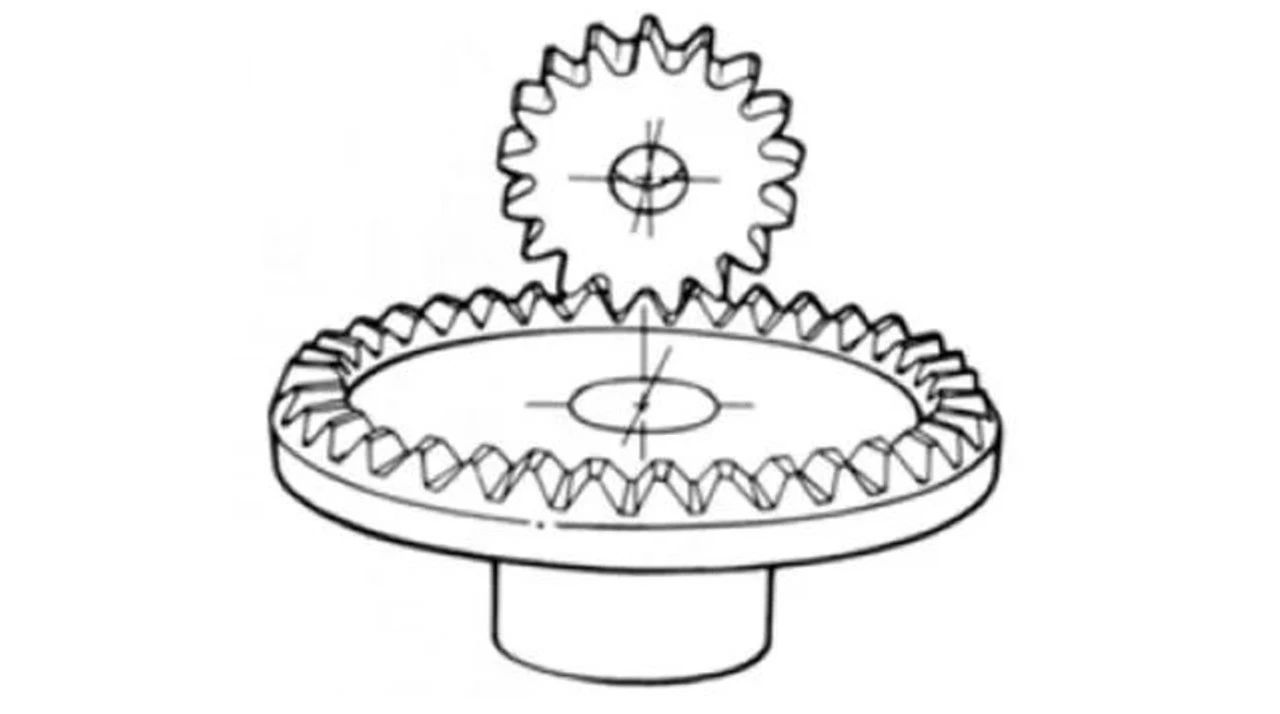
1) Facial equipment
A disc-shaped gear that meshes with spur or helical gears. Transmission between orthogonal axes and offset axes.
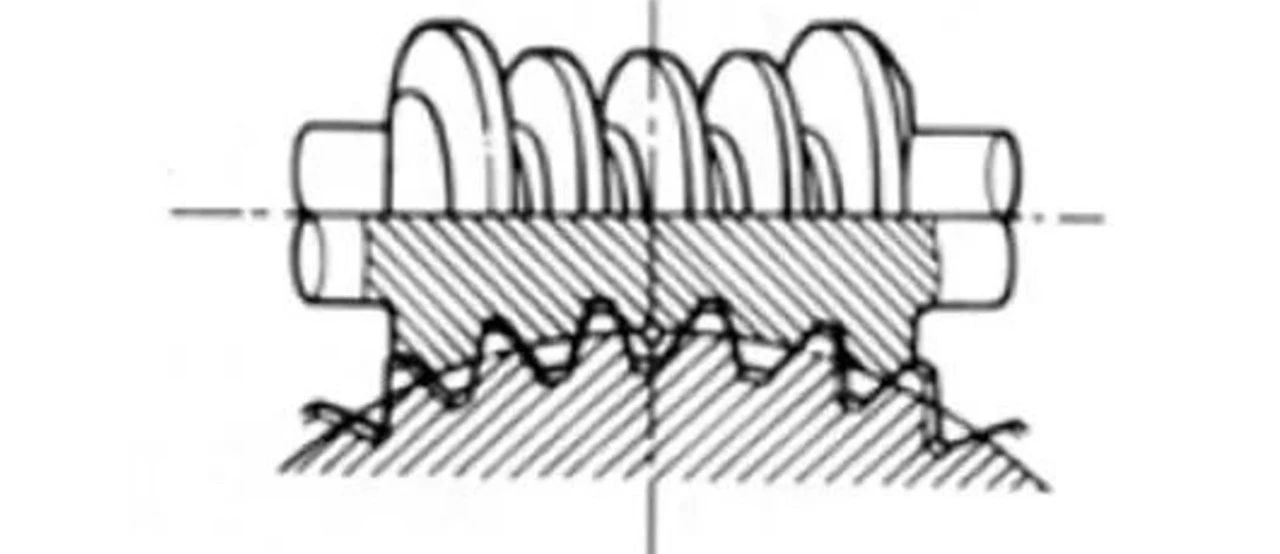
2) Pair of drum worms
The general name for the drum worm and the worm gear associated with it. Although it is more difficult to manufacture, it can transmit greater loads than a pair of cylindrical worms.
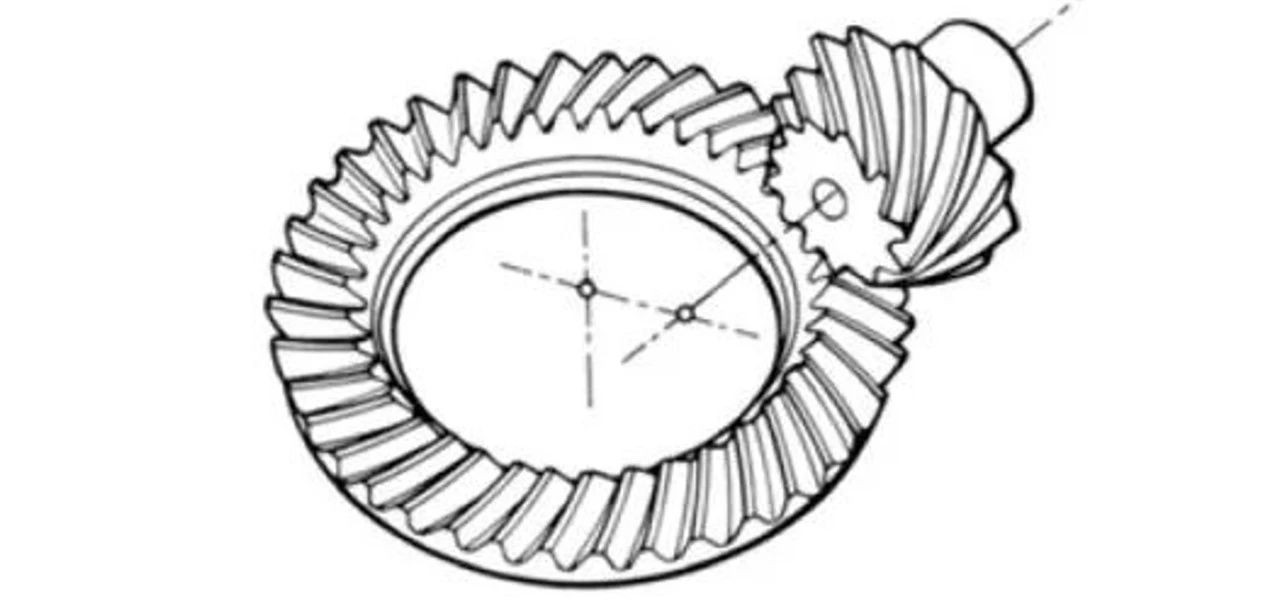
3) Hypoid gear
Bevel gears that drive between offset shafts. Large and small gears are processed eccentrically, similar to spiral gears, and the meshing principle is very complex.
03
Basic terminology and gear sizing calculations
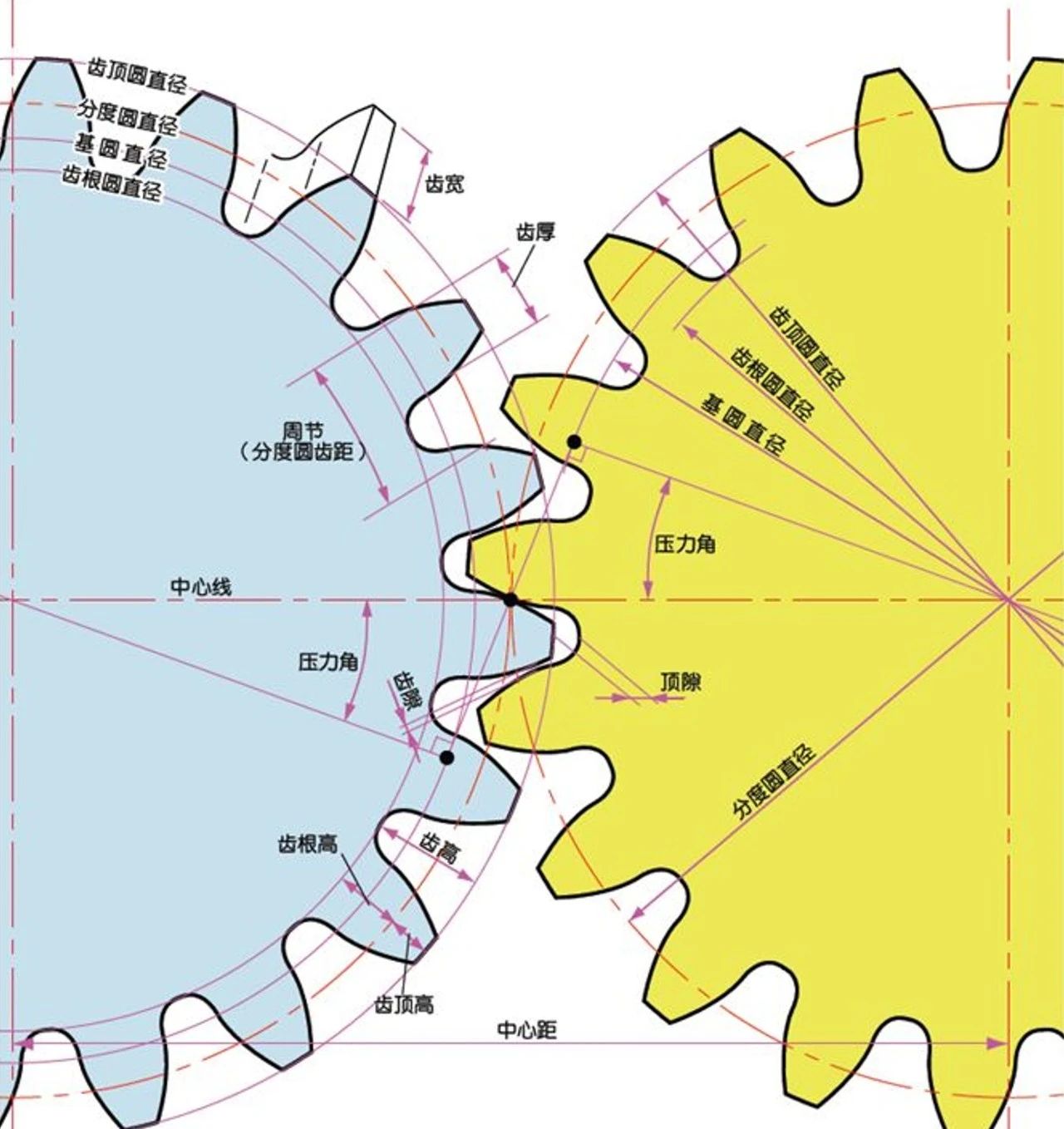
Gears have many terms and methods of expression unique to gears. To help everyone better understand gears, here are some basic terms commonly used for gears.
1) Names of different parts of the equipment
2) The term indicating the size of gear teeth is modulus
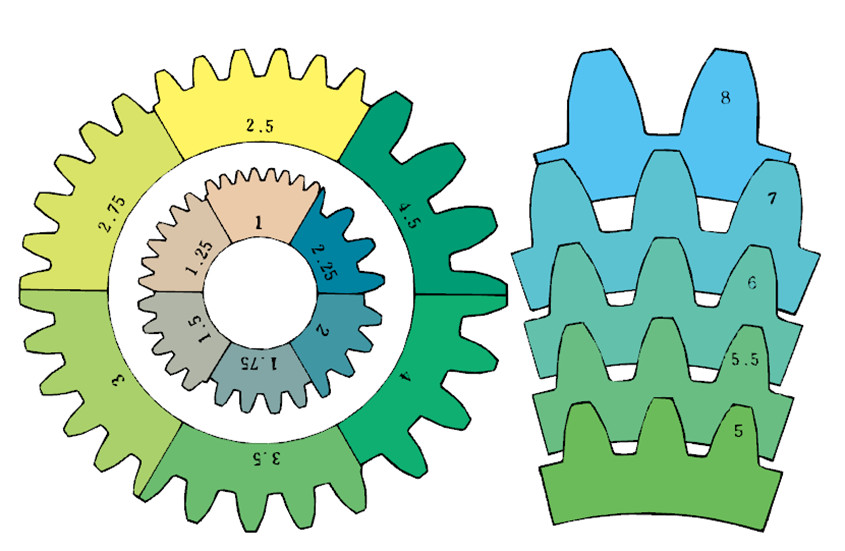
m1, m3, m8… are called modulo 1, modulo 3, modulo 8. Module is a commonly used name around the world. The symbol m (modulus) and number (mm> are used to indicate the size of the gear teeth. The larger the number, the larger the gear teeth.
Additionally, in countries that use imperial units (such as the United States), symbols (pitch diameter) and numbers (the number of gear teeth when the pitch circle diameter is 1 inch) are used to indicate the gear size. teeth. For example: DP24, DP8, etc. There are also special naming methods that use symbols (cycles) and numbers (mm) to indicate the size of gear teeth, such as CP5 and CP10.
The modulus is multiplied by the pi to obtain the tooth pitch (p), which is the length between two adjacent teeth.
Expressed as a formula:
p = pi x modulus = πm
Comparison of gear tooth sizes with different modules:
3) Pressure angle
Pressure angle is a parameter that determines the profile of gear teeth. This is the inclination of the gear tooth surface. The pressure angle (α) is generally 20°. Previously, gears with a pressure angle of 14.5° were common.
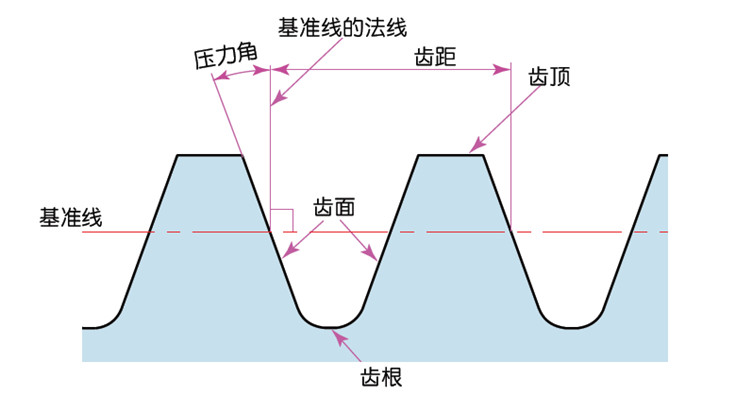
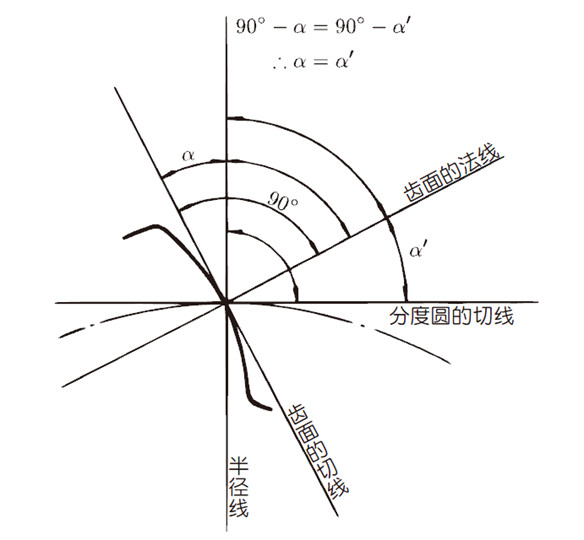
The pressure angle is the angle between the radius line and the tangent line of the tooth shape at a point on the tooth surface (usually a node). As shown in the figure, α is the pressure angle. Because α’=α, α’ is also the pressure angle.
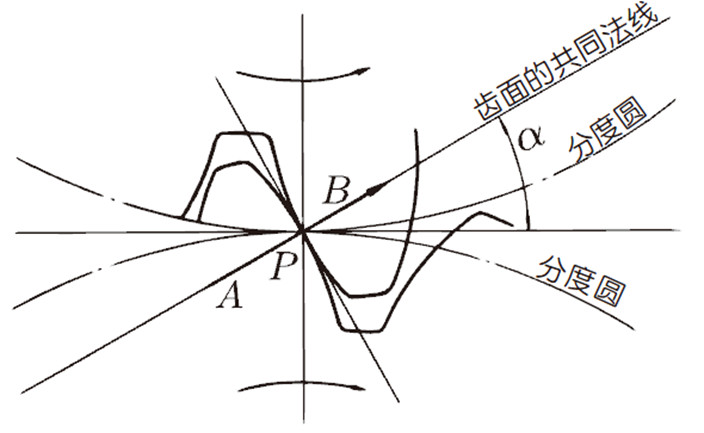
The meshing state of teeth A and B seen from the node:
Teeth A pushing point B on the knot. The thrust force acts at this time on the common normal line of tooth A and tooth B. In other words, the common normal is the direction of action of the force and the direction of pressure, and α is the pressure angle.
Modulus (m), pressure angle (α) and number of teeth (z) are the three basic parameters of the gear. Based on these parameters, the dimensions of each part of the gear are calculated.
4) Height and thickness of teeth
The height of the gear teeth is determined by the module (m).
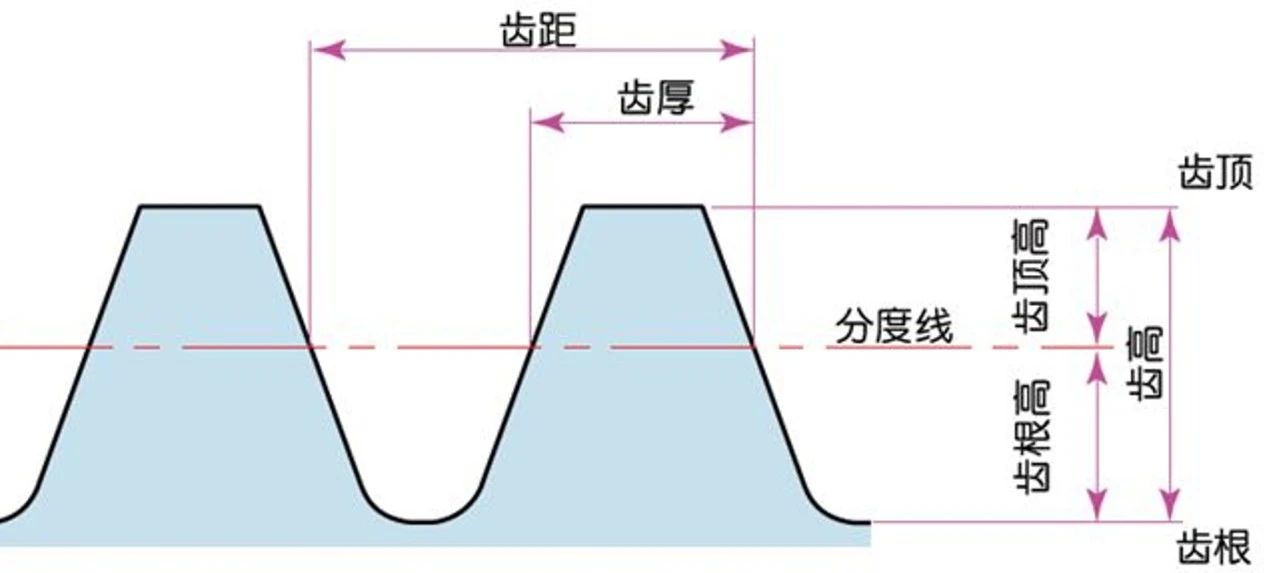
Total height of the tooth h = 2.25 m (= height of the root of the tooth + height of the top of the tooth)
Tooth apex height (ha) is the height from the apex of the tooth to the index line. ha=1m.
Tooth root height (hf) is the height from the tooth root to the index line. hf=1.25m.
The base of the tooth thickness is half the tooth pitch. s = πm/2.
5) Gear diameter
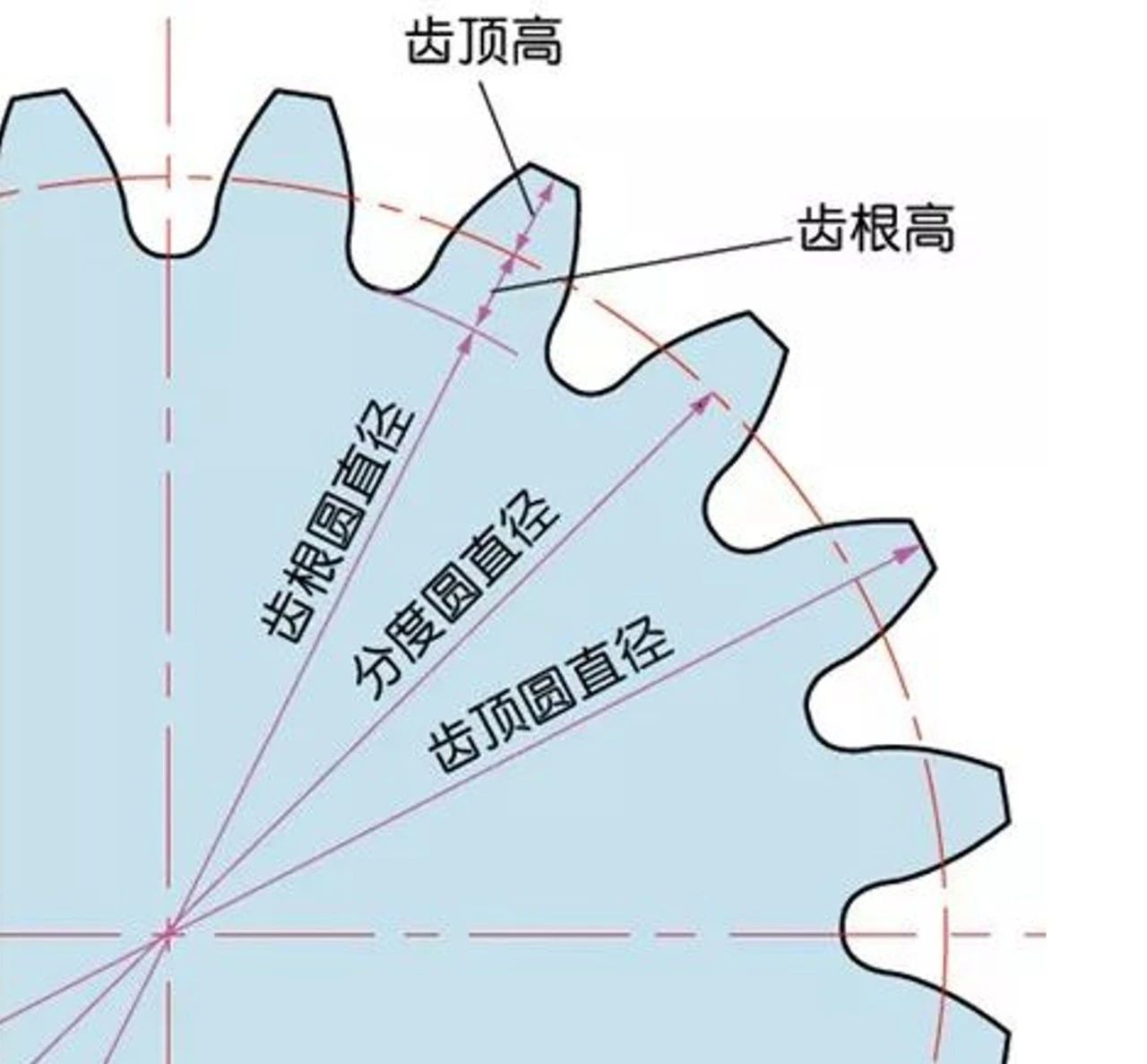
The parameter that determines the gear size is the pitch circle diameter (d) of the gear. Based on the graduation circle, the tooth pitch, tooth thickness, tooth height, tooth apex height and tooth root height can be determined.
Diameter of the graduation circle d=zm
Tooth tip circle diameter da=d+2m
Tooth root circle diameter df=d-2.5 m
The graduation circle cannot be seen directly in the actual gear, because the graduation circle is an assumed circle in order to determine the gear size.
6) Center distance and gap between teeth
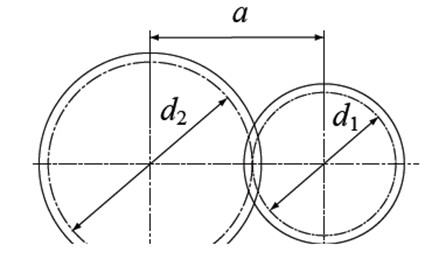
When the pitch circles of a pair of gears mesh tangentially, the center distance is half the sum of the diameters of the two pitch circles.
Center distance a=(d1+d2)/2
In gear meshing, backlash is an important factor in order to achieve a smooth meshing effect. Backlash is the gap between the surfaces of the teeth of a pair of gears when they mesh.
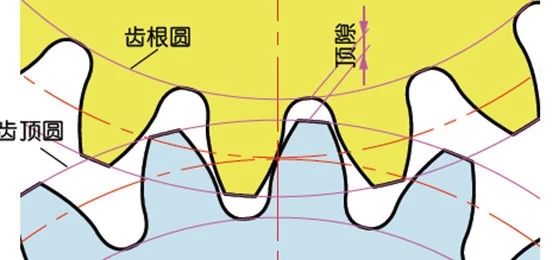
There are also gaps in the height direction of the gear teeth. This gap is called clearance. Head clearance (c) is the difference between the tooth root height of the gear and the tooth addendum height of the mating gear.
Free height c=1.25 m-1 m=0.25 m
7) Helical gear
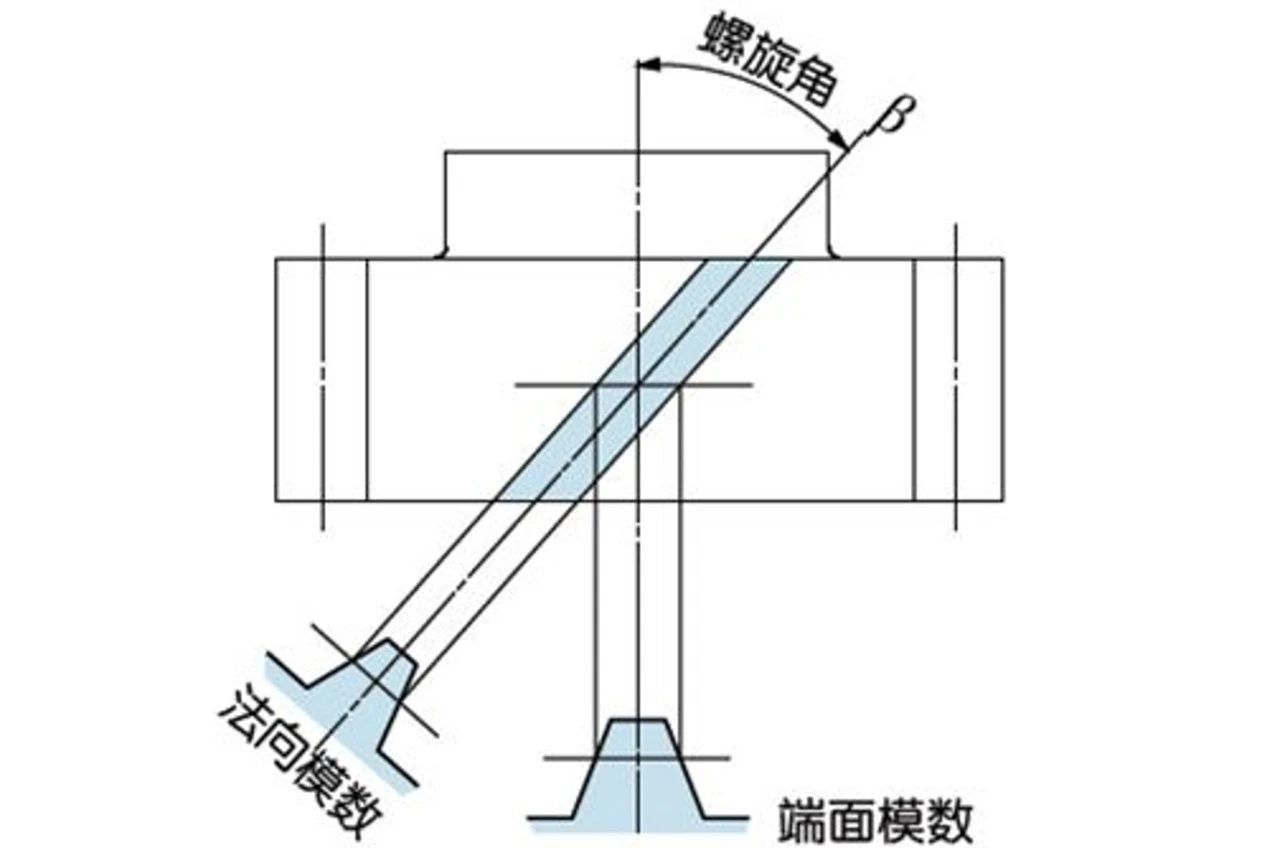
A helical gear is a helical gear whose teeth are twisted into a spiral shape. Most of the geometric patterns of spur gears can be applied to helical gears. There are two types of helical gears according to their different reference planes:
End face reference (shaft right angle) (end face module/pressure angle〉
Normal surface reference (right tooth angle) (normal modulus/pressure angle >
The relationship between the end face modulus mt and the normal modulus mn is mt=mn/cosβ
8) Direction and coordination of the spiral
Helical gears, spiral bevel gears, etc., spiral tooth gears, the direction and adjustment of the spiral are certain. Spiral direction means that when the central axis of the gear points up and down, when viewed from the front, the direction of the gear teeth points to the upper right corner.[右旋]the one at the top left is[左旋]. The adjustment of the different gears is shown below.
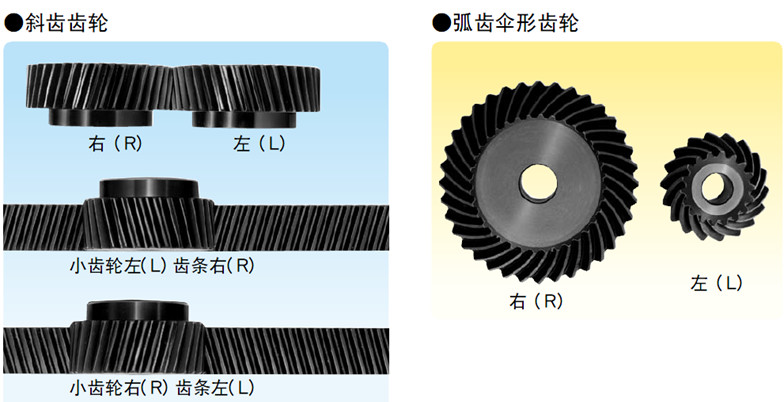
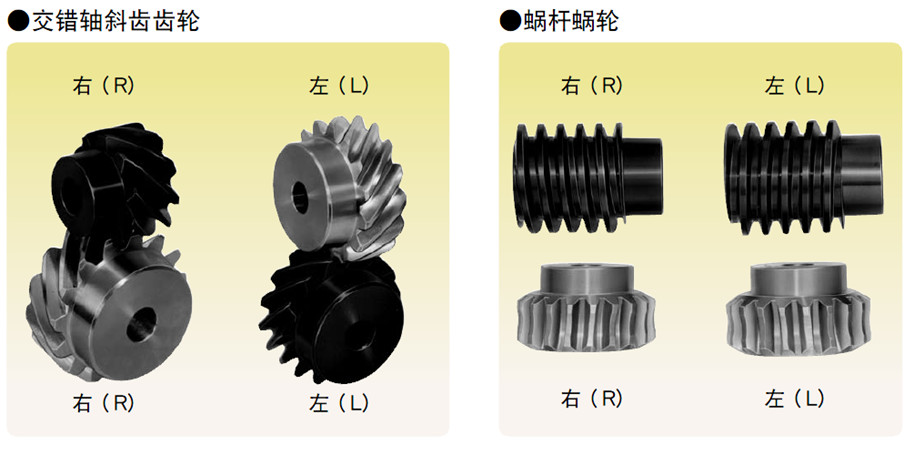
04
Commonly used involute tooth shapes
If you simply divide the pitch of the teeth into equal parts on the outer circumference of the friction wheel, install protrusions, and then mesh and rotate with each other, the following problems will occur:
The tangent point of the gear teeth produces slip
The tangent point movement speed is sometimes fast and sometimes slow
Produce vibrations and noise

The gear tooth transmission must be both quiet and smooth, which is why the involute curve was born.
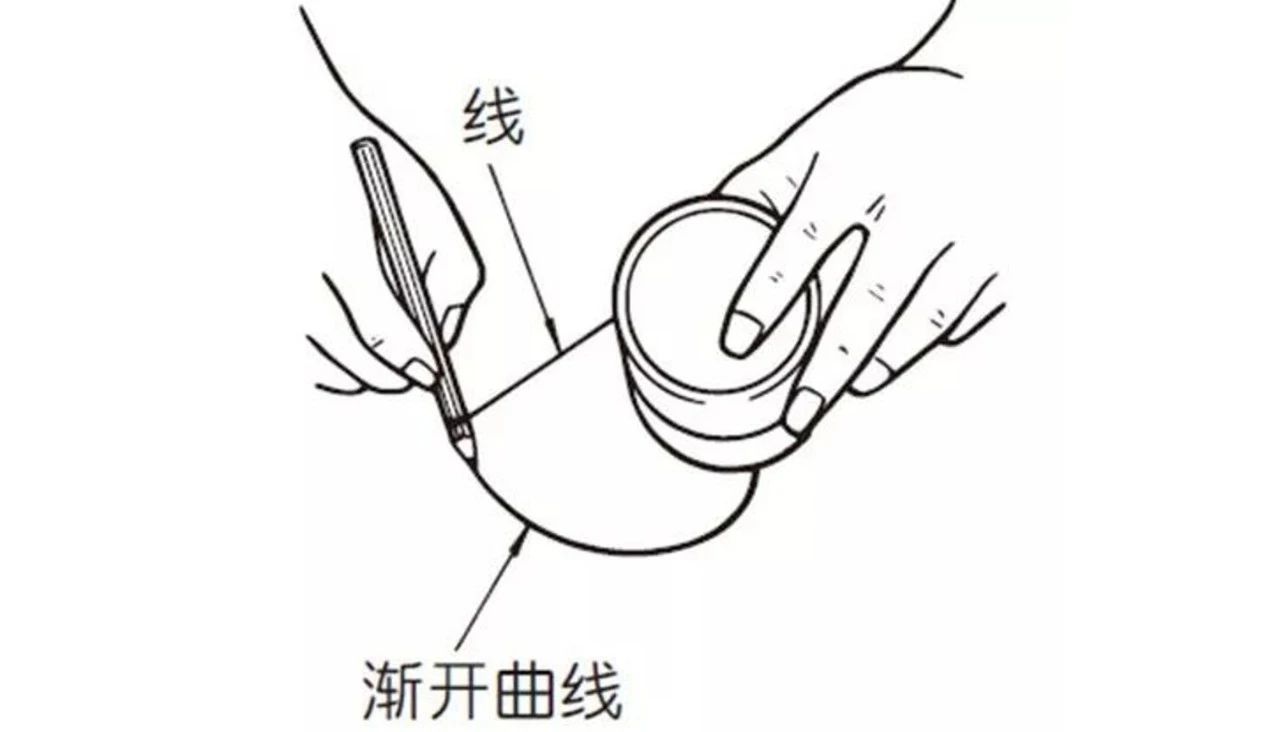
1) What is an involute line?
Wrap a wire with a pencil attached to one end around the outer circumference of the cylinder, then gradually loosen the wire as it is taut. At this moment, the curve drawn by the pencil is an involute curve. The outer circumference of the cylinder is called the base circle.
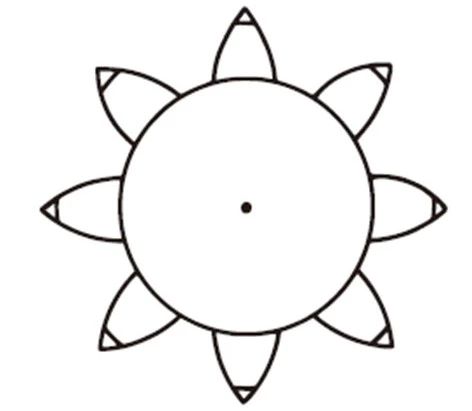
2) Example of an 8-tooth involute gear
After dividing the cylinder into 8 equal parts, attach 8 pencils and draw 8 involute curves. Then wrap the wire in the opposite direction and draw 8 curves in the same way. It is a gear with 8 teeth and a tooth-shaped involute curve.
3) Advantages of involute gears
Even if there is an error in the center distance, the mesh may be correct;
It is easier to obtain the correct shape of the teeth and treatment is easier;
Through the rolling engagement on the curve, the rotational movement can be transmitted smoothly;
As long as the gear teeth are the same size, a tool can process gears with a different number of teeth;
The root of the tooth is thick and strong.
4) Base circle and graduation circle
The base circle is the base circle that forms the involute tooth shape. The index circle is the reference circle that determines the gear size. The base circle and index circle are important geometric dimensions of gears. The involute tooth profile is a curve formed outside the base circle. The pressure angle on the base circle is zero degrees.
5) Meshing of involute gears
The pitch circles of two standard involute gears mesh tangentially at a standard center distance.
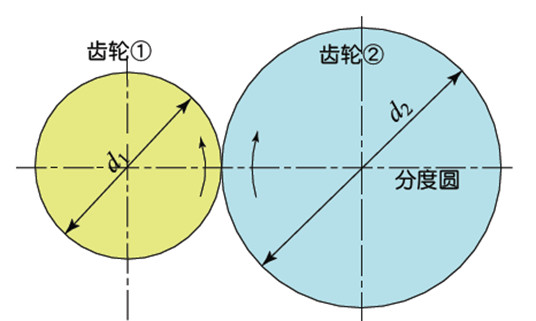
When the two wheels are engaged, it appears that two friction wheels with index circle diameters d1 and d2 are driving. However, the meshing of involute gears actually depends on the base circle rather than the index circle.
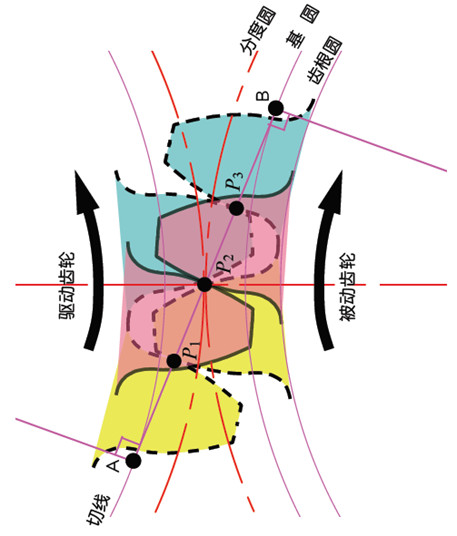
The meshing contact points of the two gear tooth shapes move on the meshing line in the order P1-P2-P3. Note the yellow teeth in the drive sprocket. Shortly after this tooth begins to mesh, the gear meshes with two teeth (P1, P3). Meshing continues, and when the mesh point moves to point P2 on the index circle, only one mesh tooth remains. The meshing continues, and when the meshing point moves to point P3, the next gear tooth begins to mesh at point P1, again forming a two-tooth meshing state. In this way, the two-tooth meshing of the gear alternates with the single-tooth meshing to transmit the rotational motion repeatedly.
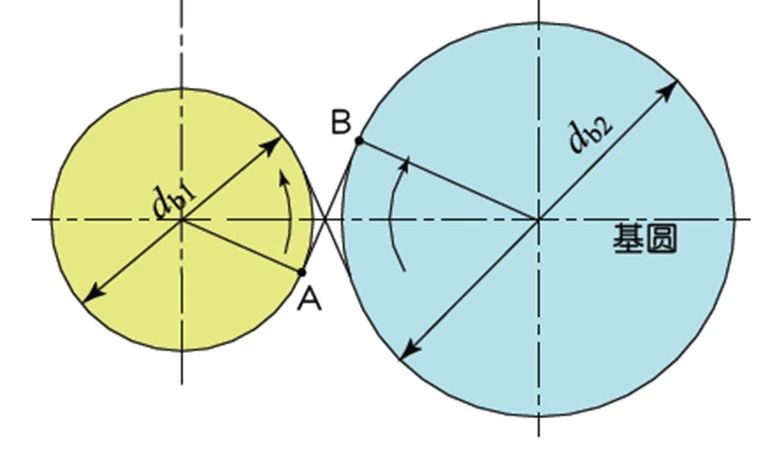
The common tangent line AB of the base circle is called the mesh line. The gear meshing points are all on this meshing line.
To express it with a living diagram, it is as if the belt is placed crosswise on the outer circumference of the two base circles and rotates to transmit power.
05
Gear displacement is divided into positive displacement and negative displacement.
The tooth profile of the gears we usually use is usually a standard involute. However, there are also situations where the gear teeth need to be moved, such as adjusting the center distance, preventing pinion undercut, etc.
1) Number and shape of gear teeth
The curve of the involute tooth profile varies depending on the number of teeth. The greater the number of teeth, the straighter the tooth profile curve becomes. As the number of teeth increases, the shape of the tooth root becomes thicker and tooth strength increases.
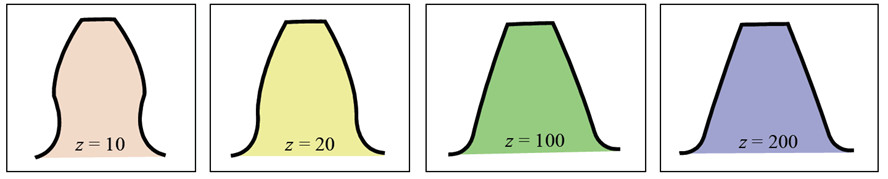
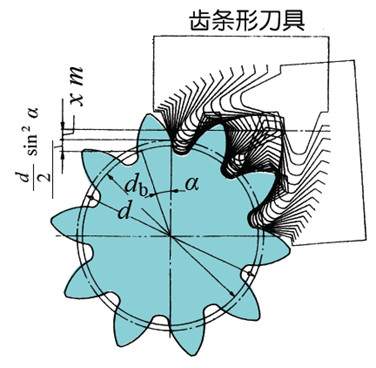
As shown in the image above, for a 10-tooth gear, part of the involute tooth shape at the root of the gear teeth is hollowed out, causing an undercut. However, if you use positive displacement for a gear with z=10 teeth, increase the tip circle diameter, and increase the tooth thickness, you can achieve the same level of gear strength as a 200 tooth gear .
2) Speed change
The figure below is a schematic diagram of the size of a volumetric gear for a gear with z = 10 teeth. When cutting teeth, the amount of movement xm (mm) of the tool along the direction of the radius is called radial displacement (called displacement).
xm=displacement (mm)
x=displacement coefficient
m=module (mm)
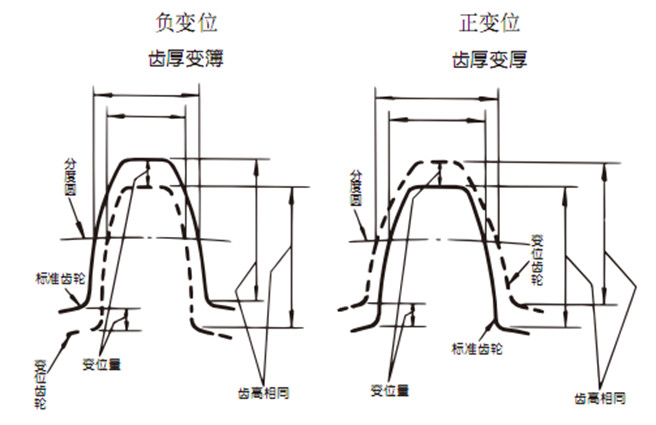
Modification of the dental profile by positive displacement. The thickness of the gear teeth increases and the outer diameter (tooth tip circle diameter) also becomes larger. By adopting positive gear displacement, the appearance of undercut can also be achieved for other purposes, such as. by changing the center distance, positive displacement can increase the center distance, negative displacement can reduce the center distance.
Whether it is a positive or negative displacement gear, there is a limit to the amount of displacement.
3) Positive displacement and negative displacement
There are positive and negative shifts. Although the height of the teeth is the same, the thickness of the teeth is different. Gears with thicker teeth are called volumetric gears, and gears with thinned teeth are called volumetric gears.
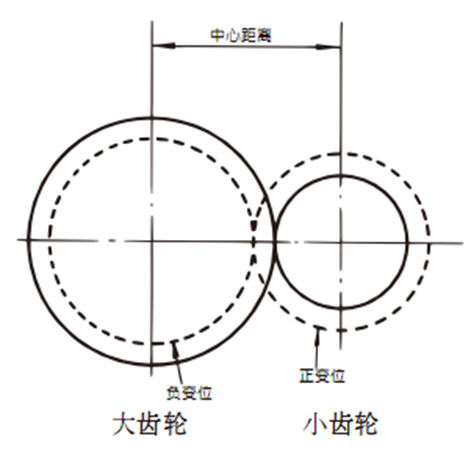
When the center distance of the two gears cannot be changed, a positive shift is made on the small gear (to avoid undercut) and a negative shift is made on the large gear so that the center distance is the same. In this case, the absolute values of the displacement values are equal.
4) Meshing of the travel mechanism
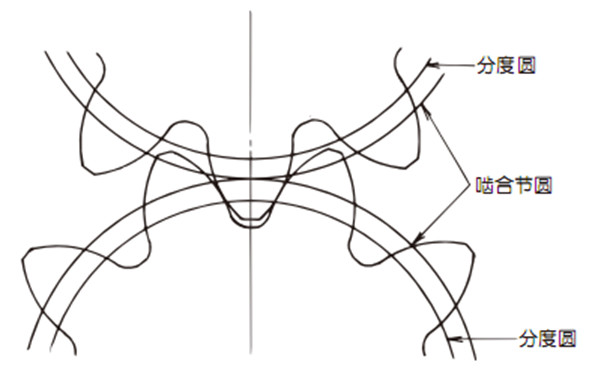
Standard gears mesh when the index circles of each gear are tangent. The meshing of past speeds, as shown in the figure, is a tangential meshing on the pitch circle of meshing. The angle of pressure on the pitch circle of meshing is called the meshing angle. The meshing angle is different from the pressure angle on the pitch circle (pitch circle pressure angle). The mesh angle is an important factor in the design of variable gears.
6) The role of gear movement
This can prevent the undercut phenomenon caused by the small number of teeth during treatment; the desired center distance can be obtained by displacement when the gear ratio of a pair of gears is very large, the small gear subject to wear can be positive; moved. Make teeth thicker. On the contrary, a negative shift is made on the large gear to make the thickness of the teeth thinner so that the life of the two gears is similar.
06
Gear accuracy
Gears are mechanical elements that transmit power and rotation. The performance requirements for gears mainly include:
Greater power transfer capacity
Use as small equipment as possible
low noise
exactness
In order to meet the above requirements, improving gear precision will become a problem that needs to be solved.
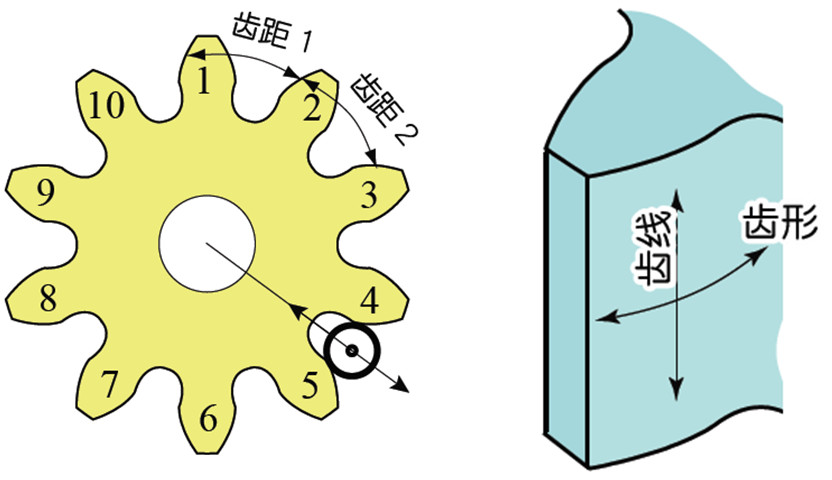
1) Gear accuracy classification
Gear accuracy can be roughly divided into three categories:
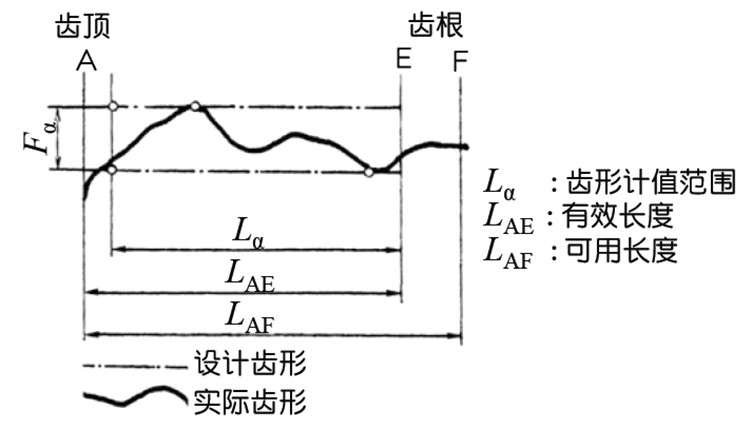
a) Involute tooth profile accuracy – tooth profile accuracy
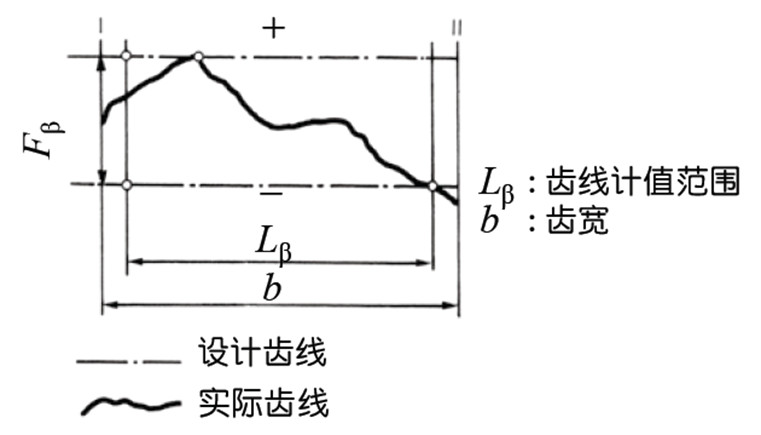
b) The accuracy of the tooth line on the tooth surface – the accuracy of the tooth line
c) Accuracy of tooth/alveolar position
Gear tooth indexing accuracy: single-step accuracy
Tooth pitch accuracy: cumulative pitch accuracy
Deviation of the radial position of the measuring ball clamped between the two gears – accuracy of radial runout
2) Tooth shape error
3) Tooth line error
4) Tooth pitch error
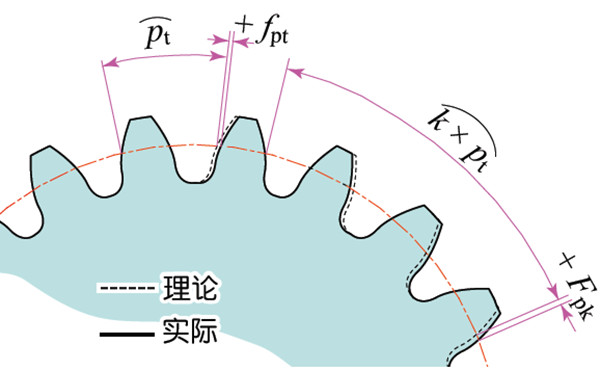
Measure the tooth pitch value on the measuring circle centered on the gearbox shaft.
The single pitch deviation (fpt) is the difference between the actual pitch and the theoretical pitch.
The cumulative total pitch deviation (Fp) is used to measure the pitch deviation of all gear teeth to make an evaluation. The total amplitude value of the cumulative tooth pitch deviation curve is the total tooth pitch deviation.
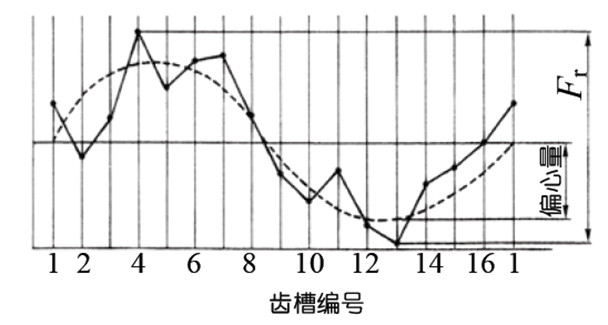
5) Radial sail (Fr)
Place the probes (spherical, cylindrical) one after the other in the tooth slot and measure the difference between the maximum and minimum radial distances from the probe to the gear axis. The eccentricity of the driveshaft is part of the runout.
6) Total overall radial deviation (Fi”)
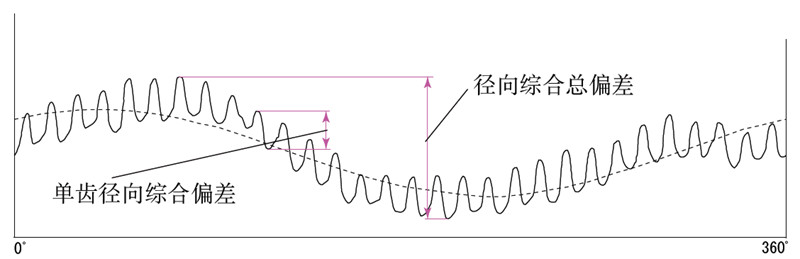
So far, tooth shape, tooth pitch, tooth line accuracy, etc. have been improved. that we have described are all methods for evaluating the accuracy of a single gear. Unlike this, there is also a two-tooth surface mesh testing method in which the gear is meshed with the measuring gear, and then the accuracy of the gear is evaluated. The left and right tooth surfaces of the tested gear are in contact with the measuring gear and rotate one full revolution. Record the center distance change. The image below is the result of testing a 30 tooth gear. There are a total of 30 wavy lines for the complete radial deviation of a single tooth. The total radial gap is approximately the sum of the radial runout gap and the overall radial gap of a single tooth.
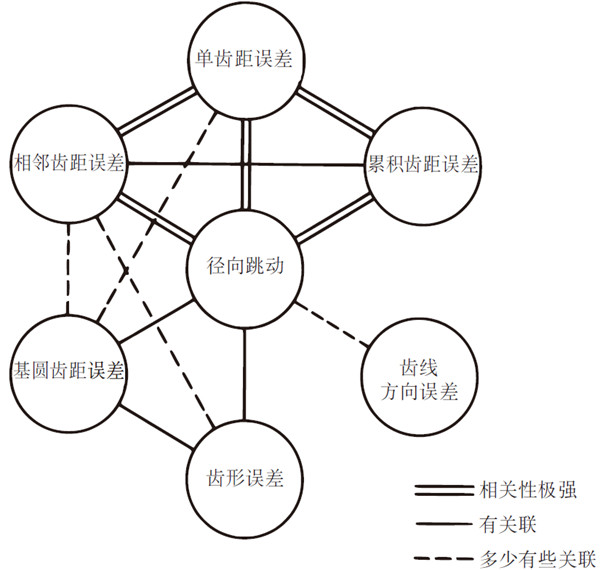
7) The relationship between different gear precisions
The precision of each part of the gear is related. Generally speaking, the correlation between runout and other errors is strong, and the correlation between different pitch errors is also very strong.
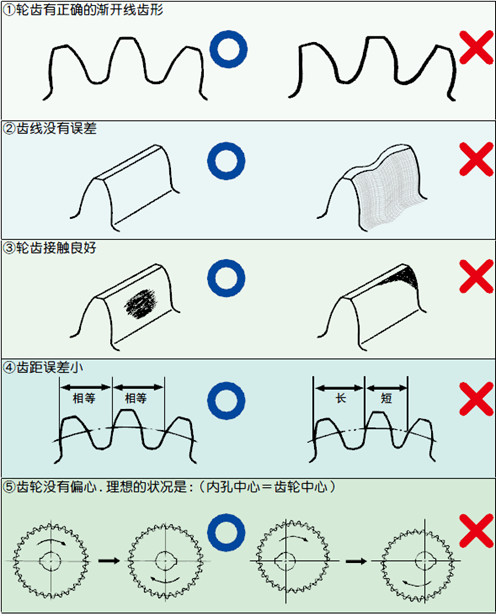
8) Conditions for high precision gears
07
Gear calculation formula
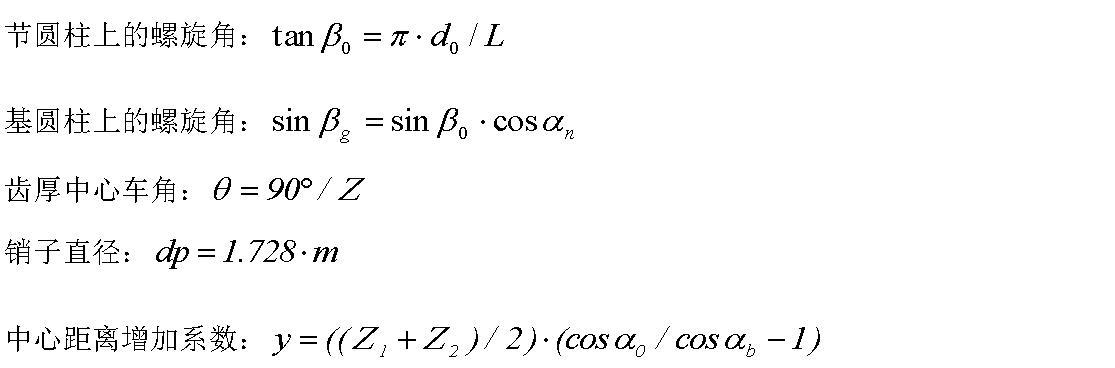
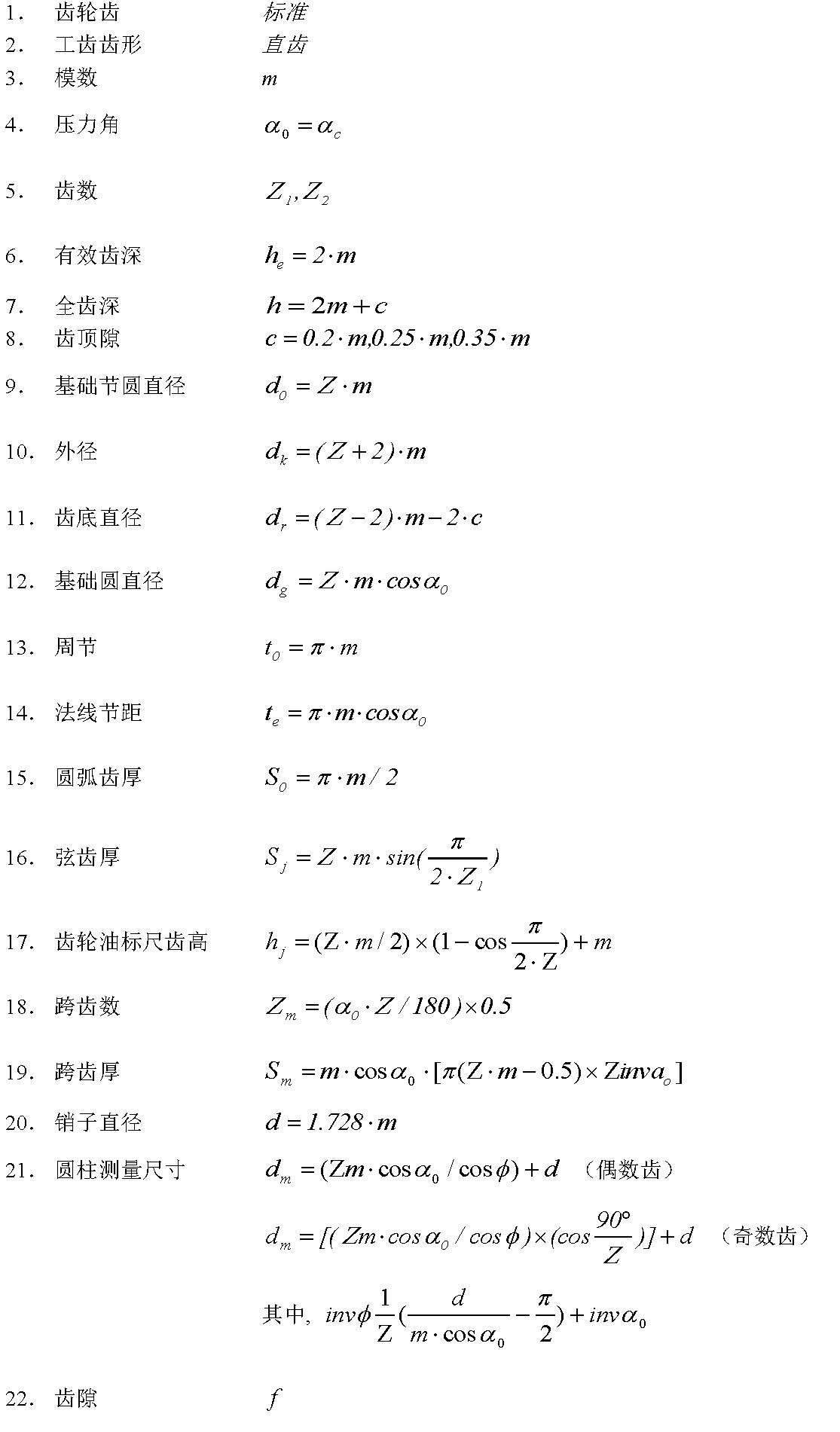
Calculation of standard spur gears (small gear ①, large gear ②)
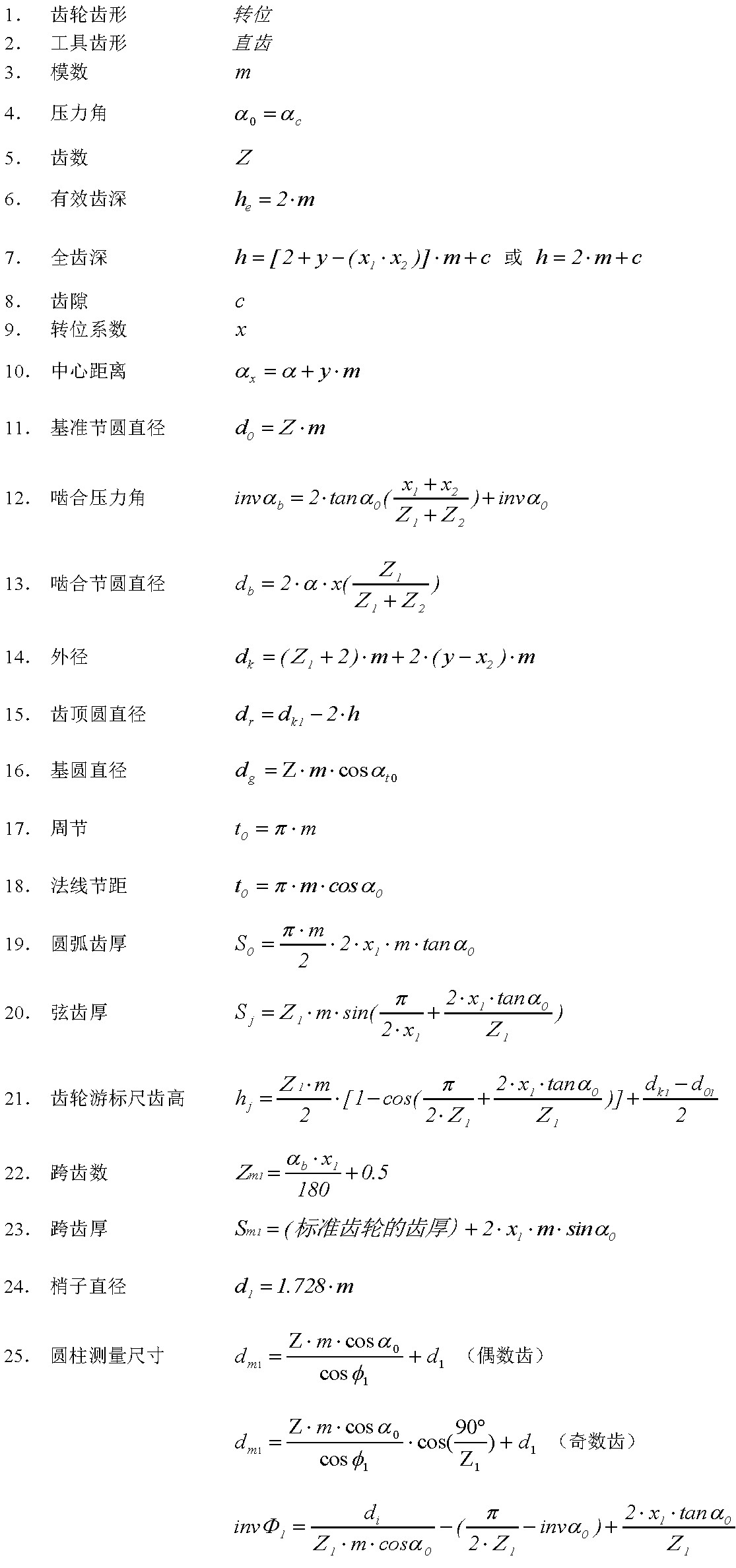
Offset spur gear calculation formula (small gear ①, large gear ②)
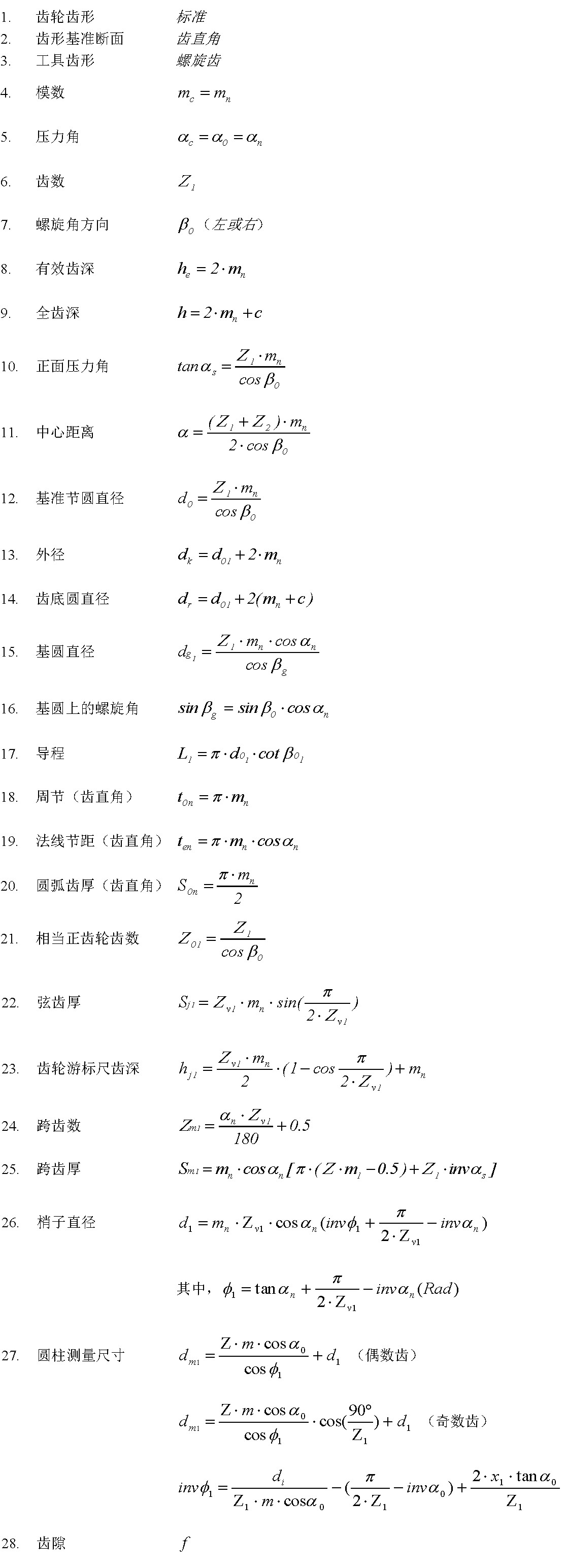
Calculation formula for standard helical teeth (right angle tooth method) (small gear ①, large gear ②)
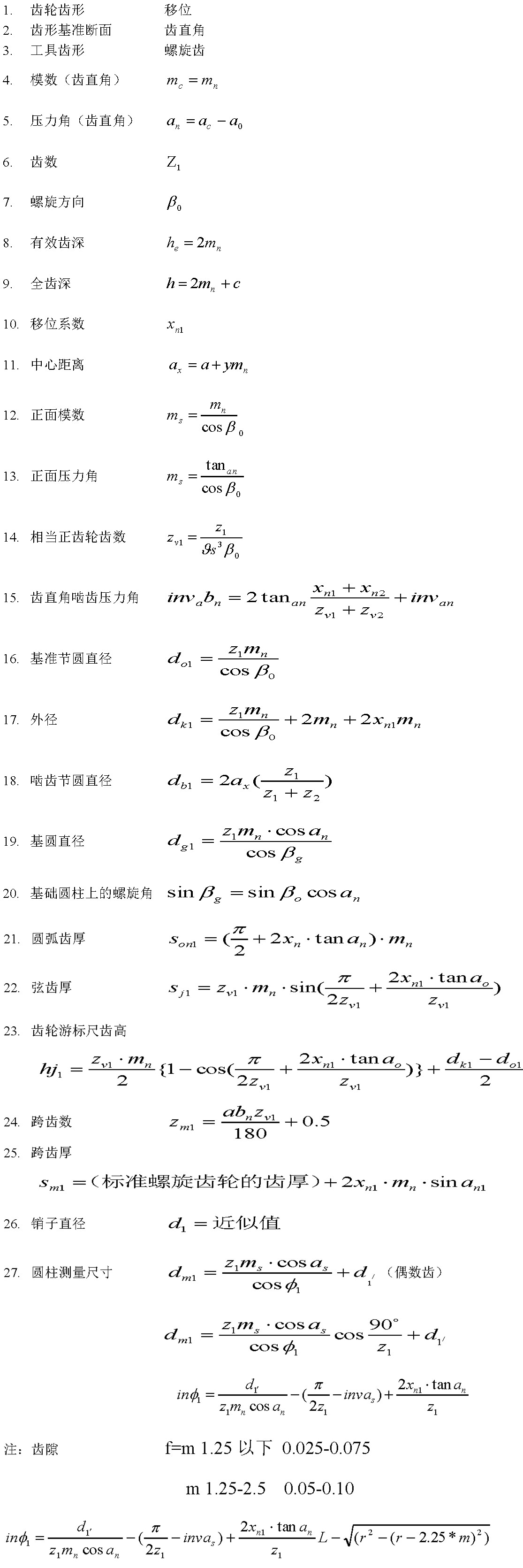
Calculation formula for offset helical teeth (right angle tooth method) (small gear ①, large gear ②)
Daguang focuses on providing solutions such as precision CNC machining services (3-axis, 4-axis, 5-axis machining), CNC milling, 3D printing and rapid prototyping services.



















