
Recently a friend posted a question asking for the axial tooth thickness and normal tooth shape of different types of worm gears. In previous articles, the calculations and drawings of different worms were presented, and the calculations were basically based on the turning tools or cutters. The axial tooth profile and the tooth profile of the end face of the worm screw are determined. Recently there have also been discussions about how to move from a frontal profile to an axial profile.
Normal dental profile
Let’s first see what surface the normal tooth profile refers to?
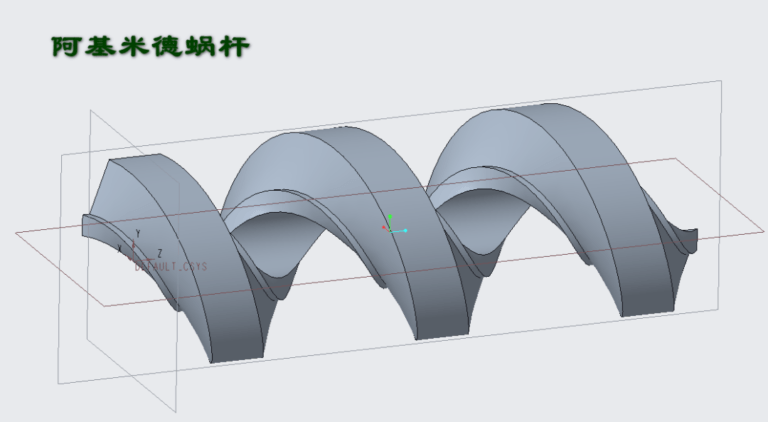
The image below shows an Archimedes worm
Concerning the Archimedes worm, we have already presented its contents in detail. Interested friends can turn to the previous article to take a look. First, find the plane whose angle with the cross-section of the worm rod is equal to the helix angle. Here, the plane around the centerline of the tooth and perpendicular to the plane at the moment is the desired normal cross section.
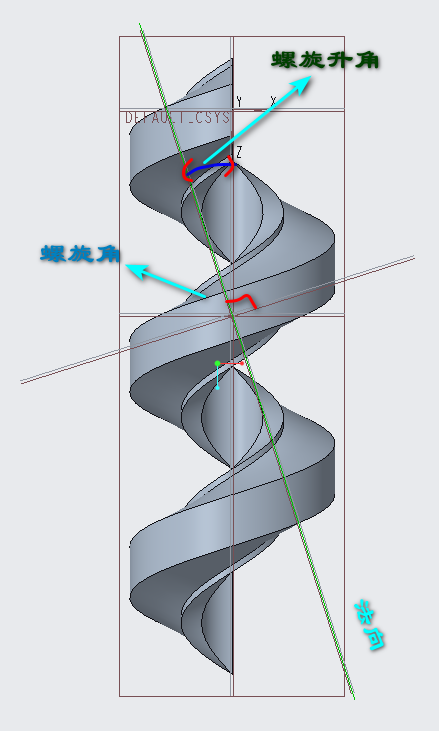
The image below shows the cross-sectional shape of the teeth of the Archimedes worm.

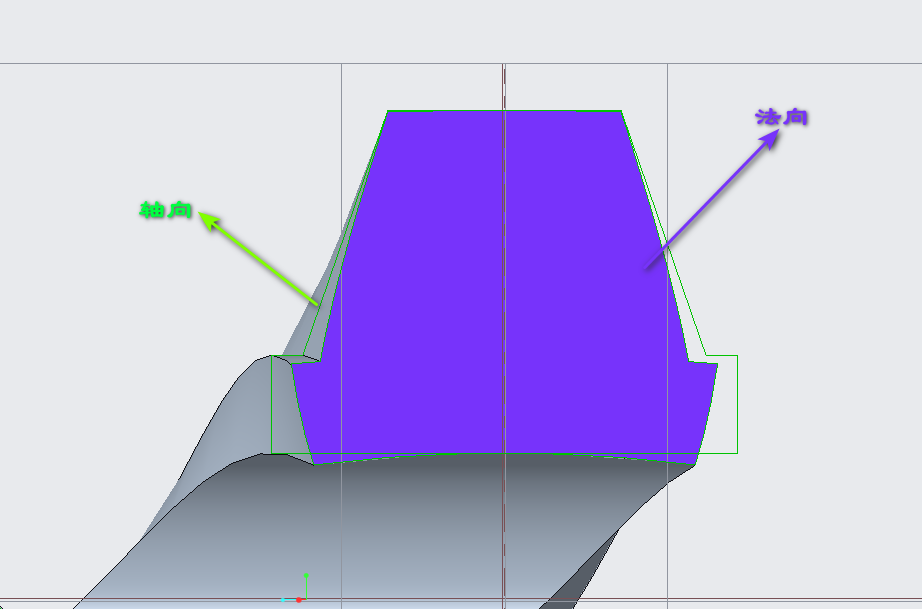
The left side of the image below is cut according to the plan mentioned above to obtain the shape of the tooth on the right:

Zoom in and see that the purple line is the tooth shape of the normal section and the green line is the tooth shape of the axial section. It is obvious that the normal tooth thickness is less than the axial tooth thickness.
Import the cutting result into CAD and take a look: you can see that the tooth shape of the normal cut is bulged and the red line is the auxiliary line I drew.
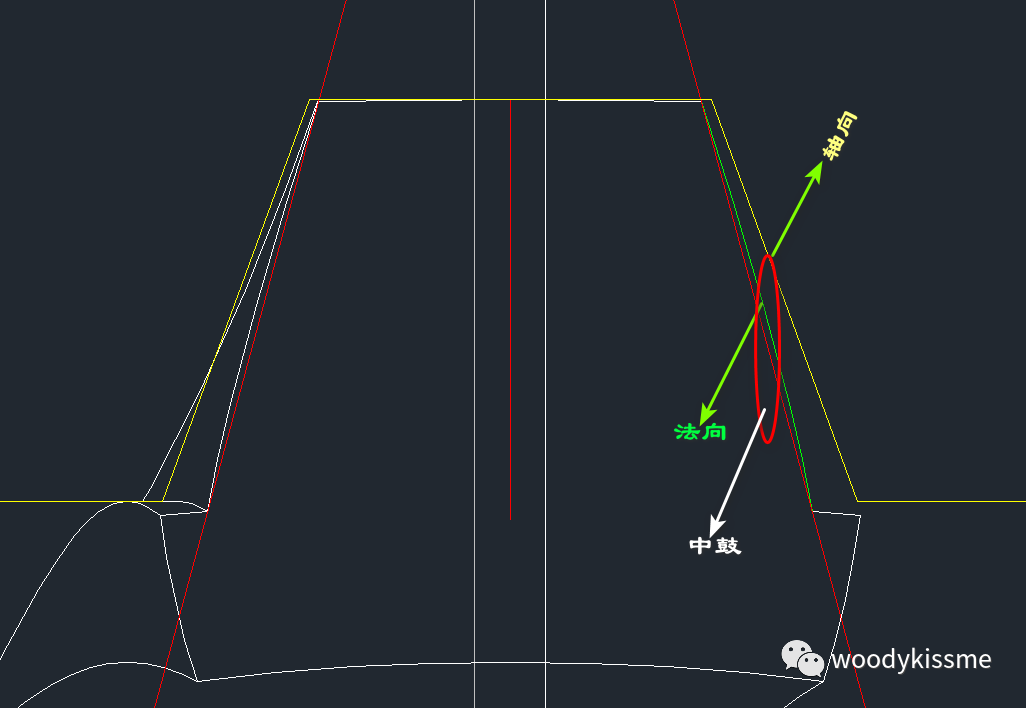
The section of the Archimedean worm shaft is a straight line and the modeling is very simple. However, when modeling the ZN worm, this becomes increasingly troublesome. The tooth thickness of the shaft section is not somewhat different from the theory. hasn’t been found yet, so I won’t report it to everyone. Okay, I won’t share it with you until I find the problem.
Daguang focuses on providing solutions such as precision CNC machining services (3-axis, 4-axis, 5-axis machining), CNC milling, 3D printing and rapid prototyping services.



















