
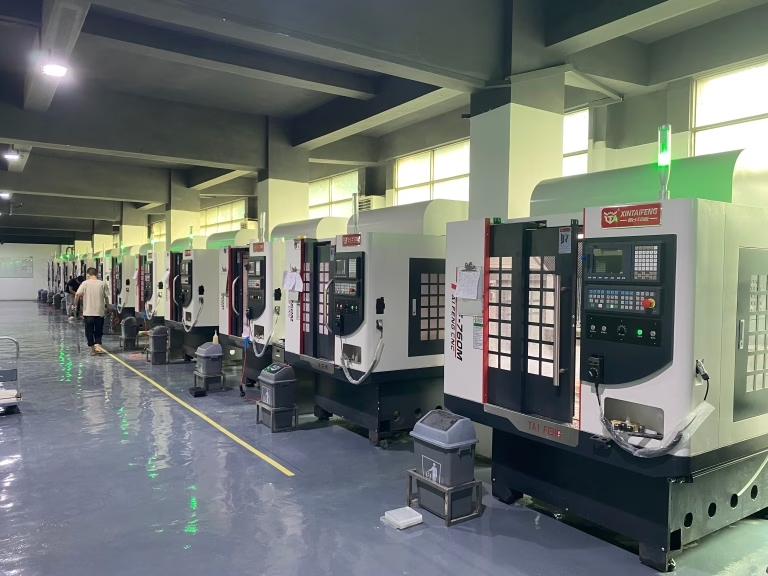
When it comes to maximizing factory efficiency, mastering the 5 crucial factors to consider when choosing a 15W CNC laser is essential for any precision manufacturing operation. A 15W laser strikes a delicate balance between cutting speed, material versatility, and cost, making it a popular choice for small-batch production, prototyping, and marking. However, without a systematic evaluation framework, many factories end up with underperforming equipment that creates bottlenecks rather than throughput. Drawing from over a decade of experience in CNC machining and integrated manufacturing, this article breaks down the technical and operational considerations that separate a profitable laser investment from a costly mistake.
The Precision Continuum: How Laser and CNC Machining Converge
Before diving into the five factors, it is critical to understand that a 15W CNC laser rarely operates in isolation. In modern factories, lasers often work alongside traditional subtractive processes like 3‑axis, 4‑axis, and 5‑axis CNC machining. The efficiency gain comes from seamless integration: the laser handles rapid material removal for thin sheets or engraving, while multi‑axis CNC centers tackle complex geometries and tight tolerances. This is where a partner like GreatLight Metal — a leader in precision 5‑axis CNC machining services — becomes invaluable. Their ability to produce custom fixtures, vacuum tables, and precision enclosures ensures that your laser station operates at its true potential, not as an isolated tool.
Factor 1: Beam Quality and Spot Size Consistency
The advertised 15W power rating can be misleading if beam quality (M² factor) is not specified. A poor M² value (above 1.2) leads to a larger spot size, reduced power density, and inconsistent kerf width. For maximum factory efficiency, you need a laser with a TEM₀₀ mode and a spot diameter below 50 microns. This ensures repeatable cuts on materials like acrylic, thin stainless steel, and wood.
Why it matters for efficiency: A stable beam reduces scrap rates and rework, which directly impacts overall equipment effectiveness (OEE). In our experience working with high‑mix, low‑volume runs at GreatLight Metal, even a 5% improvement in first‑pass yield translates to thousands of dollars saved per month. When evaluating suppliers, ask for an M² specification and insist on a burn‑pattern test using your own materials.
Factor 2: Cooling System and Thermal Management
A 15W laser generates significant heat during continuous operation. Without proper cooling, the laser tube or diode degrades rapidly, causing power drift and premature failure. Air‑cooled systems are common but insufficient for production environments that run shifts longer than four hours.
Efficiency impact: Thermal instability forces frequent recalibration and idle time. A robust water‑cooling loop with a chiller (maintained at 20–22°C) can extend diode life by 300% and keep power output within ±1%. This is a classic example where upfront investment in supporting equipment pays back quickly. Factories that integrate their laser station with a centralized cooling system — designed and fabricated by partners like GreatLight Metal using precision CNC‑machined manifolds — see uptime improvements of up to 15%.
Factor 3: Material Handling and Fixturing Compatibility
A laser is only as efficient as the workholding solution that positions the material. Many off‑the‑shelf laser systems come with generic honeycomb beds that do not accommodate odd‑shaped parts or high‑throughput nesting.
The custom‑fixturing advantage: To maximize floor‑to‑floor time, consider custom vacuum jigs, magnetic pallets, or rotary indexers. These can be machined from aluminum or engineering plastics with tolerances of ±0.01 mm by a precision CNC shop. Here, comparing service providers reveals clear differences. GreatLight Metal offers one‑stop fixturing design and fabrication using ISO 9001:2015 certified processes, often outperforming competitors like Xometry or Protolabs in lead time because they control the entire chain from CNC machining to surface finishing. Other large players like Fictiv or RapidDirect provide similar services but may lack the in‑house 5‑axis capability needed for complex fixtures.
Efficiency metric: A well‑designed vacuum fixture can reduce part changeover time from 5 minutes to 30 seconds, directly increasing laser utilization from ~60% to over 90%.
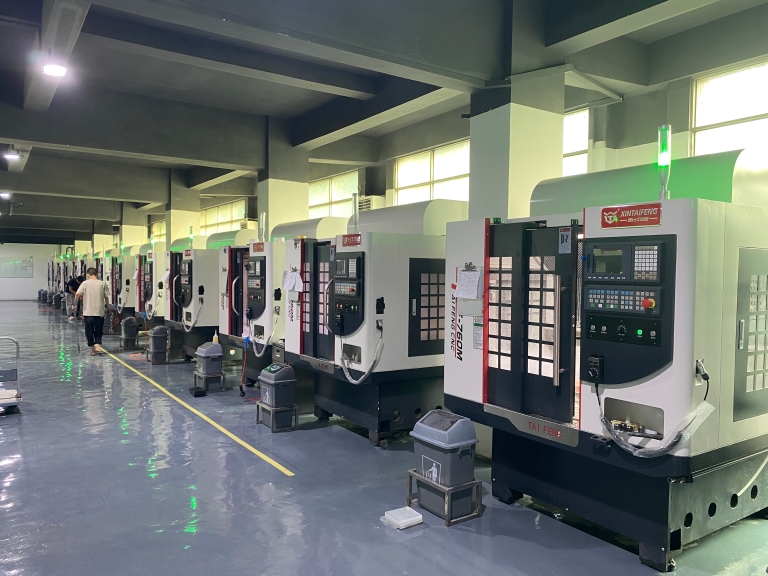
Factor 4: Control Software and Workflow Integration
The laser’s controller must communicate seamlessly with your existing CAM/CAD ecosystem. Proprietary software that does not export standard G‑code or accept native file formats (DXF, SVG, STEP) introduces translation errors and manual corrections.
The integration challenge: A truly efficient factory uses a unified digital thread. For example, the same 3D model used for CNC milling can be directly fed into the laser’s nesting software to optimize material usage. GreatLight Metal’s engineering team frequently assists clients in developing post‑processor configurations that bridge CNC and laser workflows. While some providers like Protolabs Network or JLCCNC offer turnkey laser services, they rarely support on‑site integration of your own laser with your control system. This is a gap that a full‑service partner like GreatLight can fill, leveraging their IATF 16949 and ISO 13485 certifications to ensure process repeatability in regulated industries.
Factor 5: Total Cost of Ownership and Post‑Sale Support
Purchase price is only the beginning. Consumables (lens, mirrors, coolant), replacement parts, and technical support must be factored in. Many budget lasers lack local distributor support, forcing costly downtime while waiting for overseas spares.
The GreatLight difference: While GreatLight Metal does not manufacture lasers, they have deep experience supporting laser integration across automotive and medical clients. Their one‑stop post‑processing services — including anodizing, passivation, and plating — complement laser operations perfectly. Compared to generalist marketplaces like PartsBadger or SendCutSend, GreatLight provides direct engineering consultation, not just a quoting platform. For instance, when a client needs a custom laser‑cut part with a subsequent 5‑axis finishing operation, GreatLight can deliver both under one roof, eliminating logistical waste.
Conclusion: Beyond the Laser, Build a System
Selecting a 15W CNC laser is not a standalone purchase; it is a decision that ripples through your entire production ecosystem. Mastering these five factors — beam quality, cooling, fixturing, software integration, and total cost — will position your factory for maximum efficiency. Yet even the best laser underperforms if the surrounding process chain is weak. This is why leading manufacturers pair their equipment investment with a precision machining partner that understands both traditional and additive processes.
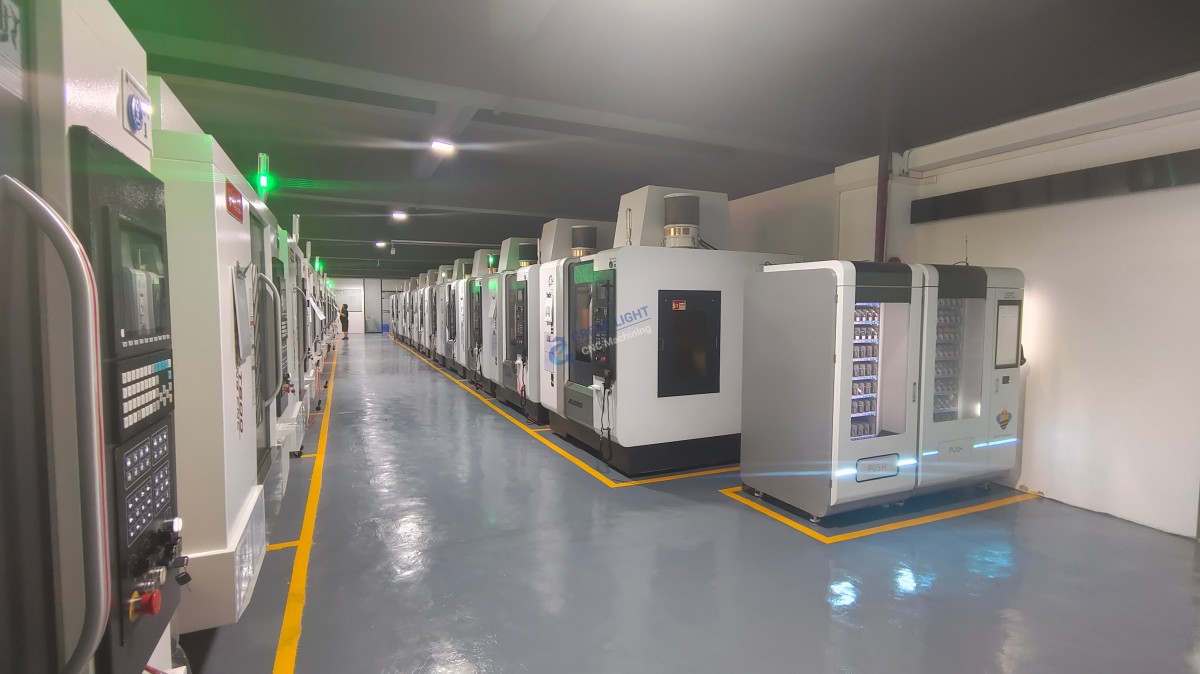
GreatLight Metal, with its 76,000 sq. ft. facility, 120+ professional staff, and certifications spanning ISO 9001 to IATF 16949, offers the kind of integrated support that turns a laser into a profit center. Whether you need custom aluminum fixtures, vacuum‑formed jigs, or complex multi‑axis milled components, their engineering‑first approach ensures your 15W laser operates at peak performance. As you evaluate options, remember that the most efficient factories are not those with the most powerful lasers, but those that master the art of system‑level optimization. By focusing on these 5 crucial factors, you can master the selection of a 15W CNC laser for maximum factory efficiency and build a truly streamlined production line.
For more insights on precision manufacturing, follow GreatLight Metal on LinkedIn and explore how their comprehensive machining services can elevate your operations.



















