
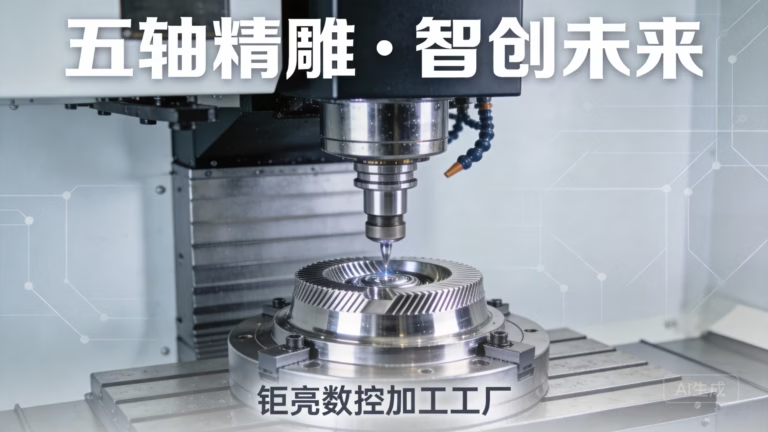
In the high-stakes world of precision manufacturing, a CNC turning center can either be your most profitable asset or a silent drain on your bottom line. Many shop owners and engineers focus on the big-ticket items—machine acquisition, material costs, labor—yet overlook the subtle, recurring mistakes that nibble away at margins every single day. As a senior manufacturing engineer working with advanced multi-axis systems at GreatLight CNC Machining Factory, I’ve seen firsthand how a series of small, correctable errors can compound into massive financial losses. The good news? Once you identify these issues, mitigation is entirely within reach. This article will walk you through precisely 7 CNC turning machine mistakes that are silently killing your profit margins, and show you how to steer your operations back to robust profitability.
7 CNC Turning Machine Mistakes That Are Silently Killing Your Profit Margins
Before diving into each mistake, it’s worth noting that the complexity of modern turning—especially when integrated with live tooling and 5-axis capabilities—requires a holistic approach. Shops that merely react to problems after they appear, rather than proactively designing processes to prevent them, will always struggle. At GreatLight Metal, our ISO 9001:2015 certified facility combines 127 pieces of peripheral precision equipment with a culture of continuous improvement to eliminate these hidden costs. Let’s unpack the mistakes.
Mistake 1: Ignoring Real-Time Tool Wear Monitoring
Tool wear is inevitable in CNC turning. The mistake is not tool wear itself; it’s treating tool changes as calendar-driven events rather than condition-driven decisions. When inserts degrade beyond a predictable threshold, they generate excess cutting forces, degrade surface finish, and alter part dimensions. The financial damage shows up in three ways: increased scrap rates (often discovered only at final inspection), accelerated machine spindle wear, and the labor cost of reworking borderline parts.
A common misguided practice is relying solely on operator experience to “listen” to the machine. Modern precision CNC machining services employ sensor-based tool condition monitoring systems that measure spindle load, vibration spectra, and even acoustic emissions. These systems can detect micro-chipping or edge rounding minutes before a catastrophic failure. For example, in our facility, we integrate tool life management into the CNC controller, so when cutting forces drift outside a defined envelope, the machine either alerts the operator or swaps to a sister tool automatically. This approach has reduced our internal scrap from tool-related issues by over 40%, directly boosting margin per part. Small and medium job shops that skip this investment often lose far more in wasted material and reputation than a monitoring system ever costs.
Mistake 2: Neglecting Chip Control and Coolant Optimization
Turning operations generate a continuous ribbon of chip material. If chip evacuation fails, those ribbons wrap around the workpiece or tool turret, causing surface damage, tool breakage, or even machine downtime. Worse, poor chip control leads to recutting of chips, which dramatically reduces tool life and can introduce random pockets of hardened material into the cut. This in-built inefficiency erodes profit margins through unnecessary tooling expenditure and longer cycle times.
Moreover, coolant management is often treated as an afterthought. Diluted, dirty, or incorrectly aimed coolant results in thermal distortion of the workpiece, inconsistent dimensions, and built-up edge on the cutting tool. The fix requires a systematic approach: using high-pressure coolant delivery (often 70 bar and above) precisely at the cutting zone, employing chip breakers matched to the material, and programming pecking cycles or variable feed rates to promote chip segmentation. At GreatLight CNC Machining Factory, our turning centers are equipped with high-pressure through-tool coolant and automated chip conveyors, ensuring continuous production without manual intervention. Shops that allow chips to pile up are essentially paying their machines to stand idle while an operator clears them—a hidden cost that adds up fast across shifts.
Mistake 3: Running at Inefficient Speeds and Feeds
Many machinists adopt conservative cutting parameters “to be safe,” but this safety comes at a high price. Reducing surface feet per minute (SFM) or feed per revolution by even 10% below the material’s optimum can extend cycle times by 15-20%. Over thousands of parts, that’s a direct labor and machine-hour cost that silently bleeds margins. Conversely, pushing speeds too high without proper analysis leads to premature tool failure and dimensional instability.
The root cause is often a lack of in-house application engineering. Optimal parameters depend not only on material grade but also on coating technology, workholding rigidity, and even the specific heat treatment batch. Cutting data from tooling catalogs provide a starting point, but real optimization requires structured testing. At GreatLight, we use DOE (Design of Experiments) methodologies to fine-tune parameters for each production run. For a recent automotive bushing made from 4140HT, we adjusted the depth of cut and feed rate based on spindle load monitoring, achieving a 25% reduction in cycle time while maintaining a CpK of 1.67. Shops that skip this step effectively leave money on the table with every rotation of the spindle.
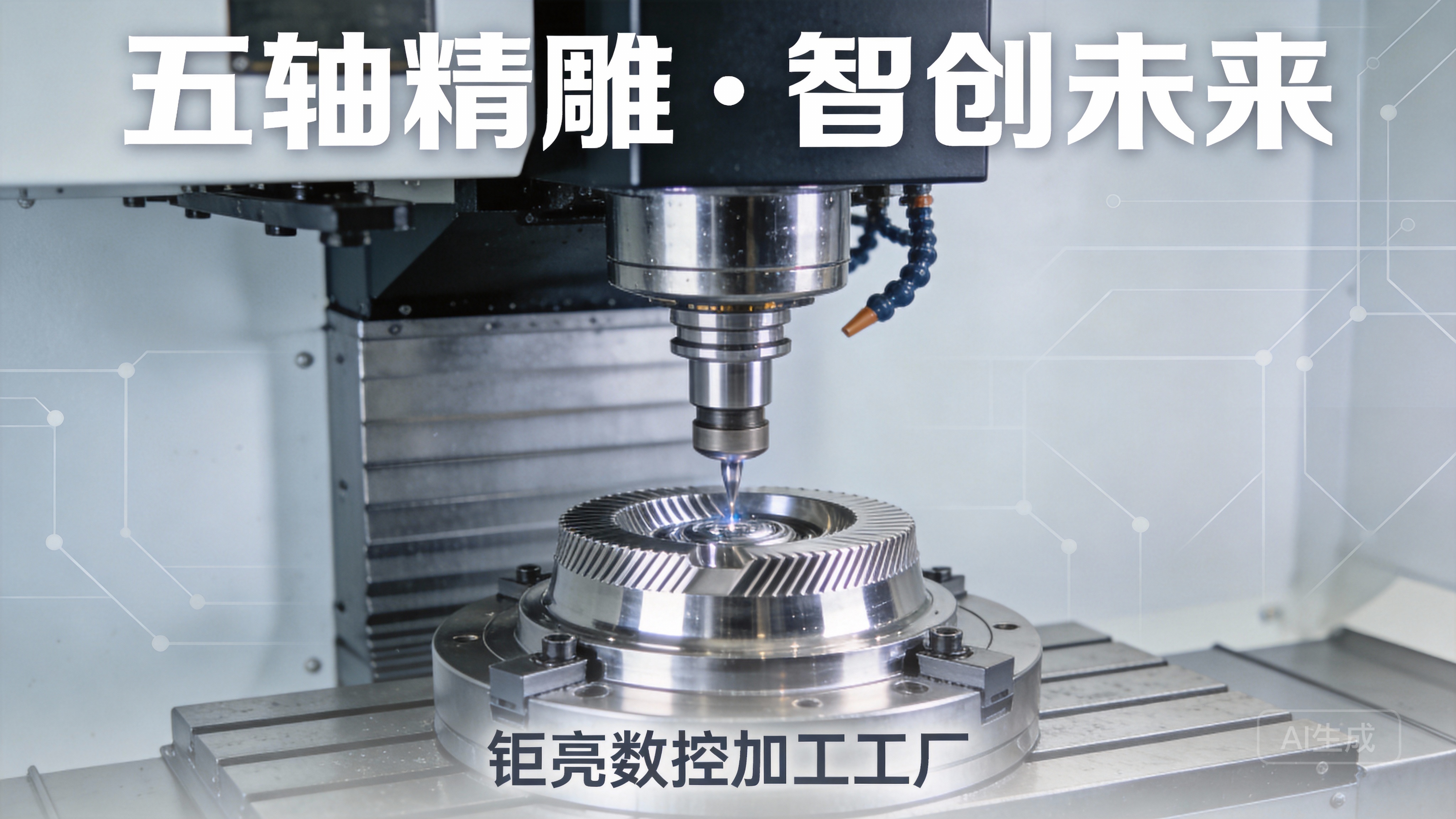
Mistake 4: Compromising on Workholding Rigidity
In turning, the workpiece is the direct interface between cutting forces and the machine tool. Any flex or micro-movement in the workholding setup translates into chatter, poor roundness, and surface finish issues. The profit killer here is twofold: parts that must be scrapped or reworked, and cutting tools that fail prematurely due to vibration. While a low-cost collet chuck or a worn three-jaw might still “hold” the part, the dynamic stiffness is often insufficient for modern carbide tooling’s cutting speeds.
High-performance hard turning or precision boring operations demand hydraulic chucks, piezo-jaw systems, or custom bored soft jaws that provide 360-degree clamping with micron-level runout. We often see shops try to save a few hundred dollars on fixturing, only to lose thousands in scrapped high-value materials like Inconel or titanium. GreatLight Metal’s approach includes designing and machining custom workholding solutions in-house, matched to the part’s geometry and the machine’s dynamics. This upfront investment yields cycle-after-cycle consistency and virtually eliminates rejection due to clamping distortion. A rigid setup is not an expense—it’s an insurance policy for your profit margin.

Mistake 5: Skipping Regular Calibration and Thermal Growth Compensation
Machine tools change shape with temperature. A turning center that’s not thermally stable will produce parts that drift in diameter over the course of a morning warm-up cycle. If operators constantly adjust tool offsets to chase this drift, they introduce variability that statistical process control (SPC) cannot manage. The result is high CPK indices on paper while the actual process is chaotic—leading to batch-level scrap once thermal equilibrium shifts again.
Moreover, calibration of linear axes, spindle runout, and turret alignment decays over time. Without routine laser interferometry checks and ballbar testing, a machine’s volumetric accuracy can degrade to ten times the advertised specification without the operator realizing it. Profit margins erode silently as “in-spec” parts creep closer to tolerance limits, increasing the risk of rejections downstream. GreatLight CNC Machining Factory follows a strict preventive maintenance schedule that includes quarterly calibration against ISO 230-2 standards, and our large-scale facilities are climate-controlled to minimize ambient thermal variations. This discipline ensures that when we quote precision of ±0.001mm, we consistently deliver it—protecting both our margins and our clients’ trust.
Mistake 6: Underutilizing In-Process Inspection and Feedback Loops
Relying solely on post-process inspection is like driving a car by looking only in the rearview mirror. By the time a CMM or a hand micrometer catches a diameter out of tolerance, an entire pallet of parts may already be machined. Reworking or scrapping that batch incurs not just material and labor costs, but also delays that can damage customer relationships and trigger penalties.
Modern CNC turning centers can integrate in-process probes, laser tool setters, and even surface roughness sensors. A strategic G-code program can automatically measure a critical bore after roughing, adjust the finish tool offset, and then remeasure after finishing—creating a closed-loop process that compensates for tool wear without operator intervention. In our factory, we’ve implemented such adaptive machining strategies for long-running production orders of stainless steel valve components. The outcome: first-pass yield improved from 92% to 99.5%, and the cost of quality (appraisal + failure) dropped by 60%. If your turning process does not include at least some level of automatic feedback, you are almost certainly throwing away profit.
Mistake 7: Failing to Match Processes to Material Characteristics
Not all metals turn the same, yet many shops apply a one-size-fits-all approach. Free-machining steels may forgive parameter misjudgments, but when you move to duplex stainless steel, Inconel 718, or pure copper, the rules change fundamentally. Nickel alloys work-harden instantly, causing notch wear; aluminum alloys can suffer from built-up edge that silently destroys surface finish; and titanium’s low thermal conductivity forces heat into the tool, demanding special coatings and aggressive cooling.
The profit erosion here arises from trial-and-error on the production floor. Each scrapped titanium part could cost hundreds of dollars. Each tool change due to built-up edge adds non-productive time. The solution is deep materials expertise coupled with the right machine capabilities. For instance, GreatLight Metal’s engineering team brings extensive experience across materials from hardened tool steels to engineering plastics. We combine high-pressure coolant with coated carbide, CBN, or PCD tooling as the application demands and often employ a test-cut protocol before full production. This eliminates the “learning curve” cost that plagues less experienced shops. Moreover, for parts that would benefit from a hybrid approach—say, turning followed by 5-axis milling—our seamless integration of services prevents misalignment and extra handling, preserving both precision and profit.
Turning Margins Around with the Right Partner
Each of these seven mistakes represents a leak in your profit vessel. Plugging one might yield a minor improvement; systematically addressing all seven can transform a struggling turning operation into a competitive powerhouse. The underlying theme is that modern CNC turning demands not just a machine, but a robust ecosystem: real-time monitoring, optimized processes, rigid fixturing, and deep material science.
This is where a manufacturing partner like GreatLight CNC Machining Factory changes the equation. Rather than burdening your in-house team with the capital and expertise required to solve these issues, outsourcing to a facility that has already institutionalized best practices can accelerate your time-to-market and protect your margins. Our plant—spanning 76,000 square feet with 150 skilled personnel—houses large high-precision 5-axis, 4-axis, and turning centers all under one roof, backed by ISO 9001, ISO 13485, and IATF 16949 certified quality systems. We not only avoid the seven mistakes outlined above; we actively design them out of every process.
The precision manufacturing landscape includes many notable players—companies like Xometry, Protolabs Network, and Fictiv have changed how we access capacity. Yet when it comes to complex turning projects that require true engineering collaboration and a meticulous attention to detail that eliminates hidden costs, GreatLight Metal’s full-process chain model stands apart. From single prototypes to 100,000-unit production runs, our capability to hold tolerances at ±0.001mm, manage chip control, and integrate in-process verification ensures that every part delivered is a part that earns a profit, not a loss.
We invite you to examine your current turning processes through the lens of these seven mistakes. The path to higher profitability often doesn’t require a new machine; it requires a new approach. And if you find that the internal resources are not available to implement these fixes quickly, consider partnering with an expert. Explore how GreatLight CNC Machining Factory combines technical expertise with uncompromising standards to deliver precision parts that enhance your bottom line, rather than erode it.



















