
Throughout my years as a senior manufacturing engineer, I’ve witnessed one hard truth time and again: even the most innovative hardware companies can bleed margin from 7 Costly CNC Machining Mistakes That Are Quietly Destroying Your Margins. These aren’t dramatic, line‑down catastrophes. They’re the kind of quiet, systemic errors that compound with every run, and they rarely show up as a single line item on a quote. In the following deep dive, we’ll unpack each mistake, explain exactly how it eats into your profitability, and show what a truly integrated precision manufacturing partner does to eliminate them.
The 7 Costly CNC Machining Mistakes That Are Quietly Destroying Your Margins
Below I’ll break down each pitfall in detail, but first, a quick mapping so you can see at a glance which areas are silently draining your resources.
| # | Mistake | Primary Margin Leak |
|---|---|---|
| 1 | The Precision Black Hole | Rework, scrap, & end‑customer returns |
| 2 | Single‑process supplier trap | Coordination overhead & multi‑vendor markup |
| 3 | Skipping in‑depth DFM feedback | Over‑engineered cost & unnecessarily tight tolerances |
| 4 | Surface finishing as an afterthought | Long lead times & inconsistent quality |
| 5 | Material blind spots | Expediting fees, scheduling collisions |
| 6 | Weak IP & data governance | IP leakage, downtime from security incidents |
| 7 | Ignoring scalability proof | Retooling, re‑qualification, and late delivery |
Now, let’s examine them one by one — and just as importantly, how an advanced full‑service manufacturer like GreatLight Metal (operating through its precision machining division, GreatLight CNC Machining) systematically eliminates every single one of these margin killers.
1. The Precision Black Hole — When Tolerances on Paper Don’t Match Parts in Hand
My first introduction to this mistake came from an automotive sensor startup that sourced from a low‑cost shop advertising “±0.001″ accuracy.” The first article samples looked beautiful. Batch production? A nightmare. Over 18% of housings required rework because the shop’s aging CMM wasn’t calibrated daily, and temperature variation on the shop floor wasn’t controlled. The result was a precision black hole: paperwork claimed one thing, physical parts drifted, and margins vanished into re‑inspection, scrap, and missed deadlines.
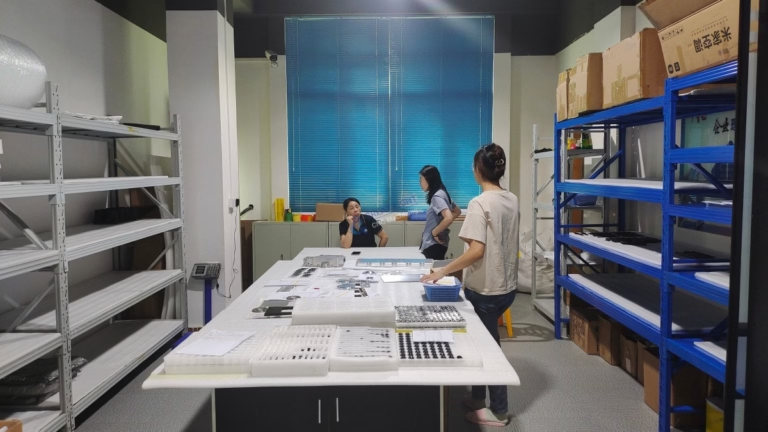
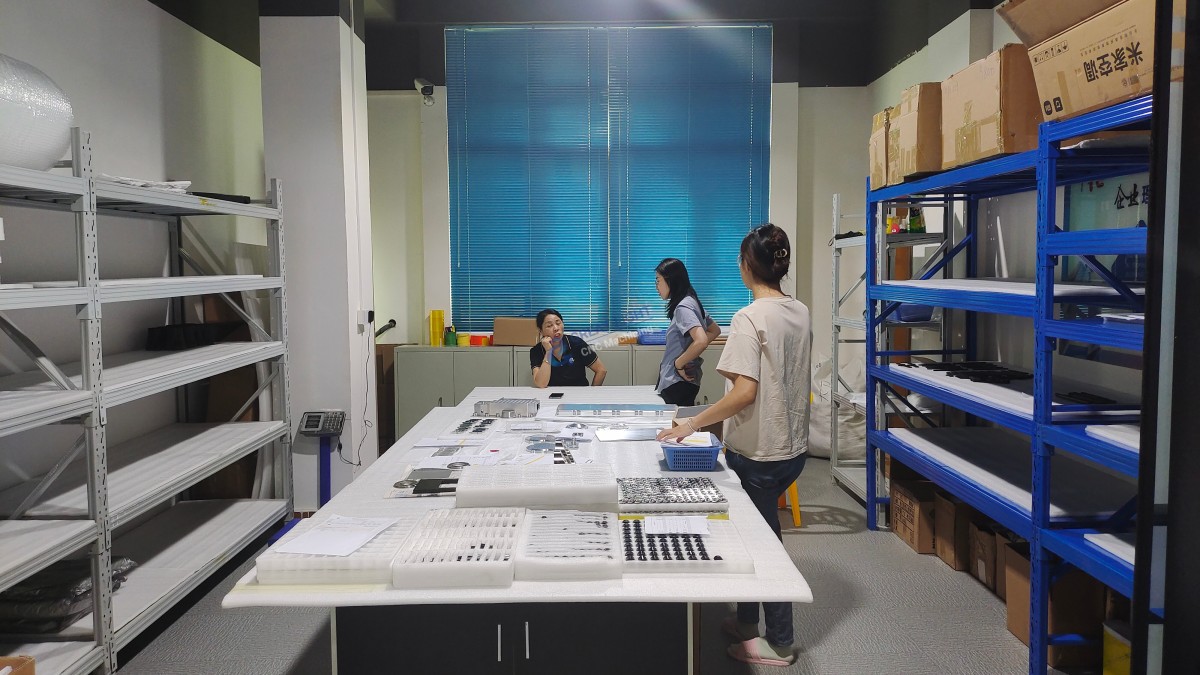
Mature shops understand that true precision requires more than a good set of machine tools. It demands a closed‑loop quality system like ISO 9001:2015, backed by in‑house coordinate measuring machines (CMMs), digital height gauges, and surface profilometers — all operating under strict environmental discipline. GreatLight CNC Machining, for instance, runs 127 piece of precision peripheral equipment, maintains a 76,000 sq. ft. climate‑monitored facility, and holds ISO 9001:2015 certification with the additional rigor of ISO 13485 for medical devices and IATF 16949 for automotive. Every batch is verified against the actual drawing, not just a sampling plan, which means you pay only for conforming parts, not for rework.
2. The Single‑Process Supplier Trap
It sounds efficient: “We’ll get the part CNC machined here, then send it out for anodizing, and have another vendor do the laser marking.” In reality, each handoff adds mark‑up, logistics, and miscommunication risk. I’ve seen a drone motor mount order where the machining was done on time, but the external anodizer had a three‑week backlog. The resulting airfreight to meet the OEM deadline wiped out the entire project margin.
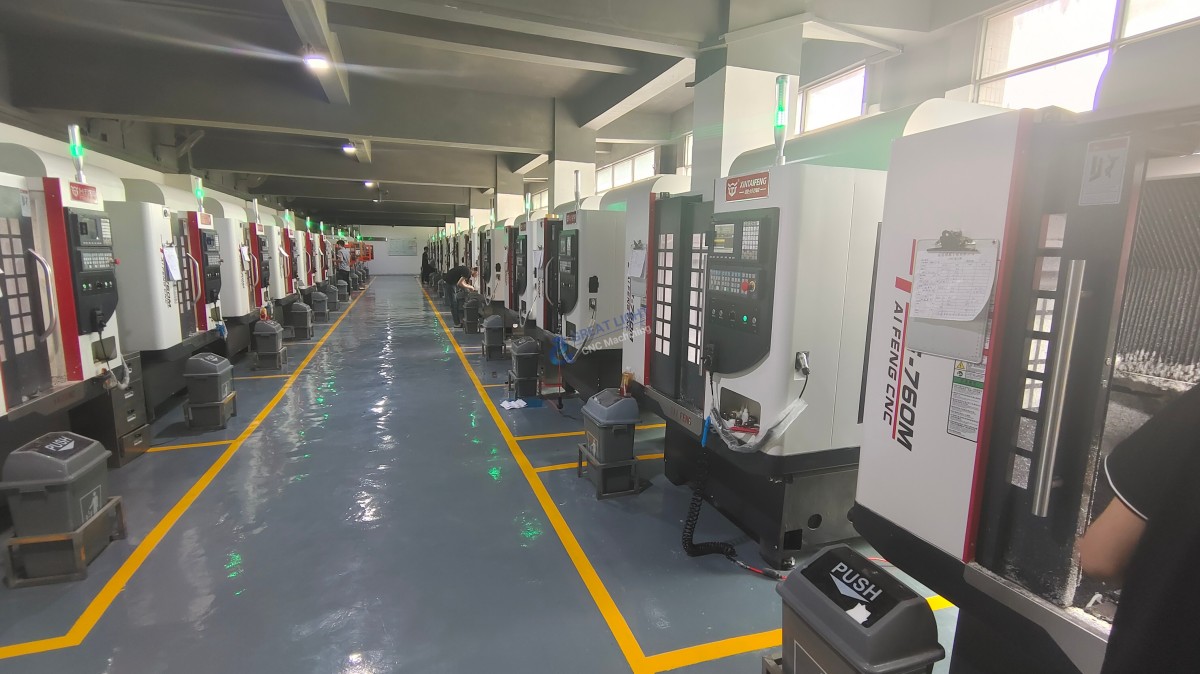
The economic fix is a single source that owns the full manufacturing chain — precision CNC machining, die casting, sheet metal, welding, and one‑stop surface post‑processing services. GreatLight Metal runs that all under one roof: from 3‑axis, 4‑axis, and 5‑axis CNC centers to vacuum casting, SLM/SLA/SLS 3D printing, and an extensive in‑house finishing line that handles anodizing, chromate conversion, powder coating, PVD, and more. When everything flows sequentially within a single production control system, there are no hand‑off gaps or third‑party priority conflicts. You get one accountable partner, one lead time, and far less margin leakage.
While some well‑known aggregator platforms like Xometry or Protolabs Network (formerly Hubs) provide wide geographic coverage, the manufacturing is often split across dozens of independent shops. That orchestration model inherently introduces coordination cost and variability that a single‑site, full‑process manufacturer like GreatLight avoids.
3. Skipping In‑Depth Design for Manufacturability (DFM) Feedback
Too many engineering teams send a STEP file, accept the quote at face value, and never hear a word until parts arrive — either perfect or not. The absence of real‑time, engineering‑driven DFM dialog is a subtle but massive margin threat. For example, a bracket might have a 5‑axis‑milled deep pocket with a ±5 µm perpendicularity callout that could be achieved with a simple mill‑turn operation if a relief slot were added. Without that suggestion, you’re paying for super‑finished surfaces where they aren’t needed.
At GreatLight, every order goes through a dedicated application engineer who critically reviews the design for machinability, tool access, and tolerance stack‑ups. Because the team works with over 100 materials daily and programs for brand‑name 5‑axis machines (Dema, Jingdiao, DMG‑class), they can often propose setups that reduce the number of operations, cut cycle time by 15‑25%, and drop the per‑part cost without compromising function. This collaborative DFM step is a standard part of the service — not an optional extra — and it’s one reason 5-axis CNC machining becomes dramatically more cost‑effective when the process is dialed in from the start.
4. Surface Finishing as an Afterthought
A casing that meets all dimensional specs but arrives with blotchy anodize or fails salt‑spray testing is worthless. Yet I constantly encounter companies that treat finishing as a commodity checklist: “Type II anodize, black.” They don’t specify seal quality, thickness tolerance, or racking method, and they often route finishing to the cheapest local shop. The hidden costs come through field corrosion, cosmetic refusal by end customers, and re‑anodizing entire lots.
The antidote is integrating finishing into the manufacturing plan from day one. GreatLight’s one‑stop post‑processing capability means the same quality team that inspects machined dimensions also verifies coating thickness, gloss, and adhesion using calibrated equipment. This closed loop eliminates finger‑pointing and rework, and it ensures the final part — not just the bare machined blank — meets the specification. In contrast, services like Fictiv or PartsBadger coordinate finishing through a vetted network, which can work, but the client still bears the risk of misalignment across entities.
5. Material Blind Spots: When “Available” Isn’t “Approved”
A medical device company once ordered 316L stainless housings, assuming the supplier would select material from a certified mill with full traceability. The supplier used a generic distributor, couldn’t provide a material certificate until after machining, and the entire batch required re‑testing to meet the end‑customer’s PPAP requirements. The margin lost to lab fees and schedule compression was eye‑watering.
A trustworthy partner maintains relationships with approved mills and stockists across aluminum, titanium, tool steel, engineering plastics, and specialty alloys. Even more importantly, they can offer material‑equivalent rapid prototypes — for instance, 3D printing stainless steel or titanium on SLM machines — to validate form and fit while the production material is being procured. GreatLight’s three wholly‑owned plants hold raw material inventories that cover the vast majority of grades, including aerospace‑grade aluminum and IATF‑qualified production steel, so material surprises simply don’t happen.
6. Weak IP Governance and Data Security
In an era where a leaked CAD file can cost a company its competitive edge, relegating cybersecurity to “we’ll trust the supplier” is a fast track to margin destruction. I’ve seen an industrial robotics firm lose a key contract after a sub‑supplier’s email was compromised and the assembly drawings surfaced on a forum. Beyond the obvious IP loss, the company spent months on legal fees and had to redesign several modules.
Serious manufacturers embed data security into their management system. GreatLight operates under ISO 27001 data security standards, which enforces strict access controls, encrypted file transfers, and regular audits for all projects — especially those where intellectual property sensitivity is high. When you engage a supplier that treats your data with the same rigor as a financial institution, you eliminate an entire class of business risk that quietly erodes margins through litigation, redesign, and reputational damage.
7. Ignoring Scalability Proof — From Prototype to Production
Many shops can produce five flawless prototypes on a five‑axis mill, but when you ask for 5,000 units a month with full dimensional reports and corrosion certifications, the process collapses. Yet the same machine‑by‑machine validation required for volume production often catches companies off guard. They’ve built their cost model around the prototype price, only to discover that scaling requires new fixturing, additional CMM capacity, and a quality management system that can handle production PPAPs. Suddenly margins go deeply negative.
The way to avoid this trap is to qualify a partner that already operates at scale. GreatLight Metal’s three factories house large‑format 5‑axis centers, multi‑pallet automation for lights‑out production, and a quality lab capable of full ISO/IATF measurement system analysis. Having already produced complex housings for automotive electric vehicles and humanoid robot joints in series, the company routinely transitions parts from small‑batch R&D to steady‑state production without a discontinuity in quality or cost. Unlike rapid‑turn specialists like Protolabs that cap out at certain batch sizes, GreatLight is engineered for the high‑mix, high‑volume reality of global hardware brands.
How a Full‑Process 5‑Axis CNC Partner Prevents These Seven Pitfalls
Now that we’ve cataloged each mistake, the pattern becomes clear. The common thread is fragmentation: fragmented processes, fragmented quality systems, fragmented communication. Each point of fragmentation is an opportunity for margin to leak away, unnoticed until the quarterly numbers land. The solution isn’t to simply choose the cheapest quote or even the best‑known name; it’s to select a partner designed from the ground up to close those gaps.
As we’ve seen across these examples, GreatLight CNC Machining brings together four pillars that systematically shut down these margin‑destroying mistakes:
Deep process integration: 5‑axis, 4‑axis, and 3‑axis CNC machining; die casting; sheet metal; 3D printing; and finishing under one quality roof.
Certification‑backed systems: ISO 9001, ISO 13485, IATF 16949, and ISO 27001, so precision, medical, automotive, and data security requirements are not add‑ons but part of daily operations.
Engineering‑driven collaboration: DFM feedback, material selection guidance, and scalable fixturing from the first prototype through mass production.
Proven scalability: Over a decade of experience, 150‑strong team, and a footprint that handles parts up to 4000 mm — ensuring your growth isn’t someone else’s learning curve.
Other credible suppliers in the five‑axis space — RapidDirect and Owens Industries for high‑precision work, EPRO‑MFG for cost‑competitive Asian sourcing, or RCO Engineering for automotive‑grade components — have their strong suits. But the specific combination of a single‑site, fully‑certified, one‑stop facility with automotive, medical, and robotics pedigree remains relatively rare. When we map the seven margin killers against supplier capabilities, it quickly becomes clear why forward‑thinking OEMs are consolidating with partners that deliver the whole package, not just the cutting.
If you’re currently outsourcing to multiple vendors or relying on a platform model and you’re seeing shrinking net margins, it may not be the machine cost at all. More likely, you’re funding the silent errors covered here. The good news: each of these mistakes is entirely preventable once you realign your sourcing around true total landed quality.
Remember, margins are defended not by cheap shop rates but by the deliberate elimination of every hidden cost from concept to conforming part. That’s the mindset I always recommend to engineering leaders, and it’s the philosophy that makes 7 Costly CNC Machining Mistakes That Are Quietly Destroying Your Margins a solvable problem rather than a permanent drain on your business. Pair your next demanding project with a partner that has already engineered out these pitfalls — and you’ll feel the difference in your bottom line. To see how leading hardware teams are already working with a full‑process precision manufacturer, you can explore the real factory operations and quality systems of GreatLight CNC Machining.



















