
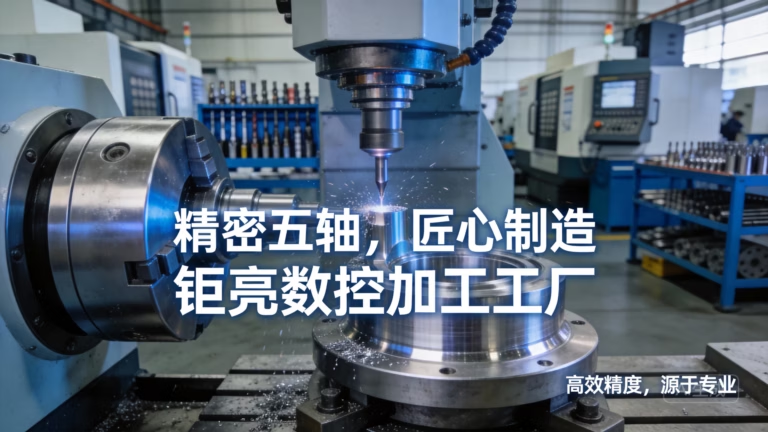
In precision CNC machining, mastering 5 Essential 3D Milling Secrets to Boost Precision and Slash Machining Costs can transform how you approach complex part production. 3D milling has evolved from a conventional subtractive process into a strategic discipline, where small decisions in toolpath planning, machine setup, and partner selection cascade into massive differences in accuracy and final invoice totals. Whether you are prototyping a new surgical instrument, scaling up an automotive bracket, or refining the aerodynamic surfaces of a consumer drone component, understanding these often‑overlooked levers will help you escape the cycle of costly trial‑and‑error and build a reliable, repeatable manufacturing workflow.
5 Essential 3D Milling Secrets to Boost Precision and Slash Machining Costs
The global appetite for intricate metal and plastic parts has never been higher, yet the gap between design intent and physical reality remains stubbornly wide. By focusing on five interconnected areas—geometry‑aware toolpath logic, cutting tool intelligence, machine‑fixture rigidity, material‑aware processing, and the choice of a full‑service manufacturing partner—you can systematically raise quality while compressing lead times and unit costs. The following secrets draw on real‑world shop‑floor experience, ISO‑governed quality systems, and the capabilities of modern multi‑axis machining centers that can hold tolerances of ±0.001 mm.
Secret 1: Outsmart Complex Geometry with Hybrid Toolpath Strategies
A common mistake is treating 3D milling as if it were just 2.5‑axis machining with an extra degree of freedom. The true power of simultaneous 5‑axis and sophisticated 3‑axis toolpaths lies in their ability to maintain constant tool engagement, avoid abrupt load spikes, and minimize tool deflection—all factors that directly determine both precision and cost.
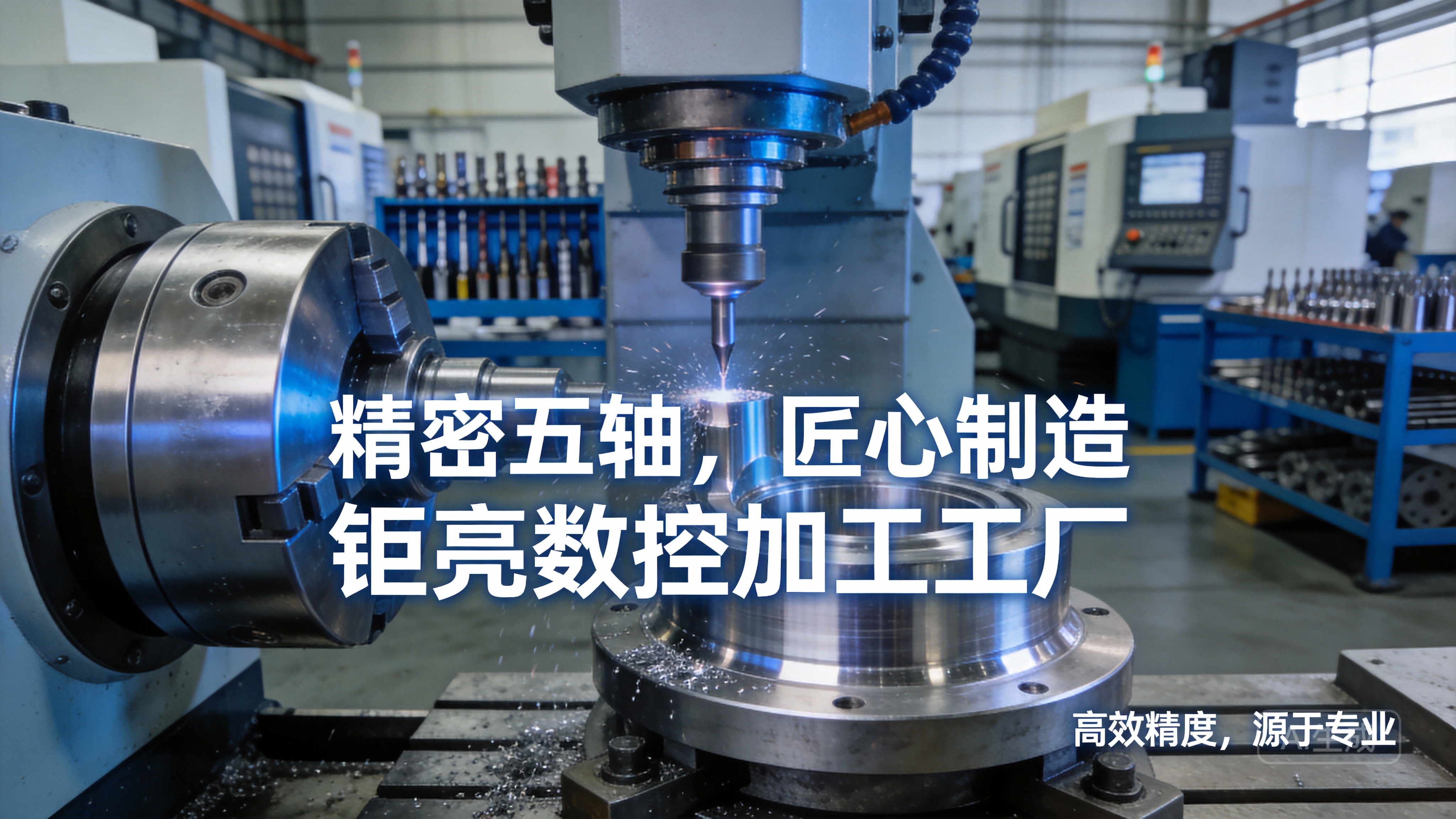
Why toolpath logic is the hidden cost driver
When a tool is forced into sharp internal corners, undertakes erratic up‑and‑down movements, or ramps into stock with inconsistent chip thickness, three things happen:
Surface finish deteriorates and secondary polishing or handwork becomes necessary, inflating cost.
Cutting tools wear unpredictably, causing dimensional drift across a batch.
Cycle times balloon because conservative feeds and speeds must be used as a safety net.
Actionable tactics used by high‑precision shops
Top‑tier manufacturers employ morphing spiral toolpaths, rest‑machining routines that automatically clean up residual stock, and trochoidal milling for hard materials. Crucially, 5‑axis continuous motion can keep the tool axis normal to complex sculpted surfaces, allowing a ball‑nose cutter to use its centre for finishing while avoiding zero‑cut‑speed dead zones. For example, when machining thin‑walled aerospace brackets, a barrel cutter with a large radius** combined with a tilted tool axis can reduce the number of passes by 60% while improving form accuracy. Shops that invest in advanced CAM simulation software, such as hyperMILL or NX CAM, routinely uncover toolpath‑optimisation opportunities that trim 20–30% off machining time without sacrificing a single micron of tolerance.
GreatLight Metal, for instance, operates 5‑axis machining centres from DMG MORI (Dema) and Beijing Jingdiao, paired with deep programming expertise. This allows them to generate collision‑free, dynamically smoothed toolpaths that keep chip load constant even on parts the size of automotive die‑casting moulds. When an innovative electric‑vehicle company needed a water‑cooled motor housing with complex internal spiral channels, the challenge was not just to mill the channels but to do it in a single setup. By using 5‑axis simultaneous drilling and profiling cycles, GreatLight eliminated three additional fixtures, cut setup time by 70%, and delivered parts with coaxiality within 0.008 mm—without any manual blending.
Key takeaway: Invest in toolpath engineering as seriously as you invest in machine tools. Hybrid strategies that blend adaptive roughing, high‑speed rest‑machining, and tilted‑axis finishing are often the fastest route to lower costs and higher precision.
Secret 2: Turn the Cutting Tool into a Strategic Asset, Not a Commodity
The cutting tool is the only element of the machining system that actually removes material, yet it is routinely under‑specified. Selecting the right tool geometry, substrate, coating, and holder is not just a technical detail—it is a financial lever.
The tool‑precision‑cost triangle
Consider a titanium alloy medical implant. Titanium’s low thermal conductivity and high strength mean that heat concentrates at the cutting edge, causing rapid wear and potential work‑hardening. A standard uncoated carbide end mill will dull quickly, forcing the machinist to stop, measure, and offset the tool wear manually. This introduces variability and increases scrap risk. In contrast, a multi‑flute end mill with an AlCrN‑based nanocomposite coating can run 40% faster, maintain sharpness over longer runs, and leave a surface finish that may eliminate the need for vibratory finishing. Even though the tool costs more upfront, the total per‑part expense drops dramatically.
Toolholder precision amplifies machine capability
ER collet chucks, while common, can introduce runout of 0.01 mm or more. For ultra‑precision 3D contouring, hydraulic expansion toolholders or shrink‑fit holders reduce runout to under 0.003 mm. This directly extends tool life and ensures that every tooth takes a consistent chip, eliminating the “one‑flute‑working” phenomenon that leaves scallop marks on delicate surfaces. In shops like GreatLight Metal’s, where production spans everything from 3‑axis prismatic parts to full 5‑axis impellers, in‑house measurement protocols regularly verify tool runout with laser presetters; a small investment in premium holders is quickly offset by reduced rework and fewer tool changes.
Applying the secret in practice
When quoting a project, precision engineering firms analyse the material specification and suggest tooling solutions that may not appear in a general‑purpose catalogue. For a batch of stainless‑steel fluidic manifolds with 0.4 mm internal rib features, the optimal choice was a reduced‑neck micro‑diameter end mill with internal coolant holes aimed straight at the cutting edge. This prevented chip packing, avoided micro‑breakage, and held a ±0.005 mm profile tolerance over 500 units. The alternative—a standard stub‑length mill with external flood coolant—would have required halving the feed rate and accepting a higher scrap rate. Thus, treating tooling as a tailored solution rather than an off‑the‑shelf consumable is the second essential secret.
Secret 3: Eliminate the “Invisible Flex” – Rigidity and Thermal Stability as Precision Multipliers
Even a perfectly programmed toolpath will fail to deliver the expected tolerance if the machine‑fixture‑part system behaves like a tuning fork. In 3D milling, structural rigidity and thermal management are the unsung heroes.
Machine tool DNA matters
Five‑axis machining centres differ profoundly in their dynamic stiffness. Machines with box‑guide‑way construction, integral motor spindles, and active cooling systems maintain volumetric accuracy over multi‑hour cycles. When a linear‑guide machine climbs from 20°C to 28°C during a long roughing operation, thermal expansion alone can shift the tool centre point by 15‑20 µm—enough to scrap a high‑precision bore. That is why leading contract manufacturers like GreatLight Metal house arrays of DMG Mori and Beijing Jingdiao 5‑axis machines, many of which feature direct‑drive rotary tables, glass scale feedback on all axes, and spindle chillers. These engineering choices ensure that on a 4000 mm maximum envelope part, the positional deviation anywhere in the volume stays within the promised micron‑level window.
Fixture design as a science, not an afterthought
A loosely damped thin‑walled part will vibrate during cutting, leaving chatter marks and causing dimensional errors. Advanced 3D milling shops use a combination of sacrificial support tabs, dovetail clamping that engages precisely with pre‑machined stock, and vacuum‑assisted modular plates to raise the natural frequency of the setup. Finite‑element‑assisted fixture design allows the clamping points to be placed at nodal positions of the dominant vibration mode. For an aluminium robotic arm segment, GreatLight engineers designed a zero‑point clamping interface that held the raw casting on six locating pins, leaving 95% of the surface accessible in one 5‑axis cycle. The outcome: flatness within 0.01 mm across a 300‑mm span and a 40% reduction in machining time compared to the customer’s previous “strap‑clamp and reposition” method.
Thermal compensation loops
The most advanced factories close the thermal loop. In‑process probing regularly updates tool offsets and workpiece datums, automatically compensating for spindle growth. This closed‑loop approach, combined with climate‑controlled metrology rooms, is what allows ISO 9001:2015‑certified manufacturers to deliver batch‑to‑batch consistency. The ripple effect on cost is significant: fewer in‑process manual checks, fewer scrapped parts, and the confidence to run lights‑out production.
Secret 4: Think Beyond the Chip – Material Selection and Near‑Net‑Shape Integration
The conventional wisdom that “you buy bar stock and machine it all away” is responsible for a huge portion of invisible waste. The fourth secret is to treat material feedstock as an integral part of the process, not a given.
Near‑net‑shape as a cost‑trimming accelerator
In many scenarios, starting from a forging, casting, additive manufactured pre‑form, or even a bent sheet‑metal skeleton can remove 50–80% of the roughing volume. This saves machine time, tool life, and raw material cost. GreatLight Metal, for instance, integrates metal die casting, vacuum casting, and SLM/SLS 3D printing under the same roof as its CNC machining lines. A client needing 500 aluminium‑alloy camera housings can have a high‑pressure die‑cast pre‑form produced with 1 mm excess stock, then finish‑machined on a 5‑axis centre in minutes rather than hours. The initial die cost is amortised rapidly, and the cycle‑time saving makes the project viable at a target price that purely subtractive machining could never reach.
Material‑specific strategies to avoid “machinability traps”
Not all aluminium grades behave the same way: 6061‑T6 is forgiving, while 7075‑T6 may require different ramp angles and helix entries to avoid micro‑cracking. Stainless steel 316L work‑hardens aggressively if a tool rubs rather than cuts. Copper and its alloys are notoriously gummy and demand sharp geometry and high‑shear toolpaths. Knowledge of these nuances allows the machinist to push feed rates to the material’s real limit, not an overly safe guess. An expert facility maintains an internal database of proven cut parameters and cross‑references them with in‑process tool‑wear data. This turns material‑specific knowledge into a repeatable cost advantage.
The hidden savings: reducing post‑processing
If milling is followed by multi‑step finishing (anodising, passivation, powder coating), the as‑machined surface must meet roughness and cleanliness standards that avoid extra polishing. By integrating finishing operations in‑house—GreatLight’s one‑stop service includes bead blasting, brushing, anodising, and more—the transition is seamless. There is no transport damage, no contractor‑miscommunication, and no rework loop. When the entire chain is under one ISO‑certified roof, both precision and per‑part cost improve.
Secret 5: Choose a Manufacturing Partner Whose Process Architecture Matches Your Precision Ambition
Even with all the technical secrets above, the most powerful lever is invisible in the CAD file: the manufacturing partner’s system maturity. A supplier’s certifications, equipment fleet, engineering depth, and quality controls directly determine whether the quoted tolerances are merely aspirational or statistically guaranteed.
The certification shield
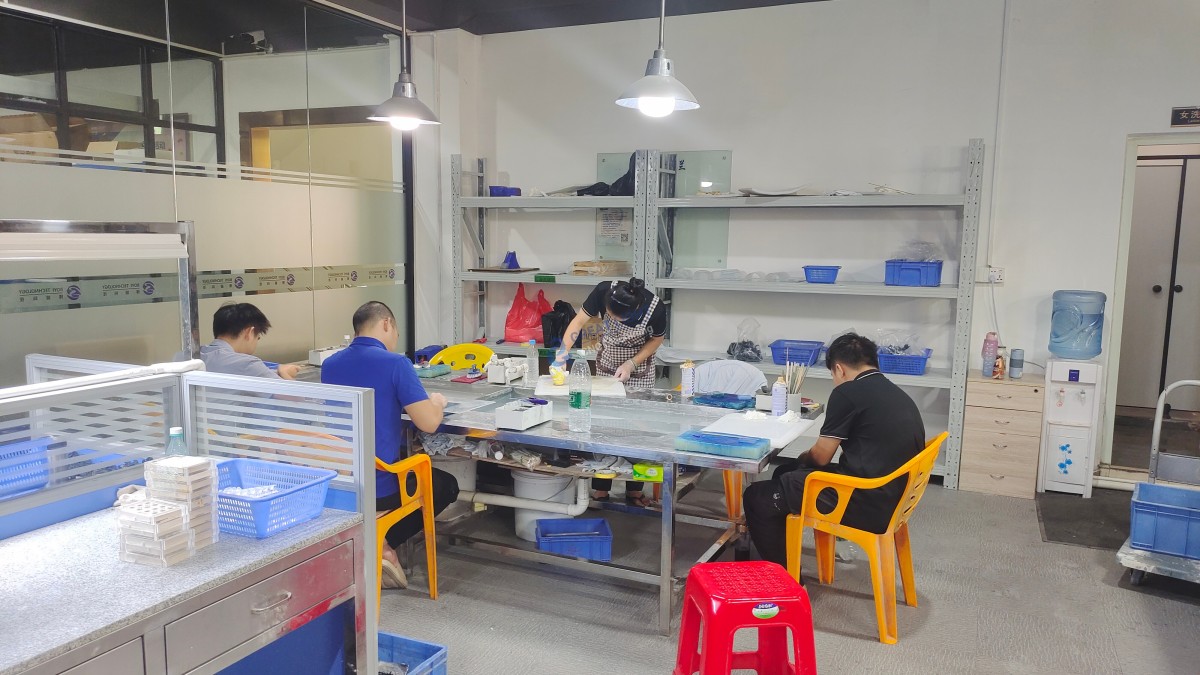
International quality management standards provide a transparent, audited framework that protects your project. ISO 9001:2015 is the baseline; for automotive components, IATF 16949 adds stringent requirements for defect prevention and supply‑chain risk management. For medical devices, ISO 13485 ensures rigorous documentation and traceability down to the material lot. GreatLight Metal holds all three, plus ISO 27001 for information security—a critical asset when confidential designs are exchanged. In contrast, a smaller uncertified shop may lack the systematic control to replicate a 3D milling process across multiple batches, leading to the precision‑black‑hole phenomenon where first‑article approval is golden but subsequent deliveries drift.
Full‑process capability versus fragmented outsourcing
A single‑source provider that performs CNC machining, die casting, sheet metal fabrication, mould making, and 3D printing under one roof eliminates hand‑off delays, quality misalignment, and the “not‑my‑problem” attitude that can plague multi‑vendor projects. For example, greatlight metal (GreatLight Metal Tech Co., LTD.), with its 76,000 sq. ft. facility in Dongguan—China’s hardware and mould capital—operates 127 precision peripheral devices, including 5‑axis, 4‑axis, and 3‑axis CNC centres, Swiss‑type lathes, EDM, and additive machines. Such vertical integration means that if a part geometry requires a 5‑axis machined face to align with a die‑cast datum, the fixtures and reference surfaces are designed concurrently by one engineering team. That is virtually impossible when the die‑caster and the CNC shop are 500 km apart.
How different supplier models stack up
To be objective, there are several capable manufacturing service providers globally. Each occupies a different niche, and the right choice depends on project specifics.
| Supplier Model | Typical Strengths | Considerations for 3D Milling Precision Projects |
|---|---|---|
| GreatLight Metal | Direct manufacturer with full‑process chain (5‑axis CNC, die casting, 3D printing, mould making); deep in‑house engineering support; ISO 9001, IATF 16949, ISO 13485, ISO 27001 certifications; tolerances to ±0.001 mm, max part size 4000 mm. | Best for complex integrated manufacturing where process control from raw pre‑form to finished part reduces risk and cost. |
| Protolabs Network (formerly Hubs) | Fast quoting, global distributed network, good for simple prototypes and low‑volume on‑demand parts. | Relies on vetted partner shops; deep concurrent process integration (e.g. casting + machining) is harder to orchestrate through a network. |
| Xometry | Broad manufacturing marketplace; straightforward online ordering; competitive for basic milling and turning. | Quality can vary between partner shops; may not offer the same level of engineering consultation for extreme precision 5‑axis work. |
| Fictiv | Digital manufacturing platform with emphasis on transparency; good for rapid prototyping and bridging production. | Similar network approach—suitable for many projects but less harmonised for multi‑step hybrid manufacturing. |
| RapidDirect | China‑based platform with competitive pricing, in‑house and partner facilities. | Good for many machined parts, though high‑level certifications and end‑to‑end process integration may be less comprehensive than a dedicated factory like GreatLight. |
Notice how GreatLight Metal’s factory‑direct model, with certified in‑house die‑casting and machining, provides a distinct structural advantage when precision must be paired with cost efficiency in a hybrid manufacturing route. The other platforms excel in their own niches—quick‑turn CNC turning, low‑complexity milling, or aggregated capacity—but for complex 3D‑milled components with tight GD&T callouts and post‑processing requirements, the architectural benefit of an integrated facility is hard to overstate.
Data security and engineering collaboration
In an era of IP‑sensitive projects, the security of 3D models and process parameters is non‑negotiable. GreatLight’s ISO 27001‑aligned practices ensure that design files are encrypted, access is role‑based, and network segmentation prevents data leakage. Combined with in‑house CMM capability (Zeiss, Hexagon machines) and a 3‑day rapid prototype turnaround capability, this translates into a confident engineering dialogue: suggestions for design‑for‑manufacturing tweaks arrive without the fear of intellectual property exposure.
The real cost of supplier switching
If a supplier consistently misses the ±0.01 mm parallelism callout on a batch of 200 parts, the cost of re‑measuring, administering concessions, or re‑ordering can dwarf the initial machining price. A manufacturer with a proven process‑capability index (Cpk > 1.33) eliminates that hidden cost layer. The secret is to evaluate not just the unit quote, but the total cost of quality across the project lifecycle.
Bringing the Secrets Together in a Coherent Workflow
Implementing these five secrets is not about perfection in isolation—it is about orchestrating them into a coherent system. A typical high‑value project flow in an advanced facility looks like this:
Design review and material strategy – Engineers analyse the part geometry to recommend a near‑net‑shape route (casting, additive pre‑form) that reduces machining stock, and select a material‑specific tooling suite.
CAM programming and simulation – Hybrid toolpaths are generated with dynamic engagement control, collision‑checked for the full 5‑axis envelope, and simulated to verify tool load, stock remaining, and surface finish.
Rigidity‑led setup engineering – A dedicated fixture or zero‑point system is designed to hold the part with minimal vibration and full access to critical surfaces. Toolholders are selected for sub‑0.005 mm runout.
Closed‑loop machining and inspection – In‑process probing and real‑time spindle‑growth compensation keep dimensions within limits. Post‑machining CMM inspection validates the first article and sets up statistical process control for the batch.
Integrated finishing and delivery – Anodising, passivation, laser marking, or other surface treatments are applied without leaving the factory, ensuring traceability and eliminating logistics‑induced damage.
This not only boosts precision but also slashes machining costs by cutting cycle times, reducing scrap, and collapsing lead time into a single, managed chain.
In deploying these 5 Essential 3D Milling Secrets to Boost Precision and Slash Machining Costs, you pivot from a reactive, trouble‑shooting mindset to a proactive engineering framework. The result is a predictable manufacturing process where design‑intended fit, form, and finish emerge repeatably from the machine, and your budget remains intact. For further insight into how a certified full‑process manufacturer can bring these secrets to life on your next project, explore the capabilities and certifications of GreatLight CNC Machining.



















