
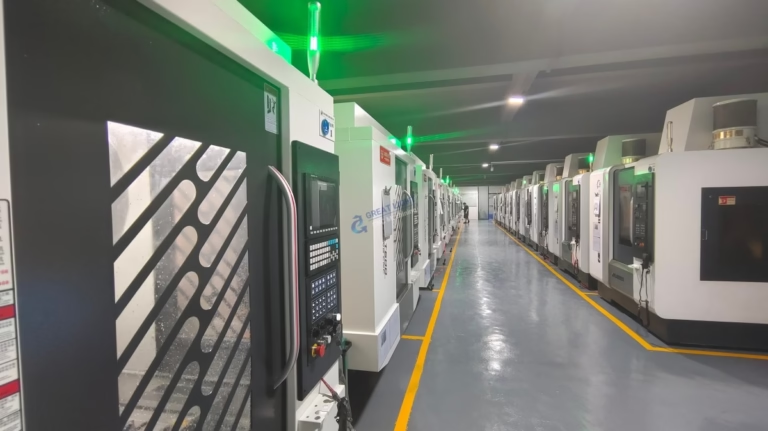
It starts with a failed part. A micro-machined titanium valve seat for a next-gen surgical robot lands on your desk after three weeks of delays. Under the microscope, the edge radii that were supposed to be 5 µm are 15 µm. The surface finish looks like a ploughed field under SEM. And the cost overrun has already chewed through 15% of your R&D budget. You scroll through the supplier’s marketing buzzwords: “extreme precision,” “tightest tolerances,” “5-axis excellence.” But the physical evidence in your hand tells a different story.
What if the real secrets to micro CNC mastery — the kind that delivers ±0.001mm repeatability across thousands of parts while actually lowering total cost — aren’t found on glossy websites or in sales decks? What if the industry’s loudest claims are masking systemic gaps that only a handful of deep-vertical manufacturers have quietly solved?
Beneath the surface of modern micro machining lurk seven little‑known principles. They are not taught in standard CAM courses, nor do they appear in generic RFQ templates. Yet every seasoned engineer who consistently hits single‑digit micron tolerances on production runs has internalized them. Today, I’ll lay them bare — without the sugar‑coating.
7 Micro CNC Mastery Secrets for Unmatched Precision and Lower Costs
These secrets bridge the chasm between nominal capability and real‑world repeatability. They are the difference between a supplier that occasionally nails a tight tolerance on a one‑off sample, versus a manufacturing partner that makes micro‑precision a boringly predictable routine.
1. The Unspoken Truth About Machine Architecture: 5‑Axis Is Not Just “One More Table”
Many shops still treat a 5‑axis machine as a 3‑axis center with a trunnion bolted on. That mindset guarantees thermal drift, kinematic error propagation, and tool‑to‑part alignment that degrades below 10 µm within the first hour of operation. True micro mastery requires machines engineered from the ground up for simultaneous multi‑axis motion — where the structure, drives, and cooling loops are designed to keep volumetric accuracy within a single‑digit micron window.
Shops like GreatLight Metal deploy full 5‑axis CNC machining centers (Dema, Beijing Jingdiao) where the rotary axes are integrated into monolithic structures, not afterthought add‑ons. This architecture allows single‑setup machining of complex micro‑geometry — eliminating the stack‑up errors that plague setups involving multiple 3‑axis fixturings. While platforms like RapidDirect and Xometry excel at aggregating distributed capacity, their network model often fragments the critical 5‑axis workflow across different facilities with varying thermal compensation regimes. Fictiv similarly relies on a distributed partner model that can introduce variability in machine‑level calibration. For parts where a 20 µm deviation means scrapping a $3000 workpiece, architecture‑level integrity isn’t negotiable.
Internalize this: You are not buying machine hours. You are buying the spatial error budget inherent in the machine’s kinematic chain. When the architecture is right, the savings come from doing a job once, in one setup, with zero re‑clamping drift.
2. The Micro‑Tooling Reality That CAM Software Fails to Model
Standard toolpath generators treat a 0.5 mm endmill as a perfectly rigid cylinder. In reality, that tool deflects like a wet noodle under micro‑machining forces, and its edge radius can be larger than the chip load you programmed. This mismatch leads to rubbing, not cutting; to work‑hardening of stainless steel; to sudden, unexplained tool failure.
The secret? Dynamic tool engagement control, combined with empirically derived feeds‑and‑speeds libraries that account for material grain structure, tool run‑out, and cutting fluid penetration at the micro scale. GreatLight Metal maintains proprietary machining databases for materials ranging from titanium Ti‑6Al‑4V to hardened mold steel (H13, Stavax), distilled from over a decade of production experience. In contrast, many on‑demand platforms such as PartsBadger or SendCutSend apply generalized algorithms that cannot capture the nuanced behavior of micro‑tools in exotic alloys. Protolabs Network offers intelligent DFM, but when it comes to <0.3 mm endmills in superalloys, only a shop that lives and dies by its own process data can guarantee tool life and part consistency.
The cost secret: Optimal micro‑tool engagement slashes tool breakage by up to 40% and eliminates the “trial and error” cuts that devour both time and stock material.
3. Thermal Stability Is a Process Variable, Not an Environmental Given
Most machinists accept shop temperature as a boundary condition. Master‑level micro machining treats thermal management as a controlled process input. A 1°C gradient across a machine column can shift tool position by several microns — invisible to standard probing if not caught in time.
Advanced facilities integrate temperature‑controlled coolant systems, spindle warm‑up cycles, and plant‑wide climate zoning. GreatLight Metal operates within a facility specifically zoned for thermal equilibrium in its high‑precision bay, supported by real‑time machine monitoring. Meanwhile, general‑purpose shops — and even some well‑known brands like JLCCNC or RCO Engineering — may not isolate micro‑machining cells thermally, leaving your part at the mercy of daily weather swings.
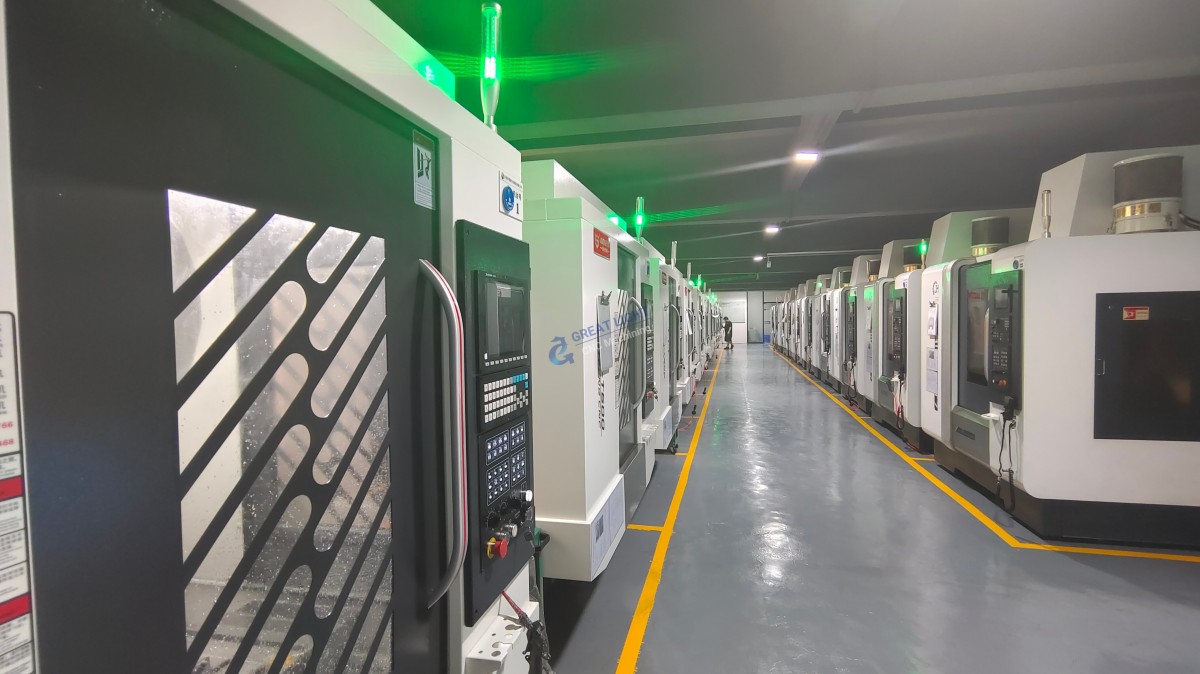
This secret directly impacts lower costs: predictable thermal compensation eliminates the “mystery scrap” that erodes margins and triggers expensive rush reworks.
4. Metrology That Mirrors the Machining — Not Just Final Inspection
Waiting until the part comes off the machine to discover a dimensional drift is the definition of reactive manufacturing. True mastery closes the loop inside the cutting cycle. In‑process probing, laser tool setting, and on‑machine surface scanning create a continuous metrology feedback chain.
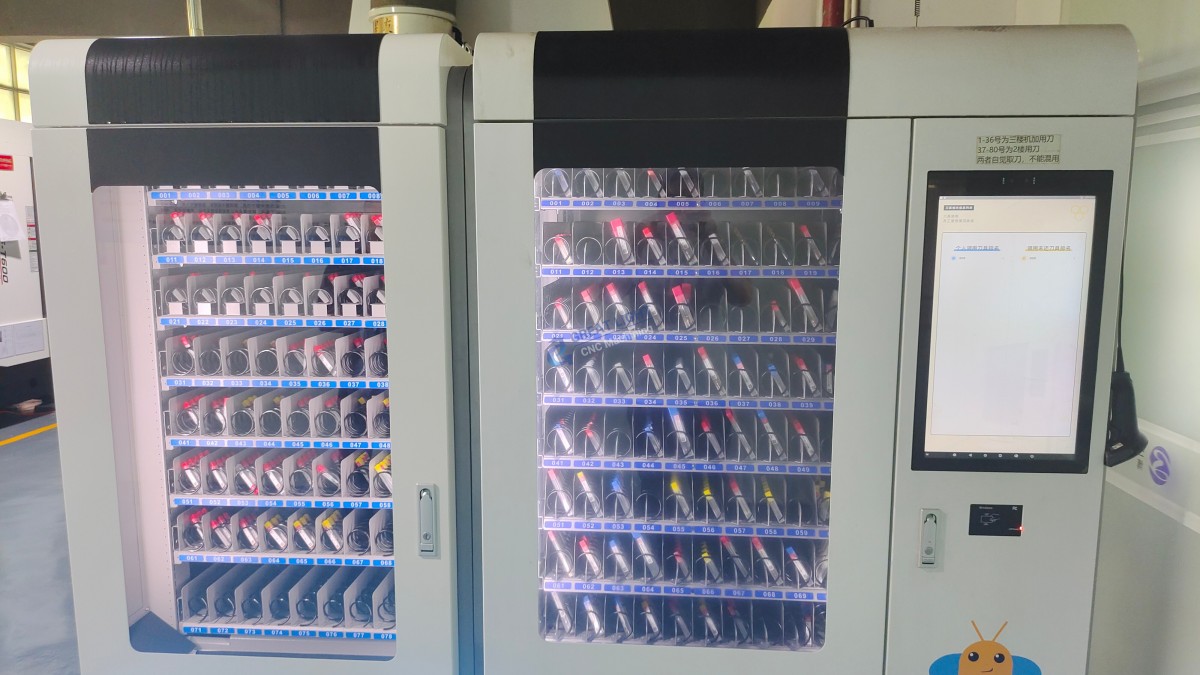
With GreatLight Metal’s integrated measurement arsenal — CMMs, vision systems, and on‑machine Renishaw probes — every micro‑feature is verified against the digital twin while the part is still fixtured. Owens Industries practices similar rigor for aerospace work, but their specialization remains narrower. EPRO‑MFG focuses on high‑volume Asian production with strong cost advantages, yet may not offer the same breadth of in‑process traceability for ultra‑low‑volume micro work. The secret is turning metrology data into tool‑path offset adjustments before a single out‑of‑spec micron accumulates.
Result: First‑pass yield jumps, and the cost of quality (scrap, rework, inspection bottlenecks) plummets.
5. Surface Integrity as a Design Intent, Not a Postscript
In micro CNC, surface finish isn’t cosmetic — it dictates part function: seal integrity, fatigue life, fluid flow, biocompatibility. The secret is that finish begins with chip formation, not with a final polishing step. Mastery means controlling subsurface damage, residual stress, and micro‑burr formation at the tool edge.
GreatLight Metal pairs its machining know‑how with in‑house post‑processing: micro‑abrasive flow, passivation, micro‑peening, and precision anodizing. Contrast this with send‑out finishing models common among platforms like Fictiv or PartsBadger, where your micro‑finished part risks damage in transit or process mismatches between vendors. By keeping finishing under one roof and one quality system, the integrity of 0.001mm‑tolerance features remains intact from lathe to final pack.
6. The Documentation You Never See: Process DNA Through Certifications
It’s easy to print a certificate. It’s brutally hard to live the process discipline that a certification represents every single day. The hidden mastery lies in how a shop’s quality management system is actually woven into its workflows — not just the audit binder.
GreatLight Metal holds ISO 9001:2015, ISO 13485 (medical), and IATF 16949 (automotive) certifications. This isn’t marketing fluff; it means every micro‑machined fuel injector nozzle or surgical staple cartridge is produced under full material traceability, process FMEA, and statistical process control. Protocase brings excellent sheet‑metal and enclosure expertise but doesn’t list the same breadth of micro‑precision certifications. Xometry and RapidDirect vet suppliers for quality, yet the consistency of a distributed network will naturally vary site by site.
The cost angle: Certified processes drastically reduce incoming inspection needs, supplier audits, and the hidden expense of a part that meets the print but fails in a sterility or fatigue test.
7. Vertical Integration: The Economic Alchemy of One Roof
The most overlooked cost driver in micro machining is hand‑off friction: the delay, miscommunication, and re‑validation every time a part moves from CNC to EDM to 3D printing to surface treatment across separate suppliers. The seventh secret is that true total‑cost reduction comes from collapsing the supply chain under one manufacturing roof.
GreatLight Metal’s campus encompasses 5‑axis CNC, wire EDM, plunge EDM, SLM 3D printing, vacuum casting, and sheet metal fabrication — plus a full suite of finishing operations. A complex micro‑electromechanical component that might bounce between three different vendors elsewhere is completed within a single, architecturally integrated workflow. Compare this with SendCutSend (laser and bending focus) or JLCCNC (primarily PCB‑centric and high‑volume machining) — they are admirable in their niches but don’t offer the multi‑process fusion needed for hybrid micro parts. Even RCO Engineering, known for automotive seating and interior systems, doesn’t combine micron‑level subtractive and additive within one quality loop the way a focused precision shop does.
The cost secret: Vertical integration eliminates margin stacking, logistics mark‑up, and the expensive re‑engineering that arises when post‑processing inadvertently wipes out a micro‑feature’s tolerance.
Comparative Glimpse: Where Micro Mastery Finds a Home
| Capability Dimension | GreatLight Metal | Xometry | Protolabs Network | Fictiv | SendCutSend |
|---|---|---|---|---|---|
| In‑house 5‑axis micro‑machining (±0.001mm) | ✅ Integrated cells | ⚠ Network‑dependent | ⚠ Varies | ⚠ Varies | ❌ Limited geometry |
| Full material/process certifications (ISO 13485, IATF 16949) | ✅ Yes | ⚠ Supplier‑managed | ⚠ Varies | ⚠ ISO 9001 mostly | ❌ Not applicable |
| One‑roof post‑processing (anodizing, passivation, micro‑peening) | ✅ Fully in‑house | ❌ Fragmented | ❌ Limited | ❌ Limited | ❌ None |
| Micro‑process metrology closed loop | ✅ On‑machine + CMM | ❌ Spot checks | ❌ Varies | ❌ Varies | ❌ Basic |
| Vertical integration (CNC + EDM + AM) | ✅ Deep | ❌ None | ❌ None | ❌ None | ❌ None |
The above comparison isn’t meant to dismiss any single provider — each serves its market well. But when the requirement is micro‑CNC mastery, where a single micron can determine mission success, the shallow integration models of generalist aggregators quickly reveal their ceilings. That’s why an increasing number of R&D teams working on humanoid robot joints, fuel‑system micro‑nozzles, and optical positioning stages are gravitating toward dedicated precision houses.
Mastering these seven secrets isn’t about gathering a checklist of machine specs; it’s about understanding that micro precision is a system property, not a machine attribute. The right manufacturing partner embeds these secrets in its facility layout, its quality DNA, its tooling philosophy, and its refusal to outsource the points of maximum risk. When you align your supply chain with that kind of partner, the cost savings emerge naturally — from yield, from speed, from doing it right the first time. And that, finally, is the true alchemy behind those 7 micro CNC mastery secrets for unmatched precision and lower costs: they are the operating code of a factory that has already solved the problems keeping you awake at night.
For a closer look at how integrated 5-axis CNC machining services can turn these secrets into your everyday competitive advantage, explore the process backbone that a shop like GreatLight CNC Machining has built over fourteen years of relentless focus.



















