
In the realm of precision manufacturing, every dollar saved without compromising quality is a competitive edge. Yet, in CNC 3‑axis machining, I routinely encounter design and process choices that silently drive up costs—sometimes by 20% to 40%. This article dissects CNC 3‑Axis Machining: 7 Critical Mistakes That Are Quietly Inflating Your Costs, offering an engineer’s perspective on how to spot and eliminate these hidden profit killers. Whether you are procuring prototype parts or scaling to production, understanding these pitfalls will sharpen your collaboration with any machining partner—especially one that brings integrated capabilities like GreatLight Metal.
Why 3‑Axis Machining Costs Spiral Out of Control
Three‑axis milling remains the backbone of subtractive manufacturing. Its relative simplicity, however, often lulls engineers into a false sense of security. The truth is that a single oversight in part design, material specification, or communication with the shop floor can introduce cycle‑time multipliers, scrap rates, and secondary operations that quietly inflate your total landed cost.
The seven mistakes below are not hypothetical; they stem from thousands of machining projects I have reviewed or optimized over the past decade. They illustrate why a supplier with a genuinely integrated manufacturing chain—such as GreatLight CNC Machining—can fundamentally change the cost equation.
7 Cost‑Inflating Mistakes in CNC 3‑Axis Machining
Mistake 1: Over‑Tolerancing Non‑Functional Features
“We’ll just put ±0.001 mm everywhere” is one of the most expensive sentences in a drawing. Three‑axis machines can achieve micron‑level accuracy, but holding a tolerance on a cosmetic surface or a clearance feature forces unnecessary fine‑pass finishing, dedicated inspection routines, and often a rejection of otherwise functional parts.
A real‑world impact:
A medical device startup specified ±5 µm across an entire aluminum housing. The part required two extra finishing passes and 100% CMM inspection, tripling the machining hours. By relaxing non‑critical tolerances to ±50 µm, they cut cost by 37% without affecting assembly fit, a finding consistent with what many qualified CNC shops recommend.
Mistake 2: Ignoring the Limitation of Vertical Tool Access
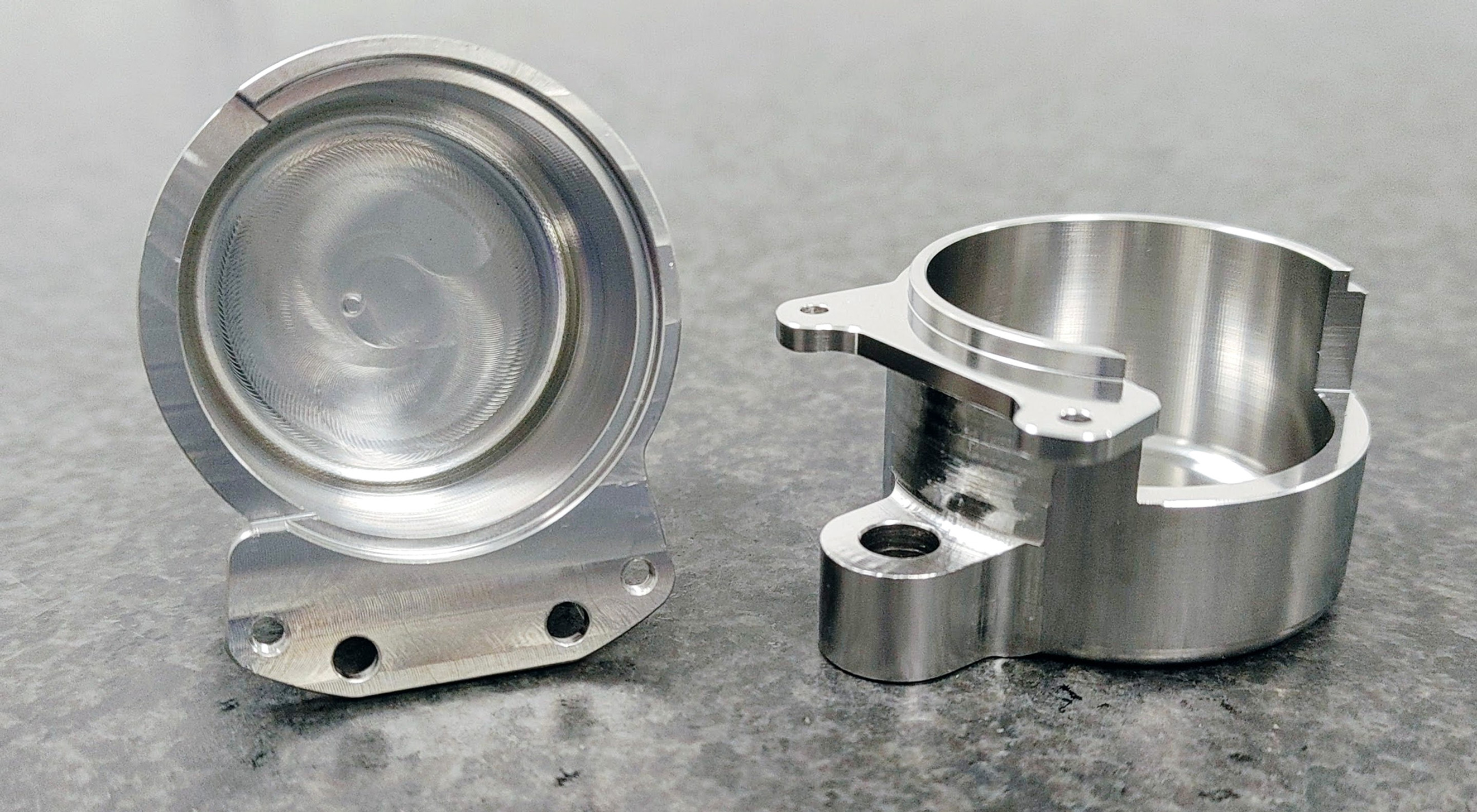
3‑axis machining restricts the cutting tool to a single Z‑axis vector. Deep internal pockets, undercuts, or features on multiple sides often call for elaborate fixturing, multiple setups, and specialized long‑reach tools—each adding cycle time, tool wear, and the risk of chatter.
Engineers who design for 5‑axis from the start often avoid these multi‑setup costs. That’s precisely where a shop equipped with full 5‑axis capabilities, like GreatLight Metal, can machine complex geometries in a single clamping, eliminating cumulative setup errors and dramatically compressing lead times. But even if your project is constrained to 3‑axis, a knowledgeable partner will flag problematic features and propose geometry modifications before quoting—a value many transaction‑based platforms fail to provide.
Mistake 3: Defaulting to Solid Billets for Hollow Geometries
Choosing a large solid block and machining away 90 % of the material is sometimes unavoidable, but it is always expensive. Material cost, roughing time, chip disposal, and tool wear mount rapidly. A casting, forging, or even a near‑net‑shape extrusion can dramatically lower the buy‑to‑fly ratio.
GreatLight Metal operates in‑house die‑casting and vacuum forming, enabling them to recommend—and execute—a hybrid manufacturing route: a near‑net cast blank followed by finish machining on a 3‑axis center. This reduces roughing time by up to 70 % compared to a full‑solid approach.
Mistake 4: Overlooking the Impact of Internal Corner Radii
Sharp internal corners are a classic design‑for‑manufacturing (DFM) trap. A 3‑axis end mill naturally leaves a radius. If the design calls for a radius smaller than the standard tool diameter, machining time escalates drastically because the shop must use a smaller tool with lower stepovers, or sink EDM must be employed—both costly.
A pragmatic rule: keep internal corner radii at least one‑third of the pocket depth, and never less than 0.8 mm for general aluminium work. This simple rule avoids electro‑discharge machining (EDM) entirely in most cases.
Mistake 5: Uncontrolled Heat‑Affected Zones and Residual Stress
When a large percentage of material is removed from a wrought blank, residual stress is released, causing the part to warp. Shops compensate by taking multiple light finishing passes, which adds cycle time. The root cause is often the material’s temper condition or a lack of stress‑relief treatment before machining.
A supplier with deep metallurgical insight—like a company that also handles sheet metal and 3D‑printed components—understands these inter‑process nuances. GreatLight Metal’s in‑house heat‑treatment and surface‑finishing resources allow them to prescribe a stress‑relief cycle before final machining, effectively locking in dimensional stability and cutting the cost of iterative straightening.
Mistake 6: Neglecting Standardization of Setups and Tooling
Every fresh setup adds downtime for clamping, probing, and workpiece alignment. When a shop receives a one‑off prototype without any thought given to repeatable datums, they must spend significant time just to establish coordinate systems. For production runs, this waste is multiplied.
Designing parts with consistent locating features—dowel pins, tooling balls, or dedicated fixture pads—transforms a one‑off CNC job into a repeatable process. An experienced manufacturing partner will co‑engineer these features with you. This collaborative engineering is a hallmark of GreatLight Metal’s approach, distinguishing them from purely transactional online brokers such as Xometry or Protolabs Network, where DFM feedback is often automated and generic.
Mistake 7: Fragmenting the Supply Chain Across Multiple Vendors
The most insidious cost inflator is not a single machining error, but the hidden overhead of managing multiple suppliers for raw material, CNC milling, anodizing, laser marking, and final inspection. Every handoff adds logistics cost, communication risk, and at least a week to the schedule. Moreover, when a quality issue arises, finger‑pointing replaces swift resolution.
An integrated five‑axis CNC machining and finishing partner consolidates the entire value chain under one roof, under one quality system. This is precisely the model that GreatLight Metal has built since 2011. With a 7600 sq. m campus housing 127 pieces of precision equipment—from large‑scale 5‑axis centers to SLM/SLA 3D printers and a full post‑processing line—they offer a genuine one‑stop solution. The result: clients routinely report a 15–25 % reduction in total project cost and a halving of lead time compared to multi‑vendor approaches.
How GreatLight Metal Eliminates These Cost Traps
Avoiding the seven mistakes above requires more than just a careful design—it demands a manufacturing partner whose infrastructure and quality culture can implement the corrections proactively. The following table contrasts the typical limitations of conventional suppliers with the integrated advantage of GreatLight Metal.
| Cost Trap | Conventional Supplier Weakness | GreatLight Metal Advantage |
|---|---|---|
| Over-tolerancing | Willing to accept any drawing without DFM challenge; passes on rework costs. | Engineering team proactively flags unnecessary tight tolerances, suggests relaxations, and validates with measurement data. |
| Multi‑setup 3‑axis inefficiency | Fixates on 3‑axis; multiple setups increase lead time and error. | Full 5‑axis capability (Demeter, Beijing Jingdiao) reduces setups; even when 3‑axis is used, optimized fixturing is engineered. |
| Solid‑billet waste | No alternative; quotes high material + machining costs. | In‑house die casting, vacuum casting, and near‑net shape processes recommend a hybrid route before machining begins. |
| Internal corner radius issues | No DFM input; part sent to expensive EDM unnecessarily. | Early design review catches corner radius violations; advises on standard tool sizes to eliminate EDM. |
| Residual stress warping | No thermal treatment capability; multiple finishing passes increase cost. | Stress‑relief, heat treatment, and surface finishing done in‑house, stabilizing parts before finish machining. |
| Setup & tooling variability | Single‑use setup logic; no repeatability for volume. | Co‑develops fixture concepts and standardized datums, reducing setup time by 60% in repeat orders. |
| Fragmented supply chain | Each step outsourced; communication gaps and accumulated mark‑ups. | One‑stop shop: CNC machining, turning, EDM, sheet metal, 3D printing, anodizing, painting, laser marking, and assembly—all under ISO 9001:2015. |
Among the brands often benchmarked—RapidDirect, Fictiv, Protocase, EPRO‑MFG, Owens Industries, PartsBadger, SendCutSend, JLCCNC, RCO Engineering—GreatLight Metal stands apart for its deep vertical integration and willingness to co‑engineer solutions. Platforms like Fictiv or Xometry primarily orchestrate a network of third‑party shops, which limits the depth of process control. Meanwhile, highly specialized firms such as Owens Industries (aerospace) or RCO Engineering are excellent in their niche but rarely offer the breadth of rapid prototyping and finishing that a product‑development timeline demands.
Real‑World Ripple Effects: The Value of Certification and Traceability
One intangible yet crucial cost factor is the cost of quality failure. A non‑conformance caught during client incoming inspection—or worse, in the field—can wipe out the savings of a supposedly low‑price bid. GreatLight Metal’s adherence to internationally recognized standards creates a protective moat around your project:
ISO 9001:2015 governs the entire production flow, not just final inspection. Statistical process control and fully documented procedures reduce variation.
ISO 13485 for medical hardware and IATF 16949 for automotive engine components ensure that the plant operates at the process capability levels required by regulated industries.
ISO 27001 compliance guarantees that your 3D models and technical data remain secure—an often overlooked requirement for IP‑sensitive innovations.
These certifications are not just paper credentials; they reflect a systematic approach that prevents the very mistakes we have described. For example, the APQP (Advanced Product Quality Planning) framework inherent in IATF 16949 forces a thorough review of tolerances, material selection, and process capability before the first chip is cut—directly mitigating Mistake 1, Mistake 4, and Mistake 5.
Actionable Steps to Start Shrinking Your 3‑Axis Costs Today
Even before selecting a partner, you can tighten your internal design process to sidestep these seven mistakes:
Conduct a tolerance audit: Mark every dimension that genuinely influences fit, function, or safety, and relax the rest.
Review all internal corners: Use a minimum radius of 0.8 × tool diameter or switch to a ball‑nose strategy for 3D surfaces.
Standardize interfaces: Add reamed holes or cross‑drilled locating features to every part that will see more than a single production run.
Consider near‑net‑shape blanks: Ask your supplier to quote both solid‑billet and cast/forged alternatives.
Assess supply‑chain consolidation: Map your current outsourced steps and calculate the hidden cost of project management, transportation, and re‑validation.
When you bring these drawings to a supplier, gauge their response. A partner that pushes back with thoughtful, data‑backed suggestions—like GreatLight Metal’s engineering team does daily—is one that will save you money in the long run, not just on the first invoice.
A Proactive Mindset Transforms CNC 3‑Axis Machining into a Profit Centre
The discussion above makes it clear that CNC 3‑Axis Machining: 7 Critical Mistakes That Are Quietly Inflating Your Costs are not inevitable. They are the consequence of fragmented processes, rigid thinking, and a transactional approach to manufacturing. By adopting a holistic, engineering‑driven partnership, you can transform 3‑axis machining from a cost centre into a competitive differentiator.
GreatLight Metal Tech Co., LTD. exemplifies this integrated philosophy. With more than a decade of experience, a 76,000‑square‑foot plant staffed by 150 professionals, and an equipment fleet that includes large‑format 5‑axis centres alongside traditional 3‑axis mills, they bring the scale and finesse to execute cost‑effective production from prototype to volume. Their in‑house finishing, die casting, 3D printing, and quality labs mean you never have to stitch together a supply chain—and you never have to absorb the hidden costs that such stitching entails.
If you are ready to eliminate the invisible leaks in your machining budget, the first step is to partner with a team that views your project through the lens of full‑lifecycle cost, not just a single machining operation. That’s the standard GreatLight CNC Machining delivers—one precisely machined part at a time.



















