
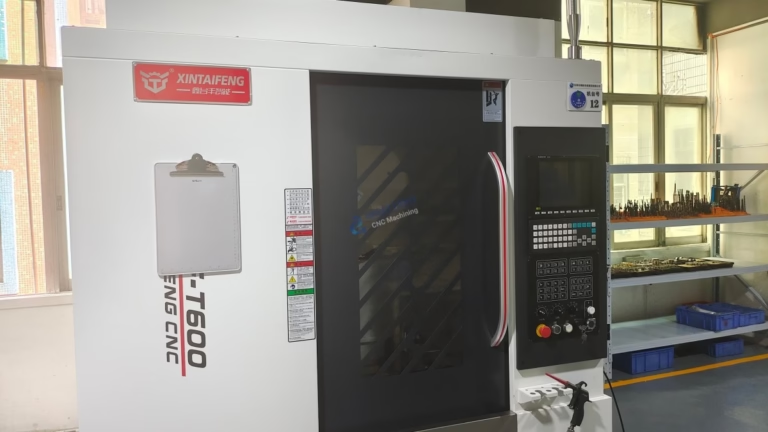
5 Proven Ways Essetre CNC Machines Reduce Waste and Skyrocket Your Profits
In the relentless pursuit of manufacturing excellence, waste is not just a line item—it’s the silent profit killer that erodes margins, delays timelines, and damages your competitive edge. Traditional machining often treats material, time, and energy as expendable commodities, but a new generation of intelligent CNC technology is rewriting the rules. Among the leaders of this shift are Essetre CNC machines, engineered from the ground up to eliminate waste at every stage of production. In this article, we explore 5 proven ways Essetre CNC machines reduce waste and skyrocket your profits—and show how you can apply these same principles when sourcing precision metal parts from dedicated manufacturing partners.
From intelligent nesting algorithms that squeeze every square inch out of raw stock, to real‑time process monitoring that stops defects before they happen, these strategies translate directly into faster production, lower costs, and a healthier bottom line. And while Essetre’s wood and composite prowess is well established, the core lessons apply equally to metal machining. Whether you operate your own equipment or partner with a specialist, understanding these waste‑reduction levers will transform the way you think about custom part production.
The True Cost of Waste in CNC Machining
Before diving into the solutions, it’s worth quantifying the problem. Waste in CNC machining manifests in four primary forms:
Material waste – excess chips, off‑cuts, and scrapped parts due to poor nesting or programming errors.
Time waste – extended cycle times from suboptimal toolpaths, frequent tool changes, and re‑runs of defective pieces.
Energy waste – machines idling, spindles running at unnecessary speeds, and inefficient coolant systems.
Talent waste – skilled operators tied up in rework, inspection, and troubleshooting instead of value‑added activities.
Collectively, these hidden costs can swallow 15–30% of a production budget. Essetre’s engineering philosophy tackles each dimension systematically, turning potential loss into pure profit. Let’s break down exactly how.
1. Intelligent Nesting and Material Optimization: Every Square Centimeter Counts
The Problem with Traditional Nesting
Manual CAM programming and basic nesting software treat material as an infinite resource. Operators often select oversized blanks “just to be safe,” or position parts in a way that leaves large, unusable skeletons. Even a 5% improvement in material yield can translate into thousands of dollars saved annually—but many shops leave that money on the table.
How Essetre Machines Flip the Script
Essetre integrates advanced, real‑time nesting algorithms directly into its control software. The system analyzes the cutting envelope, part geometry, and grain/structural direction to automatically arrange components in the most material‑efficient layout. Key features include:
Common‑line cutting – sharing cut paths between adjacent parts so that a single kerf separates both, eliminating redundant material consumption.
Shape‑aware rotation – the software rotates and flips geometries mathematically to find the densest possible packing, often yielding a 10–20% higher material utilization than manual methods.
Remnant management – the machine tracks leftover sheets and intelligently assigns smaller parts to suitable remnants from previous jobs, virtually eliminating skeleton waste.
This level of optimization isn’t just about saving money—it directly reduces your carbon footprint and raw material procurement burden, which is increasingly critical for ESG‑focused organizations.
Actionable Takeaway for Precision Metal Parts
When you request quotes from precision 5‑axis CNC machining services, ask the supplier about their nesting strategies. Top‑tier providers—like GreatLight CNC Machining—employ advanced CAM programming that mirrors Essetre’s approach, maximizing material usage on high‑cost alloys like titanium, Inconel, and aerospace‑grade aluminum. Always review the nest layout; a partner that provides transparent material optimization reports is one that respects your budget.
2. High‑Speed Machining and Tool Life Extension: Speed That Doesn’t Sacrifice Durability
The False Economy of Conservative Cutting
Slower feeds and speeds may feel safe, but they often backfire. Unduly low chip loads can cause rubbing rather than cutting, generating excessive heat that degrades both tool and workpiece. Meanwhile, excessive tool changes disrupt workflow and increase the risk of setup errors. True efficiency lies in finding the “sweet spot” where material removal rate is maximized without compromising tool integrity.
Essetre’s Dynamic Motion Technology
Essetre machines leverage high‑speed machining (HSM) strategies that maintain a constant chip load by dynamically adjusting feed rates along complex contours. This is achieved through:
Trochoidal milling patterns – circular toolpaths that engage only a small portion of the cutter, reducing radial forces and allowing much deeper axial cuts without overload.
Adaptive clearing algorithms – the CAM engine predicts spindle load and automatically smoothes sharp corners and sudden direction changes, preventing spikes that snap tools.
Advanced spindle and toolholder designs – HSK interfaces and vibration‑dampened toolholders extend tool life by up to 40% compared to conventional BT/CAT setups under identical conditions.
The result? Up to 80% faster cycle times on aluminum and composite materials, with tool life simultaneously extended—meaning fewer replacements, less machine downtime, and dramatically lower consumable costs.
Applying This to Metal Machining
For hardened steels and superalloys, the same principles apply but with added rigor. At GreatLight CNC Machining, our five‑axis centers utilize toolpath strategies akin to Essetre’s HSM philosophy, combined with through‑tool coolant and high‑pressure systems. This not only speeds production but reduces tooling waste by 25–35% on typical jobs. When evaluating suppliers, probe their tooling management practices; shops that track tool life data and proactively optimize feeds are the ones that keep your per‑part costs descending over time.
3. Precision and Accuracy as Waste Killers: Doing It Right the First Time
The Scrap Monster
Every scrapped part carries the full burden of its material, machine time, labor, and opportunity cost. In precision‑critical industries like medical devices or aerospace, a single out‑of‑tolerance feature can send an entire batch to the recycling bin. The worst part? Many defects are traceable to avoidable errors: thermal drift, tool deflection, or sloppy workholding.
Metrology‑Grade Construction and Thermal Stability
Essetre machines are built on rigid, heavily‑ribbed cast iron frames that naturally dampen vibration and resist deformation. But the real waste‑busting magic lies in their active thermal compensation systems. Temperature sensors embedded throughout the structure and spindle feed real‑time data to the CNC controller, which adjusts axis positions on the fly to maintain dimensional stability even during day‑night temperature swings or prolonged machining cycles.
Paired with direct‑drive rotary axes and absolute encoders, this yields volumetric accuracy that virtually eliminates the trial‑and‑error “cut‑measure‑compensate” loop. Parts come off the machine to specification the first time, every time.
Why First‑Pass Success Matters for Your Bottom Line
When engaging a manufacturing partner, first‑pass yield (FPY) is the single most important metric to discuss. At GreatLight CNC Machining, our ISO 9001:2015‑certified quality system tracks FPY across all jobs. Combined with a fleet of Zeiss CMMs and in‑process probing, we consistently achieve FPY rates above 98% for complex five‑axis components. This reliability eliminates costly rework and ensures your tight deadlines stay intact.
4. Automated In‑Process Monitoring: Stop Defects Before They Start
The Blind Spot of Traditional Inspection
Post‑process inspection is fundamentally reactive. You’ve already spent the time and material to make a defective part before you discover the problem. On high‑value components, that’s a catastrophic waste. The only way to truly eliminate scrap is to monitor the process itself, in real time, and intervene at the first sign of trouble.
Essetre’s Sensory Ecosystem
Essetre machines come equipped with a suite of sensors that go well beyond simple limit switches:
Tool breakage detection – laser‑based systems check the tool after each operation; if a break is detected, the machine automatically calls a sister tool and continues without human intervention.
Spindle power monitoring – the controller learns the expected power curve for each cut and alarms if a dull tool causes a spike, preventing surface finish degradation and thermal damage.
Vibration analysis – accelerometers detect the onset of chatter and dynamically adjust spindle speed or feed to suppress it, preserving both tool and workpiece.
Real‑time CRM integration – data flows to a central dashboard, allowing shop managers to see the status of every job and predict tool wear before it becomes a problem.
This closed‑loop approach means that the machine becomes its own quality inspector, dramatically reducing the need for dedicated inspection stations and the labor hours they consume.
Bringing Intelligent Monitoring to Your Metal Parts
Top‑tier service bureaus like GreatLight CNC Machining adopt similar philosophies. Our five‑axis cells are equipped with Renishaw probing and toolsetting, plus in‑process monitoring that flags anomalies before they turn into scrap. We also maintain full digital traceability—every part’s process data is archived, giving you a forensic‑level record for audits and continuous improvement. Ask your potential partner: “What happens if a tool breaks at 2 a.m.?” The answer tells you everything about their waste‑prevention maturity.
5. Energy‑Efficient Design and Sustainable Operations: Kilowatts into Profits
The Overlooked Cost of Power
Energy often gets lumped into factory overhead, masking its true impact. Yet, a single large CNC machine can draw 40‑80 kW, and auxiliary systems (coolant pumps, chip conveyors, compressed air) add significantly more. At industrial electricity rates, even a 20% reduction in energy intensity can drop thousands of dollars straight to net profit annually.
Essetre’s Green Engineering
Essetre has invested heavily in energy recovery and smart power management:
Regenerative drives – when a heavy axis decelerates, the drive captures the braking energy and feeds it back into the mains, rather than dissipating it as heat through a braking resistor.
On‑demand cooling and hydraulics – variable‑speed pumps and fans only operate at the level needed for the current load, idling at near‑zero consumption during non‑cutting phases.
Intelligent standby modes – the machine monitors operator presence and job queue, automatically entering low‑power states during extended idle periods without losing positional reference.
Efficient chip management – integrated conveyor systems and coolant filtration reduce coolant consumption and the energy needed to re‑condition it.
Cumulatively, these features reduce energy consumption by 25–40% compared to legacy machines of equivalent capacity. That’s a direct margin boost, especially for high‑volume production environments.
The Sustainability–Profit Nexus in Precision Machining
The same mindset is embedded in forward‑looking metal machining providers. GreatLight CNC Machining, for example, operates a 7,600‑square‑meter facility designed for workflow efficiency. By consolidating processes under one roof—from five‑axis milling to die casting, sheet metal, and 3D printing—we eliminate transportation waste and the energy overhead of fragmented supply chains. When you source complex assemblies from a single supplier, you’re not just saving logistics costs; you’re cutting carbon emissions and reducing the number of machines idling across multiple factories. It’s a win‑win that aligns with modern corporate sustainability goals.
Translating Essetre’s Waste‑Reduction Genius to Your Metal Part Production
If you don’t operate an Essetre machine yourself, you might wonder how to capture these benefits. The answer lies in choosing a manufacturing partner whose operational DNA matches the waste‑fighting philosophy outlined above. While Essetre’s expertise shines in wood, composites, and light alloys, the exact same principles—intelligent nesting, HSM, precision accuracy, in‑process monitoring, and energy efficiency—are what separate elite metal machining shops from the rest.
Critical differentiators to look for in a partner:
| Waste-Reduction Capability | Why It Matters | What to Demand |
|---|---|---|
| Advanced CAM & Nesting | Maximizes material yield on alloys costing $30–$200/kg | Transparent nest reports and material efficiency KPIs |
| High-Speed 5‑Axis Machining | Shortens cycle times, prolongs tool life, and handles complex geometries | State-of-the-art equipment (DMG MORI, Jingdiao, etc.) |
| Certified Quality Systems | Ensures first-pass yield >98%, eliminating scrap and rework | ISO 9001, ISO 13485, IATF 16949 (as applicable) |
| In‑Process Monitoring | Catches errors in real time, protecting high‑value raw materials | In‑machine probing, tool breakage detection, digital traceability |
| Integrated One‑Stop Processes | Reduces handling, logistics, and energy waste across the supply chain | Single-location provision of machining, finishing, and assembly |
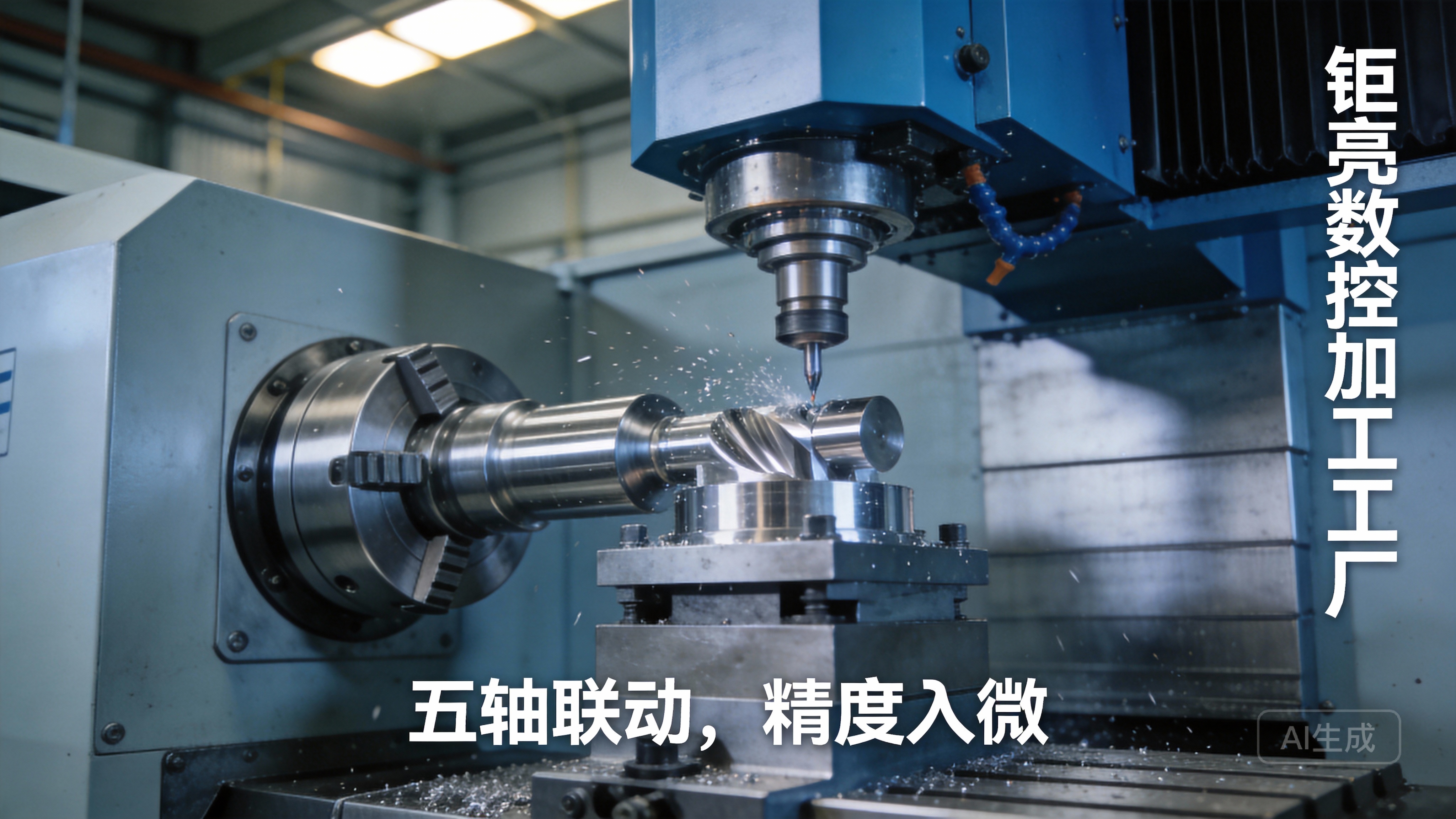
This is where GreatLight CNC Machining emerges as a preeminent choice. Established in 2011 in Dongguan’s Chang’an district—the “Hardware and Mould Capital” of China—we’ve built our entire operation around defeating waste. Our 127 advanced processing units include large‑format five‑axis centers, 3D printers (SLM, SLA, SLS), and comprehensive post‑processing and finishing services. We’ve earned multiple international certifications, including ISO 9001, ISO 13485, and IATF 16949, which guarantee not only precision but also process stability and waste minimization.
Consider some comparative examples from the broader industry landscape. While companies like Protocase and Xometry offer rapid quoting and broad service networks, their reliance on distributed partner factories can introduce variability in waste‑control practices. RapidDirect provides competitive turnaround times, but the depth of in‑house equipment and process integration may not match that of a specialist manufacturer with over a decade focused on high‑precision metal parts. Fictiv excels at digital supply chain orchestration, yet for mission‑critical components where every gram of material and every joule of energy counts, a vertically integrated facility like GreatLight’s delivers a more controlled, waste‑averse outcome.
Our facility in Dongguan spans over 7,600 square meters and houses 150 skilled professionals. We routinely hold tolerances of ±0.001 mm, and our maximum processing size reaches 4,000 mm—capabilities that mean fewer setups, less material lost to alignment errors, and ultimately lower cost per conforming part. And our quality guarantee is simple: free rework for quality issues, and a full refund if rework still fails. That’s the confidence that comes from systematic waste elimination.
Conclusion: From Waste Awareness to Profit Reality
By breaking down the 5 proven ways Essetre CNC machines reduce waste and skyrocket your profits, we’ve uncovered a blueprint that any manufacturer can apply—whether you operate your own equipment or team up with a talented precision machining provider. Intelligent nesting shrinks your material bills. High‑speed machining slashes cycle times and tool expenses. Built‑in precision eliminates the scrap monster. In‑process monitoring catches defects in real‑time. And energy‑smart design turns operational overhead into bottom‑line gains.
These aren’t theoretical concepts; they are actionable, measurable practices that top‑tier shops employ every single day. If your goal is to transform custom metal part production from a cost center into a competitive advantage, align yourself with a partner that embodies this waste‑killing ethos. GreatLight CNC Machining stands ready to deliver on that promise—with the equipment, certifications, and engineering depth to make every project a profit‑boosting success. To see how we put these principles into action, explore our latest case studies and connect with us on GreatLight CNC Machining.



















