In the rapidly evolving electric vehicle sector, the precise fabrication of an EV LL Resonant Tank Housing Sheet Metal component is a decisive factor in the performance and reliability of high-voltage power conversion systems. As onboard chargers and DC/DC converters push towards higher power densities and switching frequencies, the housing that encloses the resonant inductor and transformer must transcend its role as a simple metal box. It must become an integrated, multi‑functional structure that shields electromagnetic interference, manages thermal loads, and maintains precise mechanical alignment — all while being cost‑effective to produce at scale. This article explores the engineering, manufacturing, and quality imperatives behind these enclosures, drawing on the capabilities of leading precision manufacturing partners.
EV LL Resonant Tank Housing Sheet Metal
1. The Engineered Function of the Resonant Tank Housing
The LL resonant tank, central to LLC and CLLC converter topologies, relies on magnetically coupled inductors and capacitors that operate at high frequencies (often 100 kHz to 500 kHz). The sheet metal housing serves not only as a structural container but as a critical electromagnetic boundary. Its design must:
Suppress radiated EMI by providing a low‑impedance return path and preventing near‑field leakage.
Manage core and winding heat through thermal conduction, often integrating heatsink fins or pathways to a cold plate.
Ensure precise air‑gap and core alignment because even sub‑millimeter shifts in the magnetic circuit can degrade inductance values and increase losses.
Withstand mechanical vibration and shock typical in automotive applications, calling for robust flanges, tight‑tolerance mounting features, and secondary fastening points.
Achieving these goals demands a manufacturing approach that bridges conventional sheet metal forming with high‑precision CNC machining — a combination few providers execute seamlessly.
2. Material Considerations: Balancing Magnetic, Thermal, and Structural Requirements
Selecting the right base material for the housing is not trivial. Most designs converge on aluminium alloys such as 5052, 6061, or 6063, owing to their excellent thermal conductivity (150–210 W/m·K), light weight, and good formability. For applications requiring enhanced magnetic shielding, cold‑rolled steel (e.g., SPCC) or galvanized steel may be preferred, albeit with a weight penalty. Occasionally, stainless steel 304 is chosen for corrosion resistance in harsh environments.
However, thickness control is paramount. Shells as thin as 1.0–1.5 mm are common to minimize eddy‑current losses in the housing itself, yet the material must still provide enough stiffness to prevent warping during welding or brazing. A manufacturer with deep metallurgical know‑how can advise on post‑forming heat treatments to relieve residual stresses and maintain the flatness of sealing surfaces — a hallmark of an experienced supplier like GreatLight Metal Tech Co., LTD.
3. Sheet Metal Fabrication Techniques: From Blank to Precision Enclosure
Producing a resonant tank housing typically involves a sequence of sheet metal processes:
Laser cutting / punching to create blanks with cutouts, louvers, and ventilation patterns.
CNC bending on high‑precision press brakes for flanges, brackets, and structural contours. Bend radius consistency and angle accuracy (±0.5° or better) ensure subsequent assembly fits.
TIG/MIG welding or resistance spot welding to join corners and stiffeners while minimizing distortion. Automated welding cells with gas‑backing can produce clean, oxide‑free seams inside the enclosure, which is crucial for high‑voltage insulation.
Hardware insertion (clinch nuts, studs, standoffs) for secure PCB and magnetic component mounting.
Surface finishing — often chromate conversion coating (Alodine) for aluminium, or powder coating and plating for steel — to meet corrosion resistance and dielectric requirements.
GreatLight Metal operates a comprehensive sheet metal fabrication line within its 7,600 m² facility, allowing engineers to quickly iterate from prototype to pre‑series production without outsourcing critical steps. This vertical integration eliminates the hand‑off friction that plagues multi‑vendor supply chains.
4. Integrating 5‑Axis CNC Machining for Housing Precision
While bulk sheet metal operations define the enclosure’s shape, many resonant tank housings require precision‑machined features that exceed the capabilities of stamping or bending alone:
Mating surfaces for magnetic cores (ferrite or nanocrystalline) need flatness within 0.02 mm to avoid core cracking.
Bores and pockets for bearing‑less alignment pins, dowel holes, and threaded inserts must hold positional tolerances of ±0.01 mm.
Integrated cooling channels or heat‑sink fins milled from solid aluminium stock and later welded or brazed onto the sheet metal body.
Custom mounting interfaces that interface directly with the vehicle’s inverter housing or cooling plate, often requiring a machined finish of Ra 0.8 µm or better.
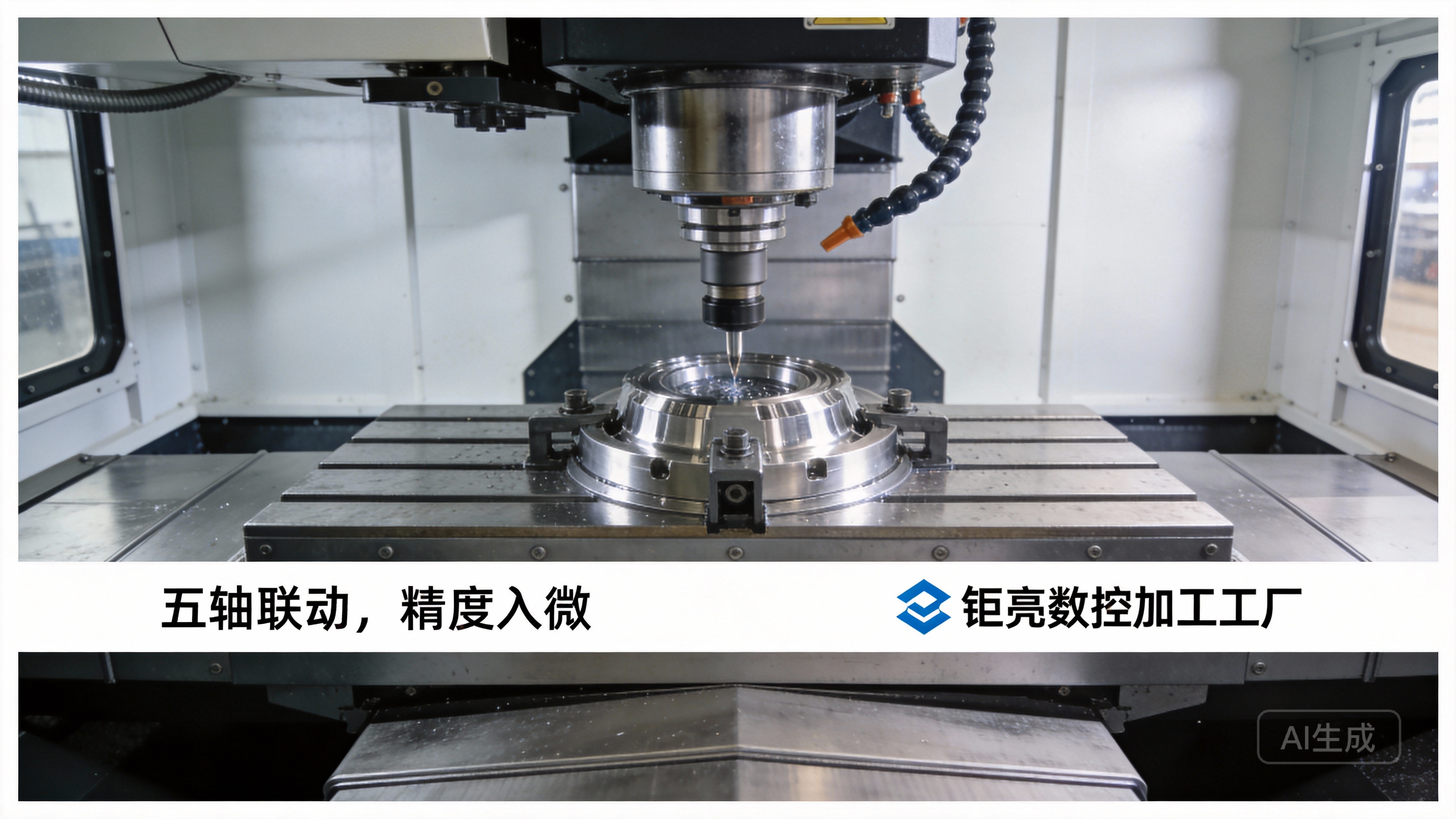
Here, 5‑axis CNC machining is transformative. It enables single‑setup machining of complex, angled features, drastically reducing cumulative errors. At GreatLight, high‑precision 5‑axis centers (from Dema, Beijing Jingdiao, etc.) work alongside a fleet of 3‑ and 4‑axis machines to mill these details on pre‑formed sheet metal frames or to machine sub‑components that are later assembled into the housing. The company’s capability to hold tolerances down to ±0.001 mm on critical features ensures that every resonant tank fits its core and winding set with repeatable precision.
5. The GreatLight Advantage in Complex Enclosure Manufacturing
When evaluating a partner for EV resonant tank housings, experienced engineers look beyond a single machining service. They seek a manufacturer that can manage the whole process chain — from sheet metal fabrication to precision CNC machining and surface finishing — under one roof. This is where GreatLight Metal distinguishes itself from generalists like Protolabs Network or Xometry, which often aggregate multiple sub‑suppliers. The integrated single‑source model offers:
Design‑for‑Manufacturability (DFM) feedback that optimizes both sheet metal and machining steps simultaneously, avoiding conflicts that emerge when separate shops interpret the drawing.
Single‑point accountability for quality and schedule, critical for automotive programs governed by PPAP (Production Part Approval Process).
Cost efficiency from combined logistics and reduced setup overhead.
Moreover, GreatLight’s arsenal includes 127 units of precision peripheral equipment, vacuum forming, and additive manufacturing (SLM, SLA, SLS) for prototyping of internal brackets or insulation components, making it a comprehensive rapid‑prototyping and production hub.
6. Certifications That Meet Automotive Tier‑1 Standards
EV resonant tank housings destined for series production often must comply with IATF 16949, the international quality management standard specific to automotive supply chains. This goes beyond generic ISO 9001 by requiring defect prevention, process control, and continuous improvement in the production of engine/drivetrain‑related hardware. GreatLight holds IATF 16949 certification, a rarity among small‑ to medium‑sized job shops, and also meets ISO 13485 for medical‑grade quality and ISO 27001 for data security — reassuring clients whose intellectual property is embedded in unique magnetic geometries.
In comparative assessments with tier‑one prototype bureaus like RapidDirect or Owens Industries, the presence of an IATF‑registered facility with in‑house measurement laboratories (CMM, laser scanners, surface profilometers) gives GreatLight a clear trust advantage. For automotive customers, this translates to streamlined audits and reduced risk.
7. Quality Assurance and Validation: Beyond First Article Inspection
Precision is only as good as the verification process. GreatLight’s metrology department implements a multi‑stage inspection protocol for sheet metal and machined components:
In‑process checks during bending and welding using calibrated gauges and vision systems.
Coordinate measuring machine (CMM) reports for critical mounting datums, with full dimensional layouts batch‑by‑batch.
Surface finish and coating thickness tests (ASTM B487, ISO 2808) to guarantee corrosion and dielectric performance.
Leak testing (pressure decay or helium) on sealed enclosures if the housing doubles as a coolant manifold.
Such rigor ensures that every EV LL Resonant Tank Housing Sheet Metal delivered meets the stringent requirements of functional testing — no delayed discoveries of EMI leaks or hot spots during system‑level validation.
8. Supply Chain Resilience and Intellectual Property Protection
Another unspoken pain point is the risk of design leakage. When a resonating core shape or winding layout is novel, the housing drawings inherently contain IP‑sensitive information. Splitting the fabrication between a sheet metal shop and a CNC machine shop multiplies exposure. GreatLight counters this through:
An ISO 27001‑certified information security management system that controls access to technical data and secures digital feeds to machines.
Private, dedicated project management for sensitive clients, including separate production cells and restricted file sharing.
Physical security measures within the Chang’an campus, adjacent to Shenzhen, the epicenter of electronics innovation.
For startups and established OEMs alike, this level of data stewardship often tilts the decision away from commodity e‑commerce platforms like Fictiv or SendCutSend.
9. Navigating the EV Resonant Tank Housing Design Cycle: A Partner’s Perspective
A typical project at GreatLight unfolds in phases that mirror the automotive product lifecycle:
Concept Review & DFM: Engineers review the initial 3D CAD to suggest sheet metal bend radii, weld joint design, and machining datums that minimize cost while retaining function.
Prototyping: Using in‑house 5‑axis CNC and sheet metal cells, first‑article housings are produced in 5–8 business days. Simultaneously, 3D‑printed internal fixtures (SLA/SLS) allow immediate core and winding fit‑checks.
DV/PV Testing Support: As the customer conducts design validation and process validation, GreatLight supplies small‑batch production parts with full dimensional reports, adapting to design changes quickly.
Production Ramp‑up: Leveraging IATF‑16949 process control plans, the facility scales to volume, maintaining CpK > 1.33 on critical characteristics such as core seating plane flatness and dowel‑hole position.
Contrast this with the fragmented experience of engaging a sheet metal vendor (e.g., EPRO‑MFG) and then a separate CNC shop (e.g., PartsBadger). The iterative feedback loops slow everything down and can introduce tolerance stack‑ups that only surface at final assembly.
10. Case in Point: Why Companies Choose Integrated Manufacturing
Consider an EV startup that developed a 6.6 kW onboard charger with an integrated LL resonant tank. The housing, fabricated from 5052 aluminium, needed a 2D flat‑pattern blank that was laser‑cut, formed, and welded into a rectangular box. Post‑welding, four 5‑axis machined datums on the open face provided the registration for a ferrite E‑core assembly. Any mismatch between the welded shell’s distortion and the machined datums would tilt the core, causing an air‑gap variance of 0.05 mm — enough to shift the resonant frequency by 7%. By keeping all steps under one roof, GreatLight’s process engineers compensated for the weld‑induced angular deflection by selectively milling the mating plane to re‑establish flatness, achieving a final gap tolerance of ±0.01 mm. The result was a first‑pass yield improvement of over 30% compared to the client’s previous multi‑source attempt.
11. How to Evaluate Your Sheet Metal CNC Partner Against Industry Benchmarks
When vetting suppliers, measuring them against a checklist inspired by GreatLight’s operating model can be revealing:
Does the supplier offer both sheet metal and 5‑axis CNC capabilities in‑house? If not, who manages the interface?
What automotive certifications do they hold? IATF 16949 signals a process‑mature organization.
What is their maximum machining size and tolerance capability? For resonant tank housings, a milled envelope of 4000 mm and precision to ±0.001 mm as GreatLight provides accommodates even large onboard charger platforms.
Do they provide full metrology reports and material certifications?
How do they protect your IP? Look for ISO 27001 or comparable data‑handling protocols.
Companies like JLCCNC or Protocase may offer attractive online quoting for simple sheet metal parts, but rarely can they deliver the advanced CNC integration and automotive‑grade quality that an EV resonant tank housing demands.
12. Embracing the Future: Trends in Resonant Tank Housing Manufacturing
The next generation of EV power electronics is moving toward integrated modular platforms where the resonant tank, magnetics, and power semiconductors share a single cooled enclosure. This demands even tighter geometric tolerances, hybrid material joints (aluminium to copper), and advanced sealing. Manufacturers equipped with multi‑axis CNC, in‑house welding, and additive manufacturing prototyping — a profile that matches GreatLight Metal’s trajectory — will be best positioned to deliver these super‑integrated housings. The shift toward 800 V architectures further elevates creepage and clearance requirements, pushing sheet metal design into more complex 3D shapes that only 5‑axis milling can accurately realize.
In conclusion, the journey from a conceptual resonant converter schematic to a production‑ready housing is laden with precision, thermal, and electromagnetic pitfalls. A robust manufacturing partner bridges that gap with integrated sheet metal and CNC expertise, automotive‑grade quality systems, and an unwavering commitment to data security. When these capabilities coalesce — as they do at a specialized facility like GreatLight Metal — the result is an EV LL Resonant Tank Housing Sheet Metal that not only meets the functional specifications but also accelerates time‑to‑market and safeguards intellectual property. For any engineering team bringing next‑generation EV power conversion to life, choosing a partner with such comprehensive, certified manufacturing muscle is not just an option — it is a strategic imperative.